
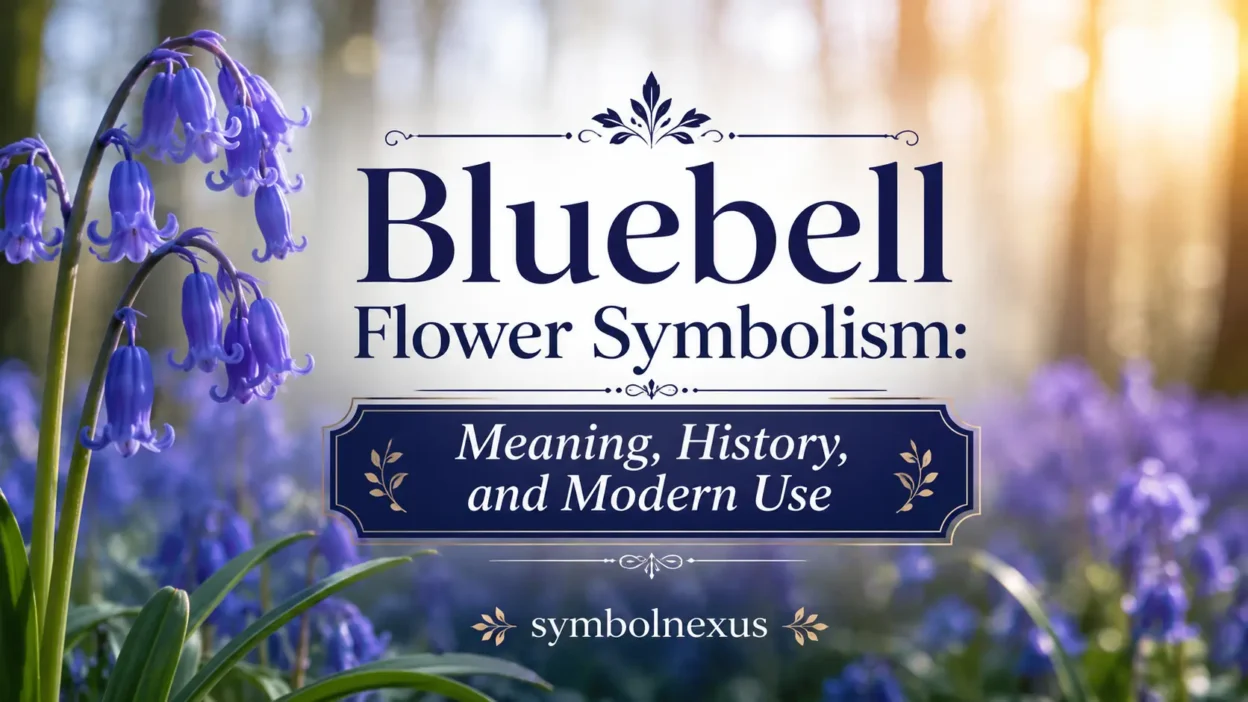
Bluebell flower symbolism centers on constancy, humility, gratitude, and gentle affection. These meanings come partly from the flower’s bowed shape, spring blooming season, woodland habitat, and place in nineteenth-century floral dictionaries.
For many Americans, bluebells also suggest renewal. Their appearance signals that winter has passed, yet their short blooming period makes the moment feel temporary. That combination of return and impermanence gives the flower an emotional connection to memory, change, and appreciation.
The meaning is not completely universal. “Bluebell” is a common name applied to several different plants, and British folklore differs from modern American interpretations. Understanding the flower therefore requires separating botany, historical tradition, and personal symbolism.
Quick Answer
Bluebell flower symbolism commonly represents constancy, gratitude, humility, and faithful affection in modern American culture. Historically, bluebells were associated with constancy in floral dictionaries and with fairies, enchanted woodlands, and cautionary beliefs in British and Irish folklore.
TL;DR
- Bluebells commonly represent loyalty, gratitude, humility, and gentle affection.
- Victorian floral dictionaries strongly connected them with constancy.
- Their spring appearance makes them symbols of renewal and returning hope.
- British folklore linked bluebell woods with fairies and supernatural danger.
- American interpretations often emphasize nature, memory, and native wildflowers.
- Tattoo and gift meanings depend heavily on personal context.
What Bluebells Look Like — and Which Flower You Mean
A bluebell usually has a curved or upright stem carrying several bell-shaped flowers in shades of blue, violet, lavender, pink, or white. The blossoms may hang downward like miniature bells, which helps explain associations with modesty and quietness.
However, the name does not refer to one plant worldwide.
The English or common bluebell, Hyacinthoides non-scripta, is a bulb-forming woodland plant native to western Europe. It generally produces fragrant, violet-blue flowers that hang along one side of a bending stem. Spanish bluebells grow more upright, with flowers positioned around the stem.
Virginia bluebells, Mertensia virginica, belong to a different plant family. Native to North America, they produce pink buds that open into blue, trumpet-shaped flowers. They grow naturally in moist forests and river floodplains and become dormant by summer.
These botanical differences matter because the symbolism attached to British woodland bluebells does not automatically belong to every American plant called a bluebell.
Bluebell Meanings at a Glance
Bluebell meanings overlap, but each one comes from a different feature or tradition.
| Context | Common U.S. Meaning | Main Association | Important Note |
|---|---|---|---|
| Personal gift | Gratitude and appreciation | A sincere, understated thank-you | Less romantic than red roses |
| Romantic gift | Loyalty and lasting affection | Steady love rather than passion | Meaning should be explained |
| Tattoo | Constancy, memory, or quiet resilience | Remaining true through change | Personal interpretation varies |
| Wedding design | Faithful love and humility | A gentle, woodland aesthetic | Not a universal wedding symbol |
| Garden planting | Renewal and connection to nature | Spring, native habitat, seasonal return | Species choice affects meaning |
| Memorial use | Remembrance and continuing affection | Beauty that returns each spring | Not a standard funeral flower |
No single authority controls these meanings. Floral symbolism changes across books, cultures, periods, and personal experiences.
Humility and the Bowed Flower
Humility is one of the most familiar modern interpretations of the bluebell. The connection comes mainly from appearance: many bluebell blossoms bend downward instead of facing upward.
That posture can resemble a bowed head. In symbolic art, a lowered head often communicates modesty, respect, reflection, or an unwillingness to demand attention. Bluebells can therefore represent someone who contributes quietly without seeking recognition.
This meaning works well when honoring a teacher, caregiver, volunteer, or family member whose kindness is steady rather than dramatic. It also suits personal artwork centered on remaining grounded after success.
Humility was not assigned consistently to bluebells in every historical flower dictionary. Some modern guides combine it with gratitude and constancy, while older texts may list only constancy. The association is best understood as a visual interpretation that developed alongside formal floral language.
Constancy, Loyalty, and Faithful Affection
Constancy is the bluebell’s clearest documented historical meaning. A nineteenth-century floral lexicon listed “Blue Bell” as an emblem of constancy, showing that the association was established within the language-of-flowers tradition.
Constancy means remaining dependable despite distance, time, or changing circumstances. It is quieter than romantic passion. A bluebell does not usually suggest overwhelming desire; it suggests affection that continues.
This distinction makes bluebells suitable for several relationships:
- A long-term partner who has remained supportive
- A friend whose loyalty has survived difficult periods
- A relative remembered across generations
- A personal commitment someone intends to keep
“Everlasting love” is sometimes presented as an ancient bluebell meaning, but that claim should be treated carefully. Lasting love is a reasonable modern extension of constancy, not necessarily a fixed message shared by every historical source.
Gratitude and Quiet Appreciation
Bluebells can communicate gratitude without the intensity of more formal flowers. Their small size and clustered growth suggest appreciation expressed through many modest acts rather than one grand gesture.
As a gift, they may say:
- “I remember what you did.”
- “Your support mattered.”
- “I appreciate your patience.”
- “You have always been dependable.”
This interpretation works particularly well for thank-you cards, spring arrangements, botanical prints, and small gifts. The flower’s meaning feels personal without becoming overly romantic.
Gratitude is sometimes confused with debt or obligation. Bluebell imagery usually communicates voluntary appreciation instead — the recognition of kindness that did not have to be given.
Spring Renewal and Returning Hope
Bluebells bloom during spring, connecting them naturally with renewal, warmer weather, and the return of outdoor life. English bluebells emerge in large woodland colonies, while Virginia bluebells appear early in North American forests before becoming dormant later in the year.
This seasonal pattern gives the flower two related meanings.
The first is recovery. Bluebells appear after winter, making them appropriate symbols for beginning again after disappointment, illness, grief, or emotional exhaustion.
The second is recurrence. The plants disappear from view but return during another growing season. That cycle can represent hope that survives unseen or affection that continues during periods of separation.
Unlike evergreen plants, bluebells do not symbolize constant visible strength. Their message is closer to trust in return: something meaningful can be absent without being permanently lost.
Fleeting Beauty and the Need to Pay Attention
A bluebell display does not last all year. Its limited season encourages people to notice it while it is present.
For that reason, bluebells can symbolize the value of temporary experiences. A friendship, childhood home, spring trip, or family tradition may not remain unchanged forever, but its limited duration does not reduce its importance.
This interpretation differs from the flower’s association with constancy. The two meanings can exist together: circumstances are temporary, while memory or loyalty may endure.
In personal symbolism, the bluebell can therefore serve as a reminder to appreciate ordinary moments before they pass. Its message is not simply that life is short. It is that attention gives temporary beauty lasting emotional significance.
The Rise of Bluebells in Floral Language
Formal flower symbolism became especially popular in Europe and the United States during the nineteenth century. Floral dictionaries assigned emotions, messages, and moral qualities to particular plants, allowing bouquets to function as coded communication.
One influential French flower-language book appeared in 1819 and inspired later British and American writers. However, those authors did not use one standardized code. They borrowed from folklore, literature, religion, physical appearance, and personal preference, often assigning different meanings to the same plant.
Within that changing system, bluebells became strongly associated with constancy. Later guides expanded the flower’s meaning to include humility, gratitude, and faithful love.
This history explains why modern definitions sometimes disagree. Floral language was never a single secret dictionary understood identically by everyone. It was a popular cultural practice with many competing versions.
Bluebells in British and Irish Folklore
Before bluebells became sentimental flowers in gift guides, they belonged to a darker woodland imagination.
British folklore connected bluebell woods with fairies, enchantment, witches, and supernatural boundaries. Some stories warned that entering a ring of bluebells could place a traveler under fairy influence. Others claimed that hearing a bluebell ring foretold danger or death.
Names such as “fairy flower,” “witches’ thimbles,” and “cuckoo’s boots” reflect this body of folk tradition.
These beliefs should not be presented as universal Celtic religion or as verified ancient rituals. Much of the material survives through regional folklore, later collections, and repeated popular retellings.
The stories nevertheless shaped the flower’s emotional character. A bluebell wood could represent beauty that deserved respect — a place inviting admiration but discouraging careless intrusion.
What Bluebells Commonly Mean in the United States
In the United States, bluebells usually have a lighter meaning than they do in old British fairy lore. Americans are more likely to encounter them through gardening, wildflower photography, botanical art, spring travel, or native-plant landscaping.
The most common American interpretations include:
- The arrival of spring
- Appreciation for natural beauty
- Loyalty within close relationships
- Gratitude for quiet support
- Remembrance of a person or place
- A preference for calm, understated design
The native-plant movement adds another layer. Planting Virginia bluebells may express care for regional ecology and an interest in restoring woodland or pollinator habitat. The plant is native to North America and is used in shaded wildflower and native-plant gardens.
This ecological meaning is modern rather than Victorian. It connects the flower with stewardship, local identity, and responsible gardening.
The American Native-Plant Meaning of Virginia Bluebells
Virginia bluebells offer a distinctly American interpretation of the bluebell image. They grow in moist woodlands and floodplains, producing clusters of flowers early in the season.
Their pink buds gradually develop into blue blossoms. This color transition gives them a natural association with growth, emotional change, and becoming.
Because the foliage later dies back, the plant also illustrates seasonal rest. Its disappearance is not failure; it is part of its normal life cycle. Gardeners often learn to mark its location and allow neighboring plants to fill the space during summer.
Symbolically, that pattern can represent:
- Rest without guilt
- Growth that is not always visible
- Change as a normal process
- Belonging to a particular landscape
- Renewal after a dormant period
These meanings arise from the plant’s observable behavior rather than from a historical flower code.
Blue Color and Its Emotional Influence
The perceived color of bluebells ranges from violet and lavender to cool blue. Some flowers also contain subtle pink, silver, or yellow tones that become visible under close observation.
In American design, blue frequently suggests calm, trust, distance, reflection, or sadness. Violet tones may introduce imagination, nostalgia, or refinement.
When these associations combine with a downward-facing flower, the result feels private and contemplative. Bluebells rarely communicate the bold confidence of sunflowers or the dramatic romance of red roses.
Their emotional tone is closer to a quiet conversation. This makes them useful in artwork about memory, solitude, tenderness, and emotional steadiness.
Blue does not have the same meaning for every viewer. Personal experience, cultural background, and the surrounding design can change whether a bluebell feels peaceful, sorrowful, romantic, or simply decorative.
Bluebells in Gifts, Weddings, and Memorials
Bluebells can be meaningful gifts, but their message is not obvious to everyone. A brief card helps explain why the flower was chosen.
For a friend or mentor, they can represent gratitude and dependability. For a partner, they may express faithful affection. For someone starting a new chapter, they can symbolize renewal.
In weddings, bluebells suit woodland, garden, spring, and storybook themes. Their association with constancy can support the idea of a lasting commitment. Floral meanings were revived in modern wedding planning after their nineteenth-century popularity had declined.
Bluebells are not a universal American wedding flower, however. Their availability, species, and suitability for cutting vary. Artificial flowers, illustrations, or embroidered designs may provide a more practical way to use the symbol.
In memorial settings, bluebells can represent continuing affection and seasonal return. They are not a standard funeral emblem, so their meaning should come from the individual’s life, garden, favorite place, or family story.
Why Bluebells Appear in Tattoos and Jewelry
A bluebell tattoo usually communicates something personal rather than a fixed cultural code. Its delicate shape allows it to work as a small standalone design or as part of a larger botanical piece.
Common tattoo interpretations include:
- Loyalty to a partner or family member
- Gratitude toward someone who offered support
- Remembrance after a loss
- Recovery following a difficult period
- Humility and private strength
- Love of forests, spring, or a particular hometown
A cluster may represent several relatives or important life periods. One bent stem can suggest modesty, while newly opening flowers may represent gradual transformation.
Bluebell jewelry often carries a similar message but can feel less permanent. A pendant or charm may serve as a private reminder of a promise, relationship, or place.
Neither tattoos nor jewelry have an official meaning. The most accurate interpretation comes from the wearer, not from a general symbolism chart.
Bluebells in Home Decor, Fashion, and Digital Culture
Bluebell patterns are common in spring decor because they combine recognizable floral shapes with cool, flexible colors. They can appear in wallpaper, fabric, ceramics, stationery, greeting cards, and botanical prints.
In a home, the design may create a woodland, cottage, or vintage atmosphere. The flower’s historical connection to floral language also makes it suitable for antique-inspired rooms and wedding stationery.
In fashion, embroidered or printed bluebells can suggest softness without appearing overly formal. Their small clustered form works well in repeating patterns.
Digital illustrations often emphasize magical woodland imagery. Fairies, glowing flowers, moons, and bluebell forests borrow from British folklore, but modern versions usually remove the older warnings about danger and death.
This shift shows how digital culture can preserve the appearance of a tradition while changing its emotional message.
Common Misunderstandings and Misuse
The first misunderstanding is that all bluebells are the same flower. English bluebells, Spanish bluebells, Virginia bluebells, Scottish harebells, and other plants may share a common name while belonging to different genera.
The second is that every listed meaning is ancient. Constancy has support in nineteenth-century floral dictionaries, but some other popular meanings are later interpretations or combinations drawn from several flowers.
The third is that bluebells are a formal symbol of death. Old folklore connected them with dangerous fairies and death omens, but modern American use is generally positive. A bluebell tattoo or bouquet should not automatically be read as a death symbol.
Careless harvesting creates another problem. Wildflower displays are living habitats, not free floral supplies. Local rules should be checked before picking any wild plant.
Bluebell bulbs should also not be treated as food or home medicine. English bluebell bulbs are poisonous, despite reports of limited historical practical or medicinal uses.
How Bluebell Meaning Changed Over Time
The meaning of bluebells developed in stages.
First came place-based observation. Communities encountered the flowers in forests, fields, and hedgerows and gave them regional names.
Folklore then transformed bluebell woods into supernatural spaces. The flowers became associated with fairies, enchantment, warnings, and the need to respect the landscape.
Nineteenth-century floral writers gave the plant a more orderly emotional meaning: constancy. This allowed the bluebell to communicate loyalty through bouquets and illustrated gift books.
Modern culture expanded the symbol again. Humility, gratitude, remembrance, renewal, and everlasting affection became common interpretations. In the United States, Virginia bluebells also acquired ecological meaning through native gardening and habitat conservation.
Today, the bluebell is less like a fixed word in a code and more like a flexible visual symbol. Its meaning depends on species, setting, color, relationship, and personal intention.
FAQs
What do bluebells symbolize spiritually?
Bluebells are often read as symbols of humility, gratitude, renewal, and remaining faithful to a personal commitment. Their spring return can also represent hope after a dormant or difficult period — but it’s worth remembering these interpretations are cultural and modern rather than fixed spiritual laws shared across traditions.
Are bluebells mentioned in the Bible?
No — bluebells don’t have a recognized role as a specific biblical symbol. They sometimes appear in modern Christian art to suggest humility, creation, or gratitude, but that usage comes from later interpretation and general floral symbolism rather than a direct scriptural reference.
What does a bluebell tattoo mean?
A bluebell tattoo most commonly represents constancy, remembrance, quiet strength, or appreciation for someone dependable. The finer details shape the meaning further — a single bowed stem often reads as modesty, while a cluster can represent multiple relationships or key periods in the wearer’s life.
Do bluebells symbolize death?
Not in modern American culture. Some British folklore linked their imagined ringing with dangerous fairies or death omens, but that tradition has largely faded from everyday use — contemporary gifts, tattoos, and designs featuring bluebells overwhelmingly emphasize loyalty, renewal, or gratitude instead.
Are bluebells appropriate for weddings?
Yes, especially for spring, woodland, or garden weddings where the couple wants to express constancy and gentle affection. Since fresh bluebells can be seasonal, delicate, or hard to source depending on region, many couples work the motif into invitations, embroidery, jewelry, or table decor instead of the live bouquet.
What is the difference between English and Virginia bluebell symbolism?
English bluebells carry the weight of British woodland folklore and nineteenth-century floral-language tradition, making their symbolism feel older and more literary. Virginia bluebells, native to North America, lean toward a newer, ecological meaning tied to spring landscapes, native gardening, and seasonal renewal specific to American forests.
What do white or pink bluebells mean?
White bluebells tend to suggest innocence, simplicity, or remembrance, while pink varieties often read as more tender or affectionate. These are modern color associations rather than historically documented meanings, so they carry less weight than the flower’s well-established link to constancy.
Can you give bluebells as a romantic gift?
Yes, though the message differs from typically romantic flowers like red roses. Bluebells communicate steady, dependable love rather than passion or infatuation, making them a fitting choice for a long-term partner or a relationship built on quiet trust rather than dramatic gestures.
Why are bluebells associated with fairies?
The association comes from British and Irish folklore, which pictured bluebell woods as enchanted spaces where fairies gathered or cast spells on unsuspecting travelers. Some tales even warned that hearing a bluebell “ring” was a sign of misfortune — folklore that modern illustrations and design have largely softened into whimsical rather than sinister imagery.
Is it bad luck to pick bluebells?
Older folklore suggested that disturbing a bluebell wood could invite fairy mischief or bad luck, though this isn’t a documented universal rule. More practically, wild bluebell colonies are slow to recover from picking or trampling, so many conservation guidelines discourage harvesting them regardless of any superstition.
Conclusion
Bluebells earn their symbolism honestly — nothing about them is loud, but everything about them is deliberate. The bowed head reads as humility. The short bloom window reads as a reminder to pay attention. The reliable spring return reads as loyalty. None of that is coincidence; it’s a flower whose entire physical character happens to line up with the emotional qualities people have assigned it for two centuries.
That alignment is also why the symbolism has stayed remarkably consistent even as its context shifted dramatically — from supernatural woodland warnings in British folklore, to a tidy entry in a Victorian flower dictionary, to a native-garden favorite in American conservation planting. Each era reframed the bluebell, but none of them abandoned the core idea: this is a flower that shows up quietly, means what it says, and comes back.
That’s the most useful way to carry the symbol forward. A bluebell isn’t the flower to reach for when you want to make a loud statement — it’s the one to reach for when the truest thing you can say is simple: I noticed you. I’m still here. I’ll be back.


