Abstract symbolism refers to the use of shapes, colors, patterns, forms, and ideas to represent meanings that are not always shown directly. Unlike realistic symbols that clearly depict an object or person, abstract symbols rely on interpretation, emotion, and cultural understanding.
People encounter abstract symbolism in many parts of modern life, including art, logos, architecture, fashion, tattoos, technology, and personal expression. A simple circle may suggest unity, a certain color may communicate emotion, and a geometric pattern may represent balance or movement.
The reason abstract symbols matter is that humans often communicate ideas that cannot be physically seen, such as freedom, identity, connection, hope, or change. Across different cultures and time periods, people have created visual systems to express complex thoughts without using words.
Quick Answer
Abstract symbolism commonly represents ideas, emotions, and concepts through shapes, colors, patterns, and visual forms rather than direct images. Historically, it has been used in art, spirituality, communication, and design, while today it appears in branding, personal expression, and modern culture.
TL;DR
- Abstract symbols express ideas without literal images.
- Shapes and colors often carry cultural meanings.
- Modern artists use abstraction for personal interpretation.
- Businesses use abstract designs for identity.
- Meanings can change across cultures and time.
What Abstract Symbols Look Like and Where People See Them
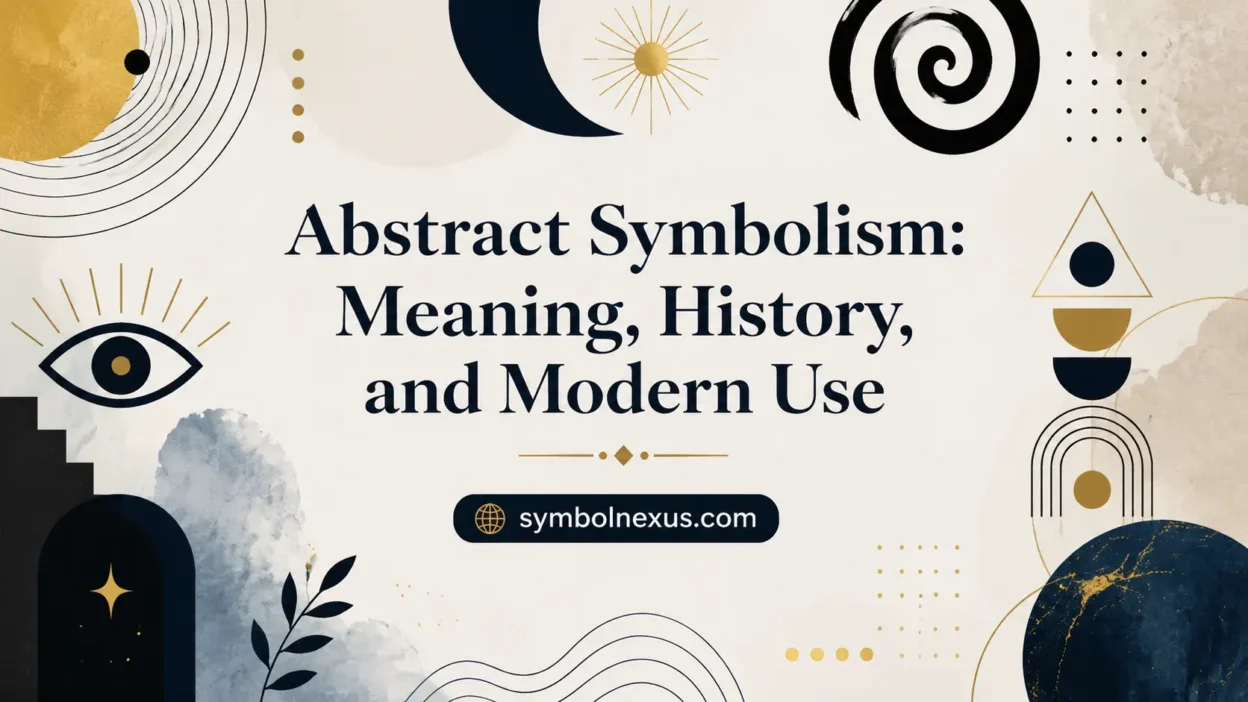
Abstract symbols do not have one fixed appearance. They can include geometric shapes, flowing lines, unusual color combinations, repeated patterns, or simplified forms that represent larger ideas.
Common examples include:
- Circles representing unity, cycles, or connection
- Triangles representing balance, direction, or strength
- Lines suggesting movement, growth, or separation
- Colors communicating emotions or social meanings
- Minimal designs used in logos and digital icons
In everyday American life, abstract symbols appear almost everywhere. People see them on company logos, road signs, clothing designs, phone apps, artwork, jewelry, and home decorations.
Unlike realistic images, abstract symbols invite viewers to think about meaning instead of simply recognizing an object.
What Abstract Symbolism Commonly Means in the United States
In the United States, abstract symbolism is often connected with personal interpretation, creativity, and individual identity.
American culture places strong value on self-expression, which is why abstract designs are common in modern art, tattoos, fashion, and branding. A person may choose an abstract tattoo because it represents a personal experience rather than a universally recognized image.
Common meanings include:
| Context | Meaning in the USA | Common Associations | Notes |
|---|---|---|---|
| Art | Personal ideas and emotions | Creativity, imagination | Meaning often depends on the viewer |
| Tattoos | Individual identity | Memories, beliefs, experiences | Usually chosen for personal reasons |
| Branding | Recognition and values | Trust, innovation, connection | Companies create unique visual identities |
| Home Design | Mood and personality | Balance, comfort, style | Used in decoration and architecture |
| Digital Culture | Communication | Simplicity, modern identity | Common in icons and online profiles |
Ancient Roots and Early Symbolic Thinking
Although abstract symbolism is strongly associated with modern art, humans have used abstract forms for thousands of years.
Early societies created marks, patterns, and shapes to communicate ideas that went beyond simple pictures. Repeated geometric designs appeared in ancient pottery, architecture, textiles, and ceremonial objects.
Many early cultures used abstract forms to represent concepts such as:
- Life cycles
- Natural forces
- Spiritual beliefs
- Social connections
- Human relationships
Ancient symbols often combined observation of nature with human imagination. A spiral, for example, could represent movement, growth, or cycles because people observed similar patterns in plants, weather, and the natural world.
The Rise of Abstract Symbolism in Art
Abstract symbolism became especially important in modern art during the late 19th and early 20th centuries.
Artists began moving away from realistic representation and explored how colors, shapes, and forms could communicate feelings or ideas directly.
Instead of painting only what they saw, many artists focused on:
- Emotional experiences
- Inner thoughts
- Human psychology
- Spiritual questions
- Social change
Abstract art challenged viewers to create their own interpretations. Two people could look at the same artwork and find completely different meanings.
This approach changed how people understood visual communication and influenced painting, sculpture, architecture, and graphic design.
How Colors Create Abstract Meanings
Color plays one of the biggest roles in abstract symbolism. People often associate colors with emotions, although meanings can vary depending on culture and context.
Common interpretations in American culture include:
- Blue: calmness, trust, stability
- Red: energy, passion, urgency
- Green: nature, growth, renewal
- Black: elegance, seriousness, mystery
- White: simplicity, peace, cleanliness
- Purple: creativity, imagination, individuality
Businesses frequently use color symbolism when designing logos because colors influence how people emotionally respond to a brand.
However, color meanings are not universal. The same color can represent different ideas in different cultures.
Shapes and Geometry as Symbolic Language
Geometric forms are among the oldest forms of abstract communication.
A circle often suggests completeness because it has no visible beginning or end. In many contexts, it represents connection, community, or continuity.
Triangles are commonly associated with direction and stability because of their strong structure. Depending on orientation and culture, they may represent different ideas.
Squares and rectangles often communicate order, reliability, and organization. This is why they appear frequently in architecture, technology, and corporate design.
Abstract geometry allows designers and artists to communicate ideas using simple visual elements.
Abstract Symbolism in American Culture and Identity
In the United States, abstract symbols are closely connected with personal identity.
People use abstract designs to express:
- Personal beliefs
- Life experiences
- Family connections
- Cultural backgrounds
- Individual creativity
A person may wear abstract jewelry because its meaning connects to a personal memory. Someone may decorate their home with abstract artwork because it creates a certain emotional atmosphere.
Unlike traditional symbols with widely accepted meanings, abstract symbols often allow people to create their own explanations.
Abstract Symbols in Tattoos and Personal Style
Abstract tattoos have become increasingly popular because they allow people to represent personal stories without using obvious images.
Common abstract tattoo styles include:
- Minimalist lines
- Geometric patterns
- Abstract shapes
- Color-based designs
- Symbol combinations
For many Americans, abstract tattoos represent experiences that are difficult to explain with words. They may symbolize personal growth, transformation, relationships, or important moments.
The meaning usually comes from the person wearing the tattoo rather than from a universal definition.
Abstract Symbolism in Branding and Design
Modern businesses rely heavily on abstract symbolism to create recognizable identities.
A successful logo often does not show exactly what a company does. Instead, it communicates feelings and values.
Companies use abstract designs to suggest qualities such as:
- Innovation
- Reliability
- Creativity
- Simplicity
- Professionalism
Technology companies especially use abstract shapes because they create a modern appearance while allowing broad interpretation.
A simple design can become strongly connected with a company’s reputation over time.
Religious and Spiritual Interpretations
Many religious and spiritual traditions use abstract symbols to represent ideas that cannot easily be described.
Examples include:
- Geometric patterns representing harmony
- Circles representing eternity
- Light-based symbols representing purity or guidance
- Repeated patterns representing order
Different traditions interpret symbols according to their own beliefs and histories.
It is important to understand that an abstract symbol does not always have one fixed religious meaning. Context determines interpretation.
Emotional and Psychological Meaning of Abstract Symbols
Abstract symbols work because humans naturally search for patterns and meaning.
A person may feel connected to a particular shape, color, or design because it reminds them of an experience or emotion.
Psychologically, abstract symbols can communicate:
- Feelings that words cannot express
- Personal memories
- Aspirations
- Inner experiences
Artists often use abstraction because emotions are not always concrete. A combination of colors and shapes may communicate a mood more effectively than a realistic picture.
Modern Uses in Digital Culture and Technology
Abstract symbolism has become even more common in the digital age.
People interact with abstract symbols daily through:
- App icons
- Emojis
- User interface designs
- Online profiles
- Digital artwork
Technology companies prefer simple abstract designs because they remain recognizable at small sizes.
Social media has also increased the use of symbolic images as people create digital identities through profile pictures, avatars, and personal designs.
Common Misunderstandings About Abstract Symbols
One common mistake is assuming that every abstract symbol has a hidden universal meaning.
In reality, interpretation depends on:
- Culture
- Personal experience
- Historical background
- Social context
A shape that represents harmony in one setting may have a different meaning elsewhere.
Another misunderstanding is that abstract symbolism is random. While abstract designs may appear simple, many are carefully created to communicate specific feelings or ideas.
How Abstract Symbolism Has Changed Over Time
The meaning of abstract symbols continues to evolve.
In earlier societies, symbols were often connected with religious traditions, nature, and community identity. In modern times, abstract symbols are frequently linked with personal expression, commercial design, and digital communication.
Today, people have more freedom to assign personal meanings to symbols. A design can represent a private memory for one person and a completely different idea for another.
This flexibility is one reason abstract symbols remain important in contemporary culture.
Frequently Asked Questions
What does abstract symbolism mean?
Abstract symbolism means using visual elements such as shapes, colors, and patterns to represent ideas rather than literal objects. The meaning often depends on culture, context, and personal interpretation.
Why do artists use abstract symbols?
Artists use abstract symbols because they can express emotions, thoughts, and experiences that may be difficult to show realistically. Abstract designs allow viewers to create their own interpretations.
What do abstract symbols represent in American culture?
In American culture, abstract symbols often represent individuality, creativity, identity, and personal expression. They are commonly used in art, tattoos, branding, and design.
Are abstract symbols always positive?
No. Abstract symbols do not have automatic positive or negative meanings. Their interpretation depends on how they are used and the cultural context surrounding them.
Why are abstract symbols popular in tattoos?
Abstract tattoos are popular because they allow people to represent personal stories and emotions without using obvious images. Many people prefer designs that have private meanings.
Do colors have universal symbolic meanings?
No. While many cultures share some color associations, meanings can change depending on history, tradition, and social context.
How are abstract symbols used today?
Abstract symbols are widely used in logos, digital interfaces, fashion, artwork, home design, and personal identity expressions.
Conclusion
Abstract symbolism shows how humans use visual language to communicate ideas, emotions, and experiences beyond literal images. From ancient patterns to modern digital designs, abstract symbols continue to help people express concepts that words cannot always capture.
In the United States, abstract symbolism is especially connected with creativity, identity, and personal interpretation. Whether used in art, tattoos, branding, or everyday design, abstract symbols remain meaningful because people bring their own experiences and perspectives to them.
The meaning of an abstract symbol is not only found in its shape or color but also in the story and context behind how people use it.