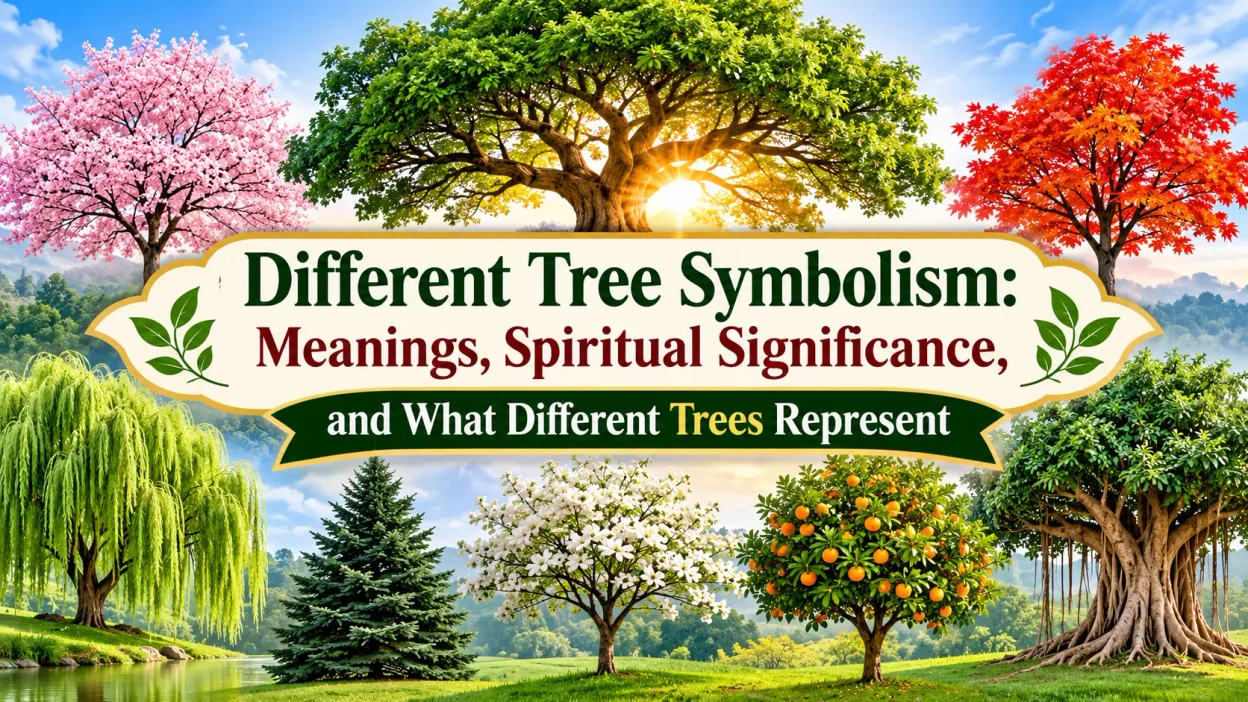
Trees have carried symbolic meanings throughout human history. Their deep roots, strong trunks, spreading branches, and ability to grow through changing seasons make them powerful representations of life, strength, wisdom, protection, and renewal. Different trees also have unique associations shaped by their appearance, cultural history, religious traditions, and practical uses.
From the mighty oak, which often represents strength and endurance, to the graceful willow, associated with flexibility and emotional healing, each tree can communicate a different message. Some symbolize love and family, while others represent spiritual connection, prosperity, transformation, or remembrance.
Understanding different tree symbolism can help you appreciate the deeper meanings behind trees in nature, literature, art, dreams, and spiritual traditions.
Quick Answer: What Do Different Trees Symbolize?
Different trees symbolize different qualities and experiences. Oak trees commonly represent strength and wisdom, willow trees symbolize flexibility and healing, pine trees represent longevity and resilience, and cherry blossoms symbolize renewal and the temporary nature of life. Apple trees are associated with knowledge and abundance, while olive trees often represent peace and reconciliation.
Tree symbolism varies across cultures and traditions, so no single interpretation applies everywhere.
TL;DR: Symbolic Meanings of Different Trees
- Oak: Strength, courage, wisdom, and endurance.
- Willow: Flexibility, grief, healing, and emotional resilience.
- Pine: Longevity, protection, peace, and perseverance.
- Cherry blossom: Beauty, renewal, and the fleeting nature of life.
- Apple: Knowledge, abundance, temptation, and fertility.
- Olive: Peace, reconciliation, hope, and prosperity.
- Cedar: Protection, wisdom, strength, and spiritual significance.
- Birch: New beginnings, purification, and renewal.
- Maple: Balance, generosity, change, and connection.
- Cypress: Mourning, remembrance, eternity, and spiritual transition.
1. Oak Tree Symbolism: Strength, Courage, and Wisdom
The oak tree is one of the most recognizable symbols of strength and endurance. Its thick trunk, powerful branches, and long lifespan make it a natural representation of stability and resilience.
In different European traditions, oak trees have been associated with powerful deities, sacred spaces, and protection. Their ability to withstand difficult weather has also made them symbols of courage and determination.
Common oak tree meanings include:
- Physical and emotional strength.
- Courage during difficult situations.
- Wisdom gained through experience.
- Stability and security.
- Leadership and personal authority.
- Family roots and lasting traditions.
The oak is especially meaningful when representing someone who remains dependable through life’s challenges. Its deep roots suggest that lasting strength comes from having a solid foundation.
2. Willow Tree Symbolism: Healing, Flexibility, and Grief
The willow tree is known for its long, flowing branches that often bend toward the ground. Its graceful appearance has inspired associations with sadness, reflection, adaptability, and emotional healing.
Unlike trees with rigid branches, willows can bend significantly in the wind. This characteristic makes them symbols of flexibility and the ability to survive difficult circumstances without losing one’s identity.
Common willow tree meanings include:
- Emotional healing and recovery.
- Grief and remembrance.
- Flexibility and adaptability.
- Intuition and reflection.
- Compassion and sensitivity.
- Strength during emotional hardship.
In some cultural traditions, willows are associated with mourning and remembrance. In other contexts, they represent healing, vitality, and renewal.
The willow reminds us that being flexible does not mean being weak. Sometimes the ability to bend and adapt is what allows a person to keep moving forward.
3. Pine Tree Symbolism: Longevity, Protection, and Resilience
Pine trees remain green throughout much of the year, even in cold climates. Their evergreen nature makes them powerful symbols of endurance, longevity, and hope.
Because they can survive harsh winters and challenging environmental conditions, pine trees are often associated with perseverance and inner strength.
Common pine tree meanings include:
- Long life and endurance.
- Protection and security.
- Peace and calmness.
- Faithfulness and consistency.
- Hope during difficult seasons.
- Spiritual strength.
Pine trees also have cultural importance in East Asian traditions, where evergreen plants can represent longevity and resilience. In winter celebrations, evergreen branches are often used to express continuity and life during the coldest season.
The pine tree teaches an important lesson: strength is not always about dramatic growth. Sometimes it is about remaining steady when circumstances become difficult.
4. Cherry Blossom Tree Symbolism: Beauty, Renewal, and Impermanence
Cherry blossom trees are especially significant in Japanese culture. Their delicate flowers appear for a relatively short period, creating a beautiful seasonal display before falling.
This brief flowering period has made cherry blossoms powerful symbols of life’s temporary nature, beauty, and renewal.
In Japanese culture, the idea of mono no aware describes an awareness of the impermanence of things and the emotions that arise from recognizing their temporary beauty.
Common cherry blossom meanings include:
- New beginnings and fresh opportunities.
- The beauty of life.
- Impermanence and change.
- Love and appreciation.
- Hope and renewal.
- The passage of time.
Cherry blossoms are particularly associated with spring, making them meaningful symbols of fresh starts and personal growth.
Their symbolism reminds us to appreciate meaningful moments rather than assuming they will last forever.
5. Apple Tree Symbolism: Knowledge, Abundance, and Temptation
Apple trees have a long history of cultural, religious, and literary symbolism. Their fruit has been associated with nourishment, fertility, abundance, love, and knowledge.
In Christian discussions, apples are often connected with the story of Adam and Eve. However, the Book of Genesis does not identify the forbidden fruit as an apple. The apple became associated with the story through later artistic and cultural traditions.
Common apple tree meanings include:
- Knowledge and discovery.
- Fertility and abundance.
- Love and attraction.
- Temptation and choice.
- Health and nourishment.
- Prosperity and growth.
In literature and folklore, apple trees can represent the rewards of nature as well as the consequences of human decisions.
The apple tree can therefore symbolize both the positive possibilities of knowledge and the responsibility that comes with making choices.
6. Olive Tree Symbolism: Peace, Hope, and Reconciliation
The olive tree has been valued for thousands of years in Mediterranean cultures. Its fruit and oil have practical, religious, and cultural importance, while its long life has made it a symbol of endurance and continuity.
One of its best-known associations is peace. The olive branch became a widely recognized symbol of reconciliation and the desire to end conflict.
In the biblical story of Noah, a dove returns with an olive leaf, indicating that the floodwaters have begun to recede. This image has contributed to the olive branch’s association with hope and the restoration of life.
Common olive tree meanings include:
- Peace and reconciliation.
- Hope after hardship.
- Prosperity and abundance.
- Wisdom and longevity.
- Healing and nourishment.
- Friendship and unity.
The olive tree is especially meaningful as a symbol of rebuilding relationships and finding peace after difficult experiences.
7. Cedar Tree Symbolism: Protection, Wisdom, and Spiritual Strength
Cedar trees are known for their impressive size, durability, and distinctive fragrance. Their strong wood has been used in buildings, furniture, and religious structures for centuries.
In the Bible, cedar trees, particularly the cedars of Lebanon, are associated with strength, beauty, and majesty. They were also used in the construction of Solomon’s Temple.
Common cedar tree meanings include:
- Protection and security.
- Wisdom and dignity.
- Strength and stability.
- Spiritual significance.
- Longevity and endurance.
- Purification and renewal.
Cedar trees can symbolize the importance of building something that lasts. Their durability makes them meaningful representations of strong foundations, lasting values, and spiritual commitment.
8. Birch Tree Symbolism: New Beginnings and Purification
Birch trees are recognizable by their often pale, peeling bark and graceful branches. They are among the first trees to establish themselves in certain disturbed or recovering landscapes, making them natural symbols of renewal.
In some European folk traditions, birch branches were associated with spring, purification, and fresh starts.
Common birch tree meanings include:
- New beginnings.
- Purification and cleansing.
- Hope and renewal.
- Innocence and simplicity.
- Adaptability.
- Fresh opportunities.
Birch symbolism is particularly relevant during periods of personal change. It can represent leaving behind old habits and making space for something healthier.
9. Maple Tree Symbolism: Balance, Generosity, and Change
Maple trees are known for their distinctive leaves and beautiful autumn colors. Their seasonal transformation has made them symbols of change, balance, and the natural cycles of life.
In Canada, the maple leaf is a major national symbol associated with identity and heritage. Maple trees are also valued for their sap, which is used to produce maple syrup.
Common maple tree meanings include:
- Balance and harmony.
- Generosity and nourishment.
- Personal growth.
- Seasonal change.
- Connection with nature.
- Community and belonging.
The maple tree can symbolize the importance of accepting life’s changing seasons. Its transformation from green summer foliage to brilliant autumn colors offers a reminder that change can be beautiful.
10. Cypress Tree Symbolism: Mourning, Eternity, and Remembrance
Cypress trees have a long association with cemeteries, memorial gardens, and sacred landscapes in parts of the Mediterranean and Europe.
Their tall, evergreen appearance has made them symbols of remembrance, mourning, and continuity beyond death.
Common cypress tree meanings include:
- Remembrance and mourning.
- Eternity and longevity.
- Spiritual transition.
- Reflection and contemplation.
- Respect for the deceased.
- Hope beyond loss.
Cypress symbolism is particularly meaningful in memorial settings. The tree can represent the lasting memory of someone who has passed away and the importance of honoring their life.
Its meaning is not exclusively about death. Its evergreen nature can also suggest endurance and continuity.
11. Palm Tree Symbolism: Victory, Peace, and Spiritual Triumph
Palm trees have important associations in religious traditions, particularly Christianity and Judaism.
In Christianity, palm branches are connected with Jesus’ entry into Jerusalem before his crucifixion. According to the Gospel accounts, people welcomed him with branches, traditionally understood as palm branches.
Palm trees also appear in biblical imagery associated with righteousness, flourishing, and spiritual vitality.
Common palm tree meanings include:
- Victory and triumph.
- Peace and celebration.
- Righteousness and faith.
- Prosperity and abundance.
- Resilience and survival.
- Spiritual growth.
Palm symbolism is especially prominent during Palm Sunday, when many Christian communities use palm branches to commemorate Jesus’ entry into Jerusalem.
12. Fig Tree Symbolism: Abundance, Wisdom, and Spiritual Growth
Fig trees have a long history in Mediterranean and Middle Eastern cultures. Their fruit has been valued as food, while the trees themselves appear in biblical stories and religious imagery.
In the Bible, fig trees can carry different meanings depending on the passage. They may represent prosperity and peace, but they can also become symbols of judgment or spiritual fruitfulness.
Common fig tree meanings include:
- Abundance and nourishment.
- Fertility and prosperity.
- Wisdom and knowledge.
- Spiritual growth.
- Peace and security.
- Responsibility and fruitfulness.
The fig tree’s ability to produce nourishing fruit makes it a natural symbol of generosity and abundance.
In Christian interpretation, the parable of the barren fig tree also emphasizes the importance of spiritual growth and producing meaningful results through faith.
13. Ash Tree Symbolism: Connection, Protection, and Renewal
Ash trees have appeared in European mythology, folklore, and traditional beliefs. Their strong wood and tall growth have contributed to associations with strength, protection, and connection.
In Norse mythology, Yggdrasil, the great world tree, is commonly identified as an ash tree. It connects different realms of existence and plays a central role in the mythology of the cosmos.
Common ash tree meanings include:
- Connection between different worlds.
- Protection and strength.
- Wisdom and knowledge.
- Balance and harmony.
- Renewal and resilience.
- Spiritual connection.
The ash tree can represent the relationship between different aspects of existence, including the physical world, spiritual beliefs, and the natural environment.
14. Banyan Tree Symbolism: Wisdom, Longevity, and Spiritual Enlightenment
The banyan tree is known for its enormous canopy and aerial roots, which grow downward and can develop into additional trunks. Over time, one tree can create an expansive structure that resembles a small forest.
In Indian religious and cultural traditions, the banyan tree has significant associations with longevity, knowledge, and spiritual life.
Common banyan tree meanings include:
- Wisdom and enlightenment.
- Longevity and immortality.
- Protection and shelter.
- Family and community.
- Spiritual connection.
- Stability and continuity.
The banyan tree is especially important in Hindu traditions. It is associated with sacred knowledge and has connections with deities and religious practices. It is also significant in Buddhist history: the Bodhi tree, under which Siddhartha Gautama attained enlightenment according to Buddhist tradition, is a sacred fig rather than a banyan, although both belong to the Ficus genus.
The banyan’s expansive structure makes it a powerful symbol of community, interconnectedness, and lasting wisdom.
15. Dogwood Tree Symbolism: Faith, Renewal, and Christianity
Dogwood trees are admired for their spring flowers and attractive seasonal appearance. In modern Christian folklore, the dogwood has become associated with the crucifixion of Jesus.
A popular story claims that the dogwood was once a large tree used for the cross and that its flowers were changed as a reminder of Christ’s suffering. However, this story is a later Christian legend, not a biblical account or established botanical history.
Common dogwood tree meanings include:
- Faith and devotion.
- Sacrifice and remembrance.
- Renewal and hope.
- Love and spiritual commitment.
- Beauty and resilience.
Because of this folklore, dogwood flowers and trees are sometimes used in Christian-inspired artwork and Easter decorations.
16. Different Trees and Their Symbolic Meanings Compared
The following table provides a quick comparison of common tree symbolism.
| Tree | Common symbolic meanings |
|---|---|
| Oak | Strength, wisdom, courage, endurance |
| Willow | Healing, flexibility, grief, resilience |
| Pine | Longevity, protection, perseverance |
| Cherry blossom | Beauty, renewal, impermanence |
| Apple | Knowledge, temptation, abundance |
| Olive | Peace, reconciliation, hope |
| Cedar | Protection, strength, spiritual significance |
| Birch | Purification, fresh starts, renewal |
| Maple | Balance, generosity, change |
| Cypress | Mourning, remembrance, eternity |
| Palm | Victory, peace, faith |
| Fig | Abundance, wisdom, spiritual growth |
| Ash | Connection, protection, renewal |
| Banyan | Wisdom, longevity, community |
| Dogwood | Faith, sacrifice, renewal |
17. What Do Different Trees Symbolize Spiritually?
From a spiritual perspective, trees are often viewed as symbols of the connection between the earth and the sky. Their roots reach into the ground, their trunks provide stability, and their branches stretch toward the light.
This structure has inspired the idea of trees as representations of spiritual growth and the relationship between physical and spiritual existence.
Different trees may carry different spiritual associations:
- Oak: Inner strength and spiritual stability.
- Willow: Emotional healing and acceptance.
- Pine: Endurance and faith through difficult seasons.
- Olive: Peace, reconciliation, and hope.
- Cedar: Protection and spiritual strength.
- Birch: Cleansing and a fresh beginning.
- Banyan: Wisdom and interconnectedness.
- Palm: Victory and spiritual devotion.
These meanings can provide a framework for personal reflection, but they should not be treated as universal religious teachings. Cultural and spiritual interpretations vary.
18. What Does It Mean to Dream About Different Trees?
Trees in dreams can represent personal growth, family connections, emotional stability, and life changes. Their condition and surroundings can influence how people interpret them.
| Dream scenario | Possible symbolic meaning |
|---|---|
| A healthy green tree | Growth, stability, and prosperity |
| A large oak tree | Strength, confidence, and security |
| A flowering tree | New beginnings and happiness |
| A tree full of fruit | Abundance, achievement, and rewards |
| A dead tree | Loss, disappointment, or transition |
| A falling tree | Instability or major life changes |
| A tree with deep roots | Family connections and strong foundations |
| A tree growing new branches | Renewal and personal development |
| Sitting under a tree | Protection, peace, and reflection |
| Planting a tree | Long-term goals and future growth |
Dream interpretation is subjective. A tree in a dream does not have one fixed meaning, and personal experiences often influence the symbolism.
19. Why Are Trees Powerful Symbols in Human Culture?
Trees have played important roles in human life for thousands of years. They provide food, shelter, medicine, materials, and protection. Their importance goes beyond practical uses, helping explain why they have become symbols in mythology, religion, literature, and art.
Several natural characteristics contribute to their symbolic power.
Deep roots: Roots represent stability, family heritage, ancestry, and a strong foundation.
Strong trunks: The trunk symbolizes strength, support, and the ability to withstand challenges.
Spreading branches: Branches can represent opportunities, relationships, growth, and connection.
Seasonal changes: The cycle of leaves, flowers, and fruit symbolizes transformation, renewal, and the passage of time.
Long lifespans: Ancient trees often represent wisdom, memory, continuity, and endurance.
Fruit and seeds: These represent abundance, fertility, creativity, and the continuation of life.
Trees also connect generations. A tree planted today may provide shade and beauty long after the person who planted it is gone. This makes trees powerful symbols of legacy and the lasting impact of human actions.
Frequently Asked Questions
1. What tree symbolizes strength?
The oak tree is one of the strongest symbols of courage, endurance, and stability. Its large trunk and long lifespan make it a natural representation of resilience and lasting strength.
2. What tree symbolizes new beginnings?
The birch tree is commonly associated with new beginnings, purification, and renewal. Cherry blossom trees also symbolize fresh starts because their flowers appear with the arrival of spring.
3. What tree symbolizes love?
Apple trees, cherry blossoms, and some flowering trees are associated with love, affection, and fertility in different cultural interpretations. Cherry blossoms can also represent the beauty and temporary nature of romantic experiences.
4. What tree symbolizes peace?
The olive tree is one of the most widely recognized symbols of peace and reconciliation. Its olive branch has become an international symbol of harmony and the desire to end conflict.
5. What tree symbolizes wisdom?
The oak and banyan trees are commonly associated with wisdom and knowledge. The oak represents experience and strength, while the banyan is important in Indian spiritual traditions and symbolizes longevity and sacred knowledge.
6. What tree symbolizes protection?
Cedar, oak, and pine trees are often associated with protection and security. Their strength, durability, and evergreen qualities contribute to these interpretations.
7. What tree symbolizes family and ancestry?
The oak and banyan trees are often used to represent family roots, heritage, and interconnected generations. Their strong roots and expansive branches provide a visual metaphor for family relationships.
8. What tree symbolizes death and remembrance?
The cypress tree is commonly associated with mourning, remembrance, and eternity, particularly in parts of Europe and the Mediterranean. Willow trees can also symbolize grief and emotional remembrance.
9. What tree symbolizes spiritual growth?
The banyan, cedar, and pine trees are associated with spiritual growth in different traditions. Their symbolism can represent wisdom, endurance, protection, and a deeper connection with spiritual beliefs.
10. What is the most meaningful tree symbol?
There is no single tree that has the most meaningful symbolism for everyone. The oak may represent strength, the olive peace, the willow healing, and the cherry blossom renewal. The most meaningful tree depends on personal experiences and cultural or spiritual beliefs.
Conclusion
Different tree symbolism reveals how nature can communicate powerful ideas about human life. The oak represents strength and courage, the willow symbolizes healing and flexibility, the pine stands for endurance, and the cherry blossom reminds us of beauty and impermanence. Meanwhile, the olive tree represents peace, the cedar symbolizes protection, and the banyan reflects wisdom and interconnectedness.
Trees also represent deeper themes such as family, ancestry, spiritual growth, transformation, and remembrance. Their roots, trunks, branches, flowers, and fruit each contribute to their symbolic significance.
Whether you are exploring tree meanings for spiritual reflection, cultural understanding, literature, or personal inspiration, each tree offers a different way to understand growth, resilience, and the natural cycles of life.