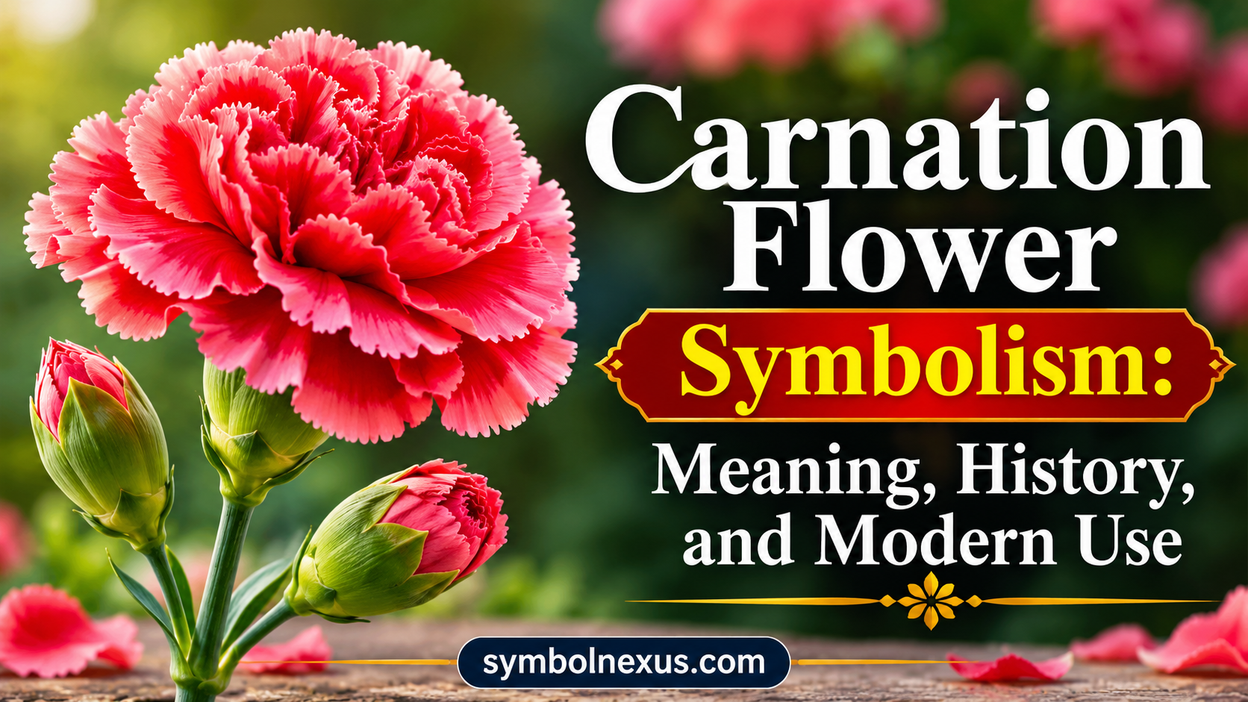
The carnation is one of the most recognizable flowers in the world. With its delicate, ruffled petals, pleasant fragrance, and wide range of colors, it has been used for centuries to express emotions that words sometimes cannot communicate. From romantic love and admiration to motherly affection and remembrance, the carnation carries a rich history of symbolic meanings.
Carnation flower symbolism is closely connected with love, devotion, gratitude, distinction, and emotional connection. However, its meaning can change depending on its color, cultural background, and the occasion on which it is given. Red carnations often represent deep love, pink carnations are associated with affection and a mother’s love, and white carnations commonly symbolize purity, innocence, and remembrance. Yellow carnations, by contrast, have traditionally been associated with disappointment or rejection in some flower-language traditions.
The flower also has important historical and cultural connections. It appeared in ancient Greek and Roman traditions, became a meaningful symbol in Christian art, gained a special place in Mother’s Day celebrations, and even became an emblem of political change in Portugal.
Understanding carnation symbolism reveals why this beautiful flower continues to be used in celebrations, ceremonies, relationships, and artistic expression.
Quick Answer: What Does a Carnation Flower Symbolize?
A carnation generally symbolizes love, admiration, affection, devotion, gratitude, and distinction. Its meaning varies by color: red represents deep love, pink symbolizes motherly affection and gratitude, white represents purity and remembrance, purple suggests unpredictability, and yellow traditionally conveys disappointment or rejection. Carnations are also associated with Mother’s Day, weddings, remembrance ceremonies, and political movements.
TL;DR: Carnation Flower Symbolism
- Love and affection: Red carnations express romantic love, admiration, and emotional devotion.
- Motherly love: Pink carnations are widely associated with a mother’s unconditional affection.
- Purity and innocence: White carnations represent sincerity, pure love, and remembrance.
- Disappointment: Yellow carnations have traditionally symbolized rejection or sadness.
- Unpredictability: Purple carnations are sometimes associated with a changeable or unpredictable personality.
- Remembrance: White carnations are used in memorials and ceremonies honoring loved ones.
- Cultural significance: Carnations are connected with Mother’s Day, Christianity, weddings, and political movements.
- New beginnings: As a January birth flower and first-anniversary flower, the carnation can represent affection and lasting connection.
1. General Meaning of Carnation Flowers
Carnations are commonly associated with love, fascination, admiration, and distinction. Their layered petals and attractive appearance have helped make them popular flowers for expressing affection and appreciation.
Unlike flowers with one dominant symbolic meaning, carnations communicate different emotions depending on their color and context.
For example, a red carnation may express romantic love, while a pink one may communicate gratitude or affection. A white carnation can represent innocence, remembrance, or sincere feelings.
The flower’s long history also contributes to its symbolism. It has appeared in religious artwork, cultural celebrations, political movements, and personal ceremonies.
Some of its most common symbolic meanings include:
- Love and devotion.
- Admiration and respect.
- Motherly affection.
- Gratitude and appreciation.
- Purity and innocence.
- Remembrance and lasting love.
- Beauty and distinction.
- Emotional commitment.
The carnation is especially meaningful because it can communicate both joyful and solemn emotions.
2. Carnation Symbolism by Color
Color plays an important role in carnation flower symbolism. Different shades have developed distinct associations through floral traditions, cultural practices, and the language of flowers.
Understanding these meanings can help you choose the right carnation for a particular occasion.
Red Carnation Symbolism: Love and Admiration
<text>Red carnations traditionally represent deep love, affection, admiration, and devotion.</text>
A dark red carnation can express passionate romantic feelings, while a lighter red shade is often associated with admiration and appreciation.
Red carnations are popular choices for romantic celebrations, anniversaries, and Valentine’s Day. They can also communicate respect and solidarity.
Their meaning extends beyond romantic relationships. In some countries, red carnations have become symbols of political movements and social causes.
Pink Carnation Symbolism: Motherly Love and Gratitude
<text>Pink carnations are strongly associated with a mother’s love, tenderness, gratitude, and affection.</text>
They are particularly popular for Mother’s Day because of their connection with maternal devotion.
A pink carnation can also express appreciation toward someone who has provided kindness, encouragement, or emotional support.
Its soft color makes it a suitable gift for mothers, family members, close friends, and people who have made a meaningful difference in your life.
White Carnation Symbolism: Purity and Remembrance
<text>White carnations symbolize purity, innocence, sincere love, and remembrance.</text>
Their clean appearance makes them popular for weddings, religious ceremonies, memorials, and other meaningful occasions.
White carnations are also associated with Mother’s Day remembrance. In the United States, they have traditionally been used to honor deceased mothers.
Their symbolism can communicate respect, peace, and an enduring emotional connection.
Yellow Carnation Symbolism: Disappointment and Rejection
<text>Yellow carnations have traditionally represented disappointment, rejection, or sadness in the Victorian language of flowers.</text>
Unlike the cheerful appearance of their color, yellow carnations historically carried a less positive message in some floral traditions.
They could be used to communicate dissatisfaction or an unwillingness to accept someone’s romantic interest.
However, flower meanings are not universal. In modern arrangements, yellow flowers may simply represent warmth, friendship, and happiness depending on the giver and cultural setting.
Purple Carnation Symbolism: Unpredictability and Individuality
Purple carnations are traditionally associated with capriciousness, meaning a changeable or unpredictable nature.
Their unusual color can also suggest creativity, individuality, mystery, and originality in modern floral interpretation.
They are suitable for people who appreciate distinctive flowers or have a bold and expressive personality.
Green Carnation Symbolism: Identity and Individual Expression
Green carnations have a particularly interesting cultural history.
In the late nineteenth century, the writer Oscar Wilde encouraged friends to wear green carnations. The flower subsequently became associated with queer identity and coded expression in certain European social circles.
Today, green carnations may also represent renewal, nature, freshness, and individuality.
Striped Carnation Symbolism: Regret and Refusal
Striped carnations have traditionally been associated with refusal, regret, or an inability to return someone’s affection.
In Victorian flower language, they could communicate a gentle rejection or disappointment.
Their unusual appearance also makes them popular in decorative arrangements where color and pattern are important.
Carnation Color Meaning Table
| Carnation colorCommon symbolic meaning | |
|---|---|
| Red | Deep love, admiration, devotion |
| Pink | Motherly love, gratitude, affection |
| White | Purity, innocence, remembrance |
| Yellow | Disappointment, rejection |
| Purple | Capriciousness, individuality |
| Green | Identity, renewal, self-expression |
| Striped | Regret, refusal, unreturned affection |
These meanings reflect established floral traditions, particularly Victorian flower language. Individual cultures and modern personal interpretations may differ.
3. Carnation Symbolism in Ancient Greek and Roman Culture
Carnations have a history stretching back more than two thousand years. They were cultivated and admired in the Mediterranean region, particularly in ancient Greek and Roman societies.
The botanical name Dianthus comes from the Greek words dios, meaning divine or associated with Zeus, and anthos, meaning flower. This is why carnations are sometimes called the “flower of the gods.”
Ancient Greeks used carnations in garlands and ceremonial crowns. Their beauty and fragrance made them suitable for decorations associated with honor, celebration, and religious occasions.
The flower also became connected with glory and distinction.
In Roman culture, flowers were used in decorative arrangements and celebrations, contributing to the carnation’s long association with beauty and ceremonial life.
These historical connections help explain why carnations continue to symbolize admiration, honor, and affection. <Cite refs={[“turn578970search0″,”turn578970search1″,”turn578970search12”]}/>
4. Carnation Symbolism in Christianity
Carnations have an important place in Christian floral symbolism, particularly through their association with the Virgin Mary.
According to a Christian legend, pink carnations first appeared where Mary’s tears fell as she watched Jesus carry the cross. The story connects the flower with maternal love, sorrow, sacrifice, and devotion.
Because of this association, carnations became a meaningful floral symbol in Christian art and religious traditions.
They may represent:
- The love of a mother for her child.
- Compassion and sacrifice.
- Faith and devotion.
- Spiritual affection.
- Remembrance and sorrow.
The carnation’s connection with Mary also helped strengthen its association with Mother’s Day and maternal love.
It is important to understand that the story about the flower growing from Mary’s tears is a religious legend rather than a botanical explanation. <Cite refs={[“turn578970search2″,”turn578970search4″,”turn578970search8”]}/>
5. Carnation Symbolism in Mother’s Day Traditions
One of the most familiar meanings of the carnation is a mother’s unconditional love.
In the United States, the flower became closely connected with Mother’s Day through Anna Jarvis, who helped establish the modern holiday.
In 1907, Jarvis chose the white carnation to honor her deceased mother. She associated its color with purity and its fragrance with memory and affection.
The flower gradually became an important part of Mother’s Day celebrations.
Different colors developed separate associations:
- Pink carnations: Honor living mothers and celebrate their love.
- White carnations: Remember mothers who have passed away.
- Red carnations: Express affection and appreciation.
Carnations are still widely used in Mother’s Day bouquets, church celebrations, and family gatherings.
Their symbolism makes them a meaningful way to celebrate motherhood while remembering loved ones who are no longer present. <Cite refs={[“turn578970search7″,”turn578970search8″,”turn578970search3”]}/>
6. Carnation Symbolism in Love and Relationships
Carnations are popular flowers for expressing romantic feelings and emotional commitment.
Their meanings depend on the relationship and the color selected.
Red carnations are especially associated with deep romantic love. They can communicate passion, admiration, and a desire to maintain a lasting connection.
Pink carnations are often given to express tenderness, appreciation, and affection. White carnations can represent sincere feelings and pure intentions.
The flower is also connected with the first wedding anniversary in modern floral traditions.
This association makes carnations suitable for celebrating a relationship that is beginning a new chapter.
In romantic arrangements, carnations can communicate:
- Loyalty and devotion.
- Appreciation for a partner.
- Lasting affection.
- Romantic admiration.
- Emotional connection.
- Commitment and celebration.
7. Carnation Symbolism in Weddings and Marriage
Carnations are popular in wedding decorations because of their attractive appearance, variety of colors, and ability to complement other flowers.
Their symbolic meanings also make them suitable for celebrating love and commitment.
White carnations may represent purity and sincere intentions, while red and pink varieties communicate affection and devotion.
They can be used in:
- Bridal bouquets.
- Wedding table arrangements.
- Floral decorations.
- Wedding anniversary gifts.
- Ceremony backgrounds.
- Boutonnieres and corsages.
Carnations are also associated with the first wedding anniversary, making them a meaningful choice for couples celebrating their first year of marriage.
Their symbolism in weddings is closely connected with affection, shared commitment, and the hope of lasting love.
8. Carnation Symbolism in the Language of Flowers
During the Victorian era, flowers became a popular way to communicate feelings that people could not always express openly.
This tradition is known as the language of flowers, or floriography.
Different flowers and colors were assigned particular meanings. People used carefully selected bouquets to send romantic messages, express admiration, or communicate rejection.
Carnations became part of this floral vocabulary.
A red carnation could communicate admiration or deep affection. A pink carnation could suggest gratitude or a mother’s love. A yellow carnation could communicate rejection, while striped varieties could express regret.
The meaning could also depend on the arrangement and the combination of flowers.
The Victorian language of flowers was not completely standardized. Different flower dictionaries sometimes assigned different meanings to the same plant.
Nevertheless, it helped establish many of the color associations that continue to influence carnation symbolism today. <Cite refs={[“turn578970search15″,”turn578970search4″,”turn578970search17”]}/>
9. Carnation Symbolism in Art and Literature
Carnations have appeared in paintings, religious artwork, decorative designs, and literary references throughout history.
In Christian paintings, the flower is sometimes associated with the Virgin Mary and maternal devotion.
In Renaissance and European art, flowers often carried additional symbolic meanings. Their colors, placement, and relationship with other objects could help communicate the subject’s emotions or spiritual significance.
Carnations also appear in Shakespearean literature and discussions of early modern flower symbolism.
Their meanings can include:
- Romantic love.
- Beauty and admiration.
- Maternal affection.
- Religious devotion.
- Innocence and remembrance.
- Emotional rejection.
The carnation’s role in artistic expression demonstrates how a flower can communicate ideas beyond its physical appearance.
10. Green Carnation Symbolism and Oscar Wilde
The green carnation has a particularly distinctive place in cultural history.
During the 1890s, Oscar Wilde and members of his social circle became associated with wearing green carnations.
The flower was used as a form of coded expression in certain European social circles and later became connected with queer identity.
Robert Hichens’s satirical novel The Green Carnation, published in 1894, drew attention to the flower’s association with Wilde’s circle.
Unlike the traditional meanings of red, pink, and white carnations, the green variety developed a cultural association with identity, individuality, and social expression.
Today, the green carnation remains an interesting example of how flowers can acquire meanings through literature, fashion, and historical events. <Cite refs={[“turn578970search1″,”turn578970search4”]}/>
11. The Red Carnation Revolution: Political Symbolism
The carnation is not only a symbol of personal emotions. It has also played an important role in political history.
In Portugal, red carnations became associated with the 1974 revolution that ended the Estado Novo authoritarian regime.
The event became known as the Carnation Revolution.
During the revolution, red carnations were placed in the barrels of soldiers’ rifles and military vehicles. The flowers became enduring symbols of political change and the transition toward democracy.
The red carnation’s meaning therefore expanded beyond romantic love and admiration.
It also became associated with:
- Freedom and political change.
- Peaceful resistance.
- Solidarity.
- Hope for a new beginning.
- Democratic transformation.
Red carnations have also been associated with socialist and labor movements in different countries, including their use during International Workers’ Day celebrations.
These historical associations demonstrate how a flower can become a recognizable symbol of collective identity and social change. <Cite refs={[“turn578970search1″,”turn578970search6″,”turn578970search12”]}/>
12. Carnation Symbolism in Different Cultures
Carnations have different meanings across cultural and national traditions.
Their use in religious celebrations, weddings, political events, and memorials has helped create a wide range of symbolic associations.
| Cultural context | Carnation symbolism |
|---|---|
| Ancient Greece | Divine beauty, honor, and ceremonial celebration |
| Christian traditions | Maternal love, devotion, and remembrance |
| United States | Mother’s Day, affection, and remembrance |
| Portugal | Political change, freedom, and democracy |
| Labor movements | Solidarity and workers’ rights |
| Victorian Europe | Romantic messages and emotional communication |
| Slovenia and Spain | National floral identity |
Carnations are also national flowers of Monaco, Slovenia, and Spain, demonstrating their cultural importance beyond individual celebrations. <Cite refs={[“turn578970search1″,”turn578970search12”]}/>
13. Carnation Symbolism as a January Birth Flower
The carnation is one of the traditional birth flowers for January, along with the snowdrop.
As a January birth flower, it is associated with love, admiration, affection, and remembrance.
Its symbolism can make it a meaningful birthday gift for someone born during the first month of the year.
The carnation’s variety of colors also allows people to select a flower that reflects their relationship with the recipient.
For example:
- Red carnations express love and admiration.
- Pink carnations communicate affection and gratitude.
- White carnations suggest sincerity and remembrance.
- Purple carnations offer a distinctive and unusual message.
The flower’s association with January gives it an additional connection with new beginnings and the start of another year. <Cite refs={[“turn578970search3″,”turn578970search1”]}/>
14. Carnation Symbolism in Tattoos
Carnation tattoos can represent love, remembrance, identity, and personal devotion.
Their detailed petals make them attractive designs, while their different colors provide opportunities to communicate individual meanings.
A red carnation tattoo may represent romantic love or a meaningful relationship. A pink carnation can honor a mother or express appreciation for someone important.
A white carnation may symbolize remembrance, innocence, or the memory of a loved one.
Some people also choose carnations to represent:
- Family connections.
- Personal milestones.
- Emotional strength.
- Religious faith.
- Individual identity.
- A meaningful historical event.
A green carnation tattoo may also carry associations with individuality and queer history.
The meaning of a carnation tattoo is ultimately personal. Its color, placement, accompanying imagery, and the story behind the design can all influence its significance.
15. Carnation Symbolism in Funerals and Remembrance
Carnations are frequently used in funeral arrangements and memorial ceremonies because of their associations with love, remembrance, and lasting affection.
White carnations are particularly common in memorial settings. They can communicate respect, purity, and the desire to honor someone who has passed away.
Pink carnations may represent appreciation and the enduring affection of family members.
Red carnations can express deep love and emotional devotion toward the deceased.
Their symbolism makes them suitable for:
- Funeral wreaths.
- Memorial bouquets.
- Cemetery arrangements.
- Remembrance ceremonies.
- Tributes to family members.
- Anniversary memorials.
A carnation in a memorial arrangement can represent the idea that love and memories continue even after someone is gone.
16. Carnation Symbolism Compared with Other Flowers
Carnations share some meanings with other popular flowers, but their historical and cultural associations give them a distinctive identity.
| Flower | Common symbolic meanings |
|---|---|
| Carnation | Love, admiration, motherly affection, remembrance |
| Rose | Romantic love, passion, beauty |
| Lily | Purity, renewal, remembrance |
| Tulip | Love, elegance, and new beginnings |
| Daisy | Innocence, simplicity, and happiness |
| Chrysanthemum | Loyalty, longevity, and remembrance |
| Sunflower | Positivity, warmth, and admiration |
The carnation stands out because its symbolism changes significantly with color and includes connections with Mother’s Day, political movements, and religious traditions.
Frequently Asked Questions
1. What does a carnation flower symbolize?
A carnation generally symbolizes love, admiration, affection, gratitude, devotion, and distinction. Its exact meaning depends on its color and cultural context. Red carnations represent deep love, pink carnations symbolize motherly affection, and white carnations are associated with purity and remembrance.
2. What does a pink carnation symbolize?
Pink carnations symbolize motherly love, tenderness, gratitude, and affection. They are especially popular for Mother’s Day and are often given to mothers or people who provide emotional support and kindness.
3. What does a red carnation mean?
Red carnations represent deep love, admiration, devotion, and passion. They are commonly used in romantic arrangements and can also symbolize solidarity and political movements.
4. What does a white carnation symbolize?
White carnations symbolize purity, innocence, sincere love, and remembrance. They are often used in weddings, religious ceremonies, funerals, and Mother’s Day tributes honoring deceased mothers.
5. Why are carnations associated with Mother’s Day?
The association became popular through Anna Jarvis, who selected white carnations to honor her deceased mother in 1907. The flower became a lasting symbol of maternal love and remembrance.
6. What does a yellow carnation symbolize?
In traditional Victorian flower language, yellow carnations symbolize disappointment, rejection, or sadness. However, modern interpretations can vary, and yellow flowers may also be given to communicate friendship or happiness.
7. What does a purple carnation symbolize?
Purple carnations are traditionally associated with capriciousness or an unpredictable nature. In modern floral interpretation, they can also represent creativity, individuality, mystery, and originality.
8. What does a carnation tattoo symbolize?
A carnation tattoo can represent love, family, remembrance, devotion, or personal identity. Its meaning often depends on the flower’s color and the personal experience connected with the design.
Conclusion
Carnation flower symbolism reflects a long history of love, admiration, devotion, remembrance, and cultural expression. From ancient Greek ceremonies to modern Mother’s Day celebrations, the carnation has remained a meaningful flower across generations.
Its colors communicate different emotions. Red carnations express deep love, pink varieties represent motherly affection, white flowers symbolize purity and remembrance, and yellow carnations have traditionally conveyed disappointment or rejection.
Beyond personal relationships, carnations have also played important roles in Christian traditions, Victorian flower language, weddings, memorials, and political movements such as Portugal’s Carnation Revolution.
Ultimately, the carnation is more than a decorative flower. It is a symbol that can express affection, honor memories, celebrate identity, and communicate meaningful emotions through its color and history.