
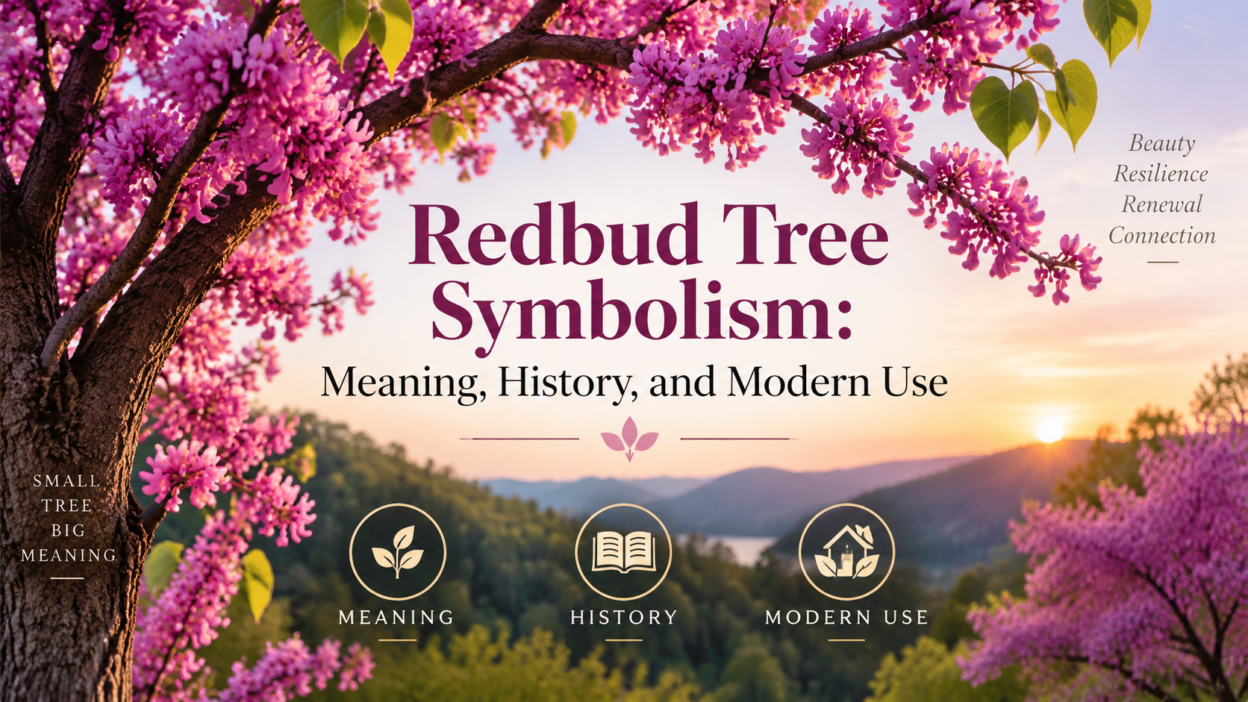
The redbud tree symbolism is commonly connected with renewal, hope, beauty, and new beginnings in American culture. With its bright spring blossoms appearing before many other trees bloom, the redbud has become a natural symbol of fresh starts, resilience, and the changing seasons.
Redbud trees are familiar sights across many parts of the United States, especially in gardens, parks, forests, and residential landscapes. Their early spring flowers create a noticeable display after winter, which is one reason many people associate them with optimism and transformation.
Beyond their appearance, redbud trees have cultural and emotional meanings that developed through Native American traditions, gardening practices, folklore, and modern appreciation of nature. Today, people view the redbud as a symbol of growth, family connections, peaceful landscapes, and personal renewal.
Quick Answer
Redbud tree symbolism commonly represents renewal, hope, and new beginnings in modern American culture, especially because the tree blooms early in spring after the cold months. Historically, it has also been associated with beauty, resilience, and connections between people and nature.
TL;DR
- Redbud trees symbolize renewal and fresh beginnings.
- Spring blossoms represent hope after difficult seasons.
- Native traditions connected redbuds with practical and cultural uses.
- Americans often plant redbuds for beauty and remembrance.
- Pink flowers create associations with love and emotional warmth.
- Modern designs use redbuds as symbols of natural beauty.
What Makes the Redbud Tree Symbolically Important?
The redbud tree is a small flowering tree known for its heart-shaped leaves and clusters of pink, purple, or reddish flowers. Unlike many flowering trees that bloom after their leaves appear, redbuds often produce flowers directly on their branches before the green foliage develops.
This unusual blooming pattern makes the tree visually striking. During early spring, bare branches suddenly become covered with colorful flowers, creating a strong connection between the tree and ideas of awakening, change, and recovery.
In the United States, the eastern redbud is the most recognized variety. It grows naturally in many eastern and central regions, where people encounter it along woodland edges, roadsides, parks, and home gardens.
The tree’s ability to thrive in different environments has also contributed to its symbolic association with adaptability and endurance.
Common Meanings of Redbud Tree Symbolism in the United States
The meaning of the redbud tree is mainly shaped by its natural characteristics. Its seasonal behavior, appearance, and role in landscapes influence how people interpret it.
| Context | Meaning in the USA | Common Associations | Notes |
|---|---|---|---|
| Spring blooming | Renewal and fresh starts | New beginnings, optimism | Flowers appear after winter |
| Home gardens | Beauty and connection | Family, comfort, belonging | Popular ornamental tree |
| Memorial planting | Remembrance and love | Honor, emotional connection | Used in meaningful landscapes |
| Nature symbolism | Resilience and adaptation | Growth, survival | Thrives in many regions |
| Art and design | Natural elegance | Peace, creativity | Inspired by flowers and leaves |
The Physical Features Behind Its Symbolic Meaning
Many symbols come from what people observe in nature, and the redbud tree is a strong example of this connection.
The tree’s heart-shaped leaves often create associations with love, kindness, and emotional bonds. While leaf shapes do not have one universal meaning, many cultures naturally connect heart forms with affection and relationships.
Its flowers appear in early spring when landscapes are recovering from winter. This timing has helped people connect the redbud with:
- returning life
- emotional renewal
- positive change
- patience after hardship
The contrast between bare branches and colorful flowers also creates a visual reminder that growth can appear after quiet or challenging periods.
Ancient Roots and Early Cultural Connections
The redbud tree has long been part of North American landscapes. Indigenous peoples recognized the tree for practical purposes, including using different parts of the plant for food, tools, and traditional practices.
Some Native communities used redbud flowers and seeds as food sources, while the wood had practical uses because of its strength and availability. These relationships with the tree were based on observation, usefulness, and respect for the natural environment.
Different Indigenous cultures have their own traditions and interpretations connected with plants. Therefore, there is no single universal Native American meaning for the redbud tree. Its significance depended on the specific community, location, and relationship with the natural world.
Over time, the redbud moved from being mainly a useful native plant to becoming an appreciated symbol of seasonal beauty.
Redbud Tree Meaning in American Culture
In modern United States culture, redbuds are often connected with emotional experiences rather than formal symbolism.
Many Americans see the tree as a sign of spring arriving after winter. Its flowers often appear when people begin spending more time outdoors, preparing gardens, attending outdoor events, and enjoying warmer weather.
Redbuds commonly appear in:
- residential landscaping
- public parks
- botanical gardens
- nature photography
- spring festivals
- outdoor ceremonies
For homeowners, planting a redbud can represent creating a welcoming space filled with natural beauty. For communities, groups of flowering trees can represent shared appreciation for local landscapes.
The tree’s smaller size also makes it approachable compared with larger symbolic trees such as oaks or redwoods. It often represents personal growth and everyday moments rather than national or monumental ideas.
The Symbolism of Redbud Flowers
The flowers are one of the main reasons people connect the redbud with positive meanings.
Redbud blossoms usually appear in shades of pink, purple, or reddish tones. These colors naturally influence how people perceive the tree.
Pink flowers are often associated with:
- affection
- gentleness
- kindness
- emotional warmth
Purple shades may suggest:
- creativity
- imagination
- individuality
However, these meanings are cultural associations rather than fixed rules. A person’s experience with a redbud tree may influence what it represents to them.
For many people, the flowers simply represent the beauty of a new season and the joy of seeing nature return.
Emotional and Psychological Meaning of the Redbud Tree
Trees often influence human emotions because they represent stability, growth, and connection with the environment. The redbud’s seasonal cycle creates a specific emotional message.
When people see a redbud bloom after months of cold weather, they may associate it with:
Hope After Change
The tree demonstrates that quiet periods can lead to visible growth. This makes it a natural symbol for moving forward after difficult experiences.
Personal Growth
Because the tree changes dramatically throughout the year, it can represent personal development and life transitions.
Connection With Nature
A redbud planted near a home can create a feeling of belonging and connection to the surrounding landscape.
These interpretations are personal rather than universal, but they explain why many people feel attached to flowering trees.
Redbud Tree Symbolism in Gardens and Home Design
Redbuds are popular in American landscaping because they provide seasonal beauty without requiring the space of larger trees.
In garden design, the tree may represent:
- welcoming spaces
- peaceful environments
- natural balance
- appreciation for local plants
Landscape designers often use redbuds as focal points because their flowers create visual interest during early spring.
A homeowner may plant a redbud to mark:
- moving into a new home
- creating a family garden
- celebrating a personal milestone
- remembering someone important
The meaning usually comes from the reason behind planting the tree rather than the tree alone.
Redbud Tree Symbolism in Memorials and Remembrance
Trees are often planted as living memorials because they continue growing over time. Redbuds are sometimes chosen for this purpose because their yearly blossoms create a recurring reminder of life and renewal.
A redbud planted in memory of someone may symbolize:
- lasting connection
- cherished memories
- continuing growth
- hope for the future
Unlike objects that remain unchanged, trees develop with each season. This natural cycle can make them meaningful symbols of ongoing remembrance.
Redbud Tree in Folklore and Traditional Beliefs
The redbud tree appears in various forms of local folklore and regional storytelling, especially in areas where the tree grows naturally. Much of its symbolism comes from people observing its seasonal cycle rather than from one specific legend shared across all cultures.
In Appalachian regions and other parts of the eastern United States, flowering trees often became part of seasonal traditions because their blooms marked the arrival of warmer weather. The redbud’s early flowers served as a natural sign that winter was ending and outdoor life was returning.
Some traditional stories connect flowering trees with themes of:
- renewal after hardship
- nature’s ability to recover
- beauty appearing unexpectedly
- the importance of seasonal change
However, many modern claims about redbud folklore are based on general plant symbolism rather than documented traditions. The tree’s strongest cultural meaning comes from its relationship with the landscape and the people who care for it.
Cross-Cultural Meanings of the Redbud Tree
The redbud tree is native to North America, so its strongest cultural connections come from regions where it naturally grows. However, flowering trees in many cultures share similar symbolic themes.
Across different societies, spring-blooming trees often represent:
Renewal and Rebirth
Many cultures view spring flowers as signs that life returns after a period of rest. This connection appears in celebrations of seasonal change around the world.
Beauty and Impermanence
Flowering trees often remind people that beauty can be temporary. The short blooming period encourages appreciation of present moments.
Connection Between Humans and Nature
Trees frequently represent relationships between generations because they grow, change, and remain part of a place for many years.
The redbud does not carry one global meaning like some well-known symbols. Instead, its symbolism develops from local experiences, personal memories, and cultural relationships with nature.
Redbud Tree Symbolism in Tattoos and Personal Expression
Tree tattoos are popular because they allow people to represent ideas connected with growth, identity, and life experiences. A redbud tree tattoo often reflects personal meanings rather than a fixed traditional message.
Common interpretations include:
New Beginnings
Someone may choose a redbud tattoo after a major life change, such as starting a new chapter, recovering from a difficult period, or reaching an important goal.
Family and Roots
Because trees grow from roots while reaching outward, they often represent family connections, personal history, and belonging.
Love and Emotional Memories
The heart-shaped leaves and pink blossoms can make the redbud a fitting symbol for affection, relationships, or remembrance.
Appreciation for Nature
Some people choose redbud designs simply because they enjoy the tree’s appearance and connection to the outdoors.
Tattoo symbolism depends heavily on the individual. A redbud design may represent a personal story rather than a widely recognized meaning.
Redbud Tree Symbolism in Art, Photography, and Modern Media
The redbud tree appears frequently in nature photography, garden artwork, and regional creative projects. Its popularity comes from its distinctive spring appearance.
Artists often use redbuds to communicate:
- peaceful landscapes
- seasonal transitions
- natural beauty
- emotional warmth
Photographers especially value redbuds because their flowers create strong visual contrast against early spring backgrounds.
In modern digital culture, images of flowering trees are often shared during spring as symbols of:
- fresh starts
- positive moods
- outdoor enjoyment
- appreciation for simple beauty
Unlike some symbols that are heavily connected with mythology or religion, the redbud usually communicates everyday emotions and experiences.
Religious and Spiritual Interpretations of the Redbud Tree
The redbud tree does not have one official religious meaning across major faith traditions. However, trees in general hold important symbolic roles in many religions and spiritual traditions.
Trees are often connected with ideas such as:
- life
- creation
- growth
- wisdom
- connection between earth and sky
Some individuals may view a redbud tree through these broader ideas because of its seasonal renewal and living nature.
Personal faith communities may create their own interpretations, but the redbud itself is not universally recognized as a specific religious symbol.
Redbud Tree Symbolism in Weddings and Celebrations
Flowering trees often appear in celebrations because they create attractive natural settings. Redbuds can be used in spring weddings, outdoor gatherings, and decorative arrangements.
Their common associations with celebrations include:
- new chapters
- affection
- happiness
- growth together
A redbud tree planted after a wedding may represent a relationship continuing to grow over time.
However, the meaning usually comes from the couple’s personal connection with the tree rather than from a traditional wedding rule.
Common Misunderstandings About Redbud Tree Symbolism
Because plant symbolism is widely shared online, some meanings become exaggerated or presented as universal when they are not.
Several misunderstandings include:
The Redbud Has One Fixed Meaning Everywhere
The redbud does not have a single official symbolism. Different people and communities may interpret it differently.
Every Traditional Claim Has Historical Evidence
Some online explanations combine general tree symbolism with the redbud’s characteristics. These ideas may be meaningful but are not always connected to documented traditions.
The Tree Represents Only Positive Experiences
Although redbuds are mostly linked with hope and renewal, people may also associate them with personal memories, including loss or change.
Understanding symbolism requires separating cultural history from individual interpretation.
How Redbud Tree Meaning Has Changed Over Time
The meaning of the redbud tree has evolved as people’s relationships with nature have changed.
Originally, many communities viewed the tree mainly as a useful native plant. Its value came from its role in local environments and practical uses.
Later, as gardening and landscape design became more common, people began appreciating redbuds for their appearance. The tree became associated with beauty, seasonal celebration, and home environments.
Today, the redbud represents a combination of:
- natural beauty
- environmental appreciation
- personal memories
- seasonal renewal
Its symbolism continues to develop because people create new connections with the tree through their own experiences.
Redbud Tree Symbolism Compared With Other Symbolic Trees
Different trees carry different cultural associations. The redbud’s meaning becomes clearer when compared with other well-known trees.
| Tree | Common Symbolic Meaning | Main Reason |
|---|---|---|
| Redbud | Renewal and new beginnings | Early spring blossoms |
| Oak | Strength and endurance | Long lifespan and sturdy growth |
| Willow | Reflection and flexibility | Drooping branches and water associations |
| Cherry blossom | Beauty and temporary moments | Short flowering season |
| Evergreen | Continuity and resilience | Remains green year-round |
The redbud stands out because its symbolism focuses less on size or age and more on seasonal transformation.
Modern Ways People Use Redbud Symbolism Today
In contemporary American life, redbud symbolism appears in many forms.
People may use redbud imagery in:
- home decorations
- garden planning
- artwork
- jewelry designs
- tattoos
- photography
- seasonal crafts
The symbol works well because it combines visual beauty with ideas that many people relate to, such as growth, change, and appreciation of nature.
A person does not need to follow a specific tradition to connect with the redbud. Its meaning often comes from personal experiences and emotional associations.
Frequently Asked Questions About Redbud Tree Symbolism
What does a redbud tree symbolize?
A redbud tree commonly symbolizes renewal, hope, and new beginnings because it blooms early in spring. Many people also connect it with beauty, growth, and emotional connection with nature.
What does a redbud tree tattoo mean?
A redbud tree tattoo may represent personal growth, life changes, family connections, or appreciation for nature. The meaning depends on the person’s own story and reason for choosing the design.
Is the redbud tree a religious symbol?
The redbud tree is not a universal religious symbol. However, some people connect it with broader spiritual ideas related to life, growth, creation, and renewal.
Why are redbud trees associated with spring?
Redbud trees bloom early in spring before many other trees develop leaves. This seasonal timing makes them a natural symbol of returning life and fresh beginnings.
Do Native American cultures have a specific redbud tree meaning?
Different Indigenous communities have their own relationships with native plants, including redbuds. There is no single meaning shared by all Native American cultures.
Can a redbud tree symbolize remembrance?
Yes, some people plant redbud trees as living memorials because the tree returns with flowers every year. Its seasonal cycle can represent lasting memories and continued connection.
Are redbud trees considered lucky symbols?
Some people may view redbuds positively because they represent growth and renewal, but there is no widely accepted tradition that makes the redbud universally a luck symbol.
Conclusion
The redbud tree represents renewal, hope, beauty, and the natural process of change. Its early spring flowers explain why many people connect it with fresh starts and the return of life after winter.
From native landscapes to modern gardens, art, and personal expression, the tree has gained meaning through the ways people experience and appreciate it. While traditions may differ, redbud tree symbolism remains closely tied to growth, emotional connection, and the beauty of seasonal transformation.
Whether planted in a yard, photographed in bloom, or chosen as a personal symbol, the redbud reminds people that change can create new opportunities for growth.


