
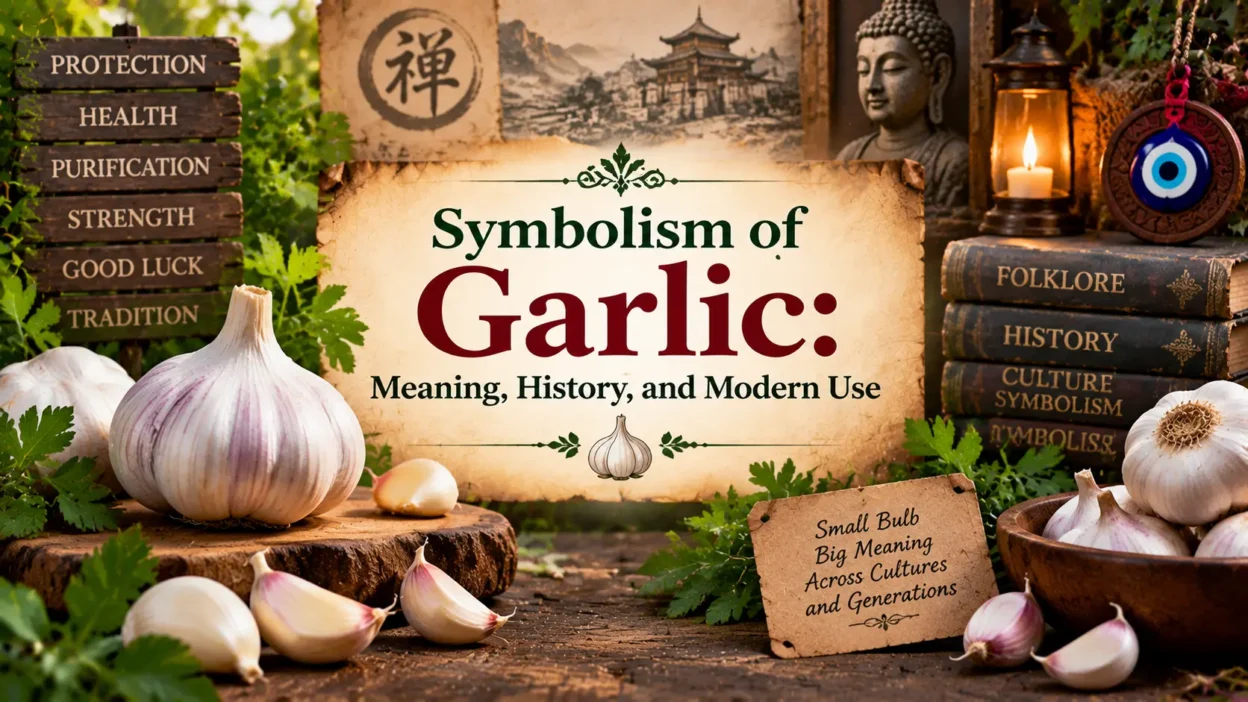
Garlic is more than a common kitchen ingredient. Across cultures, it has represented protection, strength, health, courage, and connection to tradition. The symbolism of garlic comes from its long relationship with human survival, healing practices, folklore, and everyday rituals.
From ancient civilizations that valued garlic as a source of physical strength to modern Americans who associate it with cooking, family traditions, and protective folklore, this plant carries meanings that have changed over time. Its strong smell, layered bulbs, and ability to preserve food helped shape many of the ideas connected with it.
Today, garlic appears in food culture, seasonal traditions, home decor, folklore discussions, and even personal designs such as tattoos. Understanding its symbolism reveals how a simple plant became a sign of resilience, protection, and cultural identity.
Quick Answer
Garlic commonly symbolizes protection, strength, and health in modern American culture, especially through food traditions, folklore, and ideas about natural wellness. Historically, it has also been associated with courage, healing, spiritual protection, and survival across many cultures.
TL;DR
- Garlic symbolizes protection, health, and resilience.
- Ancient societies valued garlic for strength and healing.
- Americans connect garlic with food, family, and tradition.
- Folklore often links garlic with protection from harm.
- Garlic symbolism changes across cultures and beliefs.
- Modern uses include tattoos, decor, and celebrations.
What Garlic Represents as a Symbol
Garlic is a bulb-forming plant from the allium family, related to onions, leeks, and shallots. Its white or purple-tinted cloves grow underground inside a protective outer layer. This hidden structure influenced some symbolic interpretations because garlic appears simple outside but contains many individual sections within.
In symbolic language, garlic often represents:
- Protection because many traditions viewed it as a barrier against danger.
- Strength because it was believed to support physical endurance.
- Health because of its long connection with traditional remedies.
- Unity because many cloves form one complete bulb.
- Resilience because the plant grows underground and survives difficult conditions.
Unlike symbols created mainly through art or mythology, garlic gained meaning through daily human experience. People cooked with it, stored it, used it in healing practices, and included it in cultural traditions. Its symbolism developed from practical importance before becoming connected to beliefs and stories.
Why Garlic Became Connected With Protection
One of the strongest meanings associated with garlic is protection. This idea developed because many communities believed garlic had qualities that could defend the body and home.
Before modern medicine, people often used plants as part of traditional health practices. Garlic’s strong flavor, noticeable smell, and long storage ability made it stand out among common foods. Over generations, people connected its physical qualities with ideas of defense and safety.
In European folklore, garlic became especially linked with protection against supernatural threats. Stories about garlic hanging near doors or windows became popular because people believed certain plants could create protective boundaries around homes.
In the United States, these ideas are usually viewed as folklore rather than everyday belief. However, garlic still appears in discussions about traditional remedies, cultural customs, and seasonal storytelling, especially around Halloween themes involving vampires and protective charms.
Ancient Roots and Early Symbolism of Garlic
Garlic has been cultivated for thousands of years, and its symbolic meaning developed in several ancient societies.
Ancient Egyptians valued garlic for its practical and ceremonial importance. Historical evidence shows that garlic was included in workers’ diets, especially among laborers involved in physically demanding tasks. Because of this association with endurance, garlic became connected with strength and vitality.
Ancient Greeks and Romans also recognized garlic’s importance. Soldiers and athletes used it as part of their diets because they believed it supported energy and stamina. Over time, garlic became associated with courage and physical ability.
In many early societies, plants that supported survival often gained symbolic meanings. Garlic was not only something people ate; it represented the human desire for protection, health, and endurance.
Garlic Symbolism in the United States
In modern American culture, garlic is understood mostly through food, family traditions, and cultural heritage. While some older folklore associations remain familiar, most Americans encounter garlic through cooking rather than spiritual practices.
Garlic commonly represents:
| Context | Meaning in the USA | Common Associations | Notes |
|---|---|---|---|
| Cooking traditions | Family and connection | Recipes, holidays, shared meals | Garlic is a major ingredient in many cuisines |
| Folklore | Protection | Vampires, charms, old stories | Often treated as entertainment today |
| Wellness culture | Health | Natural remedies, nutrition | Linked with traditional beliefs |
| Home symbolism | Comfort and warmth | Kitchens, gardens, decoration | Represents everyday living |
| Personal identity | Heritage and taste | Cultural recipes and memories | Connects people with family history |
American interpretations of garlic often focus on relationships and experiences. A garlic-heavy family recipe may represent heritage, while a garden full of garlic plants may symbolize self-sufficiency and connection to nature.
The Role of Garlic in Folklore and Traditional Beliefs
Garlic appears in many folklore traditions because people historically searched for natural objects that could represent safety and defense.
The most famous Western association is the belief that garlic could protect against vampires. This idea became popular through European folklore and later spread through books, movies, and television. Today, garlic and vampires are strongly connected in popular culture, especially during Halloween.
However, garlic folklore is broader than vampire stories. Different communities used garlic in protective customs because they believed strong-smelling plants could discourage negative influences or unwanted forces.
Modern Americans usually recognize these stories as cultural traditions rather than factual practices. Still, they remain important because folklore shows how ordinary objects become symbols through shared imagination.
Garlic in Religion and Spiritual Traditions
Garlic has appeared in religious and spiritual traditions around the world, although its meaning differs greatly between communities. In some traditions, it represents protection and purification, while in others it is viewed as a food with strong physical qualities rather than a sacred object.
In parts of European folk Christianity, garlic became connected with protection customs. People sometimes placed garlic near entrances or carried it as a protective item because they believed certain natural objects could guard against harm. These practices were generally part of local folklore rather than official religious teachings.
In some Hindu traditions, garlic has a more complex interpretation. Certain communities associate garlic and other strong-flavored foods with physical stimulation and avoid them during specific spiritual practices. Other people simply view garlic as an important ingredient in everyday cooking and traditional medicine.
In Buddhism and other contemplative traditions, garlic may be discussed because of dietary practices rather than symbolism. Some groups avoid certain foods during periods of meditation because they believe food choices can influence the body and mind.
These examples show that garlic does not have one universal spiritual meaning. Its interpretation depends on the beliefs, customs, and values of each community.
Garlic as a Symbol of Health and Healing
One of garlic’s strongest symbolic connections comes from its long relationship with health. Before modern science explained nutrition and medicine in detail, many societies relied on plants as part of traditional healing systems.
Garlic became associated with:
- physical strength
- disease prevention
- endurance
- cleansing
- natural wellness
Ancient people noticed that garlic had unusual qualities. Its strong aroma, sharp taste, and ability to last for long periods made it different from many other plants. These characteristics helped create the idea that garlic was a special food with protective qualities.
In the United States today, garlic is often connected with healthy cooking and natural wellness movements. Many people include garlic in meals because of its flavor and because it is commonly viewed as part of a balanced diet.
However, modern interpretations separate cultural symbolism from medical claims. Garlic may symbolize health and vitality, but symbolic meaning does not replace professional medical advice.
The Emotional Meaning Behind Garlic Symbolism
Symbols often develop because people connect physical objects with personal experiences. Garlic’s emotional meanings usually come from memories, family traditions, and feelings of comfort.
For many Americans, garlic represents:
- home-cooked meals
- family gatherings
- cultural heritage
- warmth and hospitality
- personal memories
The smell of garlic cooking can remind people of childhood kitchens, holiday dinners, or recipes passed between generations. Because food carries emotional memories, garlic often becomes a symbol of belonging.
Its many cloves inside one bulb also create another symbolic idea: unity. Different pieces come together to create one whole object, which can represent family connections, teamwork, or community bonds.
This meaning is especially common among people who connect food with identity. A traditional garlic-based recipe may represent a family’s history and the continuation of cultural practices.
Garlic Symbolism in Tattoos and Personal Expression
Garlic tattoos are less common than designs featuring flowers, animals, or traditional symbols, but they carry unique meanings for people who choose them.
A garlic tattoo may represent:
- protection from negativity
- connection to family traditions
- love of cooking
- cultural heritage
- humor and individuality
- appreciation for simple things
Some people choose garlic tattoos because of the plant’s connection with folklore, especially vampire stories. Others select it because garlic reminds them of home, family meals, or a personal experience.
The design style also affects the meaning. A realistic garlic tattoo may highlight nature and food symbolism, while a cartoon-style garlic design may represent humor, creativity, or a playful personality.
Unlike symbols with fixed meanings, tattoos usually reflect the wearer’s personal story. The same garlic image can represent protection for one person and family memories for another.
Garlic in Home Decor and Modern Design
Garlic has a place in decorative traditions because of its connection with kitchens, gardens, and rural lifestyles.
In some homes, garlic decorations appear in:
- farmhouse-style kitchens
- seasonal displays
- harvest decorations
- cooking-themed artwork
- garden designs
Garlic braids, which involve tying multiple garlic bulbs together, are especially recognizable in traditional food cultures. Their appearance can symbolize preparation, abundance, and self-sufficiency.
In American interior design, garlic imagery often creates a feeling of warmth and simplicity. It connects spaces with ideas of homemade food, comfort, and traditional living.
Modern designers may use garlic illustrations on kitchen towels, signs, paintings, and packaging because the symbol quickly communicates natural ingredients and cooking traditions.
Cultural Differences in Garlic Symbolism
Garlic has different meanings depending on the culture and historical setting.
| Culture or Tradition | Symbolic Meaning | Historical Connection |
|---|---|---|
| Ancient Egypt | Strength and endurance | Used as an important food source |
| Ancient Rome | Courage and physical ability | Connected with soldiers and athletes |
| European folklore | Protection | Associated with protective customs |
| Mediterranean cultures | Family and tradition | Central ingredient in regional cooking |
| Modern United States | Food, heritage, and wellness | Connected with recipes and lifestyle |
In Mediterranean cultures, garlic often represents tradition because it plays an important role in regional cuisines. It appears in meals that are connected with family gatherings and cultural identity.
In parts of Eastern Europe, garlic has remained connected with seasonal customs and protective folklore.
In the United States, these meanings blend together. Garlic can represent immigrant traditions, family recipes, gardening, healthy cooking, and popular culture.
Garlic in Holidays, Pop Culture, and Media
Garlic’s most recognizable appearance in American popular culture comes from vampire stories. Movies, television shows, books, and Halloween decorations frequently use garlic as a symbol of protection against vampires.
This connection has become so common that many people recognize garlic as a Halloween-related image even if they do not know its older folklore background.
Beyond vampire stories, garlic appears in cooking shows, advertisements, food festivals, and cultural celebrations. It represents flavor, creativity, and shared experiences.
Garlic festivals in different parts of the United States celebrate the plant through food, entertainment, and community events. These gatherings show how a simple ingredient can become part of local identity.
Common Misunderstandings About Garlic Symbolism
Because garlic has many folklore connections, some meanings are exaggerated or misunderstood.
One common misunderstanding is that all cultures view garlic as a magical protective object. In reality, many societies simply valued garlic as food, medicine, or an important agricultural product.
Another misunderstanding is that garlic symbolism is always connected with vampires. Vampire folklore is only one part of garlic’s larger history.
Some people also confuse traditional health beliefs with scientific evidence. While garlic has an important place in cultural wellness traditions, symbolic associations are different from medical conclusions.
Understanding these differences helps separate historical customs from modern interpretations.
How Garlic Symbolism Has Changed Over Time
Garlic’s meaning has evolved as human societies changed. In ancient communities, its symbolism often focused on survival, strength, and health. People valued it because it supported daily life.
During later periods, folklore added new meanings, especially ideas about protection from invisible threats. Stories transformed garlic from a useful plant into a cultural symbol.
Today, garlic represents a mixture of old and new meanings. Americans may see it as a cooking ingredient, a sign of heritage, a Halloween image, or a symbol of natural living.
Its symbolism remains flexible because people continue to attach personal experiences to it.
Frequently Asked Questions About Garlic Symbolism
What does garlic symbolize spiritually?
Garlic can symbolize protection, purification, and strength in some spiritual and folk traditions. However, its meaning changes depending on the belief system and cultural background.
What does a garlic tattoo symbolize?
A garlic tattoo may represent protection, family traditions, cooking, humor, or personal identity. The meaning usually depends on the reason someone chooses the design.
Why is garlic associated with vampires?
Garlic became linked with vampires through European folklore and later popular books and movies. Today, this connection is mainly recognized as part of Halloween and entertainment culture.
Does garlic have a positive or negative meaning?
Garlic is usually associated with positive ideas such as health, protection, and strength. Some traditions view it differently because of dietary or spiritual practices.
What does garlic symbolize in American culture?
In the United States, garlic commonly represents food traditions, family memories, cultural heritage, and wellness. Its folklore meanings are usually connected with storytelling rather than everyday beliefs.
Why is garlic considered a protective symbol?
Garlic became a protective symbol because many cultures valued it for health benefits and connected strong-smelling plants with defense against harm. Folklore later expanded this idea into stories and customs.
Conclusion
Garlic represents much more than a flavoring ingredient. Its meanings developed from practical experiences with food, health, survival, and cultural traditions. Over time, it became connected with protection, strength, family, and identity.
The symbolism of garlic reflects how ordinary objects can gain meaning through human experiences. In modern American culture, garlic continues to appear in kitchens, folklore, personal designs, and traditions that connect people with comfort and heritage.
Whether viewed as a symbol of protection, a reminder of family meals, or a connection to cultural history, garlic remains an example of how everyday items can carry lasting human meaning.


