
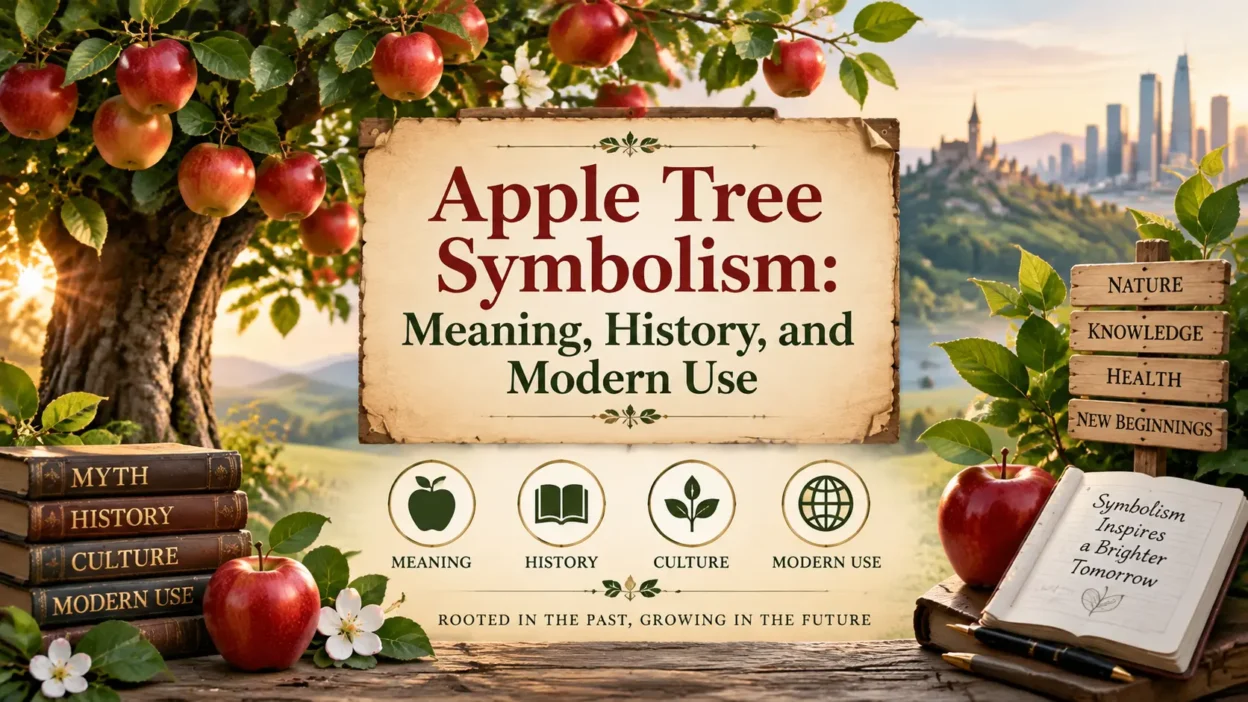
An apple tree is more than a fruit-bearing plant; it represents ideas connected to growth, knowledge, family, abundance, and renewal. Apple tree symbolism appears in American gardens, literature, religious stories, artwork, and personal traditions because the tree carries meanings that connect nature with human experiences.
For many people in the United States, an apple tree suggests home, patience, and the rewards of caring for something over time. A tree that takes years to mature reflects long-term growth, while its blossoms and fruit represent new beginnings and successful results.
The meaning of the apple tree developed through ancient myths, religious traditions, farming communities, and cultural storytelling. Today, Americans often see the apple tree as a symbol of family roots, education, prosperity, and the simple beauty of nature.
Quick Answer
Apple tree symbolism commonly represents growth, knowledge, family, and abundance in modern American culture, especially through gardens, education, and seasonal traditions. Historically, apple trees have also been associated with fertility, wisdom, temptation, and renewal in different cultural and religious traditions.
TL;DR
- Apple trees symbolize growth, knowledge, and lasting connections.
- Ancient cultures linked apples with fertility and wisdom.
- Americans associate apple trees with education and harvest.
- Blossoms represent renewal, hope, and new beginnings.
- Apples appear in tattoos, art, and home decoration.
- Religious meanings vary across different traditions.
What an Apple Tree Represents in Modern American Culture
In the United States, apple trees are strongly connected with ideas of home, family, and personal growth. Unlike symbols that focus on a single meaning, the apple tree represents a complete cycle of life: planting, waiting, blooming, and producing fruit.
Many Americans connect apple trees with childhood memories, farms, orchards, and autumn traditions. Visiting an apple orchard in fall is a common family activity in many regions, making the tree a symbol of togetherness and seasonal celebration.
The tree’s ability to produce fruit year after year also creates an association with stability. A mature apple tree suggests something carefully built over time, whether that means a family, a career, a community, or personal wisdom.
| Context | Meaning in the USA | Common Associations | Notes |
|---|---|---|---|
| Home gardens | Family, care, stability | Roots, belonging, memories | Often planted as a lasting feature |
| Education | Knowledge and learning | Teachers, schools, wisdom | Connected with apple traditions |
| Harvest season | Abundance and gratitude | Autumn, farms, community | Common in fall celebrations |
| Tattoos | Personal growth and identity | Life cycles, strength, renewal | Meaning depends on design choices |
The Physical Beauty Behind the Symbol
An apple tree changes dramatically throughout the year, and each stage contributes to its symbolic meaning.
In spring, apple trees produce delicate flowers that represent freshness, hope, and new possibilities. The blossoms appear before the fruit, reminding people that growth often begins with small beginnings.
During summer, the tree develops leaves and growing apples. This stage represents progress, patience, and preparation. The fruit does not appear instantly; it requires time and care.
In autumn, ripe apples represent achievement and reward. The harvest season gives the tree a connection with gratitude, sharing, and the results of hard work.
During winter, the bare branches represent rest, endurance, and the natural cycle of change. The tree remains alive even when it appears quiet, creating associations with resilience and renewal.
Ancient Roots and Early Symbolism
The apple tree gained symbolic meaning thousands of years ago because apples were valuable food sources and appeared in myths from different regions.
In ancient Europe, apple trees were often connected with fertility and abundance because they produced large amounts of fruit. A healthy apple tree represented a successful harvest and the continuation of life.
Greek mythology also connected apples with important stories. The golden apples of the Hesperides were considered valuable treasures guarded by mythical figures. These stories helped associate apples with beauty, rarity, and achievement.
In Celtic traditions, apple trees held special importance because they were linked with otherworldly knowledge and healing. The apple was sometimes viewed as a fruit connected to wisdom and transformation.
Although these meanings varied between cultures, the apple tree often represented something valuable that required care and respect.
Apple Tree Symbolism in Religion and Spiritual Traditions
Apple trees appear in several religious and spiritual discussions, although their meanings differ depending on the tradition.
In Christianity, apples became widely associated with the story of Adam and Eve, even though the biblical text does not specifically identify the forbidden fruit as an apple. Over time, European artwork often portrayed the fruit as an apple, creating a connection between apples and themes of temptation, choice, and human understanding.
Because of this association, some people view apples as symbols of knowledge and moral decisions. Others focus on the positive side of the image, seeing the apple as a representation of learning, awareness, and spiritual growth.
In other traditions, fruit-bearing trees often represent blessings, life, and connection between humans and nature. The apple tree’s ability to provide food naturally supports these associations.
The Connection Between Apple Trees and Knowledge
One of the most recognizable meanings of the apple is knowledge. This association became especially strong in American culture through education.
The tradition of giving apples to teachers helped create a cultural connection between apples and schools. Although the exact origin of this custom is debated, the image became common in American classrooms, books, and educational artwork.
An apple tree extends this idea by representing the source of knowledge and learning. The tree can symbolize the process of gaining wisdom over time, similar to how a tree grows slowly before producing fruit.
This meaning makes apple trees popular symbols for schools, educational organizations, and personal designs related to learning.
Apple Trees and Their Role in American History
Apple trees have a long connection with American farming, settlement, and everyday life. When European settlers arrived in North America, they brought apple seeds and young trees with them because apples were useful for food, preservation, and community farming.
Over time, apple orchards became part of many American landscapes. Small farms, homesteads, and rural communities often planted apple trees because they provided fruit for families and offered a reliable harvest.
The apple tree became connected with ideas of independence and self-sufficiency. A person who planted and cared for an orchard created a resource that could support future generations.
In American storytelling, the apple tree often represents a peaceful rural life. Images of old farmhouses with apple trees nearby continue to appear in paintings, advertisements, and seasonal decorations because they communicate comfort and tradition.
Why Apple Trees Represent Family and Generational Connections
A mature apple tree can live and produce fruit for many years, which makes it a natural symbol of family history and lasting relationships.
Many families plant trees to mark important moments, such as buying a home, celebrating a birth, remembering a loved one, or creating a family garden. The tree becomes a living reminder of shared experiences.
Unlike a temporary decoration, an apple tree grows alongside the people who care for it. Its changing seasons reflect human experiences: beginnings, growth, challenges, and renewal.
For this reason, apple trees often represent:
- Family heritage
- Childhood memories
- Protection and care
- Connection between generations
- A lasting legacy
In modern American culture, the image of an apple tree can communicate a desire for stability in a fast-changing world.
Emotional and Psychological Meaning of the Apple Tree
The apple tree carries emotional meanings because it reflects familiar human experiences. People often connect with symbols that represent growth, patience, and belonging, and the apple tree naturally fits those ideas.
A flowering apple tree may create feelings of hope because blossoms appear after winter. The transition from bare branches to flowers and fruit mirrors the idea that difficult periods can lead to positive change.
A fruit-filled tree often represents accomplishment. It reminds people that meaningful results usually require time, effort, and consistent care.
The tree can also symbolize emotional roots. Just as a tree depends on its roots for strength, people often connect their identity with family, memories, culture, and personal values.
Apple Tree Symbolism in Weddings and Celebrations
Apple trees are sometimes used in celebrations because they represent love, growth, and a future built together.
Apple blossoms are especially popular in decorative designs because their soft appearance creates associations with beauty, freshness, and new beginnings. They can appear in wedding flowers, invitations, artwork, and seasonal decorations.
The fruit of the apple tree also connects with ideas of sharing and hospitality. In many cultures, offering food from a harvest represents generosity and community.
For couples and families, an apple tree image may represent:
- A relationship growing stronger over time
- A shared future
- Family expansion
- A peaceful home
While apple trees are not a traditional wedding symbol everywhere, their natural connection with growth makes them meaningful in modern celebrations.
Apple Tree Symbolism in Tattoos and Personal Style
Apple tree tattoos are popular because they allow people to express personal stories through nature imagery.
The meaning of an apple tree tattoo depends on the design. A tree with roots may focus on family and identity, while blossoms may represent new beginnings or personal transformation.
Common apple tree tattoo meanings include:
- Personal growth
- Family connections
- Knowledge and learning
- Memories of childhood
- Strength through change
- Connection with nature
Some designs include apples, birds, books, or roots to add additional meanings. For example, an apple tree combined with a book may emphasize education and wisdom, while a tree with deep roots may represent heritage.
In American tattoo culture, nature-based designs often allow people to express experiences that are difficult to explain with words.
Apple Trees in Home Decor and Design
Apple tree imagery appears frequently in American home decoration because it creates a feeling of warmth and familiarity.
Artwork featuring apple trees is often used in kitchens, dining areas, and farmhouse-style interiors. The symbol fits spaces associated with food, family gatherings, and comfort.
Decorative apple tree designs may communicate:
- A welcoming home
- Connection to rural traditions
- Appreciation for nature
- Simplicity and balance
The popularity of farmhouse design trends has helped keep apple tree imagery visible in modern interiors. The symbol works well because it combines natural beauty with ideas of home and tradition.
Cross-Cultural Meanings of Apple Trees
Although apple trees have a strong place in American culture, their symbolism changes across different societies.
In European folklore, apple trees often represented fertility, protection, and connection with nature. Some traditions considered apple orchards special places associated with celebration and seasonal rituals.
In Greek mythology, apples were linked with beauty, achievement, and valuable rewards through stories involving golden apples.
In Norse mythology, apples were connected with youth and renewal. The goddess Idunn was said to guard apples that helped maintain the gods’ vitality.
In Chinese culture, apples can represent peace because the word for apple sounds similar to the word for peace in Mandarin. Apples are sometimes given as gifts during special occasions to express good wishes.
These different meanings show that apple trees have been interpreted through local beliefs, languages, and traditions.
Positive and Negative Interpretations of Apple Tree Symbolism
Most modern interpretations of apple trees are positive, focusing on growth, knowledge, and abundance. However, historical associations have also created more complex meanings.
Positive interpretations include:
- Wisdom
- Education
- Prosperity
- Family connection
- Renewal
- Patience
Negative or complicated interpretations may include:
- Temptation
- Mistakes
- Human weakness
- Desire for forbidden knowledge
The connection between apples and temptation mainly comes from later Christian artwork rather than the original biblical description. Because of this, the apple tree can represent both curiosity and caution depending on the context.
Understanding both sides prevents oversimplifying the symbol. Like many cultural symbols, the apple tree carries multiple meanings shaped by history.
How Apple Tree Meaning Has Changed Over Time
The meaning of the apple tree has evolved as societies changed. In ancient cultures, the tree was often connected with fertility, mythology, and survival because food production was closely tied to daily life.
During agricultural periods, apple trees represented practical benefits such as food, trade, and community stability.
In modern America, the focus has shifted toward personal meanings. Many people now associate apple trees with education, family memories, environmental awareness, and personal growth.
Digital culture has also changed how people use the symbol. Apple tree illustrations appear in social media posts, digital artwork, educational materials, and lifestyle branding.
The symbol remains recognizable because it connects natural growth with human experiences.
Modern Uses of Apple Tree Symbolism
Today, apple tree imagery continues to appear in many areas of American culture. While some symbols become less recognizable over time, apple trees remain familiar because they connect everyday life with nature, family, and learning.
Modern uses include:
Education and Learning
The apple remains one of the most recognizable symbols connected with teachers and schools in the United States. Apple tree images are often used in classrooms, educational websites, and learning materials.
A tree full of apples can represent knowledge that grows over time. Each apple can be viewed as a result of curiosity, study, and experience.
Schools and educational organizations may use apple tree designs to communicate ideas such as:
- Growth through learning
- Student development
- Achievement
- Supportive teaching environments
Environmental and Nature Awareness
As interest in gardening and sustainability grows, apple trees have gained new meanings related to environmental responsibility.
Planting an apple tree can represent a connection with the earth and a commitment to caring for future generations. Backyard orchards, community gardens, and local farms often use fruit trees as examples of sustainable living.
For many Americans, an apple tree represents a balance between humans and nature. It shows how careful attention can create something valuable over time.
Social Media and Digital Design
Apple tree illustrations are common in digital spaces because they communicate ideas quickly. A single image of an apple tree can suggest family, growth, education, or seasonal change.
Designers use apple tree imagery in:
- Inspirational graphics
- Educational content
- Nature-themed branding
- Personal blogs
- Digital artwork
The symbol works well online because it is widely understood across different age groups.
Apple Tree Symbolism in Literature and Popular Culture
Apple trees frequently appear in stories because they can represent important life themes.
In literature, a tree may symbolize a character’s connection to home, childhood, or personal history. An apple orchard can create a setting that feels peaceful, nostalgic, or connected to simpler times.
The apple itself has appeared in many famous stories, often representing choices, knowledge, or transformation. Because apples are familiar objects, writers can use them to communicate complex ideas through simple images.
In American popular culture, apple trees often appear in:
- Children’s books
- Farm stories
- Autumn-themed media
- Family advertisements
- Historical artwork
The symbol works because audiences already understand the relationship between trees, seasons, and growth.
Common Misunderstandings About Apple Tree Symbolism
Although apple trees have many meanings, some interpretations are often exaggerated or misunderstood.
One common misunderstanding is that every apple symbol has a hidden religious meaning. While apples have religious associations in some traditions, many modern uses simply represent nature, learning, or family.
Another misunderstanding is that apple trees always symbolize perfection or success. In reality, the tree also represents patience and the challenges involved in growth.
A tree does not produce fruit immediately. It requires time, care, and protection. This makes the symbol more realistic because it represents progress rather than instant achievement.
Apple tree symbolism depends heavily on context. A tree in a classroom, garden, religious painting, or tattoo may communicate different ideas.
Apple Tree Symbolism Compared Across Different Contexts
| Context | Symbolic Meaning | Common Examples | Modern Interpretation |
|---|---|---|---|
| Education | Knowledge and growth | Teachers, schools, books | Learning and personal development |
| Family life | Roots and connection | Home gardens, family artwork | Belonging and memories |
| Religion | Choice and understanding | Biblical artwork | Moral decisions and awareness |
| Nature | Renewal and balance | Orchards, gardens | Environmental connection |
| Personal tattoos | Identity and transformation | Roots, blossoms, fruit designs | Individual life stories |
Why People Still Connect With Apple Trees Today
The apple tree remains meaningful because it reflects experiences that many people share. Everyone understands the process of growth, change, and waiting for results.
A young tree represents potential. A flowering tree represents new opportunities. A fruit-bearing tree represents achievement. An old tree represents experience and history.
These stages mirror human life, which is why people continue to use apple trees as symbols in personal and cultural expressions.
In a modern world where many things change quickly, the apple tree represents steady development. It reminds people that meaningful results often come from consistent effort.
Frequently Asked Questions About Apple Tree Symbolism
What does an apple tree symbolize in American culture?
In American culture, an apple tree commonly symbolizes knowledge, family, growth, and abundance. It is especially connected with education, farming traditions, and the idea of creating something lasting.
The tree’s yearly cycle also represents patience and renewal, making it meaningful in gardens, artwork, and celebrations.
What does an apple tree tattoo mean?
An apple tree tattoo can represent personal growth, family roots, wisdom, or important life experiences. The meaning depends on the design elements, such as roots, blossoms, fruit, or additional symbols.
Some people choose apple tree tattoos to represent their connection with nature or memories of childhood and home.
Are apple trees mentioned in the Bible?
Apple trees are not specifically named in the Bible’s story of Adam and Eve. The association between apples and the forbidden fruit developed later through European artwork and traditions.
Because of this history, apples may represent knowledge, temptation, or moral choices in some religious contexts.
What does an apple blossom symbolize?
Apple blossoms often symbolize new beginnings, hope, beauty, and renewal. Their appearance in spring connects them with fresh starts and positive changes.
They are commonly used in decorative designs because of their delicate appearance and seasonal meaning.
Why are apples associated with teachers?
Apples became associated with teachers and schools through cultural traditions that developed in the United States and other Western countries. The connection grew because apples represented knowledge and learning.
Today, apple imagery remains a familiar classroom symbol even though the exact origin of the tradition is uncertain.
Does an apple tree have a spiritual meaning?
An apple tree can have spiritual meanings related to growth, wisdom, renewal, and connection with nature. However, interpretations vary depending on religious and cultural beliefs.
Some traditions view the tree as a symbol of blessings and life, while others focus on knowledge and personal choices.
Is apple tree symbolism always positive?
Apple tree symbolism is usually positive, but it can also include themes of temptation and difficult choices because of certain religious interpretations. The meaning depends on the cultural or personal context.
Most modern uses focus on growth, family, learning, and natural beauty.
Conclusion
The apple tree represents ideas that remain important in modern life: growth, knowledge, family connections, and the rewards of patience. Its meaning developed through farming traditions, mythology, religion, and cultural storytelling, creating a symbol that carries different interpretations across societies.
In the United States, apple tree symbolism is often connected with education, home, seasonal traditions, and personal growth. Whether seen in a garden, tattoo, artwork, or classroom, the apple tree continues to represent the process of becoming stronger and creating something valuable over time.
Its lasting appeal comes from a simple idea: like a tree, people grow through care, experience, and the connections they build.


