
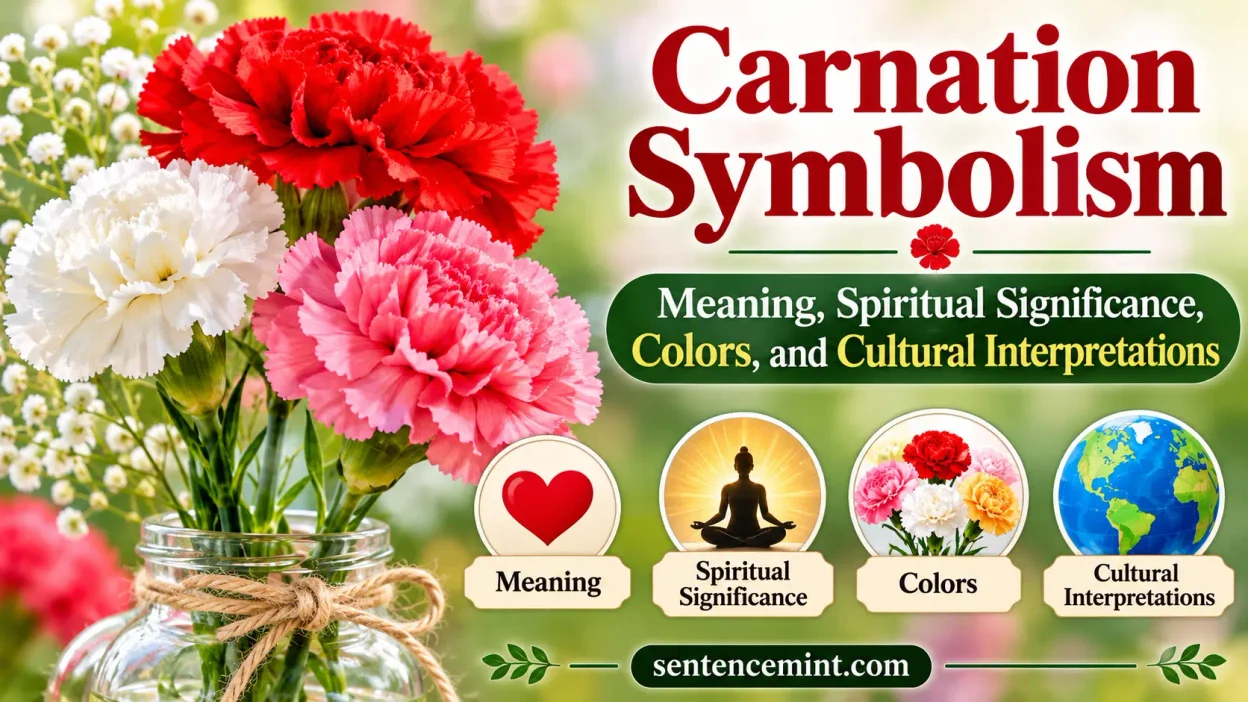
Carnations are among the most recognizable and meaningful flowers in the world. Known for their delicate, ruffled petals, pleasant fragrance, and wide range of colors, they have been used for centuries in celebrations, ceremonies, religious traditions, and expressions of affection.
Carnation symbolism is closely connected with love, admiration, devotion, gratitude, and remembrance. However, the meaning of a carnation can change depending on its color, cultural background, and the occasion on which it is given.
Red carnations are commonly associated with deep affection and admiration, while pink carnations are often connected with gratitude and a mother’s enduring love. White carnations can represent purity and remembrance, whereas yellow carnations have sometimes been associated with disappointment or rejection.
Beyond their beauty, carnations carry a rich symbolic history. They have appeared in religious art, political movements, national celebrations, and personal traditions, making them flowers with meanings that extend far beyond decoration.
What Do Carnations Symbolize?
Carnations commonly symbolize:
- Love: Affection, romance, and emotional attachment.
- Admiration: Respect and appreciation for another person.
- Devotion: Loyalty, commitment, and lasting relationships.
- Gratitude: Thankfulness and recognition.
- Purity: Innocence, sincerity, and spiritual cleanliness.
- Motherhood: Maternal affection and unconditional love.
- Remembrance: Honoring loved ones and preserving memories.
- Good fortune: Celebration, happiness, and positive wishes in some traditions.
The exact meaning depends on the flower’s color and cultural context. A red carnation may communicate romantic affection, while a white carnation may be more appropriate for remembrance or a solemn occasion.
History and Origins of Carnation Symbolism
Carnations belong to the genus Dianthus, which includes many flowering plants with colorful petals and distinctive appearances.
The scientific name Dianthus is commonly traced to Greek roots meaning “divine flower” or “flower of the gods.” The name is traditionally associated with the Greek words dios (divine) and anthos (flower).
Carnations have a long history in European culture, where they appeared in religious paintings, ceremonies, and celebrations.
1. Ancient Greek and Roman Associations
Carnation-like flowers have been connected with ancient Mediterranean traditions, although the exact historical use and symbolism of modern cultivated carnations should not be assumed to be identical to those of every ancient flower called Dianthus.
The association with divine beauty contributed to the flower’s later symbolic reputation.
2. Christian Symbolism
In Christian art and European religious traditions, carnations have sometimes been associated with divine love, devotion, and the Virgin Mary.
In certain artistic interpretations, the carnation is connected with the idea of sacred love and the relationship between Mary and Jesus.
The flower’s symbolism also appears in Renaissance paintings, where it can represent love, marriage, and spiritual devotion.
3. Victorian Flower Language
During the Victorian era, flowers became an important way to communicate emotions that people might not express directly.
Carnations developed different meanings depending on their colors. They could communicate admiration, affection, rejection, or disappointment.
This tradition helped establish many of the color meanings still associated with carnations today.
Spiritual Meaning of Carnations
Spiritually, carnations are often interpreted as symbols of love, emotional strength, devotion, and inner beauty.
Their long-lasting blooms and delicate petals create associations with enduring affection and the ability to remain beautiful through changing circumstances.
1. Divine Love and Spiritual Devotion
Carnations are sometimes associated with divine love and spiritual devotion, particularly in Christian-inspired floral traditions.
Their connection with sacred art and religious celebrations has made them symbols of faith, sincerity, and reverence.
2. Emotional Strength and Resilience
Carnations are known for their relatively long-lasting blooms when properly cared for.
Symbolically, this quality can represent emotional endurance, strength, and the ability to maintain love through difficult periods.
A carnation may therefore serve as a reminder that meaningful relationships require patience and care.
3. Gratitude and Appreciation
Carnations are frequently used to express appreciation.
Spiritually, they can represent recognizing the positive relationships and experiences that bring meaning to life.
Pink carnations, in particular, are commonly associated with gratitude and maternal affection.
4. Purity and Inner Beauty
White carnations are often connected with purity, sincerity, innocence, and spiritual clarity.
Their light appearance can symbolize an honest heart and a desire to live with kindness and integrity.
5. Remembrance and Eternal Affection
Carnations are often used in memorial arrangements and ceremonies honoring loved ones.
Their symbolic connection with remembrance suggests that affection and meaningful memories can remain even after someone is gone.
Carnation Symbolism by Color
The color of a carnation has a major influence on its symbolic meaning. Different shades communicate different emotions and messages.
<AsyncImageGroup query={[“red carnation flower close up”,”pink carnation flower close up”,”white carnation flower close up”,”yellow carnation flower close up”]} aspectRatio=”5:4″ layout=”bento”/>
1. Red Carnation Symbolism
Red carnations commonly symbolize deep love, admiration, passion, and affection.
They are popular gifts for romantic partners, family members, and people who deserve special appreciation.
Red carnations may represent:
- Romantic love.
- Strong affection.
- Admiration and respect.
- Passion and commitment.
- Courage and devotion.
In some traditions, darker red carnations express deeper affection, while lighter red shades may communicate admiration.
2. Pink Carnation Symbolism
<AsyncImage query=”soft pink carnation flower ruffled petals close up” aspectRatio=”16:9″ width=”100%”/>
Pink carnations are strongly associated with gratitude, tenderness, maternal love, and appreciation.
They are especially popular for Mother’s Day and other occasions celebrating motherhood.
A traditional Christian association connects pink carnations with the Virgin Mary’s tears, although this is a devotional interpretation rather than a universal historical explanation.
Pink carnations may symbolize:
- A mother’s love.
- Gratitude and appreciation.
- Tender affection.
- Kindness and compassion.
- Emotional warmth.
3. White Carnation Symbolism
<AsyncImage query=”beautiful white carnation flower close up soft background” aspectRatio=”16:9″ width=”100%”/>
White carnations commonly symbolize purity, innocence, sincerity, and remembrance.
They are often used in weddings, religious ceremonies, memorial arrangements, and formal celebrations.
Their simple appearance makes them suitable for expressing respect, peace, and heartfelt sympathy.
White carnations may represent:
- Innocence and purity.
- Spiritual devotion.
- Honest intentions.
- Peace and remembrance.
- New beginnings.
4. Yellow Carnation Symbolism
<AsyncImage query=”bright yellow carnation flower close up” aspectRatio=”16:9″ width=”100%”/>
Yellow carnations have traditionally been associated with disappointment, rejection, and sometimes jealousy in Victorian flower language.
However, yellow is also widely associated with sunshine, happiness, warmth, and friendship.
The meaning therefore depends on the cultural tradition and the intention behind the gift.
Yellow carnations may symbolize:
- Disappointment.
- Rejection.
- Jealousy in traditional flower language.
- Friendship and warmth in modern floral arrangements.
- Happiness and optimism.
5. Purple Carnation Symbolism
<AsyncImage query=”purple carnation flower close up ruffled petals” aspectRatio=”16:9″ width=”100%”/>
Purple carnations are often associated with mystery, creativity, individuality, and fascination.
Their unusual appearance makes them popular in arrangements designed to express originality and artistic personality.
In some Victorian flower-language interpretations, purple carnations have also been associated with unpredictability or capriciousness.
6. Orange Carnation Symbolism
<AsyncImage query=”bright orange carnation flower close up” aspectRatio=”16:9″ width=”100%”/>
Orange carnations can symbolize enthusiasm, excitement, energy, and fascination.
Their vivid color creates a cheerful impression and makes them suitable for celebrations and encouraging messages.
They may represent:
- Motivation.
- Creativity.
- Enthusiasm.
- Confidence.
- Joy and excitement.
7. Striped Carnation Symbolism
<AsyncImage query=”pink white striped carnation flower close up” aspectRatio=”16:9″ width=”100%”/>
Striped carnations have traditionally been associated with refusal, regret, or an inability to accept someone’s affection.
In Victorian flower language, their mixed colors could communicate complicated or conflicting emotions.
Today, striped carnations are also appreciated for their unusual patterns and decorative beauty.
8. Green Carnation Symbolism
Green carnations have unusual cultural associations, especially in literature and LGBTQ+ history.
They became associated with Oscar Wilde and the aesthetic movement of the late nineteenth century. Wilde and his circle helped popularize the wearing of green carnations as a coded cultural signal.
Today, green carnations may symbolize individuality, artistic expression, identity, and nonconformity, depending on context.
Carnation Symbolism in Different Cultures
Carnations have developed different meanings across countries and cultural traditions.
1. Carnations in China
In modern Chinese floral culture, carnations are commonly associated with maternal love, gratitude, respect, and family affection.
They are popular gifts for Mother’s Day and other occasions honoring parents.
Their association with motherhood makes them meaningful flowers for expressing appreciation and family devotion.
2. Carnations in Japan
In Japan, carnations are particularly popular as gifts for Mother’s Day.
Red carnations are commonly associated with a mother’s love, while white carnations have traditionally been used in remembrance of deceased mothers.
Their meanings can vary depending on the occasion and floral arrangement.
3. Carnations in Spain
In Spain, carnations have strong cultural associations with celebration, national identity, and traditional festivals.
They are especially visible in flamenco-inspired imagery and traditional clothing.
Red carnations can symbolize passion, pride, and cultural expression, although their meaning depends on the particular event.
4. Carnations in Portugal
The red carnation became an important symbol of freedom and political change during Portugal’s Carnation Revolution in 1974.
The flower was placed in the barrels of soldiers’ rifles and became associated with the peaceful overthrow of the Estado Novo dictatorship.
In this historical context, red carnations symbolize freedom, democracy, peace, and hope.
5. Carnations in the United States
Carnations are widely used in American celebrations, memorials, and national observances.
They have a particularly strong connection with Mother’s Day. Anna Jarvis helped popularize the white carnation as a symbol honoring mothers, and the flower later became closely associated with the celebration.
Carnations are also used in formal events and as expressions of appreciation.
Carnation Symbolism in Christianity
Carnations have several associations within Christian art and devotional traditions.
Although they are not given one universal symbolic meaning in the Bible, they have appeared in religious paintings and traditions associated with sacred love and devotion.
1. The Virgin Mary
Pink carnations have traditionally been associated with the Virgin Mary in some Christian interpretations.
One devotional explanation connects their color with Mary’s tears and maternal sorrow.
This association makes the pink carnation a symbol of maternal love, compassion, and devotion.
2. Divine Love
Carnations have sometimes represented the enduring love of God and the spiritual relationship between humanity and the divine.
Their presence in religious artwork can reinforce themes of love, faith, and devotion.
3. Purity and Innocence
White carnations can symbolize purity, sincerity, and spiritual innocence in Christian-inspired floral traditions.
They are sometimes used in church decorations, weddings, and ceremonies that emphasize faith and commitment.
4. Remembrance and Sacrifice
Carnations may also be used to honor people who have died or to remember important religious events.
Their presence in memorial arrangements can express respect, remembrance, and enduring affection.
It is important to distinguish these later devotional and artistic associations from direct biblical symbolism. The Bible does not establish a specific symbolic meaning for carnations.
Carnation Symbolism in Love and Relationships
Carnations are popular flowers for expressing romantic feelings and appreciation.
Their meanings vary according to color and the relationship between the giver and receiver.
| Carnation color | Relationship meaning |
|---|---|
| Red | Deep love and passion |
| Pink | Tender affection and gratitude |
| White | Pure intentions and sincere love |
| Yellow | Disappointment or friendship, depending on context |
| Purple | Fascination and individuality |
| Orange | Excitement and attraction |
| Striped | Rejection or conflicting emotions in traditional flower language |
Carnations can be used to express affection, celebrate commitment, or communicate feelings that are difficult to put into words.
Carnation Symbolism in Dreams
Dreams about carnations may reflect love, relationships, memories, gratitude, and emotional experiences.
However, dreams do not have fixed meanings or reliably predict future events. Their interpretations depend on the dreamer’s personal associations and circumstances.
1. Dreaming of Red Carnations
Red carnations may symbolize romantic affection, passion, or a strong emotional connection.
The dream may reflect feelings toward someone important in your life.
2. Dreaming of Pink Carnations
Pink carnations may represent gratitude, maternal affection, tenderness, and emotional support.
They may remind you of someone who has offered kindness or encouragement.
3. Dreaming of White Carnations
White carnations may symbolize peace, sincerity, remembrance, or a desire for emotional clarity.
They may also reflect thoughts about a new beginning or an important memory.
4. Dreaming of Yellow Carnations
Yellow carnations may represent disappointment, uncertainty, or complicated relationships.
However, they can also reflect happiness and friendship, depending on the dream’s emotional atmosphere.
5. Receiving Carnations in a Dream
Receiving carnations may symbolize appreciation, affection, recognition, or a desire to feel valued.
The color and the person giving the flowers may provide additional personal context.
6. Giving Someone Carnations in a Dream
Giving carnations may represent your desire to express love, gratitude, admiration, or forgiveness.
It may reflect feelings you have not yet communicated openly.
Carnation Symbolism in Weddings and Special Occasions
Carnations are frequently used in weddings, anniversaries, Mother’s Day celebrations, and memorial ceremonies.
Their wide variety of colors makes them suitable for different occasions.
Weddings
White and pink carnations can symbolize sincere love, purity, devotion, and lasting commitment.
They are also popular because they are relatively durable and can be incorporated into many types of floral arrangements.
Mother’s Day
Pink and red carnations are especially associated with Mother’s Day.
They communicate gratitude, admiration, and affection toward mothers and maternal figures.
Funerals and Memorials
White and red carnations are sometimes used in memorial arrangements.
White can represent peace and remembrance, while red can express enduring love and respect.
Anniversaries
Red and pink carnations can symbolize lasting affection, admiration, and commitment.
Their long-lasting blooms also make them suitable metaphors for relationships that endure over time.
What Does It Mean to Give Someone Carnations?
Giving carnations can communicate different emotions depending on the flower’s color and the occasion.
- Giving red carnations: Expresses love, admiration, or passion.
- Giving pink carnations: Shows gratitude, tenderness, and appreciation.
- Giving white carnations: Communicates sincerity, respect, or remembrance.
- Giving yellow carnations: May express friendship or, in traditional flower language, disappointment.
- Giving purple carnations: Suggests fascination, individuality, or admiration.
- Giving orange carnations: Communicates enthusiasm and excitement.
The personal message behind the gift is just as important as its color.
Why Are Carnations Considered Special Flowers?
Carnations have remained popular for generations because they combine beauty, durability, affordability, and symbolic depth.
Several characteristics make them especially meaningful:
- Long-lasting blooms: Their durability can symbolize enduring affection and commitment.
- Many colors: Different shades allow people to express a wide range of emotions.
- Historical importance: Carnations have appeared in religious art, political movements, and cultural celebrations.
- Versatility: They are suitable for weddings, birthdays, memorials, and everyday gifts.
- Emotional significance: They provide a meaningful way to express love, gratitude, admiration, and remembrance.
Frequently Asked Questions About Carnation Symbolism
1. What do carnations symbolize spiritually?
Carnations are often associated with love, devotion, gratitude, purity, emotional strength, and remembrance. Their spiritual meanings vary depending on color and cultural context.
2. What does a red carnation symbolize?
A red carnation commonly symbolizes deep love, passion, admiration, and affection. It is often given to express strong romantic or personal feelings.
3. What do pink carnations symbolize?
Pink carnations symbolize gratitude, tenderness, maternal love, compassion, and appreciation. They are especially popular for Mother’s Day.
4. What do white carnations symbolize?
White carnations commonly represent purity, innocence, sincerity, peace, and remembrance. They are frequently used in weddings and memorial arrangements.
5. What do yellow carnations mean?
Yellow carnations have traditionally symbolized disappointment, rejection, or jealousy in Victorian flower language. In modern arrangements, they may also represent friendship, happiness, and warmth.
6. Are carnations symbols of love?
Yes. Carnations are widely associated with love and affection. Red carnations represent passionate love, while pink carnations are often connected with tenderness and maternal affection.
7. What do carnations symbolize in Christianity?
In some Christian artistic and devotional traditions, carnations represent divine love, purity, maternal affection, and devotion. Pink carnations are sometimes associated with the Virgin Mary.
8. Why are carnations associated with Mother’s Day?
Carnations became associated with Mother’s Day through Anna Jarvis, who promoted the white carnation in memory of her mother. The flower later became a popular expression of maternal love and appreciation.
9. What does a purple carnation symbolize?
Purple carnations may symbolize fascination, creativity, mystery, and individuality. In some traditional flower-language systems, they are also associated with unpredictability.
10. What does a carnation symbolize in a dream?
A carnation in a dream may represent love, gratitude, remembrance, or emotional connection. Its color and the circumstances of the dream can influence its personal meaning.
Conclusion
Carnation symbolism is rich with meanings connected to love, admiration, devotion, gratitude, purity, and remembrance. Throughout history, these beautiful flowers have appeared in religious traditions, cultural celebrations, political movements, and personal expressions of affection.
Their colors add further depth to their symbolism. Red carnations express deep love, pink carnations communicate gratitude and maternal affection, white carnations represent purity and remembrance, and yellow carnations carry more complicated associations.
From ancient floral traditions to modern celebrations, carnations continue to communicate emotions that words sometimes cannot express. Ultimately, their enduring symbolism reminds us of the importance of love, appreciation, family, and the meaningful connections we share with others.


