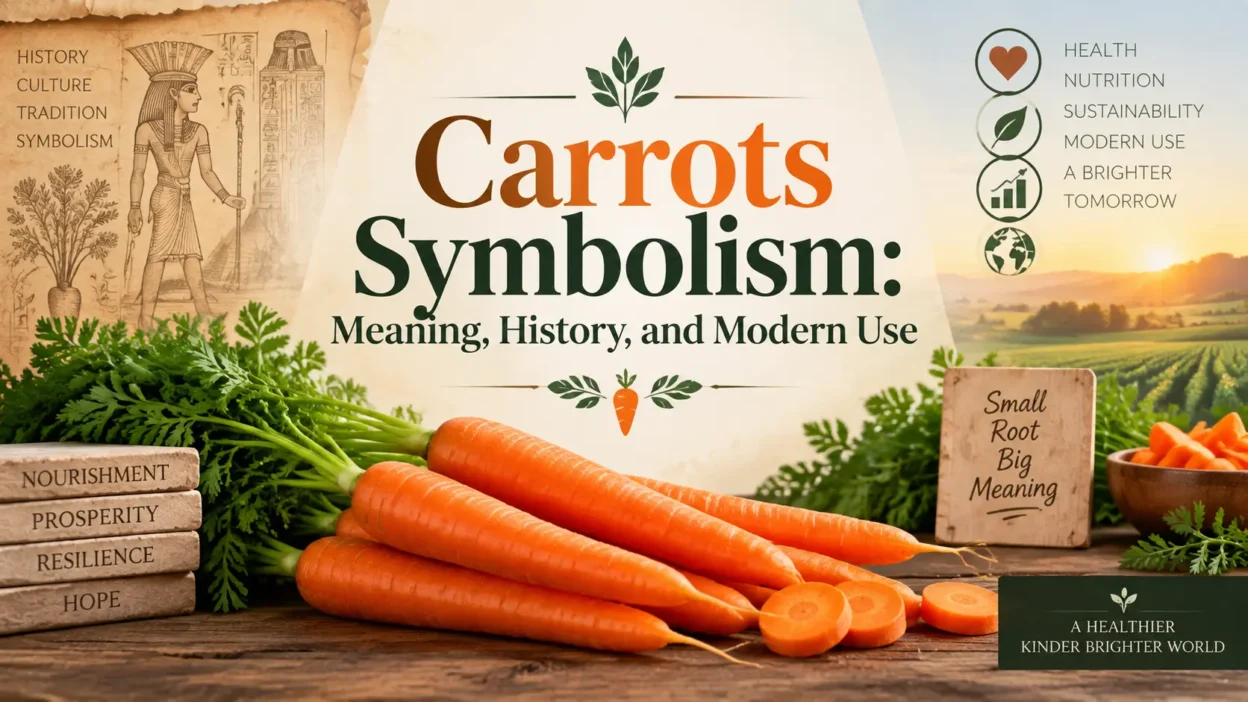
Carrots are often seen as a simple everyday vegetable, but carrots symbolism reveals a wider story connected to growth, health, patience, nourishment, and natural abundance. In modern American culture, carrots commonly represent wellness, positive habits, and a connection to the earth, while older traditions connected them with survival, fertility, and prosperity.
From kitchen gardens and holiday meals to children’s stories and health movements, carrots have developed meanings that go beyond food. Their bright color, underground growth, and association with vision and vitality have helped shape how people understand this familiar root vegetable.
Quick Answer
Carrots symbolism commonly represents health, growth, good choices, and natural abundance in modern American culture, especially through wellness, gardening, and food traditions. Historically, carrots have also been associated with fertility, prosperity, survival, and the rewards of patience because they grow hidden beneath the soil.
TL;DR
- Carrots symbolize health, nourishment, and positive habits.
- Their underground growth represents patience and hidden progress.
- Orange carrots connect with energy, warmth, and creativity.
- American culture links carrots with wellness and gardening.
- Folklore connects carrots with fertility and prosperity.
- Modern uses include art, design, and personal expression.
What Carrots Symbolize in Modern American Culture
In the United States, carrots are most commonly associated with health, balanced living, and natural nourishment. Their reputation as a nutritious food has made them a familiar symbol in wellness campaigns, school programs, and healthy lifestyle movements.
Many Americans view carrots as a reminder of making better daily choices. They appear in discussions about eating fresh foods, growing vegetables at home, and maintaining a connection with nature.
Carrots also symbolize simplicity. Unlike luxury foods or rare ingredients, carrots represent something accessible and practical. A person does not need special resources to grow, cook, or enjoy them.
Their bright orange color adds another layer of meaning. Orange is often connected with enthusiasm, creativity, warmth, and energy. Because of this, carrots can visually communicate optimism and a cheerful approach to life.
The Physical Identity and Everyday Presence of Carrots
Carrots are root vegetables that grow underground, with a long orange root extending beneath green leaves. While many people recognize the common orange carrot, varieties also exist in purple, yellow, white, and red colors.
The hidden growth pattern of carrots creates an important symbolic idea. The visible plant above the ground does not reveal the full development happening below. Because of this, carrots can represent:
- Personal growth that happens quietly
- Hard work before visible success
- Patience and preparation
- Strength developed over time
This symbolism connects with a common human experience: important progress often happens before others notice the results.
Carrots are also linked with farming and gardens. A carrot pulled from the soil represents the reward of caring for something patiently. This makes it a natural symbol of effort, harvest, and achievement.
Ancient Roots and Early Symbolic Associations
Carrots have a long agricultural history that began thousands of years ago. Early forms of carrots were not the bright orange vegetables commonly found today. Ancient varieties were often purple, yellow, or pale and were cultivated in regions of Central Asia before spreading into Europe.
Historically, carrots were valued mainly as food and medicine. Their meanings developed from their practical importance rather than from a single religious or mythological tradition.
Because carrots could grow in different climates and store well after harvesting, they became connected with survival and preparation. Communities depended on crops like carrots during changing seasons, which helped create associations with stability and security.
The carrot’s ability to grow beneath the soil also contributed to ideas about hidden resources and natural protection. Underground crops represented the earth’s ability to provide nourishment even when resources were not immediately visible.
Carrot Symbolism in the United States
In American culture, carrots have become closely connected with ideas of health, family, and everyday happiness.
One of the strongest associations comes from nutrition. Carrots are frequently promoted as a healthy food because they contain important nutrients, including beta-carotene. This connection has made them a symbol of caring for the body and choosing healthier habits.
Carrots also appear strongly in American childhood culture. The image of a rabbit eating a carrot is common in books, cartoons, toys, and Easter decorations. Although rabbits do not naturally depend on carrots as their primary food, popular culture has made this pairing familiar.
During Easter celebrations, carrots may appear alongside rabbit imagery, representing spring, renewal, and playful traditions.
| Context | Meaning in the USA | Common Associations | Notes |
|---|---|---|---|
| Food and Health | Wellness and nourishment | Nutrition, healthy habits | Common in modern lifestyles |
| Gardening | Growth and patience | Harvest, nature, effort | Represents rewards from care |
| Easter Culture | Spring and renewal | Rabbits, childhood traditions | Popular but based on modern imagery |
| Orange Color | Energy and positivity | Creativity, warmth | Connected with visual symbolism |
| Personal Style | Simplicity and fun | Playfulness, individuality | Used in designs and artwork |
The Connection Between Carrots and Growth
Growth is one of the strongest symbolic ideas connected with carrots. Unlike fruits that develop visibly on branches, carrots mature beneath the surface. This creates a metaphor for progress that cannot always be seen immediately.
A person learning a skill, building a career, or developing confidence may relate to the carrot’s growth process. The result appears after consistent care and time.
Gardeners often view carrots as symbols of patience because they require attention before harvest. Pulling a carrot from the soil reveals something that has been developing quietly.
This idea makes carrots useful symbols in education, personal development, and motivational designs. They represent the belief that small efforts can create meaningful results.
Carrots as Symbols of Health and Vitality
Modern health culture has strongly shaped the meaning of carrots. Their association with nutrition has made them a visual symbol for wellness and self-care.
Carrots frequently appear in:
- Healthy eating campaigns
- Cooking programs
- School nutrition materials
- Fitness-related content
- Organic farming movements
Their bright appearance reinforces ideas of freshness and energy. A bowl of colorful vegetables, including carrots, often communicates a lifestyle focused on balance and natural choices.
The symbolism is not only about physical health. Carrots can also represent responsible decision-making and awareness about personal well-being.
Orange Carrots and the Meaning of Color
The orange color of most modern carrots plays an important role in their symbolism. Color psychology often connects orange with enthusiasm, creativity, friendliness, and warmth.
Orange carrots can represent:
- Optimism
- Energy
- Confidence
- Creativity
- Celebration
This connection is especially noticeable in food photography, restaurant design, and seasonal decorations. The color makes carrots visually appealing and helps communicate freshness.
Historically, orange carrots became popular in Europe, especially in the Netherlands, where cultivation helped establish the orange variety that became widely recognized today.
Carrots in Gardening and Nature Symbolism
For gardeners, carrots represent the relationship between humans and the natural world. Growing carrots requires preparation, care, and patience.
Unlike flowers that immediately display their beauty, carrots reward people only after waiting. This makes them symbols of:
- Trust in natural processes
- Hidden potential
- Careful planning
- Harvest rewards
Home gardening has increased interest in carrots as symbols of self-sufficiency. Growing vegetables allows people to reconnect with food sources and appreciate the work behind everyday meals.
In this way, carrots represent more than a crop. They represent cooperation between human effort and nature.
Carrots in Folklore and Cultural Traditions
Carrots have appeared in folklore and everyday traditions mostly through their connection with food, farming, and seasonal change. Unlike some plants that became central religious symbols or mythological objects, carrots gained meaning through ordinary human experiences such as growing crops, preparing meals, and celebrating harvests.
In European farming communities, root vegetables like carrots represented security because they could remain stored for long periods and provide nourishment during colder months. A successful carrot harvest suggested careful planning and a stable food supply.
Some traditional beliefs connected carrots with fertility and abundance because they grow beneath the earth and produce a useful harvest from a small seed. The idea of a hidden reward beneath the soil helped create associations with patience, family prosperity, and natural productivity.
Carrots also became connected with folk stories involving animals. The most famous example is the rabbit-and-carrot pairing. While rabbits in nature eat many types of plants, popular stories and cartoons created the familiar image of rabbits enjoying carrots. This association helped carrots become symbols of playfulness, innocence, and childhood imagination.
In modern American culture, these folk connections appear in children’s books, animated characters, Easter decorations, and gardening traditions. The carrot often represents something cheerful and familiar rather than something mysterious or sacred.
Religious and Spiritual Interpretations of Carrots
Carrots do not hold a major symbolic role in most major religious traditions, but they can carry spiritual meanings through broader ideas connected with nature, food, and creation.
In many spiritual perspectives, growing food represents cooperation between humans and the natural world. A carrot seed becoming a mature vegetable can symbolize transformation, patience, and the process of receiving rewards after effort.
Some people connect root vegetables with grounding because they grow beneath the surface of the earth. In spiritual practices that focus on nature, roots may represent stability, connection, and a strong foundation.
Carrots may also appear in discussions about gratitude. A simple vegetable can remind people to appreciate everyday resources, farming work, and the natural systems that provide nourishment.
In Christian communities, carrots are not considered a specific biblical symbol. However, food and harvest imagery often carry broader themes of provision, gratitude, and caring for creation. Carrots may fit into these ideas as part of a larger appreciation for the gifts of nature.
Emotional and Psychological Meaning of Carrots
The emotional symbolism of carrots comes from their appearance, cultural associations, and connection with healthy living. Their bright orange color often creates feelings of warmth, friendliness, and energy.
People may associate carrots with:
- Fresh starts
- Positive routines
- Personal improvement
- Comfort and familiarity
- Childhood memories
Because carrots are commonly introduced as one of the first vegetables children learn about, they often carry a sense of simplicity and innocence. They may remind people of school lunches, family meals, gardening activities, or childhood stories.
Psychologically, carrots can represent achievable progress. Unlike symbols connected with rare achievements, carrots represent small improvements that happen through consistent effort.
The phrase “carrot and stick” also influences how some people understand carrots symbolically. In this expression, a carrot represents motivation, reward, or encouragement, while the stick represents punishment or pressure. This idea has made the carrot a symbol of positive incentives.
In workplaces, education, and personal development, the “carrot” approach suggests encouraging progress through rewards rather than relying only on criticism.
Carrots in Tattoos, Art, and Modern Design
Carrot imagery appears in tattoos and artwork less often than symbols like flowers, animals, or celestial objects, but when it does appear, it usually carries personal and playful meanings.
A carrot tattoo may represent:
- Love of gardening
- Connection with nature
- Healthy living
- Humor and individuality
- Childhood memories
- Simplicity
Gardeners may choose carrot designs as a reminder of patience and the satisfaction of growing their own food. Others may select carrot artwork because of its cheerful appearance and association with happiness.
In modern design, carrots are commonly used in:
- Food branding
- Farm logos
- Children’s products
- Kitchen decorations
- Eco-friendly designs
Their recognizable shape makes them an effective visual symbol. A carrot can quickly communicate ideas about freshness, natural ingredients, and wholesome choices.
The use of carrots in design often focuses less on ancient symbolism and more on modern lifestyle values such as sustainability, wellness, and connection with nature.
Carrots in Holidays and Popular Culture
Carrots have become strongly connected with certain American holidays and entertainment traditions, especially through their relationship with rabbits.
During Easter, carrot imagery often appears alongside rabbit decorations, baskets, and spring themes. The connection represents renewal, seasonal change, and childhood celebration.
Carrots are also popular during autumn and harvest-related decorations. Their association with gardens and crops makes them suitable symbols for celebrating abundance and the changing seasons.
In popular culture, carrots are often used to create friendly and humorous characters. One of the most famous examples is Bugs Bunny, whose image holding a carrot helped strengthen the connection between carrots and playful personality.
Cartoons and children’s media often use carrots to represent:
- Friendliness
- Humor
- Cleverness
- Innocence
This cultural image has influenced how many Americans view carrots today. For many people, the vegetable represents happiness and familiarity as much as nutrition.
Positive and Negative Symbolic Interpretations
Most interpretations of carrots are positive because they are connected with food, health, and nature. However, symbols can change depending on context.
Positive meanings of carrots include:
Health and wellness:
Carrots represent caring for the body and making thoughtful choices.
Growth and patience:
Their underground development symbolizes progress that happens over time.
Abundance:
A successful harvest represents preparation and reward.
Creativity and energy:
The orange color connects carrots with enthusiasm and optimism.
Simplicity:
Carrots represent everyday pleasures rather than luxury.
However, carrots can also have less positive interpretations.
The phrase “carrot and stick” may suggest manipulation when rewards are used only to control behavior. In some situations, offering a “carrot” can mean using incentives to influence people rather than respecting their independence.
Carrots can also represent unrealistic ideas about health when they become part of extreme diet discussions. The vegetable itself is positive, but cultural messages around food can sometimes create unnecessary pressure.
Understanding these differences helps separate the natural symbolism of carrots from modern expressions that use the word differently.
Evolution of Carrot Meaning Over Time
The meaning of carrots has changed as human relationships with food and agriculture have changed.
Early communities valued carrots mainly as a reliable crop. Their symbolism came from survival, farming, and the importance of having enough food through different seasons.
As cultivation expanded, carrots became more familiar in European and American diets. Their meaning shifted toward household nourishment and practical health.
In the modern United States, carrots are strongly connected with wellness, gardening, and positive lifestyle choices. They appear in discussions about organic farming, sustainable food systems, and personal health.
Popular culture also transformed the carrot into a symbol of humor and childhood through cartoons, stories, and holiday traditions.
Today, carrots represent a combination of old and new ideas:
- Ancient agricultural values of patience and harvest
- Modern beliefs about health and self-care
- Cultural ideas about happiness and simplicity
The symbol continues to evolve because people keep finding new connections between food, nature, and personal identity.
Carrots in Modern Lifestyle and Digital Culture
In modern American life, carrots have become a symbol connected with healthier choices, environmental awareness, and simple enjoyment. Their meaning today is shaped less by traditional folklore and more by changing ideas about food, lifestyle, and personal values.
One of the strongest modern associations is with wellness culture. Carrots frequently appear in content about balanced diets, meal preparation, and natural foods. Their image communicates freshness, care, and a practical approach to health.
Carrots are also connected with the growing interest in home gardening. Many Americans grow vegetables as a way to reduce dependence on processed foods and reconnect with nature. A garden carrot represents more than a crop; it represents participation in the process of creating something useful.
In digital culture, carrot images are often used in a lighthearted way. They appear in:
- Food photography
- Recipe videos
- Gardening communities
- Environmental content
- Educational posts
- Cute illustrations and emojis
The visual appeal of carrots makes them effective online symbols. Their bright color and familiar shape quickly communicate ideas such as freshness, positivity, and natural living.
Small businesses, especially those connected with organic products, farming, and healthy food, often use carrot imagery because audiences immediately recognize its connection with wholesome values.
Carrots also appear in discussions about sustainability. A locally grown carrot can symbolize awareness of where food comes from and appreciation for agricultural work.
Common Misunderstandings About Carrot Symbolism
Although carrots have mostly positive meanings, several misunderstandings exist because of popular culture and modern assumptions.
One common misconception is that carrots have always been a major spiritual symbol across all cultures. In reality, carrots gained most of their symbolic meaning through agriculture, food traditions, and everyday life rather than through major religious systems.
Another misunderstanding comes from the popular belief that carrots are the main food of rabbits. This image became widespread through cartoons and stories, but real rabbits eat a wider variety of plants. The connection is mainly a product of entertainment and cultural imagination.
Some people also assume that orange carrots have always existed in their current form. Early carrots came in different colors, including purple and yellow varieties. The orange carrot became especially popular later through cultivation and agricultural development.
Another misconception is that carrots only symbolize health. While wellness is one of their strongest modern meanings, carrots can also represent patience, growth, farming, creativity, and simple pleasures.
Symbols often change depending on context. A carrot in a garden, a cartoon, a restaurant logo, or a personal tattoo may communicate different ideas.
Comparison of Carrot Symbolism Across Different Contexts
| Context | Symbolic Meaning | Why It Is Associated | Modern Example |
|---|---|---|---|
| Health and Nutrition | Wellness and self-care | Carrots are known as nutritious foods | Healthy lifestyle campaigns |
| Gardening | Patience and reward | Growth happens beneath the soil before harvest | Home vegetable gardens |
| Farming Traditions | Stability and abundance | Crops provide food and security | Harvest celebrations |
| Childhood Culture | Fun and imagination | Rabbit stories and cartoons popularized carrots | Children’s books and media |
| Personal Expression | Individuality and positivity | Bright design and familiar imagery | Tattoos and artwork |
Frequently Asked Questions About Carrot Symbolism
What do carrots symbolize?
Carrots commonly symbolize health, growth, nourishment, and positive choices. They are also associated with patience because the vegetable develops underground before becoming visible.
What does a carrot symbolize in American culture?
In American culture, carrots usually represent healthy living, gardening, and simple enjoyment. They are also connected with childhood traditions, especially through rabbit characters and Easter celebrations.
Do carrots have a spiritual meaning?
Carrots do not have a major universal spiritual meaning, but some people connect them with grounding, gratitude, natural growth, and the relationship between humans and the earth.
What does a carrot tattoo symbolize?
A carrot tattoo may symbolize gardening, healthy living, humor, personal growth, or a connection with nature. The meaning often depends on the person’s experiences and design choices.
Why are carrots associated with rabbits?
The connection between rabbits and carrots comes mainly from cartoons, children’s stories, and popular culture. While rabbits can eat carrots, the relationship became symbolic through entertainment rather than traditional animal behavior.
Are carrots a symbol of good luck?
Carrots are not widely recognized as a universal good luck symbol, but some traditions connect successful harvests with prosperity and abundance. Their meaning is usually linked more with growth and nourishment than luck.
What does the color orange mean in carrot symbolism?
The orange color of carrots is often associated with energy, creativity, warmth, and optimism. It adds a cheerful quality to the vegetable’s overall symbolism.
Conclusion
Carrots represent much more than a common vegetable on a dinner plate. They symbolize health, patience, natural growth, and the rewards that come from consistent care. In modern American culture, they are strongly connected with wellness, gardening, family traditions, and positive everyday choices.
The meaning of carrots symbolism has developed through agriculture, food traditions, popular culture, and personal experiences. While carrots do not carry one single universal message, they continue to represent ideas that remain relevant: taking care of ourselves, appreciating nature, and recognizing the value of gradual progress.
From a backyard garden to a holiday decoration or a piece of artwork, carrots continue to show how ordinary objects can gain meaning through the way people use and understand them.