Carnations are among the world’s most recognizable flowers, admired for their ruffled petals, delicate fragrance, vibrant colors, and remarkable lasting beauty. For centuries, they have appeared in celebrations, religious ceremonies, floral arrangements, and meaningful gifts. Beyond their attractive appearance, carnations carry rich symbolic meanings associated with love, admiration, devotion, gratitude, compassion, and remembrance.
Carnation flower symbolism depends largely on the flower’s color, cultural background, and the occasion on which it is given. Red carnations commonly represent deep love and admiration, pink carnations express gratitude and motherly affection, and white carnations symbolize purity, sincerity, and remembrance. Yellow carnations have traditionally been associated with disappointment or rejection in some flower-language traditions, while purple and green varieties can communicate individuality and creativity.
From ancient Mediterranean traditions to modern Mother’s Day celebrations and Portugal’s historic Carnation Revolution, these flowers have developed meanings that reach far beyond their beauty. Understanding their history and different color associations can help you choose the right carnation and appreciate the emotions it can express.
Quick Answer: What Do Carnation Flowers Symbolize?
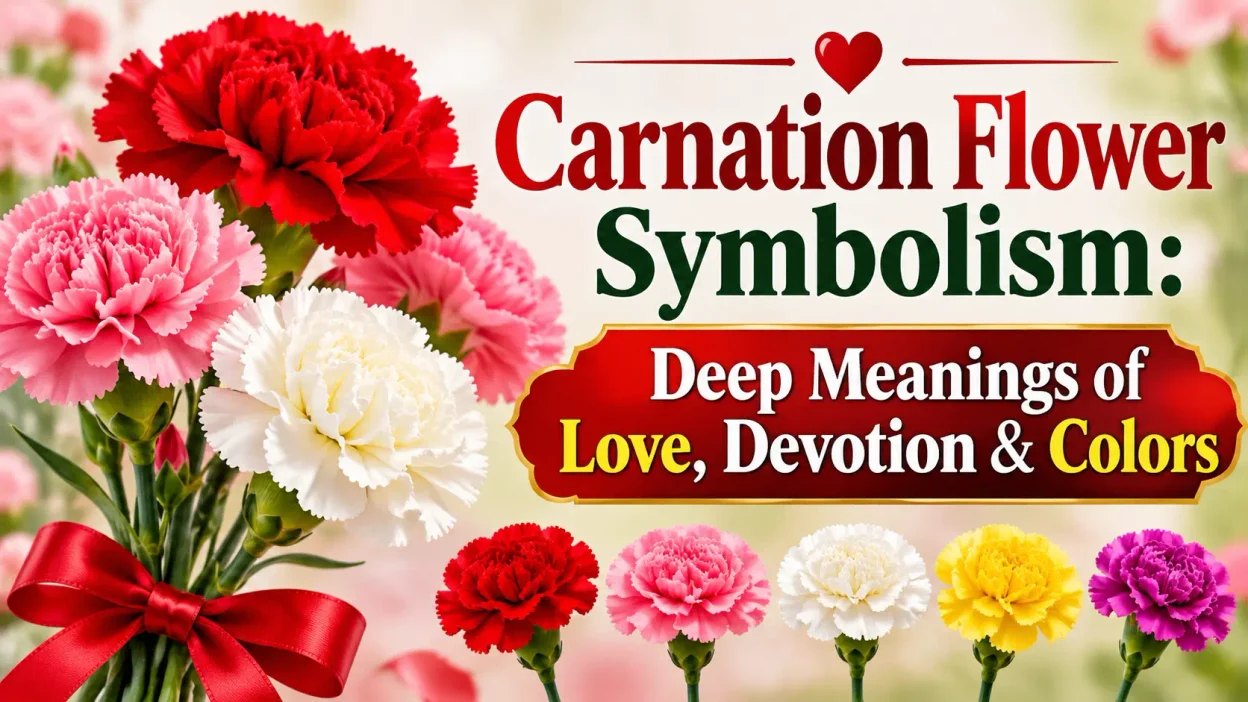
Carnations generally symbolize love, admiration, devotion, gratitude, affection, and remembrance. Their specific meaning often depends on color:
- Red carnations: Deep love, passion, and admiration.
- Pink carnations: Motherly love, gratitude, and tenderness.
- White carnations: Purity, sincerity, peace, and remembrance.
- Yellow carnations: Disappointment or rejection in traditional flower language.
- Purple carnations: Creativity, individuality, and uniqueness.
- Green carnations: Renewal, identity, and nonconformity.
- Striped carnations: Mixed emotions or refusal in traditional floral symbolism.
Although these associations are widely recognized, carnation meanings are not universal. Cultural traditions, personal experiences, and the occasion can all influence how a flower is interpreted.
What Is the History Behind Carnation Symbolism?
Carnations belong to the genus Dianthus, a name derived from Greek elements often interpreted as meaning “divine flower” or “flower of the gods.” This connection has helped establish the flower’s long-standing association with beauty, admiration, and reverence.
Carnations have a long history in the Mediterranean region, where flowers were valued for decoration, ceremonies, and expressions of affection. Over time, they became popular in European floral art, religious imagery, and the Victorian language of flowers.
During the Victorian era, flowers were frequently used to communicate feelings that people might find difficult to express directly. Carnations developed different meanings according to their colors, allowing people to send messages through carefully selected bouquets.
Their symbolism continued to evolve through cultural traditions and historical events. Pink carnations became closely associated with Mother’s Day, while red carnations gained a powerful political meaning during Portugal’s Carnation Revolution in 1974.
Today, carnations remain popular because they combine beauty, affordability, versatility, and a wide range of emotional associations.
Carnation Flower Symbolism by Color
The color of a carnation plays an important role in determining its symbolic meaning. Each shade can communicate a different emotion, making carnations suitable for romantic gifts, family celebrations, religious occasions, and memorial arrangements.
1. Red Carnation Symbolism: Love, Passion, and Admiration
<escape> </escape>
Red carnations are among the most recognizable varieties. Their rich color and traditional connection with affection make them popular choices for romantic arrangements and meaningful celebrations.
Red carnations commonly symbolize:
- Deep love and affection
- Passion and devotion
- Admiration and respect
- Courage and emotional strength
- Romantic commitment
Light red carnations are often associated with admiration and tenderness, while darker red shades can communicate deeper affection and devotion.
Red carnations also have an important historical meaning in Portugal. During the Carnation Revolution of April 25, 1974, red carnations became symbols of freedom, democracy, and political change. Their association with this largely peaceful revolution continues to make them powerful symbols of hope and social transformation.
2. Pink Carnation Symbolism: Motherly Love and Gratitude
Pink carnations are especially associated with maternal affection, tenderness, appreciation, and compassion. Their gentle appearance reflects the warmth and kindness often connected with family relationships.
Pink carnations commonly symbolize:
- Motherly love
- Gratitude and appreciation
- Compassion and kindness
- Tender affection
- Emotional warmth
- Lasting family bonds
Pink carnations are particularly popular for Mother’s Day because of their association with maternal love. They are meaningful gifts for mothers, grandmothers, and other important caregivers.
In some Christian traditions, pink carnations are also associated with the Virgin Mary. A later religious legend connects the flower with Mary’s tears during the crucifixion, although this is a devotional tradition rather than a biblical account.
3. White Carnation Symbolism: Purity, Peace, and Remembrance
White carnations are admired for their elegant appearance and associations with sincerity, innocence, and spiritual devotion. Their simple color makes them suitable for both joyful celebrations and solemn occasions.
White carnations commonly symbolize:
- Purity and innocence
- Sincerity and faithfulness
- Peace and remembrance
- Spiritual devotion
- Respect and sympathy
- New beginnings
White carnations are frequently used in weddings, religious ceremonies, and memorial arrangements. They can communicate peaceful intentions, heartfelt respect, and lasting memories.
In some cultures, white carnations are also associated with remembrance of mothers who have passed away. Their meaning can therefore be especially emotional when used in family memorials.
4. Yellow Carnation Symbolism: Disappointment and Rejection
Yellow carnations have a more complicated symbolic history than many other varieties. In traditional Victorian flower language, they were sometimes associated with disappointment, rejection, and unreturned affection.
Yellow carnations have traditionally represented:
- Disappointment
- Rejection
- Regret
- Unrequited affection
- Emotional distance
However, yellow is not always a negative color in floral symbolism. Yellow flowers are commonly associated with sunshine, happiness, optimism, and friendship.
For this reason, the meaning of a yellow carnation depends on the cultural setting and the intention behind the gift. If you are choosing flowers for someone, consider the recipient’s preferences rather than relying entirely on historical flower-language meanings.
5. Purple Carnation Symbolism: Creativity and Individuality
Purple carnations are less traditional than red, pink, and white varieties, but their unusual appearance gives them distinctive symbolic associations.
Purple carnations commonly symbolize:
- Individuality and originality
- Creativity and imagination
- Mystery and fascination
- Elegance and dignity
- Artistic expression
- Personal uniqueness
Purple has been associated with royalty, prestige, and distinction in several cultural traditions. Purple carnations can therefore make thoughtful gifts for people who appreciate unusual flowers, artistic beauty, and expressive designs.
Their symbolism also makes them suitable for celebrating someone whose personality stands out.
6. Striped Carnation Symbolism: Mixed Emotions and Refusal
Striped carnations feature two or more colors arranged in noticeable patterns across their petals. Their distinctive appearance has inspired associations with complexity and contrasting emotions.
Striped carnations may symbolize:
- Mixed feelings
- Complexity in relationships
- Uncertainty
- Individuality
- Creativity
- Refusal or unreturned affection in traditional flower language
In Victorian floral traditions, striped carnations were sometimes used to communicate refusal, particularly when affection could not be returned.
Today, their meaning is often more decorative and personal. The colors used in the design can influence the message, while the recipient’s own interpretation may matter more than historical conventions.
7. Green Carnation Symbolism: Renewal and Nonconformity
Green carnations are unusual and visually distinctive. Their color connects them with nature and growth, while their cultural history gives them additional associations with identity and unconventional expression.
Green carnations commonly symbolize:
- Renewal and growth
- Individual identity
- Creativity and originality
- Nonconformity
- Uniqueness
- Personal expression
Green carnations also hold a notable place in LGBTQ+ cultural history. In the late nineteenth century, Oscar Wilde and some of his associates wore green carnations as a subtle emblem of identity and unconventional expression.
This association gives the green carnation a historical meaning that extends beyond its botanical appearance.
Carnation Flower Symbolism in Different Cultures
Carnations have appeared in different cultural traditions, religious settings, and historical events. Their meanings have developed in different ways across regions, demonstrating how one flower can communicate very different messages.
Ancient Greek and Roman Associations
The name Dianthus is often translated as “divine flower” or “flower of the gods,” reflecting the flower’s connection with beauty and reverence.
Flowers played important roles in ancient Greek and Roman celebrations, ceremonies, and decorative traditions. Carnations are often discussed in connection with this broader Mediterranean history, although specific meanings attributed to modern carnation colors should not automatically be treated as established ancient beliefs.
Christian Carnation Symbolism
Carnations sometimes appear in Christian art and later religious interpretations.
Pink carnations are associated in some Christian traditions with the Virgin Mary and maternal love. A popular legend connects their appearance with Mary’s tears during the crucifixion. This is a later devotional tradition, not an event described in the Bible.
White carnations may symbolize purity, faith, and spiritual devotion, while red carnations can represent love, sacrifice, and religious commitment.
It is important to remember that the Bible does not specifically name carnations or assign them a fixed symbolic meaning. These associations developed through Christian art, tradition, and interpretation.
Japanese Carnation Symbolism
In Japan, carnations are strongly associated with Mother’s Day and expressions of appreciation for mothers.
Red carnations are commonly given to living mothers as expressions of love and gratitude. White carnations have traditionally been associated with remembrance of mothers who have died.
These customs make carnations meaningful flowers for family celebrations and memorial occasions.
Portuguese Carnation Symbolism
The red carnation has a powerful historical meaning in Portugal because of the Carnation Revolution of April 25, 1974.
During the largely peaceful military-led revolution that ended decades of authoritarian rule, red carnations became associated with freedom, democracy, and political transformation.
The flower remains an important national symbol and is closely connected with the anniversary of the revolution. In this context, the red carnation represents much more than romantic love: it stands for hope, freedom, and the possibility of change.
Victorian Flower Language
During the Victorian era, flowers were often used to communicate emotions indirectly. This tradition, commonly known as floriography, assigned different meanings to flowers and their colors.
Carnations developed several recognizable associations:
- Red could express admiration and affection.
- Pink could communicate gratitude and tenderness.
- White could represent purity and sincerity.
- Yellow could suggest rejection or disappointment.
- Striped varieties could communicate refusal.
Flower-language dictionaries were not completely standardized, so meanings sometimes differed between sources. Nevertheless, Victorian floriography helped shape many of the color associations still recognized today.
Carnation Flower Symbolism in Love and Relationships
Carnations can communicate different kinds of affection, making them meaningful gifts for romantic partners, friends, and family members.
Unlike flowers that are primarily associated with romance, carnations can express several forms of love, from passionate attraction to maternal affection and lasting friendship.
| Carnation Color | Meaning in Love and Relationships |
|---|---|
| Red | Deep affection, passion, and admiration |
| Pink | Tenderness, gratitude, and caring love |
| White | Sincerity, loyalty, and pure intentions |
| Yellow | Complicated feelings or disappointment in traditional flower language |
| Purple | Fascination, individuality, and admiration |
| Green | Unconventional expression and personal identity |
| Striped | Mixed emotions or unreturned affection in traditional flower language |
Red carnations are suitable for expressing romantic affection, while pink varieties can communicate appreciation and gentle love.
White carnations may be chosen to represent sincere intentions or lasting commitment. Ultimately, the personal meaning behind the gift matters just as much as traditional flower symbolism.
Carnation Flower Symbolism in Spirituality
In modern spiritual interpretations, carnations are often connected with love, emotional healing, gratitude, protection, and devotion.
Their meaning can be explored through several symbolic themes.
Love and Compassion
Carnations can represent the importance of expressing affection through kindness, understanding, and meaningful actions.
Pink carnations are particularly associated with compassion and nurturing love. They can serve as reminders to appreciate the people who offer care and support.
Gratitude and Appreciation
Carnations are frequently given as gifts, making them natural symbols of thankfulness. They can represent appreciation for relationships, meaningful experiences, and the people who make life more beautiful.
Strength and Resilience
Carnations are known for their relatively long vase life when properly cared for. This characteristic can inspire symbolic associations with endurance, commitment, and lasting affection.
Their symbolism may remind people that meaningful relationships require patience, care, and consistency.
Spiritual Devotion
White and red carnations may appear in religious or ceremonial arrangements to represent faith, sincerity, love, and devotion.
These spiritual meanings are interpretive rather than universal religious teachings. Their significance depends on the beliefs and traditions of the people using them.
Carnation Flower Symbolism in Dreams
Dreams about carnations can be interpreted through personal emotions, memories, and experiences. Different colors and situations may inspire different symbolic readings.
| Carnation in a Dream | Possible Symbolic Interpretation |
|---|---|
| Red carnation | Romantic feelings, affection, or admiration |
| Pink carnation | Gratitude, family love, or emotional warmth |
| White carnation | Peace, sincerity, or a fresh beginning |
| Yellow carnation | Disappointment, uncertainty, or unresolved feelings |
| Purple carnation | Creativity, individuality, or mystery |
| Withered carnation | Neglected relationships or changing emotions |
| Bouquet of carnations | Appreciation, celebration, or meaningful connections |
| Receiving carnations | Feeling loved, valued, or remembered |
| Giving carnations | Desire to express affection or gratitude |
Dream interpretations are subjective and should not be treated as predictions. Your emotions during the dream and your personal associations with carnations may be more meaningful than any general interpretation.
What Does It Mean to Give Someone Carnations?
Giving carnations can communicate affection, appreciation, respect, or remembrance. The intended message often depends on the flower’s color and the occasion.
Here are some common examples:
- For Mother’s Day: Pink or red carnations can express maternal love and gratitude.
- For romantic occasions: Red carnations can communicate affection, passion, and admiration.
- For weddings: White carnations can represent sincerity, purity, and commitment.
- For birthdays: Colorful carnations can express happiness, appreciation, and celebration.
- For memorial services: White carnations and other appropriately chosen varieties can communicate respect and remembrance.
- For friendship: Pink and cheerful-colored carnations can express warmth and appreciation.
Carnations are also popular because they are relatively affordable, available in many colors, and suitable for both simple bouquets and elaborate floral arrangements.
Carnation Flower Symbolism in Art and Literature
Carnations have appeared in paintings, decorative arts, poetry, and literature for centuries. Their visual beauty and associations with love and devotion have made them meaningful elements in artistic expression.
In Renaissance European art, carnations sometimes appeared in portraits and religious paintings. Depending on the context, they could represent betrothal, marriage, affection, or religious devotion.
Their presence in a portrait could communicate a relationship or emotional connection that was not directly explained through words.
In modern art and floral design, carnations can represent beauty, nostalgia, individuality, and the emotional complexity of human relationships.
Their ruffled petals and wide range of colors also make them expressive subjects for painters, photographers, and designers.
What Does a Carnation Flower Tattoo Symbolize?
A carnation tattoo can represent love, remembrance, devotion, gratitude, and personal strength. Its meaning often depends on the chosen color and design.
Common interpretations include:
- Red carnation tattoo: Romantic love, passion, and devotion.
- Pink carnation tattoo: Motherly love, gratitude, and compassion.
- White carnation tattoo: Purity, peace, and remembrance.
- Yellow carnation tattoo: Personal growth after disappointment or emotional challenges.
- Purple carnation tattoo: Individuality, imagination, and creativity.
- Green carnation tattoo: Renewal, identity, and nonconformity.
Some people choose carnation tattoos to honor their mothers or other family members. Others select them as reminders of important relationships, personal milestones, or meaningful memories.
A small single carnation can create a delicate botanical design, while a larger bouquet can represent several important people or experiences.
Carnations Compared With Other Symbolic Flowers
Carnations share certain meanings with other popular flowers, but each has its own traditional associations.
| FlowerCommon Symbolic Meaning | |
|---|---|
| Carnation | Love, admiration, gratitude, and remembrance |
| Rose | Love, passion, and beauty |
| Lily | Purity, renewal, and remembrance |
| Daisy | Innocence, simplicity, and new beginnings |
| Chrysanthemum | Longevity, honor, and remembrance in various cultures |
| Peony | Prosperity, romance, and good fortune in some traditions |
| Tulip | Love, elegance, and renewal |
Carnations are particularly versatile because their different colors can express a broad range of emotions, from romantic affection to gratitude and remembrance.
Frequently Asked Questions About Carnation Flower Symbolism
1. What do carnation flowers symbolize?
Carnations commonly symbolize love, admiration, gratitude, devotion, affection, purity, and remembrance. Their meaning often depends on their color, cultural background, and the occasion on which they are given.
2. What does a red carnation symbolize?
A red carnation generally represents love, passion, admiration, and devotion. It can be given to someone to express romantic affection, deep appreciation, or respect.
3. What do pink carnations symbolize?
Pink carnations traditionally symbolize motherly love, gratitude, tenderness, and compassion. They are especially popular for Mother’s Day and other occasions celebrating family relationships.
4. What does a white carnation symbolize?
White carnations commonly symbolize purity, innocence, sincerity, peace, and remembrance. They are often used in weddings, religious ceremonies, and memorial arrangements.
5. What do yellow carnations mean?
In traditional Victorian flower language, yellow carnations could represent rejection, disappointment, or regret. However, yellow flowers are also associated with happiness, optimism, and friendship in modern interpretations.
6. What does a purple carnation symbolize?
Purple carnations can represent individuality, creativity, mystery, elegance, and imagination. Their unusual color makes them distinctive gifts for people who appreciate originality and artistic expression.
7. Why are carnations associated with Mother’s Day?
Carnations became closely associated with Mother’s Day through Anna Jarvis, who promoted the flower in honor of her mother. White carnations were central to the original observance, and the tradition later expanded to include other colors, particularly pink and red.
8. What is the spiritual meaning of carnations?
In modern spiritual interpretations, carnations can represent love, compassion, gratitude, devotion, emotional strength, and renewal. Their meanings vary according to personal beliefs and cultural traditions.
9. What do carnations symbolize in Christianity?
In some Christian traditions, carnations are associated with the Virgin Mary, maternal love, purity, and devotion. However, carnations are not specifically identified as symbolic flowers in the Bible.
10. What does a green carnation symbolize?
Green carnations can symbolize individuality, renewal, creativity, and nonconformity. They also have a historical association with Oscar Wilde and aspects of queer cultural history in the late nineteenth century.
11. What does a carnation tattoo mean?
A carnation tattoo can represent love, gratitude, remembrance, family devotion, and personal strength. Different colors add further meaning, allowing the design to honor a relationship, person, or important life experience.
12. Are carnations good flowers to give as gifts?
Yes. Carnations are versatile gifts for Mother’s Day, birthdays, romantic occasions, weddings, and memorial ceremonies. Choosing a color that reflects your intended message can make the gift more meaningful.
13. What does a bouquet of carnations symbolize?
A bouquet of carnations can symbolize affection, appreciation, celebration, and meaningful relationships. Its specific message depends on the colors, arrangement, and reason for giving it.
14. What is the historical meaning of the red carnation in Portugal?
The red carnation became a symbol of freedom, democracy, and peaceful political change during Portugal’s Carnation Revolution on April 25, 1974. The flower remains an important symbol of the country’s modern history.
15. Which carnation color is best for expressing gratitude?
Pink carnations are a traditional choice for expressing gratitude, appreciation, and tenderness. They are especially suitable for thanking mothers, family members, friends, and people who have offered support.
16. Do carnations symbolize remembrance?
Yes. White carnations are particularly associated with remembrance, respect, and peaceful reflection. They are often included in memorial arrangements and ceremonies honoring loved ones.
Conclusion: The Lasting Meaning of Carnation Flowers
Carnation flower symbolism reflects the many ways people express love, devotion, admiration, gratitude, and remembrance through nature. Although their meanings vary across cultures and traditions, carnations remain powerful symbols of human connection and emotional expression.
Red carnations commonly represent deep affection and passion, pink carnations express maternal love and appreciation, and white carnations symbolize purity, sincerity, and remembrance. Yellow, purple, green, and striped varieties add further meanings shaped by historical flower language and modern personal interpretations.
From their historical associations in the Mediterranean world to Japanese Mother’s Day customs and Portugal’s Carnation Revolution, carnations have developed a cultural significance that reaches far beyond their appearance.
Whether given as a thoughtful gift, displayed at a wedding, used in a religious ceremony, or chosen as a meaningful tattoo, carnations can communicate emotions that words sometimes struggle to express. Their lasting beauty reminds us that even a simple flower can carry a powerful message of love, gratitude, hope, and remembrance.