
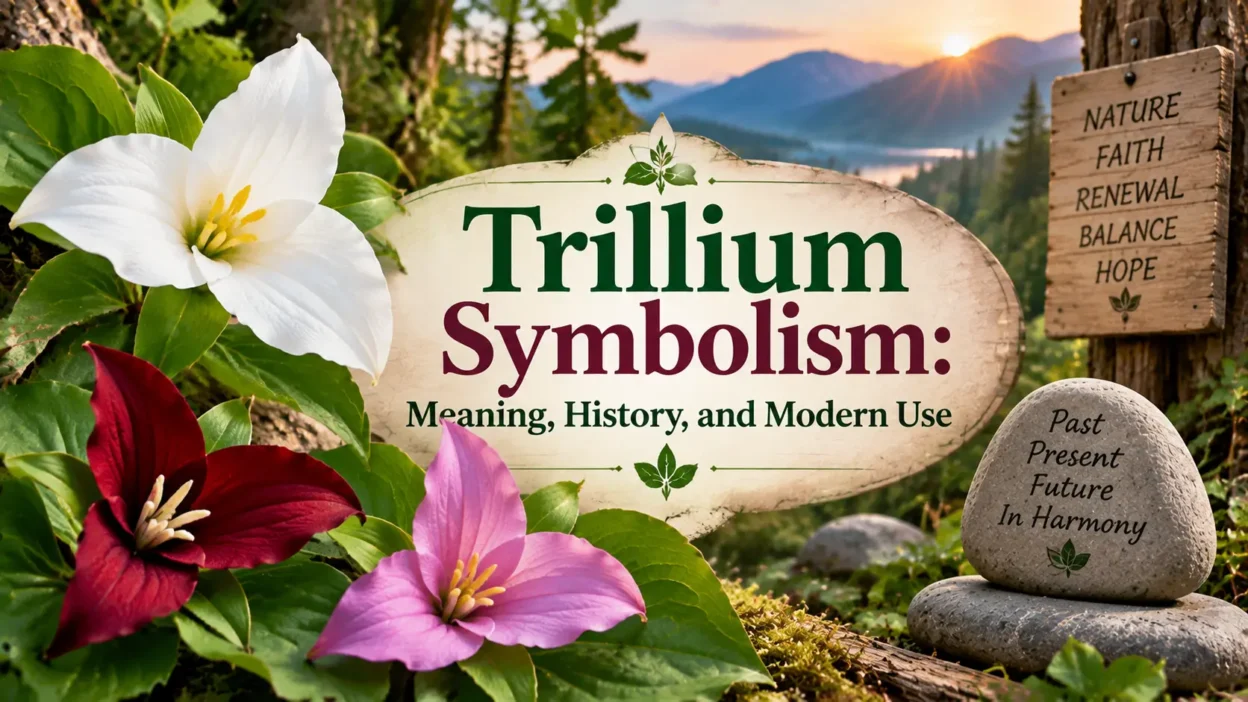
Trillium symbolism is often connected with balance, renewal, purity, and natural harmony in modern American culture. This three-petaled woodland flower has gained meaning because of its unique appearance, long connection with forests, and importance in regional traditions across North America.
The trillium is a small but distinctive wildflower recognized by its three leaves and three petals. It grows naturally in woodland areas, especially in parts of the eastern United States and Canada. Because it appears in spring after winter fades, many people associate it with fresh beginnings, growth, and the return of life to the landscape.
Understanding trillium symbolism helps explain why this flower appears in gardens, artwork, conservation efforts, tattoos, and personal designs. Its meaning comes not from one single tradition but from a combination of botanical features, cultural connections, and human appreciation for nature.
Quick Answer
Trillium symbolism commonly represents balance, renewal, and harmony with nature in modern American culture, especially through gardening, conservation, and personal artwork. Historically, the flower has also been connected with woodland traditions, healing practices, and the natural cycles of spring.
TL;DR
- Trillium represents balance through its three-part structure.
- The flower symbolizes spring renewal and natural growth.
- Native traditions connected trillium with woodland knowledge.
- Americans use trillium in gardens and conservation.
- Tattoos often represent harmony and personal transformation.
- Its meanings come from nature, culture, and appearance.
What Is the Trillium Flower and Why Does It Stand Out?
Trillium is a wildflower belonging to the genus Trillium, named because many parts of the plant appear in groups of three. A typical trillium has three green leaves, three petals, and three sepals arranged in a symmetrical pattern.
The flower usually grows in forests and shaded woodland environments. Depending on the species, trilliums can bloom in colors such as white, red, pink, yellow, or purple. The white trillium is among the most recognized varieties because of its clean appearance and connection with spring landscapes.
Unlike many garden flowers that bloom quickly, trilliums grow slowly and can take years before producing flowers. This slow growth has influenced some modern interpretations, where the plant represents patience, resilience, and steady development.
The flower’s relationship with forests also makes it a symbol of ecosystems and environmental awareness. Many nature lovers see trillium as a reminder that small plants play important roles in maintaining healthy habitats.
What Does Trillium Symbolize in the United States?
In the United States, trillium commonly symbolizes balance, renewal, and connection with the natural world. Its three-part structure naturally encourages people to associate it with ideas of completeness and stability.
Many Americans encounter trillium during spring hikes, woodland walks, and native plant gardening. Because it appears when forests begin their seasonal transformation, it often represents:
- New beginnings after difficult periods
- Growth and personal change
- Peaceful relationships with nature
- Simplicity and natural beauty
The flower is especially meaningful in areas where native wildflowers are valued as part of local identity. Gardeners often plant trilliums to preserve native landscapes rather than simply decorate outdoor spaces.
The symbolism is also connected with conservation. Since some trillium species are sensitive to habitat damage and overharvesting, the flower has become a reminder of protecting natural environments.
| Context | Meaning in the USA | Common Associations | Notes |
|---|---|---|---|
| Gardening | Natural beauty and renewal | Native plants, spring gardens | Often valued for ecological importance |
| Tattoos | Personal growth and balance | Transformation, harmony | Chosen for simple but meaningful design |
| Conservation | Protection of nature | Forests, biodiversity | Represents care for ecosystems |
| Artwork | Calmness and purity | Woodland themes | Used in nature-inspired designs |
The Historical Roots Behind Trillium Symbolism
The symbolic meaning of trillium developed from both human observation and cultural relationships with forests. Indigenous communities across North America used many native plants as sources of food, medicine, and practical knowledge. Trillium was recognized as part of the woodland environment, although specific meanings differed among communities.
European settlers and botanists later studied trillium species and documented their unique structure. The plant’s name itself comes from its pattern of threes, which influenced symbolic interpretations connected with unity and balance.
During the 19th and early 20th centuries, interest in wildflowers increased among gardeners, scientists, and nature writers. Trillium became admired as a representative of untouched forests and seasonal beauty.
Unlike symbols created through written mythology, trillium symbolism developed mainly through observation: its shape, growth cycle, and relationship with the forest shaped the meanings people attached to it.
The Meaning of Three in Trillium Symbolism
The number three plays a major role in how people interpret trillium. The flower’s three petals and three leaves naturally create associations with balance and structure.
Across many cultures, the number three has been connected with ideas such as:
- Unity between separate parts
- Beginning, middle, and end
- Past, present, and future
- Mind, body, and spirit
However, trillium does not have one universal meaning based only on the number three. Its symbolism depends on cultural background and personal interpretation.
In modern American design, people often appreciate the three-part pattern because it creates a visually balanced image. The flower can represent stability without needing a religious or supernatural explanation.
Native American Connections and Traditional Understanding
Many Indigenous cultures across North America developed detailed knowledge of native plants, including their environmental roles and practical uses. Trillium was part of woodland ecosystems familiar to various Native communities.
Some groups used parts of trillium plants in traditional practices, although uses and meanings varied by region and community. Plant knowledge was often connected with seasonal changes, survival skills, and relationships with the natural world.
It is important to avoid treating all Indigenous traditions as one shared belief system. Different nations have their own histories, languages, and plant relationships.
Today, trillium is often appreciated as part of broader conversations about respecting Indigenous ecological knowledge and protecting native landscapes.
Trillium Symbolism in Spring and Renewal
One of the strongest modern meanings of trillium comes from its connection with spring. The flower usually emerges after colder months when forests begin producing new growth.
Because of this seasonal timing, trillium often represents:
- Fresh starts
- Recovery after challenges
- Hopeful change
- Returning energy
People who choose trillium imagery may connect with the idea of rebuilding and moving forward. The flower’s slow growth also adds another layer: meaningful change can take time.
In gardens and natural areas, seeing trillium bloom can mark the transition from winter landscapes to active spring environments. This seasonal role helps explain why many people view it as a symbol of renewal.
Emotional and Psychological Meaning of Trillium
Flowers often influence human emotions because people connect natural environments with memories, comfort, and personal experiences. Trillium’s woodland setting gives it a calm and peaceful emotional quality.
Psychologically, people may associate trillium with:
- Stability during change
- Quiet strength
- Patience
- Connection with the outdoors
- Personal growth
Unlike bright tropical flowers that may suggest excitement or celebration, trillium often carries a softer meaning. Its appeal comes from subtle beauty and the feeling of discovering something rare in nature.
For many people, a trillium image represents a slower, more thoughtful approach to life.
Trillium Symbolism Across Different Cultures
Although trillium is mainly associated with North American forests, its symbolic interpretation connects with broader human ideas about flowers, seasons, and natural patterns. Different cultures often assign meaning to plants based on appearance, environment, and traditional relationships with nature.
In many cultures, three-part designs have been linked with ideas of completeness and harmony. The trillium’s three leaves and three petals naturally fit into this wider human tendency to find meaning in repeated patterns found in the natural world.
However, trillium does not carry the same meaning everywhere. Unlike widely recognized flowers such as roses or lilies, trillium symbolism remains strongly connected with the regions where the plant naturally grows.
Some broader interpretations include:
- Balance: The symmetrical structure suggests order and stability.
- Growth: The yearly return of the flower represents seasonal renewal.
- Connection: Its forest habitat reflects a relationship between humans and nature.
- Respect: Its sensitivity encourages awareness of environmental protection.
Rather than having one fixed global meaning, trillium represents how people create connections with the plants that surround them.
Why Trillium Appears in American Gardens and Conservation
Trillium has become an important native plant in many American gardens because it represents more than visual beauty. Many gardeners choose native plants to support local ecosystems and preserve regional landscapes.
Unlike many ornamental flowers imported from other parts of the world, trillium belongs naturally to North American woodland environments. Growing it can reflect an interest in protecting local biodiversity.
The flower is also associated with responsible gardening because trilliums require patience. They prefer specific conditions, including rich soil, shade, and stable environments. Their slow growth reminds gardeners that natural systems develop gradually.
Conservation groups and plant enthusiasts often view trillium as an indicator of healthy forests. When trillium populations decline, it can signal problems such as habitat destruction, invasive species, or excessive collection.
For many Americans, protecting trillium means protecting the larger woodland environment where many plants and animals depend on the same ecosystem.
Trillium Symbolism in Tattoos and Personal Expression
Trillium tattoos have become popular among people who want a nature-based symbol with personal meaning. The flower’s simple shape makes it suitable for minimalist designs, detailed botanical artwork, and larger nature-themed tattoos.
Common meanings behind trillium tattoos include:
- Personal transformation: Representing growth after life changes.
- Balance: Reflecting harmony between different parts of life.
- Connection to nature: Showing appreciation for forests and the outdoors.
- Family or relationships: Using the three-part design to represent important bonds.
Some people choose trillium tattoos because the flower reminds them of a specific place, such as a childhood forest, hiking location, or meaningful landscape.
The symbolism can also be personal rather than traditional. A trillium tattoo does not automatically communicate one specific message; its meaning depends on the individual’s experiences and intentions.
Trillium in Jewelry, Fashion, and Home Design
The trillium’s clean shape and natural appearance make it suitable for decorative uses. Designers often use floral patterns because plants communicate ideas of beauty, growth, and connection.
In jewelry, trillium designs may appear on:
- Necklaces
- Earrings
- Rings
- Pendants
- Charms
People may choose these designs because they prefer subtle nature symbolism rather than more common floral symbols.
In home decor, trillium artwork can create a woodland or botanical atmosphere. Paintings, prints, and handmade crafts featuring the flower often appear in spaces designed around natural themes.
The flower’s understated appearance fits modern design preferences that focus on simplicity, sustainability, and appreciation for natural materials.
Trillium and Its Connection With Identity and Place
Some symbols become meaningful because they represent a specific location or community. Trillium has strong regional connections, especially in parts of the eastern United States and the Pacific Northwest.
For people living near trillium habitats, the flower may represent:
- Local pride
- Childhood memories
- Outdoor experiences
- Regional landscapes
A native flower can become part of a community’s identity because residents see it return every year. Similar to how certain states or regions value specific animals, trees, or plants, trillium can represent a connection to home.
This local meaning explains why many people feel a personal attachment to trillium even if they do not have a broader cultural interpretation of the flower.
Trillium Symbolism in Literature and Art
Artists and writers often use flowers to express emotions that are difficult to describe directly. Trillium’s connection with forests gives it a quiet, reflective quality.
In artistic settings, trillium may represent:
- Peaceful environments
- Hidden beauty
- Fragility of nature
- The passing of seasons
Unlike flowers commonly associated with romance or celebration, trillium often appears in nature-focused artwork. Its presence suggests observation, patience, and appreciation for small details.
Photographers also value trillium because finding the flower in the wild can feel like discovering a rare moment in nature.
Common Misunderstandings About Trillium Symbolism
Because flowers often receive symbolic interpretations online, some meanings become exaggerated or disconnected from history. Trillium is sometimes presented with very specific spiritual meanings that may not have strong cultural support.
A few common misunderstandings include:
Trillium does not have one universal spiritual meaning
Some sources assign fixed meanings such as specific emotional messages or supernatural connections. These interpretations may reflect personal beliefs rather than widely accepted cultural traditions.
The three petals do not guarantee one symbolic meaning
The number three influences interpretation, but different people may connect it with different ideas depending on their background.
Trillium is not just a decorative flower
Because it is attractive, some people focus only on appearance. However, its ecological role and connection with native landscapes are major parts of its modern importance.
Understanding trillium symbolism requires separating established cultural associations from newer personal interpretations.
Positive and Negative Symbolism Associated With Trillium
Trillium is generally viewed positively, especially because of its connection with nature and spring. However, like many symbols, its meaning can change depending on context.
| Symbolic Aspect | Positive Meaning | Possible Concern |
|---|---|---|
| Three-part design | Balance and unity | Overinterpretation of numerical symbolism |
| Spring blooming | Renewal and hope | Short flowering period |
| Woodland habitat | Natural connection | Habitat loss threatens populations |
| Rare appearance | Specialness and discovery | Overcollection can harm plants |
The flower’s main symbolic message remains connected with harmony and respect for natural cycles.
The Modern Evolution of Trillium Meaning
Trillium symbolism has changed as society’s relationship with nature has changed. Earlier meanings were often connected with practical plant knowledge and local environments. Modern interpretations increasingly focus on conservation, personal identity, and environmental awareness.
Today, trillium may represent:
- Sustainable living
- Appreciation for native plants
- Emotional recovery
- Simplicity
- Respect for ecosystems
The rise of environmental movements has added new layers to the flower’s meaning. Many people now see native plants as symbols of responsibility toward the natural world.
At the same time, personal uses such as tattoos and artwork allow individuals to create their own connections with the flower.
Frequently Asked Questions About Trillium Symbolism
What does trillium symbolize spiritually?
Trillium is often interpreted spiritually as a symbol of balance, renewal, and connection with nature. These meanings usually come from personal beliefs and the flower’s natural features rather than one universal spiritual tradition.
What does a trillium tattoo symbolize?
A trillium tattoo commonly represents growth, harmony, patience, and appreciation for nature. Many people choose it because the flower reminds them of personal experiences, places, or important life changes.
Why is trillium associated with three?
Trillium is associated with three because its leaves, petals, and other structures often appear in groups of three. This physical pattern has influenced symbolic ideas about balance, unity, and completeness.
Is trillium a symbol of love?
Trillium is not traditionally recognized as a romantic symbol like the rose. However, some people may use it to represent love for nature, family connections, or meaningful personal relationships.
What does white trillium symbolize?
White trillium is often connected with purity, renewal, and peaceful natural beauty. In North American settings, it is especially associated with spring forests and native landscapes.
Is trillium important in Native American traditions?
Trillium was known among Indigenous communities as part of North American plant environments, but meanings and uses varied among different nations. It is important to recognize that Indigenous plant traditions are diverse rather than one shared system.
Conclusion
Trillium symbolism reflects a relationship between people and the natural world. In modern American culture, the flower commonly represents balance, renewal, patience, and respect for native landscapes.
Its three-part structure, spring appearance, and woodland habitat have shaped the meanings people attach to it. From gardens and conservation efforts to tattoos and artwork, trillium continues to represent personal growth and connection with nature.
Whether viewed as a botanical treasure or a personal symbol, trillium reminds people that meaningful change often develops slowly, much like the flower itself. Understanding trillium symbolism means recognizing both its cultural connections and the natural environment that gives it meaning.


