
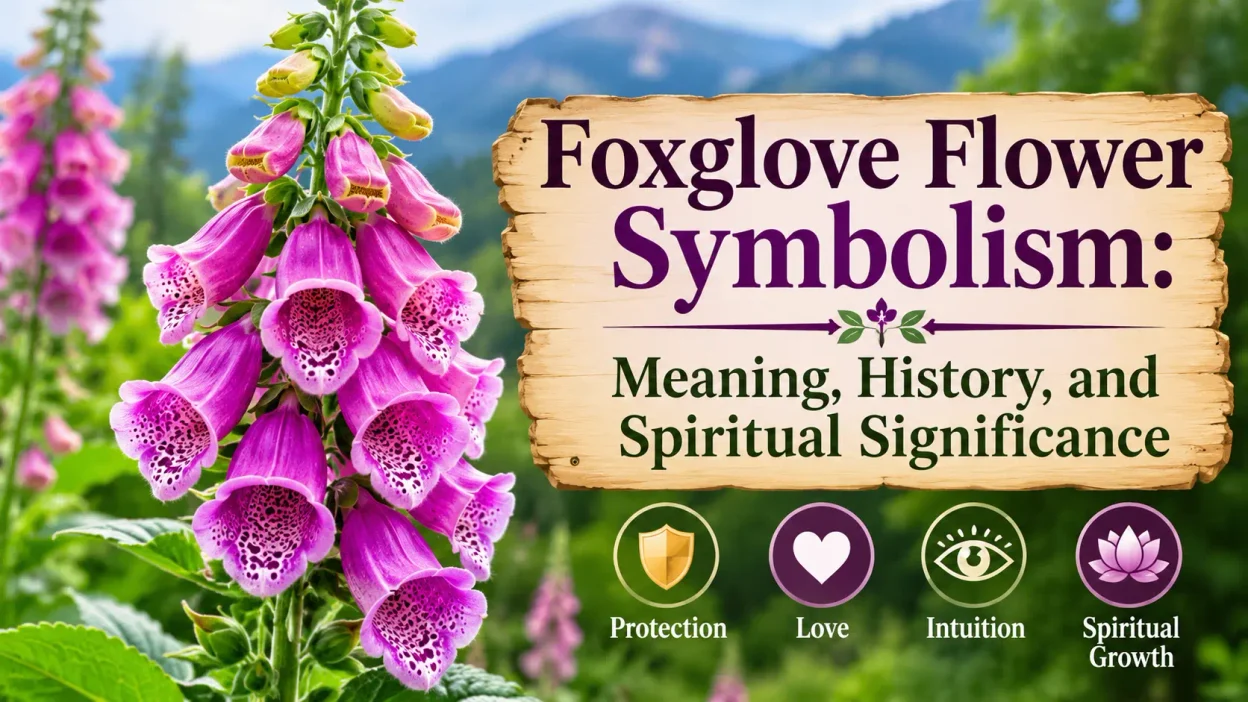
The foxglove is one of the most fascinating flowers in the natural world. Known for its tall flower spikes and delicate, bell-shaped blossoms, it creates a beautiful display in gardens, woodlands, and countryside landscapes. Its flowers often appear in shades of purple, pink, white, and yellow, with distinctive spots inside their tubular petals.
However, foxglove symbolism goes beyond its attractive appearance. The plant has a complicated history involving folklore, traditional medicine, magic, and poison. It can represent beauty, mystery, protection, healing, and hidden danger at the same time.
The foxglove’s connection with fairies and other supernatural figures has made it a popular symbol in traditional stories. Its medicinal history has also connected it with the heart, healing, and the delicate balance between life and death.
Today, foxgloves appear in gardens, artwork, literature, tattoos, and floral arrangements. Their unusual appearance and mysterious reputation make them meaningful symbols of transformation, caution, and natural beauty.
In this guide, we explore foxglove flower symbolism, its spiritual meaning, historical background, cultural folklore, color associations, and modern interpretations.
Quick Answer: What Does the Foxglove Flower Symbolize?
The foxglove flower commonly symbolizes:
- Beauty: Its elegant, bell-shaped flowers represent natural charm and delicate beauty.
- Mystery: Its association with fairies and folklore gives it an otherworldly meaning.
- Protection: Traditional European customs connected foxgloves with protection against harmful supernatural influences.
- Healing: Its historical connection with digitalis medicine represents the relationship between nature and medical discovery.
- Danger: Its poisonous properties symbolize hidden risks and the importance of caution.
- Transformation: Its growth cycle can represent change, development, and renewal.
- Insincerity: Some Victorian flower-language traditions associated foxgloves with insincerity because of their beautiful but poisonous nature.
Overall, foxglove symbolism reflects the contrast between beauty and danger, making it one of the most mysterious flowers in traditional plant symbolism.
1. The General Meaning of Foxglove Flower Symbolism
The general meaning of foxglove symbolism is connected with beauty, mystery, protection, healing, and hidden danger.
Unlike flowers that have mostly positive associations, foxgloves carry contrasting meanings. Their delicate blossoms create an impression of elegance, but the plant’s poisonous nature introduces a more serious interpretation.
This contrast is central to understanding the flower’s symbolism.
Beauty and Elegance
Foxgloves have tall stems covered with rows of colorful, bell-shaped flowers. Their graceful appearance has made them popular in cottage gardens and natural landscapes.
Symbolically, they can represent elegance, individuality, and the beauty of the natural world.
Mystery and Enchantment
Their unusual shape and traditional associations with fairies and witches give foxgloves an enchanting quality.
They can represent hidden worlds, imagination, folklore, and the mysteries of nature.
Protection and Caution
Some traditional beliefs connected foxgloves with protective powers. At the same time, their toxicity makes them reminders that not everything beautiful is harmless.
Healing and Transformation
Foxgloves have a significant place in medical history because compounds derived from the plant contributed to the development of important heart medications.
This history connects the flower with healing, scientific discovery, and transformation.
2. Foxglove Symbolism in History
Foxgloves have a long history in European landscapes, traditional medicine, and folklore.
The common foxglove, scientifically known as Digitalis purpurea, is native to parts of western Europe. It is recognized by its tall flower spikes and tubular blossoms, which commonly appear in summer.
The name Digitalis comes from the Latin word associated with a finger. It refers to the shape of the flowers, which resemble the fingers of a glove.
The common name “foxglove” has a less certain origin. One popular explanation suggests that the flowers were imagined as tiny gloves worn by foxes. Another interpretation connects the name with older folklore about supernatural creatures.
Historical Medicinal Uses
Foxglove became especially important in European medical history during the eighteenth century.
English physician and botanist William Withering investigated its use in treating dropsy, a historical term for fluid accumulation in the body. His published work in 1785 helped establish the medicinal importance of the plant.
Foxglove contains cardiac glycosides, including compounds associated with the development of digitalis medicines.
This history gives the flower a symbolic connection with healing and the heart.
Folklore and Traditional Beliefs
Foxgloves were also associated with fairies, witches, and magical creatures in European folklore.
Their bell-shaped blossoms inspired names such as fairy bells, fairy gloves, witches’ thimbles, and dead men’s bells.
These traditional names reveal how people connected the plant with both enchantment and danger.
Over time, foxgloves became symbols of the mysterious relationship between nature, medicine, and folklore.
3. Foxglove Spiritual Meaning
Spiritually, foxglove can symbolize mystery, transformation, protection, and the importance of respecting the unknown.
Its appearance and historical associations make it a meaningful flower for people interested in nature-based symbolism and traditional folklore.
Spiritual Mystery
The foxglove’s association with fairies and supernatural stories connects it with hidden knowledge and mysterious experiences.
It can represent curiosity about the unseen world and the mysteries of existence.
Transformation and Growth
Foxgloves commonly follow a two-year growth pattern. During the first year, the plant develops leaves close to the ground. In the following year, it produces its tall flowering stem.
This process can symbolize gradual development, patience, and personal transformation.
Protection and Awareness
Traditional folklore sometimes connected foxgloves with protection against harmful supernatural influences.
In modern symbolic interpretations, this can represent emotional boundaries, awareness, and the importance of protecting personal well-being.
Respect for Nature
The flower’s poisonous properties provide an important spiritual metaphor: beauty and power can exist together.
It can remind people to appreciate nature while recognizing that natural things deserve respect and caution.
These spiritual interpretations are symbolic rather than universal religious teachings.
4. Foxglove Symbolism in Folklore and Fairy Traditions
One of the most interesting aspects of foxglove symbolism is its connection with fairies and supernatural folklore.
In traditional British and Scottish stories, foxgloves were often associated with fairy creatures. Their small, bell-shaped flowers were imagined as clothing, gloves, hats, or musical instruments belonging to these mysterious beings.
Fairy Gloves and Fairy Bells
Several traditional names for foxgloves refer directly to fairies.
The flowers’ tubular shapes resemble tiny gloves or bells, making them easy to associate with imaginary fairy clothing.
These associations gave the plant an enchanting reputation.
Foxgloves and Witches
Other traditional names include witches’ gloves, witches’ fingers, and witches’ thimbles.
Such names reflect historical beliefs about plants that were considered mysterious, powerful, or potentially dangerous.
Protection Against Evil
Some Scottish folklore traditions connected foxglove leaves with protection against witches and the evil eye.
Historical accounts describe the use of leaves around cradles and household boundaries as protective customs.
These practices were based on traditional beliefs, not scientifically demonstrated supernatural effects.
The Fox and the Flower
The origin of the word “foxglove” is uncertain, but one popular folk explanation suggests that foxes wore the flowers on their paws to move quietly while hunting.
Another theory connects the flower with places where foxes raised their young.
Although these explanations are not established botanical facts, they have helped make foxglove a memorable part of European folklore.
5. Foxglove Symbolism in Love and Relationships
In love and relationships, foxglove can symbolize mystery, attraction, caution, and the complexity of emotions.
Its beautiful flowers and poisonous nature create a contrast that can be interpreted as a reminder that appearances do not always reveal someone’s true character.
Beauty and Attraction
Foxgloves can represent the attraction created by beauty, elegance, and individuality.
Their unusual shape makes them symbols of distinctive charm.
Mystery in Love
The flower’s folklore associations give it a mysterious quality.
It can represent the excitement of discovering another person’s personality and understanding the less visible parts of a relationship.
Caution and Trust
Some Victorian flower-language traditions associated foxgloves with insincerity.
This interpretation connects the flower with the importance of honesty and trust.
It can serve as a reminder to look beyond appearances and build relationships through genuine communication.
Emotional Complexity
Foxgloves can also represent the complicated nature of love.
Attraction, uncertainty, vulnerability, and trust can exist together, just as beauty and danger coexist in the plant itself.
6. Foxglove Symbolism in Different Cultures
Foxglove symbolism is particularly connected with European folklore and traditional plant knowledge. Its meanings differ across regions and historical traditions.
British Traditions
In Britain, foxgloves are closely associated with woodland landscapes, cottage gardens, and fairy folklore.
Their unusual flowers inspired traditional names connected with fairies, witches, and magical creatures.
They also became important in the history of European medicine.
Scottish Folklore
Foxgloves have a particularly interesting place in Scottish folklore.
Traditional stories connected them with fairies and protective customs. In some accounts from the Scottish Borders, leaves were placed around household boundaries and babies’ cradles to protect against harmful supernatural influences.
These associations helped establish foxgloves as symbols of mystery and protection.
Irish Folklore
Foxgloves are also part of the wider landscape of British and Irish plant folklore.
Their bell-shaped blossoms and unusual appearance fit naturally into traditional stories about fairies and other supernatural beings.
However, specific beliefs should not be assumed to have been shared by every Irish community.
European Traditions
Across parts of Europe, foxgloves became associated with traditional medicine, magical folklore, and the natural environment.
Their poisonous properties contributed to their reputation as plants that required careful handling.
Modern Cultural Interpretations
Today, foxgloves are widely appreciated as ornamental flowers and valuable plants for pollinators.
Their symbolic meanings often focus on mystery, natural beauty, healing history, and the contrast between attraction and danger.
7. Foxglove Symbolism in Healing and Medicine
Foxglove has a remarkable connection with the history of medicine.
Although the plant is highly poisonous, compounds derived from certain foxglove species have been used in medicines for specific heart conditions.
This unusual relationship has inspired a symbolic connection between healing and danger.
The Heart Connection
Foxglove contains cardiac glycosides, which affect the way the heart functions.
Historically, these compounds became important in the development of digitalis medicines.
Because of this medical connection, foxglove can symbolize the heart, life, and the delicate balance required to maintain health.
Healing Through Knowledge
The history of foxglove also represents scientific discovery.
Its medicinal applications demonstrate how careful observation and research can help transform knowledge of natural substances into medical treatments.
The Balance Between Healing and Harm
Foxglove’s medicinal importance does not make the raw plant safe.
Its leaves, flowers, and other parts can cause serious poisoning if ingested.
Symbolically, this contrast represents the idea that something powerful can have both beneficial and harmful effects depending on how it is understood and used.
Safety note: Never consume foxglove or prepare homemade remedies from it. Digitalis-related medicines require professional medical supervision and precise dosing.
8. Foxglove Symbolism in Dreams
Dreaming about foxgloves can be interpreted as a symbol of mystery, attraction, caution, personal growth, or hidden concerns.
Dream meanings are subjective, and a flower in a dream does not have one scientifically established interpretation.
The following are common symbolic possibilities.
Dreaming of Purple Foxgloves
Purple foxgloves may represent mystery, imagination, creativity, or spiritual curiosity.
They can reflect an interest in exploring unfamiliar ideas or experiences.
Dreaming of White Foxgloves
White foxgloves may symbolize innocence, simplicity, peace, or the desire for emotional clarity.
Dreaming of a Field of Foxgloves
A field filled with foxgloves may represent beauty, imagination, personal opportunities, or an interest in exploring new possibilities.
Dreaming of a Wilting Foxglove
A wilting flower may symbolize disappointment, neglected responsibilities, or the end of a particular stage in life.
Dreaming of Touching a Foxglove
This dream may represent curiosity about something unfamiliar or attractive.
Because foxglove is poisonous, it may also symbolize the need to recognize risks before becoming involved in a situation.
Dreaming of Picking Foxgloves
Picking foxgloves may represent attraction, personal choices, or the desire to hold on to something beautiful.
The dream’s emotional atmosphere and personal associations are important when considering its possible meaning.
9. Foxglove Symbolism in Literature and Art
Foxgloves have inspired writers, poets, illustrators, and artists because of their unusual appearance and mysterious reputation.
Their tall flower spikes create striking visual imagery, while their poisonous nature gives them associations with hidden danger and enchantment.
Mystery and the Supernatural
In literary descriptions, foxgloves can help create an atmosphere of mystery.
Their association with fairies and witches makes them suitable symbols in fantasy, folklore, and supernatural stories.
Beauty and Danger
Artists and writers may use foxgloves to represent something attractive but potentially harmful.
This interpretation is especially effective when a story explores deception, temptation, or the difference between appearance and reality.
Natural Beauty
Foxgloves are also popular subjects in botanical illustrations and garden photography.
Their repeating bell-shaped flowers and tall stems make them visually distinctive.
Poetry and Imagination
The flower has appeared in poetry and nature writing, where it can represent the beauty of wild landscapes and the relationship between humans and nature.
Its unusual form allows writers to explore imagination, memory, and the mysterious qualities of the natural world.
10. Foxglove Symbolism by Color
Foxgloves come in several colors, including purple, pink, white, cream, and yellow.
Although their color meanings are not universal, each shade can inspire different symbolic interpretations.
| Foxglove ColorCommon Symbolic Meaning | |
|---|---|
| Purple | Mystery, imagination, spirituality, and creativity |
| Pink | Affection, gentleness, admiration, and beauty |
| White | Innocence, peace, purity, and simplicity |
| Yellow | Happiness, optimism, warmth, and energy |
| Cream | Elegance, subtle beauty, and calmness |
| Deep Magenta | Passion, individuality, and emotional intensity |
Purple Foxglove
Purple is one of the most recognizable colors associated with common foxgloves.
It can symbolize mystery, creativity, imagination, and spiritual curiosity.
Its rich color also gives the flower an elegant and dramatic appearance.
Pink Foxglove
Pink foxgloves can represent affection, gentleness, admiration, and emotional warmth.
They are often appreciated for their soft and romantic appearance.
White Foxglove
White foxgloves may symbolize simplicity, innocence, peace, and elegance.
Their pale blossoms create a delicate appearance that contrasts with the plant’s mysterious reputation.
Yellow Foxglove
Yellow varieties can symbolize happiness, optimism, confidence, and vitality.
Their bright appearance creates a cheerful impression in gardens and floral designs.
Cream Foxglove
Cream-colored foxgloves can represent understated beauty, calmness, and sophistication.
Their gentle appearance makes them suitable for natural and minimalist floral arrangements.
11. Foxglove Symbolism as a Tattoo
A foxglove tattoo can represent mystery, beauty, transformation, individuality, and the contrast between attraction and danger.
Because foxgloves have a distinctive appearance and complicated symbolism, they can be meaningful choices for people who appreciate flowers with deeper interpretations.
Different designs may communicate different messages.
Single foxglove tattoo: Can represent individuality, elegance, and personal mystery.
Purple foxglove tattoo: May symbolize imagination, spirituality, and creativity.
Foxglove with butterflies: Can represent transformation, freedom, and the relationship between nature and change.
Foxglove with a moon: May symbolize mystery, intuition, and an interest in the unknown.
Foxglove bouquet tattoo: Can represent natural beauty, personal growth, and appreciation for wildflowers.
Black-and-gray foxglove tattoo: May emphasize elegance, remembrance, mystery, or the contrast between beauty and danger.
A foxglove tattoo can also serve as a reminder that appearances do not always tell the complete story.
12. Foxglove Symbolism in Gardens and Nature
Foxgloves are popular garden flowers because of their tall stems and colorful blossoms.
They are especially associated with cottage gardens, woodland settings, and natural landscapes.
Their presence in a garden can symbolize the beauty of wild nature, seasonal renewal, and the importance of biodiversity.
Connection With Bees
Foxglove flowers are adapted to attract pollinating insects, especially long-tongued bees such as bumblebees.
Their tubular blossoms provide nectar, while their spotted interiors help guide pollinators toward it.
This relationship can inspire symbolic interpretations involving cooperation, interconnectedness, and the importance of supporting nature.
Growth and Renewal
Many common foxgloves follow a biennial growth pattern.
They develop leaves during their first year and produce their tall flowering stems during the second.
This life cycle can represent patience, gradual development, and the rewards of nurturing something over time.
Wild Beauty
Foxgloves often grow in woodland clearings, hedgerows, and other natural environments.
Their ability to appear in relatively untamed landscapes makes them symbols of freedom, natural elegance, and organic beauty.
Important safety reminder: Foxgloves are toxic if eaten and can also be harmful to pets. Enjoy them visually, keep them away from children and animals, and avoid using them in edible arrangements.
13. Foxglove Symbolism in Modern Life
In modern culture, foxgloves are valued for their beauty, historical associations, and distinctive appearance.
They are commonly used in garden design, botanical illustrations, photography, and floral-inspired artwork.
Their symbolism continues to develop through several modern associations.
Mystery and Individuality
Foxgloves are less conventional than familiar flowers such as roses and tulips.
Their unusual appearance makes them appealing symbols of individuality and unconventional beauty.
Natural Elegance
Their tall stems and delicate flowers create an elegant visual effect.
They are often associated with romantic gardens, woodland settings, and natural floral designs.
Scientific Discovery
Their medical history gives them a connection with scientific research and the relationship between nature and modern medicine.
Caution and Awareness
Their poisonous properties provide a reminder that natural beauty can coexist with risk.
This interpretation makes foxglove a useful symbol in artwork and storytelling about hidden truths and careful decision-making.
14. Positive and Negative Meanings of Foxglove
Foxglove symbolism includes both positive and negative interpretations.
Its meaning depends on the context, cultural background, and the particular quality being emphasized.
| Positive Meanings | Negative Meanings |
|---|---|
| Natural beauty | Hidden danger |
| Mystery and imagination | Deception |
| Protection in folklore | Fear and superstition |
| Healing history | Poison and harm |
| Personal transformation | Uncertainty |
| Elegance | Insincerity |
| Creativity | Temptation |
The positive meanings focus on beauty, imagination, and healing, while the negative meanings emphasize danger, caution, and misleading appearances.
This combination makes foxglove a particularly interesting flower in literature and symbolic interpretation.
15. Foxglove Compared With Other Symbolic Flowers
Foxglove has a distinctive symbolic identity, but comparing it with other flowers helps explain its unique qualities.
| Flower | Common Symbolic Meaning | Main Association |
|---|---|---|
| Foxglove | Mystery, beauty, caution, and healing | Folklore and medicinal history |
| Rose | Love, passion, and beauty | Romance |
| Lily | Purity, renewal, and remembrance | Spirituality |
| Lavender | Calmness, devotion, and tranquility | Peace |
| Bluebell | Humility, gratitude, and constancy | Woodland beauty |
| Bellflower | Gratitude, affection, and humility | Delicate bell-shaped blossoms |
| Poppy | Remembrance, sleep, and imagination | Beauty and symbolism of sleep |
Foxglove stands out because its attractive appearance, supernatural folklore, and poisonous properties create a complex combination of meanings.
Frequently Asked Questions About Foxglove Flower Symbolism
1. What is the main meaning of foxglove flower symbolism?
Foxglove flower symbolism commonly represents beauty, mystery, protection, healing, transformation, and hidden danger. Its delicate blossoms and poisonous nature create a contrast between attraction and caution.
2. What does foxglove symbolize spiritually?
Spiritually, foxglove can symbolize mystery, personal transformation, protection, and respect for nature. These meanings are influenced by its traditional associations with fairies and folklore.
3. Why is foxglove associated with fairies?
Foxglove’s small, bell-shaped flowers inspired traditional stories about fairies wearing them as gloves, hats, or clothing. This association led to common names such as fairy bells and fairy gloves.
4. Does foxglove symbolize danger?
Yes. Foxglove is highly poisonous, and its beautiful appearance contrasts with its potential harm. Symbolically, it can represent hidden risks, caution, and the importance of looking beyond appearances.
5. What does purple foxglove symbolize?
Purple foxglove can symbolize mystery, imagination, creativity, spirituality, and individuality. These meanings are modern symbolic interpretations influenced by the flower’s rich color and unusual appearance.
6. What does white foxglove symbolize?
White foxglove may represent innocence, purity, peace, simplicity, and elegance. Its pale flowers create a delicate appearance.
7. What does foxglove mean in Victorian flower language?
Some Victorian flower-language traditions associated foxglove with insincerity. This interpretation reflected the contrast between the flower’s attractive appearance and its poisonous nature. Flower meanings varied between historical dictionaries.
8. Is foxglove a symbol of healing?
Foxglove is associated with healing because compounds derived from the plant contributed to the development of digitalis medicines used for certain heart conditions. However, the raw plant is poisonous and must never be used as a homemade remedy.
9. What does a foxglove tattoo symbolize?
A foxglove tattoo can represent mystery, elegance, individuality, transformation, and the contrast between beauty and danger. Its meaning depends on the design and the wearer’s personal experiences.
10. Is foxglove poisonous?
Yes. Foxglove contains toxic compounds that can cause serious poisoning, including dangerous effects on the heart. All parts of the plant should be treated as poisonous if eaten, and it should be kept away from children and pets.
Conclusion
Foxglove flower symbolism represents beauty, mystery, protection, healing, transformation, and hidden danger. Its unusual bell-shaped blossoms and rich folklore have made it one of the most fascinating flowers in traditional European plant symbolism.
Historically, foxgloves were associated with fairies, witches, protective customs, and traditional medicine. Their role in the development of digitalis medicines also connects them with scientific discovery and the complex relationship between nature and human health.
Today, foxgloves remain popular in gardens, literature, artwork, and tattoos because of their elegant appearance and mysterious character.
Ultimately, the foxglove offers an important symbolic lesson: beauty can exist alongside danger, and appreciating nature also means understanding and respecting its power.


