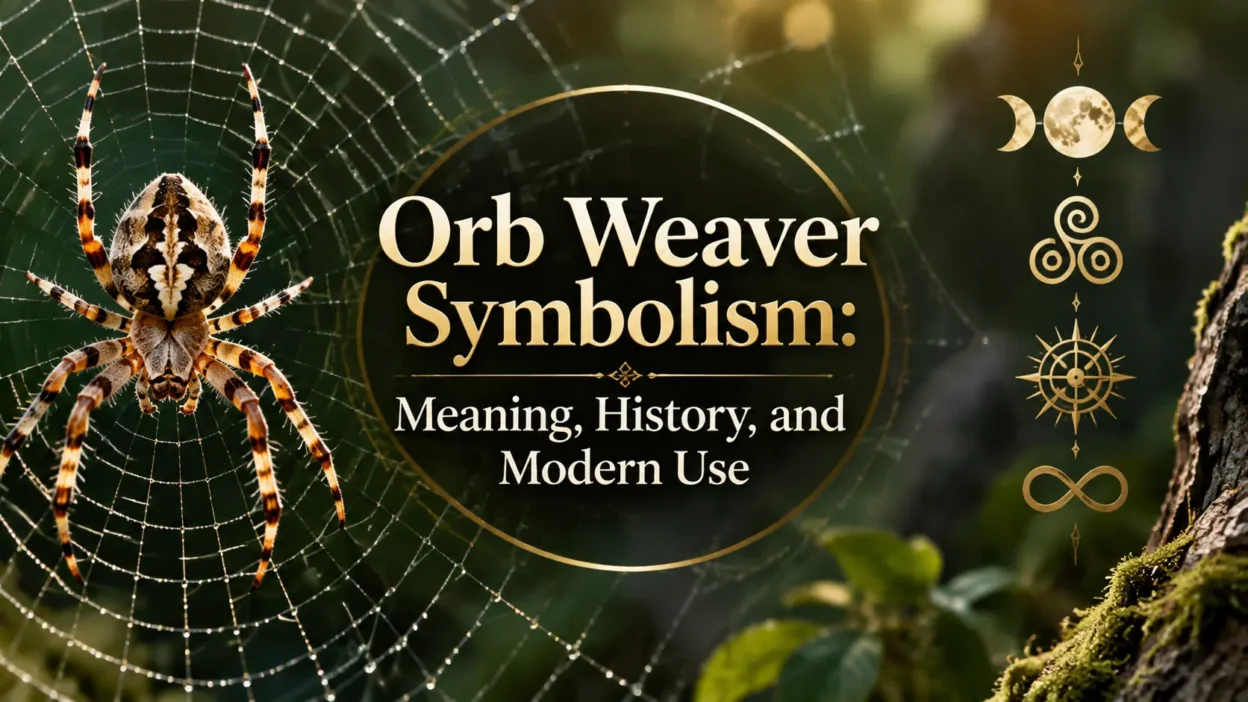
Orb weaver spiders are among the most recognizable spiders in North America because of their large, circular webs and striking appearances. For many people, seeing an orb weaver in a garden, backyard, or wooded area creates curiosity about its meaning. Orb weaver symbolism is often connected with creativity, patience, balance, and the ability to build something carefully over time.
Unlike symbols that come from a single tradition, the orb weaver carries meanings shaped by nature observation, folklore, art, and personal interpretation. In modern American culture, many people view this spider as a reminder of careful planning, resilience, and the importance of creating a strong foundation.
The orb weaver’s web plays a major role in its symbolism. The spider does not simply create a random structure; it carefully designs a precise pattern that serves a purpose. This connection between creativity and survival has influenced how people understand the orb weaver as a symbol in tattoos, home decor, storytelling, and personal reflection.
Quick Answer
Orb weaver symbolism commonly represents creativity, patience, and careful creation in modern American culture, especially through its detailed web-building behavior. Historically, spiders have also been associated with storytelling, feminine creativity, connection, and the ability to shape one’s own path.
TL;DR
- Orb weavers symbolize creativity through web-making.
- Their webs represent patience and careful planning.
- American culture often views spiders as nature symbols.
- Folklore connects spiders with stories and wisdom.
- Tattoos use orb weavers for resilience meanings.
- The symbol can represent balance and connection.
What Is an Orb Weaver Spider?
Orb weavers are a large group of spiders known for their round, wheel-shaped webs. They belong mainly to the family Araneidae and include many species found across the United States. These spiders often appear in gardens, forests, fields, and around homes during warmer months.
Their most noticeable feature is their circular web. The web contains strong radial lines that extend outward like spokes on a wheel, connected by spiral threads that create the trapping surface. Many orb weavers rebuild parts of their webs regularly, showing a repeated process of creation and renewal.
Their appearance varies widely. Some have bright yellow, orange, or red markings, while others have brown or gray patterns that help them blend into their surroundings. Although their size and appearance may seem intimidating, most orb weavers are harmless to humans and play an important role in controlling insect populations.
Because of their unusual behavior and artistic webs, orb weavers have become symbols of construction, creativity, and natural intelligence.
What Does an Orb Weaver Symbolize in the United States?
In the United States, orb weaver symbolism is mainly connected with creation, patience, and persistence. The spider’s daily work of building and repairing its web creates a natural example of effort and preparation.
Many Americans encounter orb weavers outdoors, especially during late summer and fall when their webs become more visible. Because of this seasonal appearance, some people associate them with change, preparation, and the transition between different stages of life.
The spider’s web is often the strongest symbolic element. It represents how small actions can create something larger. A single thread may seem weak, but thousands of connected threads create a structure capable of supporting the spider’s survival.
Common American interpretations include:
| Context | Meaning in the USA | Common Associations | Notes |
|---|---|---|---|
| Nature | Creativity and survival | Gardens, forests, ecosystems | Shows balance in the natural world |
| Personal growth | Patience and progress | Goals, rebuilding, learning | Reflects steady effort |
| Art and design | Creativity and structure | Tattoos, crafts, decoration | Inspired by web patterns |
| Seasonal symbolism | Change and preparation | Fall, outdoor spaces | Linked with visible autumn webs |
| Storytelling | Connection and imagination | Folklore, literature | Related to spider myths |
The Web as a Symbol of Creation and Creativity
The orb weaver’s web is one of the strongest reasons people connect this spider with creativity. Unlike a simple shelter, the web is an organized design created through instinct and precision.
Many cultures have used spiders as symbols of creators because they appear to “make” something from almost nothing. The spider takes invisible silk and transforms it into a functional structure. This idea connects the orb weaver with artists, builders, writers, and anyone who creates something through dedication.
In modern American life, this symbolism appears in creative communities. Writers, designers, and artists sometimes use spider imagery to represent the process of building ideas. The web becomes a metaphor for connecting thoughts, experiences, and relationships.
The orb weaver reminds people that creativity is not always a sudden moment of inspiration. Often, it comes from repeated work, small improvements, and attention to detail.
Patience and Persistence: Lessons From the Orb Weaver
Orb weavers spend significant time creating their webs, but their work does not always last. Wind, weather, and animals can damage or destroy a web. Instead of abandoning the effort, the spider repairs or rebuilds it.
This behavior creates a connection between orb weavers and resilience. The spider represents the ability to continue working after setbacks.
In American culture, this meaning fits ideas of personal growth and determination. People often use natural symbols to represent overcoming challenges, and the orb weaver offers a simple example of rebuilding after difficulty.
The symbolism does not suggest that success happens instantly. Instead, it reflects the value of patience, repetition, and learning from experience.
Ancient Roots of Spider Symbolism
Spider symbolism existed long before modern interpretations of orb weavers. Across different cultures, spiders were often connected with creation because of their ability to produce complex webs.
In many traditional stories, spiders appear as intelligent figures that teach lessons about wisdom, planning, and survival. Their ability to create patterns from simple materials made them symbols of craftsmanship.
Some traditions viewed spiders positively as protectors or creators, while others associated them with fear because of their hidden movements and connection to darkness. These different views show that spider symbolism has always depended on cultural beliefs and personal experiences.
The orb weaver’s symbolism developed from these broader spider associations but became more focused on the beauty and structure of its circular web.
Orb Weaver Symbolism in Native American Traditions
Spider symbolism appears in several Native American traditions, although meanings differ among individual nations and communities. One of the most well-known spider-related figures is the Spider Woman or Grandmother Spider in certain Indigenous stories.
These stories often connect spiders with creation, teaching, wisdom, and connection between people. The spider may represent someone who helps maintain balance or shares important knowledge.
However, it is important to recognize that Native American cultures are diverse. There is no single universal Native American meaning for spiders or orb weavers. Interpretations depend on specific tribal histories, languages, and traditions.
Today, many people appreciate spider symbolism through a broader understanding of nature, while respecting that Indigenous meanings come from distinct cultural contexts.
Feminine Creativity and the Spider Symbol
Spiders have often been associated with feminine symbolism because many spider-related figures in mythology are connected with creation, weaving, and nurturing.
The act of weaving has historically been linked with creativity and craftsmanship. Because spiders “weave” their homes from silk, they became connected with ideas of artistic ability and life-building.
In modern interpretations, orb weavers may symbolize feminine strength, independence, and creative expression. This meaning is especially common in artwork and tattoos where the spider represents someone who creates their own identity.
However, the symbol is not limited to one gender. The orb weaver can represent creativity and resilience for anyone.
Why Orb Weaver Symbolism Appears in Tattoos and Personal Style
Orb weaver tattoos are often chosen because the spider combines natural beauty with meaningful ideas. The circular web, detailed patterns, and unusual appearance give tattoo artists many ways to create visually interesting designs.
For some people, an orb weaver tattoo represents creativity and personal growth. The web can symbolize the life a person has built through experiences, relationships, and choices. Each thread represents a connection, while the complete web represents the larger story.
Others choose the image because they admire spiders as part of nature. An orb weaver tattoo may reflect respect for wildlife, outdoor experiences, gardening, or a connection with the natural world.
Common meanings behind orb weaver tattoos include:
- Building a new life after challenges
- Creating something meaningful
- Accepting change and growth
- Finding balance between independence and connection
- Appreciating overlooked parts of nature
Unlike some spider symbols that focus on fear or danger, orb weaver designs often highlight beauty, patience, and craftsmanship.
Emotional and Psychological Meaning of the Orb Weaver
The orb weaver can represent several emotional ideas because of the way it lives. Its behavior reflects qualities that many people value in their own lives.
Patience
An orb weaver does not rush its work. It carefully creates a web, waits, observes, and responds when necessary. This behavior can represent calmness and the importance of timing.
For people facing long-term goals, the spider may serve as a reminder that progress often happens through consistent effort rather than quick results.
Resilience
A damaged web does not mean the end of the spider’s work. The ability to repair and rebuild connects the orb weaver with emotional recovery.
Many people interpret this symbol as encouragement to continue after disappointment, failure, or major life changes.
Connection
A web is made of many connected strands. This structure can represent relationships, community, and the way individual choices affect a larger system.
In modern American culture, the web can also represent digital connections, communication, and networks between people.
Orb Weaver Symbolism in Home Decor and Garden Culture
Many Americans encounter orb weavers around homes, especially in gardens and outdoor spaces. Because these spiders usually help control insects, gardeners often view them as beneficial visitors rather than unwanted pests.
In garden symbolism, orb weavers can represent:
- Natural balance
- Environmental awareness
- Respect for wildlife
- Harmony between humans and nature
A spider web in a garden may also remind people that beauty can appear in unexpected places. The web is temporary, yet it creates a carefully organized design that changes with weather and seasons.
Some nature-focused home designs include spider imagery because it represents organic patterns and the creativity found in the natural world.
Orb Weaver Symbolism in Literature, Art, and Storytelling
Spiders have appeared in stories for centuries because they naturally create strong images. Their webs can represent connections, traps, creativity, or hidden relationships depending on the story.
The orb weaver’s specific symbolism often focuses more on creation than danger. Its circular web resembles patterns found in art, architecture, and nature, making it attractive to visual artists.
Writers may use spider imagery to explore themes such as:
- Building a personal identity
- Creating stories or ideas
- Understanding relationships
- Surviving difficult circumstances
The spider often works as a metaphor because its actions are easy for humans to understand. Building, repairing, and connecting are experiences shared across cultures.
Cross-Cultural Interpretations of Spider Symbolism
Spider meanings vary around the world. Some cultures view spiders as creative figures, while others connect them with fear or uncertainty.
In parts of African folklore, the spider figure Anansi is known as a clever storyteller who uses intelligence and strategy. This tradition connects spiders with knowledge and communication.
In some Asian traditions, spiders have been associated with good fortune or unexpected visitors. Certain beliefs view seeing a spider as a positive sign, although interpretations vary by region.
European folklore sometimes presented spiders with mixed meanings. They could represent careful work and protection but also fear because of their hidden movements.
These examples show that spider symbolism is not fixed. The meaning changes depending on cultural beliefs, historical experiences, and personal interpretation.
Common Misunderstandings About Orb Weaver Symbolism
Because spiders often create fear, orb weavers are sometimes misunderstood. Their appearance can make people assume they represent danger, but their symbolism is usually much more connected with creation and balance.
One common misunderstanding is that all spider symbols have the same meaning. A spider used in horror imagery may represent fear, while an orb weaver in nature artwork may represent creativity and patience.
Another misunderstanding is that seeing an orb weaver always carries a specific spiritual message. Some people interpret encounters personally, but there is no universal rule that every spider sighting has a hidden meaning.
A balanced interpretation recognizes both sides: spiders can inspire curiosity while also causing discomfort. Symbolism depends on context.
Positive and Negative Meanings Associated With Orb Weavers
Like many natural symbols, orb weavers can have different interpretations.
| Symbolic ViewPositive MeaningChallenging Meaning | ||
|---|---|---|
| Web | Creativity and connection | Feeling trapped |
| Spider | Intelligence and patience | Fear or uncertainty |
| Rebuilding | Recovery and persistence | Repeating difficult cycles |
| Hidden movement | Observation and awareness | Mystery or discomfort |
The positive interpretation usually focuses on the spider’s ability to create and adapt. The negative interpretation often comes from human fear of spiders rather than the animal’s actual behavior.
Understanding both perspectives allows people to appreciate the symbol without forcing one meaning onto everyone.
How Orb Weaver Meaning Has Changed Over Time
Spider symbolism has changed as human relationships with nature have evolved.
In earlier traditions, spiders were often explained through myths and stories. People used animals to understand ideas about creation, survival, and human behavior.
Modern interpretations are often more personal. Many Americans view the orb weaver through environmental awareness, artistic expression, and individual experiences.
The rise of nature photography, wildlife education, and outdoor hobbies has also changed how people see spiders. Instead of focusing only on fear, many people now recognize their ecological importance.
The orb weaver has shifted from a creature people might avoid into a symbol of natural design and adaptation.
Orb Weaver Symbolism in Modern Digital Culture
Modern technology has created new ways for symbols to spread. Images of orb weavers and their webs appear in photography, social media posts, educational content, and nature communities.
The web itself has gained additional meaning because the internet is often described as a “web.” This connection gives spider imagery another layer of interpretation related to communication and information sharing.
However, digital culture can also exaggerate fear. Halloween content, horror movies, and fictional portrayals often present spiders as frightening creatures. These portrayals are cultural expressions rather than accurate reflections of orb weaver behavior.
Today, the orb weaver exists between two worlds: a real animal in nature and a symbol used in human creativity.
Frequently Asked Questions About Orb Weaver Symbolism
What does an orb weaver symbolize spiritually?
Orb weavers are often interpreted as symbols of creation, patience, and connection. Spiritual interpretations vary, and different people may attach personal meanings based on their beliefs and experiences.
Are orb weavers considered a good symbol?
Many people view orb weavers positively because they represent creativity, balance, and natural harmony. Their role in gardens also connects them with helpfulness and environmental balance.
What does an orb weaver tattoo mean?
An orb weaver tattoo often represents creativity, resilience, personal growth, or the connections a person builds throughout life. The meaning depends on the individual’s reason for choosing the design.
Do orb weavers have a meaning in Native American culture?
Some Native American traditions include spider figures connected with creation and wisdom, but meanings differ among tribes. There is no single interpretation shared by all Native American cultures.
Are orb weavers symbols of fear?
They can represent fear in horror stories and popular culture, but their broader symbolism often focuses on creativity, patience, and survival.
What does a spider web symbolize?
A spider web can symbolize connection, creation, relationships, and the results of careful effort. In modern culture, it may also represent communication networks.
Why do people find orb weavers fascinating?
Many people are interested in orb weavers because of their detailed webs, unusual appearance, and important role in ecosystems. Their behavior shows organization and adaptation in the natural world.
Conclusion
The meaning of orb weaver symbolism comes from the spider’s unique ability to create, adapt, and maintain its web. In modern American culture, it is commonly connected with creativity, patience, resilience, and the connections people build throughout life.
From garden encounters to tattoos and artwork, the orb weaver represents more than a spider. It reflects the process of creating something valuable through careful effort and persistence.
Rather than viewing the orb weaver only through fear, many people now recognize it as an example of nature’s design, reminding us that even small creatures can represent important ideas about growth, balance, and renewal.


