
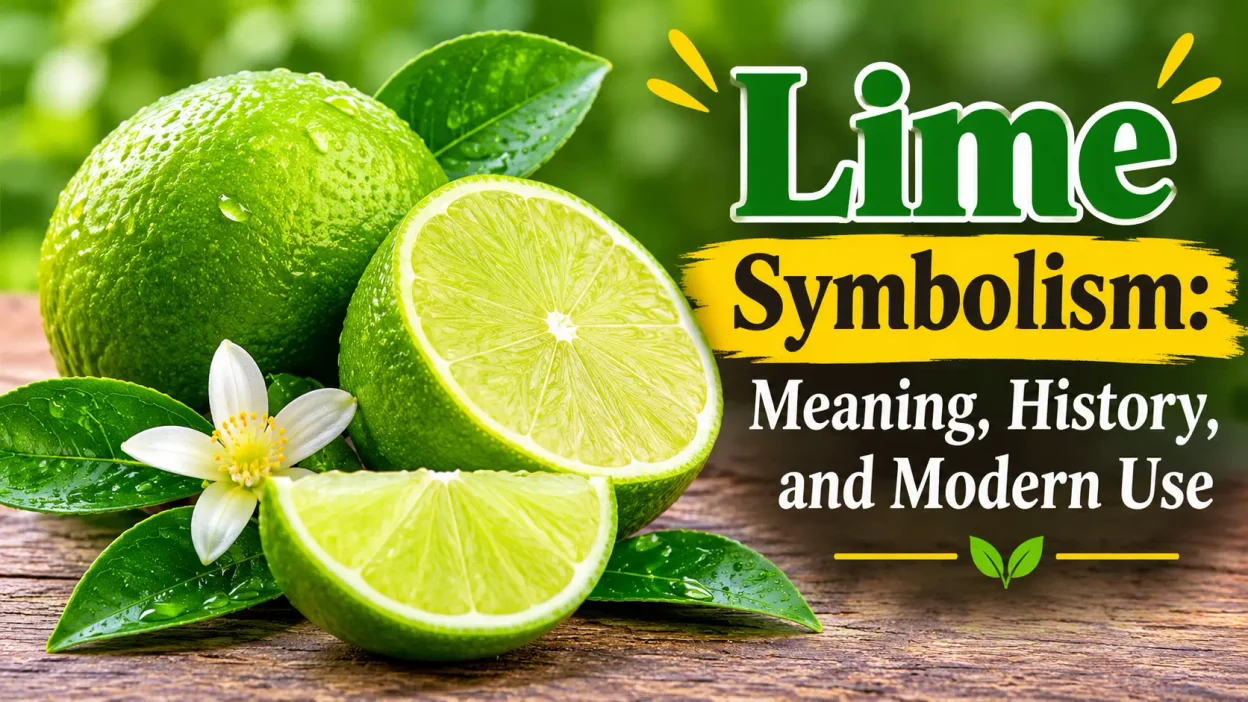
Limes are small citrus fruits with a distinctive green appearance, refreshing fragrance, and sharp, tangy flavor. Although they are commonly used in cooking, drinks, and traditional remedies, they also carry symbolic meanings connected with freshness, vitality, purification, protection, and renewal.
The symbolism of lime comes from several characteristics. Its green skin connects it with nature, growth, and new beginnings, while its sour taste represents awakening, stimulation, and the ability to bring balance to different experiences. In some cultural traditions, citrus fruits are also used in protective customs and spiritual practices.
Today, lime imagery appears in art, fashion, home decoration, tattoos, branding, and popular culture. It can represent everything from tropical energy and youthful creativity to emotional cleansing and personal transformation.
However, lime symbolism is not universal. Its meaning depends on whether someone is referring to the citrus fruit, lime-green color, lime tree, or a particular cultural tradition.
This guide explores the meaning of lime, its historical background, spiritual interpretations, cultural associations, and modern symbolic uses.
Quick Answer: What Does Lime Symbolize?
Lime commonly symbolizes:
- Freshness: Its refreshing taste and fragrance represent a clean beginning.
- Renewal: Its green appearance connects it with growth and new opportunities.
- Vitality: Its bright color and sharp flavor suggest energy and enthusiasm.
- Cleansing: Its traditional uses in household and folk practices create associations with purification.
- Protection: Certain regional customs use citrus fruits in protective rituals.
- Balance: Its acidity represents contrast, moderation, and the ability to enhance other experiences.
- Prosperity: Its connection with nourishment and cultivation can symbolize abundance and well-being.
Overall, lime is a symbol of freshness, energy, and transformation, although its meaning changes across different contexts.
1. The General Meaning of Lime Symbolism
The general meaning of lime symbolism centers on freshness, renewal, energy, cleansing, and vitality.
Unlike flowers that have well-established meanings in traditional flower language, limes do not have one universally recognized symbolic definition. Their associations have developed through agriculture, cooking, traditional customs, and their distinctive physical characteristics.
The fruit’s green color suggests natural growth, while its sharp flavor creates a sense of alertness and stimulation.
Some of its most common symbolic interpretations include:
Freshness and purity: Lime is widely used to add a fresh taste to food and drinks. Symbolically, this can represent cleanliness, clarity, and a new perspective.
Energy and enthusiasm: Its bright appearance and tangy flavor make it a natural symbol of excitement and vitality.
Growth and renewal: Green is commonly associated with vegetation, spring, and new beginnings. Lime therefore connects with personal development and positive change.
Protection and cleansing: Some traditional practices use citrus fruits in rituals intended to remove negative influences or protect a household.
Balance and contrast: Lime’s acidity can transform the taste of other ingredients. Symbolically, it represents the importance of balance and the ability to improve a situation through contrast.
These meanings make lime an interesting symbol of both physical freshness and emotional renewal.
2. Lime Symbolism in History
Limes have a long history of cultivation, trade, and cultural use. Their historical importance is closely connected with food preservation, agriculture, traditional medicine, and international commerce.
Limes belong to the citrus family, which includes lemons, oranges, and several other fruits. Different lime varieties developed and spread through trade routes connecting parts of Asia, the Middle East, Africa, Europe, and the Americas.
Over time, limes became important ingredients in regional cuisines and household traditions.
Ancient and Traditional Uses
Citrus fruits were valued for their distinctive flavors and practical uses. Their juice and aromatic peels became important ingredients in cooking, food preparation, and traditional remedies.
In South Asia, different citrus fruits have appeared in religious customs, household practices, and traditional healing systems.
Maritime History
Lime juice became particularly important in maritime history because citrus helped prevent scurvy, a disease caused by vitamin C deficiency.
British sailors were famously associated with lime juice during the 18th and 19th centuries. This historical connection contributed to the nickname “limeys” for British sailors and later British people.
Symbolically, this history connects limes with survival, health, nourishment, and protection during difficult journeys.
Modern Cultural Significance
Today, limes are recognized around the world as ingredients in beverages, desserts, sauces, and traditional dishes.
Their association with refreshing flavors has also influenced advertising, design, and popular culture.
Through these historical developments, lime has become associated with health, hospitality, freshness, and everyday abundance.
3. Lime Spiritual Meaning
Spiritually, lime is often interpreted as a symbol of purification, renewal, protection, and positive energy.
Its refreshing fragrance and cleansing associations make it a meaningful image in some folk and contemporary spiritual practices.
Although there is no universal religious interpretation of lime, its symbolic qualities can encourage reflection on emotional and spiritual well-being.
Purification and Cleansing
Lime’s association with cleaning and freshness has inspired interpretations of spiritual purification.
In symbolic contexts, it can represent the desire to release unwanted influences, clear emotional confusion, and create space for positive experiences.
Protection From Negative Energy
Some folk traditions use citrus fruits in protective customs. Within these traditions, lime may represent a barrier against misfortune or unwanted influences.
The exact practices and meanings differ between communities and should not be treated as universal beliefs.
Renewal and Transformation
The green color of lime connects it with nature and regeneration.
Spiritually, this can represent leaving old habits behind, embracing new opportunities, and developing a healthier relationship with oneself.
Vitality and Positive Energy
Lime’s bright appearance and refreshing character make it a symbol of enthusiasm and renewed motivation.
It can serve as a reminder to approach life with curiosity, energy, and an open mind.
4. Lime Symbolism in Different Cultures
Lime has different meanings in different cultural settings. In some places, it is mainly valued as food, while in others, citrus fruits also appear in ceremonial, protective, or traditional practices.
South Asian Traditions
In parts of India and neighboring regions, lime and other citrus fruits appear in household customs and religious practices.
Lime garlands and fruit offerings are associated with certain Hindu devotional traditions. Citrus fruits may also be used in customs intended to ward off negative influences or protect homes and businesses.
In some South Asian folk practices, lime is combined with chilies and hung near entrances or vehicles as a protective charm.
These practices have regional variations. The meaning of a particular ritual depends on its community and religious context.
Southeast Asian Traditions
In Southeast Asia, lime is an important ingredient in food, beverages, and traditional household practices.
For example, Indonesian lime, commonly called jeruk nipis, is used in cooking and traditional preparations.
Its fresh aroma and acidic juice have helped establish associations with cleanliness, freshness, and vitality.
Middle Eastern and Persian Culinary Traditions
Limes and other citrus fruits have an important place in several Middle Eastern culinary traditions.
Dried limes, particularly in Persian and neighboring cuisines, are used to add a distinctive sour and earthy flavor to dishes.
In these settings, citrus can carry personal associations with family recipes, cultural heritage, hospitality, and connection to home.
African Cultural Practices
Citrus fruits appear in different African culinary and folk traditions.
In some regional customs, lime is associated with purification, protection, and hospitality. Lime juice may also be used in refreshing drinks offered to guests.
These meanings vary considerably across African communities, so they should not be generalized to the entire continent.
Western Modern Culture
In contemporary Western culture, lime is commonly associated with summer, tropical environments, freshness, and energetic lifestyles.
It appears frequently in food advertising, beverages, fashion, and interior design.
Its bright green appearance also makes it a popular visual symbol of creativity and youthful energy.
5. Lime Symbolism in Protection and Cleansing
One of the more interesting aspects of lime symbolism is its connection with protection and purification.
In certain cultural and folk traditions, citrus fruits are used in customs intended to remove unwanted influences or protect people and property.
These practices often combine the fruit with other symbolic objects or ingredients.
Common interpretations include:
Removing negativity: Lime can represent the symbolic removal of unwanted emotional or spiritual influences.
Protecting the home: In some regional customs, citrus fruits are placed near entrances as protective symbols.
Restoring balance: Its association with freshness can represent returning to a peaceful and organized environment.
Creating a clean beginning: Using lime in cleansing-related customs can symbolize the desire to start again with a positive attitude.
These interpretations belong to particular cultural and folk traditions. There is no scientific evidence that placing a lime in a room or using it in a ritual physically removes negative energy.
6. Lime Symbolism in Love and Relationships
In love and relationships, lime can symbolize freshness, excitement, balance, and the importance of maintaining enthusiasm.
It is not a traditional universal symbol of romantic love in the way that roses are. However, its distinctive qualities can inspire meaningful interpretations.
Freshness in Relationships
A lime can represent bringing new energy into a relationship.
It may symbolize the importance of trying new experiences, communicating openly, and avoiding emotional stagnation.
Excitement and Attraction
The fruit’s sharp flavor can represent excitement, spontaneity, and the lively emotions that make relationships interesting.
Balance and Compatibility
Lime is frequently used to balance sweetness in food and drinks.
Symbolically, this can represent how different personalities and perspectives complement one another.
Shared Experiences
Lime is often associated with food, drinks, and social gatherings.
As a gift or decorative symbol, it can represent shared enjoyment, friendship, and memorable experiences.
7. Lime Symbolism in Dreams
Dreaming about lime can be interpreted in several ways, including renewal, emotional clarity, energy, and the need for balance.
Dream symbolism is subjective, so the meaning depends on the dreamer’s experiences, emotions, and the details of the dream.
Here are some possible interpretations.
Dreaming of a Fresh Green Lime
A fresh green lime may symbolize new opportunities, positive changes, and personal growth.
It can reflect a desire for a healthier or more energetic lifestyle.
Dreaming of Eating a Lime
Eating a lime may represent confronting something unpleasant but necessary.
Its sour taste can symbolize a difficult truth, an unexpected experience, or a situation that requires emotional adjustment.
Dreaming of a Basket of Limes
A basket filled with limes may represent abundance, preparation, and opportunities.
It can also symbolize the importance of appreciating the resources already available in life.
Dreaming of a Rotten Lime
A rotten lime may represent disappointment, neglected responsibilities, or an opportunity that has been overlooked.
It could encourage reflection on something that needs attention.
Dreaming of Lime Juice
Lime juice may symbolize freshness, emotional release, and the desire to simplify a complicated situation.
Dreaming of Planting a Lime Tree
Planting a lime tree may represent long-term plans, patience, and the development of something meaningful.
The dreamer’s emotions are important. A pleasant dream may reflect positive associations, while an uncomfortable dream may connect with personal worries or unresolved feelings.
8. Lime Symbolism in Art and Literature
Lime appears in art, literature, advertising, and visual storytelling through its distinctive green color and associations with citrus flavors.
Writers and artists can use lime imagery to communicate freshness, energy, contrast, and transformation.
Freshness and Renewal
Lime can represent a fresh perspective or the beginning of a new stage in life.
A lime tree, for example, may suggest growth, cultivation, and the passage of time.
Energy and Excitement
The bright green appearance of lime can create a lively visual impression.
Artists may use it to represent enthusiasm, youth, or a vibrant environment.
Contrast and Complexity
The sour taste of lime can also function as a metaphor for difficult experiences.
In literature, an unpleasant taste may represent disappointment, an uncomfortable truth, or an unexpected change.
Tropical Identity
Lime imagery often appears in scenes involving beaches, warm weather, restaurants, and summer celebrations.
It can help establish an atmosphere of relaxation, hospitality, and enjoyment.
9. Lime Symbolism by Color
Lime fruit and lime-green color are closely connected, but they do not communicate exactly the same meanings.
The fruit’s green skin is associated with nature and freshness, while lime green as a color can communicate youthfulness, visibility, creativity, and boldness.
| Color or AppearanceCommon Symbolic Meaning | |
|---|---|
| Bright lime green | Freshness, energy, and optimism |
| Pale lime green | Renewal, gentleness, and natural growth |
| Yellowish lime green | Warmth, enthusiasm, and creativity |
| Dark lime green | Stability, nature, and maturity |
| Artificial neon lime | Attention, boldness, and modernity |
| Brown or spoiled lime | Neglect, disappointment, and decline |
Bright Lime Green
Bright lime green is often associated with vitality, creativity, and enthusiasm.
Its vivid appearance makes it useful in designs intended to communicate energy and excitement.
Pale Lime Green
Pale lime green can suggest calmness, freshness, and gentle renewal.
It is often used in designs that aim to create a light and natural atmosphere.
Dark Lime Green
Darker shades can communicate stability, nature, and maturity.
They may also create a connection with forests, leaves, and natural environments.
Neon Lime Green
Neon lime green is particularly noticeable.
It can represent confidence, modernity, visibility, and bold self-expression. However, in certain visual contexts, fluorescent green can also suggest chemicals or toxicity.
10. Lime Symbolism in Tattoos
A lime tattoo can represent freshness, individuality, energy, humor, and an appreciation for life’s simple pleasures.
Because lime does not have one fixed traditional meaning, tattoo interpretations are often personal.
Different designs can communicate different messages.
Single lime tattoo: May represent vitality, freshness, and a positive outlook.
Lime slice tattoo: Can symbolize enjoyment, spontaneity, and a love of vibrant experiences.
Lime branch tattoo: May represent growth, nature, and personal development.
Lime with flowers: Can combine the meanings of renewal, beauty, and natural abundance.
Lime with a butterfly: May symbolize transformation, freedom, and fresh beginnings.
Lime with a quote: Can communicate a personal philosophy about enjoying life, overcoming challenges, or embracing change.
Some people choose lime tattoos simply because they enjoy citrus fruits or tropical designs. A tattoo does not need to represent a traditional belief to have personal meaning.
11. Lime Symbolism in Food and Hospitality
Lime has an important place in food culture, where its symbolism is closely connected with hospitality, refreshment, and shared experiences.
Its juice is used in beverages, sauces, desserts, salads, marinades, and many traditional dishes.
Because it enhances other flavors, lime can represent the ability to bring balance and character to everyday experiences.
Hospitality
Offering a refreshing lime-based drink can symbolize welcome and generosity.
Celebration
Lime is frequently associated with summer parties, gatherings, and festive beverages.
Nourishment
Its culinary importance connects it with food, nourishment, and everyday well-being.
Cultural Heritage
Family recipes and traditional dishes often carry memories of home, identity, and shared experiences.
In this way, lime can represent more than flavor. It can become a symbol of connection and cultural continuity.
12. Lime Tree Symbolism
A lime tree can symbolize growth, nourishment, abundance, and the value of patience.
Unlike the fruit alone, the tree represents the process that produces nourishment over time.
Its branches, leaves, flowers, and fruit can all inspire different symbolic interpretations.
Growth: The tree represents gradual development and the importance of nurturing potential.
Abundance: Its fruit can symbolize productivity, prosperity, and nourishment.
Patience: Growing a healthy fruit tree requires care and time, making it a symbol of persistence.
Family and continuity: A mature tree can represent roots, heritage, and connections between generations.
Natural balance: Its relationship with the surrounding environment can symbolize harmony and interconnectedness.
An important distinction is necessary: the citrus lime tree is not the same plant as the European lime or linden tree (Tilia). The two have different botanical identities and cultural histories. European linden trees have their own symbolism involving community, love, justice, and gathering places.
13. Lime Symbolism in Modern Life
In modern life, lime is frequently used as a symbol of freshness, creativity, and energetic living.
Its popularity extends beyond food and drinks into design, fashion, branding, and digital culture.
Branding and Advertising
Companies often use lime imagery to communicate freshness, natural ingredients, excitement, and a youthful identity.
Its bright green appearance helps products stand out visually.
Fashion
Lime-green clothing can express confidence, creativity, and individuality.
It is often used in bold outfits and seasonal collections.
Home Decoration
Lime-green decorations can create an energetic and refreshing atmosphere.
The color is particularly effective as an accent in kitchens, living spaces, and contemporary interiors.
Environmental Awareness
Because green is strongly connected with nature, lime imagery may also appear in environmental campaigns and sustainability-related designs.
However, a green appearance alone does not establish that a product is environmentally friendly.
14. Lime Symbolism Compared With Other Citrus Fruits
Limes, lemons, oranges, and grapefruits belong to the citrus family, but their colors, flavors, and cultural associations can create different symbolic interpretations.
| Citrus Fruit | Common Symbolic Meaning | Main Association |
|---|---|---|
| Lime | Freshness, vitality, renewal, and cleansing | Sharp flavor and green appearance |
| Lemon | Clarity, purification, and contrast | Bright color and sour taste |
| Orange | Happiness, warmth, abundance, and celebration | Sweetness and vibrant color |
| Grapefruit | Balance, complexity, and renewal | Combination of sweet and bitter flavors |
| Mandarin | Good fortune, prosperity, and celebration in some traditions | Golden-orange appearance |
These interpretations are broad symbolic associations rather than universal cultural definitions.
Lime stands out because its refreshing qualities combine with its green color to create a strong connection with energy and renewal.
15. Positive and Negative Meanings of Lime
Like many symbols, lime can have both positive and negative interpretations.
Its meaning depends on the fruit’s condition, the context in which it appears, and the feelings associated with it.
| Positive Meanings | Negative Meanings |
|---|---|
| Freshness | Sourness or unpleasantness |
| Renewal | Immaturity |
| Energy | Overstimulation |
| Protection | Fear of negative influences |
| Growth | Unfinished development |
| Vitality | Emotional irritation |
| Balance | Disruption or contrast |
A fresh lime may represent vitality and new beginnings, while a spoiled lime may suggest neglect or disappointment.
Similarly, lime green can appear cheerful and energetic in one setting but artificial or toxic in another.
This contrast makes lime an interesting symbol of how the same object can communicate different messages depending on its surroundings.
Frequently Asked Questions About Lime Symbolism
1. What is the main meaning of lime symbolism?
The main meanings of lime symbolism include freshness, renewal, vitality, cleansing, and energy. Its green appearance connects it with growth, while its tangy flavor suggests stimulation and awakening.
2. What does lime symbolize spiritually?
Spiritually, lime can represent purification, protection, positive energy, and new beginnings. These interpretations are particularly associated with certain folk practices and contemporary spiritual beliefs.
3. Does lime symbolize good luck?
In some regional folk traditions, citrus fruits are used in customs associated with protection and good fortune. Outside those contexts, lime is more commonly associated with freshness, vitality, and renewal.
4. What does a lime symbolize in a dream?
A lime in a dream may represent new opportunities, emotional clarity, personal growth, or an unexpected experience. Its meaning depends on the dreamer’s emotions and the condition of the fruit.
5. What does lime green symbolize?
Lime green commonly represents energy, freshness, youthfulness, creativity, and renewal. In certain contexts, especially those involving fluorescent imagery, it can also suggest artificiality or toxicity.
6. What does a lime tattoo mean?
A lime tattoo may symbolize vitality, individuality, freshness, humor, and enjoyment of life. Its meaning often depends on the design and the personal experiences of the wearer.
7. Are limes used for spiritual protection?
Yes, certain regional traditions use lime and other citrus fruits in customs intended to protect homes, vehicles, or individuals from negative influences. These are cultural and folk beliefs rather than scientifically established protective effects.
8. What does a lime tree symbolize?
A lime tree can symbolize growth, abundance, nourishment, patience, and family connections. Its fruit represents the rewards of cultivation and the value of consistent care.
9. Is lime a symbol of love?
Lime is not a widely established traditional symbol of romantic love. However, it can represent excitement, freshness, shared experiences, and balance in modern personal interpretations.
10. What is the difference between lime fruit symbolism and lime-green color symbolism?
Lime fruit symbolism focuses on freshness, nourishment, cleansing, and vitality. Lime-green color symbolism focuses more on youthfulness, creativity, visibility, energy, and renewal.
Conclusion
Lime symbolism is closely connected with freshness, vitality, cleansing, renewal, and protection. Its distinctive green appearance represents growth and natural energy, while its sharp flavor suggests awakening, balance, and new perspectives.
Across different cultures, lime has appeared in food traditions, household customs, and regional protective practices. Its historical role in maritime health also connects it with nourishment and survival.
In modern life, lime imagery communicates creativity, enthusiasm, hospitality, and a refreshing approach to everyday experiences.
Whether represented as a citrus fruit, a tree, or a bright green color, lime offers a meaningful reminder that even small things can bring freshness, balance, and positive change into life.


