
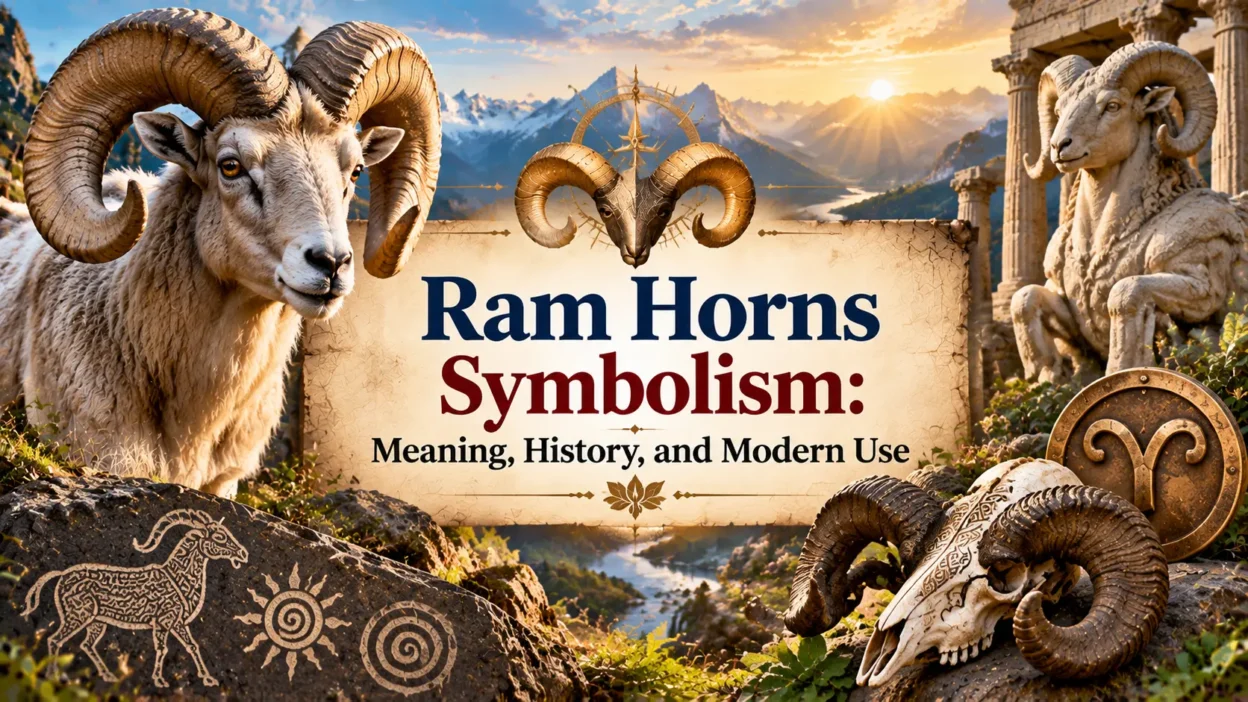
Ram horns are curved, spiral-shaped horns found on male sheep, especially mature rams. Across many cultures, these horns have represented strength, determination, leadership, sacrifice, and spiritual authority. Today, ram horns symbolism appears in American art, tattoos, jewelry, fashion, and religious imagery, where people often connect the shape with confidence and personal identity.
The meaning of ram horns developed from the real-life qualities people observed in rams. The animal is known for its powerful headbutting behavior, resilience, and ability to survive in difficult environments. These traits helped transform the horns into a symbol associated with courage, protection, and persistence.
Quick Answer
Ram horns commonly symbolize strength, determination, and leadership in modern American culture, especially in tattoos, artwork, and personal symbols of resilience. Historically, they have also represented sacrifice, divine connection, fertility, and authority in ancient religious and mythological traditions.
TL;DR
- Ram horns represent strength, courage, and persistence.
- Ancient cultures linked them with gods and leadership.
- Religious traditions used ram imagery for sacrifice and faith.
- Americans often use them in tattoos and designs.
- Their meaning depends on cultural and personal context.
What Ram Horns Look Like and Where People See Them
Ram horns are thick, curved structures that grow from the sides of a male sheep’s head. Unlike straight horns, ram horns usually form a spiral shape that curls outward and then back toward the face.
The appearance itself contributes to the symbol’s meaning. The spiral shape can suggest growth, cycles, movement, and natural power. Their solid structure reflects endurance and protection because rams use their horns for defense and competition.
People encounter ram horn imagery in many places, including:
- Ancient sculptures and carvings
- Religious artwork
- Heraldry and emblems
- Jewelry designs
- Tattoo art
- Fantasy artwork
- Clothing and home decorations
In modern design, ram horns are often separated from the animal itself and used as a visual symbol of confidence, independence, or connection with nature.
What Ram Horns Commonly Mean in the United States
In the United States, ram horns are most often understood as symbols of strength, determination, and individuality. Their meaning changes depending on where they appear.
A person choosing a ram horn tattoo may connect it with overcoming challenges, standing firm, or showing a strong personality. A designer using ram horns in artwork may be expressing themes of nature, masculinity, leadership, or ancient traditions.
Common American interpretations include:
| Context | Meaning in the USA | Common Associations | Notes |
|---|---|---|---|
| Tattoos | Strength and personal resilience | Courage, identity, overcoming struggles | Meaning is usually personal |
| Jewelry | Confidence and individuality | Style, nature, uniqueness | Often used as a bold design element |
| Religious art | Faith and sacrifice | Biblical stories, devotion | Depends on tradition |
| Fantasy design | Power and ancient wisdom | Mythology, warriors, magic themes | Popular in entertainment |
| Home decor | Rustic strength | Nature, tradition, wilderness | Often used for visual appeal |
Unlike some symbols with a single fixed meaning, ram horns can communicate different ideas depending on the person and setting.
Ancient Roots and Early Symbolism
The symbolic history of ram horns reaches back thousands of years. Ancient societies observed the ram’s physical power and connected the animal with important human qualities such as authority, fertility, and protection.
In ancient Egypt, ram imagery was connected with several deities. The ram-headed god Amun became one of Egypt’s most important religious figures. Rams were associated with kingship, creation, and divine power because of their connection with this deity.
Ancient Near Eastern cultures also used ram imagery in religious and royal contexts. The horns often represented strength and connection between earthly rulers and divine forces.
The meaning was not simply based on appearance. Communities depended on sheep for food, clothing materials, and survival. Because of this practical importance, the ram became connected with prosperity and life itself.
Ram Horns in Religious Traditions
Ram horns hold an important place in several religious traditions, especially Judaism and Christianity.
In Jewish tradition, the shofar is traditionally made from a ram’s horn. It is blown during important religious occasions, including Rosh Hashanah and Yom Kippur. The sound serves as a call to reflection, repentance, and spiritual awareness.
The biblical story of Abraham and Isaac also connects the ram with sacrifice. According to the Book of Genesis, a ram appears as a substitute sacrifice, creating an association between the animal and themes of faith, obedience, and divine provision.
In Christianity, the ram can represent sacrifice and spiritual commitment because of these biblical connections. However, interpretations vary among denominations and individual believers.
The symbol’s religious meaning is usually connected to specific traditions rather than a universal belief shared by everyone.
Ram Horns in Mythology and Folklore
Ram horns appear in mythology as signs of power, transformation, and connection to supernatural forces.
In Greek mythology, the ram appears in the story of the Golden Fleece. The magical ram Chrysomallos becomes a central figure in the tale of Jason and the Argonauts. The golden fleece represents a valuable object connected with adventure and kingship.
The Greek god Zeus was also sometimes represented with ram associations through regional traditions and artistic interpretations. These connections helped reinforce the idea of the ram as a symbol of authority.
In folklore, horned animals often represent strength and wild nature. Ram horns, in particular, became associated with determination because rams are known for charging forward rather than avoiding conflict.
The Psychological Meaning Behind Ram Horn Symbols
People often choose symbols because they communicate something about how they see themselves or how they want others to see them.
Ram horns can represent:
- Confidence during difficult situations
- The ability to defend personal boundaries
- Persistence toward goals
- A connection with nature
- Independence and self-direction
The spiral shape may also attract people because it suggests movement and development. Unlike a simple straight line, a spiral appears to grow while returning around itself, creating associations with cycles and personal evolution.
However, symbolism is personal. One person may view ram horns as a sign of courage, while another may appreciate them simply for their visual appearance.
Why Ram Horns Appear in Tattoos and Personal Style
Ram horn tattoos have become popular among people who want imagery connected with strength and individuality.
Common tattoo meanings include:
- Surviving hardship
- Personal transformation
- Inner strength
- Leadership
- Determination
- Connection with ancient cultures
Some people combine ram horns with other elements, such as flowers, skulls, celestial designs, or geometric patterns. These combinations create new meanings based on the wearer’s personal story.
In fashion and jewelry, ram horn designs often create a bold appearance. They may appeal to people interested in natural forms, mythology, or symbolic artwork.
Ram Horns in American Art, Design, and Pop Culture
American artists and designers often use ram horns because they create a strong visual impression. Their curved shape works well in logos, illustrations, fantasy themes, and decorative artwork.
In entertainment, horned figures frequently appear in fantasy and mythology-inspired settings. However, fictional uses do not always reflect traditional meanings.
Sports teams, brands, and creative projects may also use ram-like imagery to communicate toughness, competition, and energy. In these cases, the symbol usually focuses on physical strength rather than religious meaning.
The popularity of natural and ancient-inspired designs has also increased interest in horn imagery in modern decor and fashion.
Positive and Negative Interpretations of Ram Horns
Ram horns are usually connected with positive qualities, but interpretations can vary.
Positive associations include:
- Courage
- Protection
- Leadership
- Determination
- Spiritual awareness
Some people may interpret horns negatively because horn imagery has sometimes been connected with frightening or rebellious characters in certain modern entertainment or cultural contexts.
These negative associations often come from specific stories, religious interpretations, or fictional portrayals rather than from the historical meaning of ram horns themselves.
Understanding the original context helps separate traditional symbolism from later interpretations.
How Ram Horn Symbolism Has Changed Over Time
The meaning of ram horns has shifted as societies changed.
In ancient communities, the symbol was closely tied to agriculture, survival, religion, and royal authority. The ram was a valuable animal, so its image carried practical and spiritual importance.
Later traditions focused more on religious meanings, especially sacrifice and divine connection. Modern audiences often interpret ram horns through personal expression, art, and identity.
Today, the symbol can represent ancient wisdom and personal strength at the same time. A tattoo artist, religious community, or fashion designer may each use the same image for very different reasons.
Common Misunderstandings About the Symbol
One common misunderstanding is that all horn symbols have the same meaning. In reality, ram horns, goat horns, and other horned symbols can have different histories.
Another misconception is that ram horns always represent aggression because rams fight by charging. While strength and determination are part of the symbolism, many traditions also connect the ram with sacrifice, protection, and spiritual reflection.
Modern fictional portrayals can also create confusion by mixing different horned creatures and traditions together.
The safest interpretation is to consider the cultural setting where the symbol appears.
Modern Uses of Ram Horn Imagery
Today, ram horns appear in many forms:
- Tattoos representing personal strength
- Jewelry inspired by nature
- Fantasy illustrations
- Religious objects such as shofars
- Clothing patterns
- Home decorations
- Digital artwork
Social media has also helped spread symbolic designs by allowing people to share tattoo meanings, artwork, and personal interpretations.
For many Americans, ram horns are less about a single traditional meaning and more about expressing values such as resilience, confidence, and individuality.
Frequently Asked Questions
What do ram horns symbolize spiritually?
Ram horns can symbolize spiritual strength, sacrifice, and connection with divine traditions. Their meaning depends on the religious or cultural context where they appear.
What does a ram horn tattoo mean?
A ram horn tattoo often represents courage, determination, resilience, or personal identity. Some people choose it because of its connection to mythology, religion, or natural strength.
Are ram horns a positive symbol?
Ram horns are generally viewed as a positive symbol associated with strength, protection, and perseverance. However, meanings can change depending on cultural or personal interpretation.
What do ram horns represent in the Bible?
In biblical traditions, ram horns are connected with sacrifice, faith, and spiritual awareness. The ram’s horn is also used as a shofar in Jewish religious practices.
Are ram horns and goat horns the same symbol?
No. Although both involve horn imagery, they come from different animals and have different cultural histories. Their meanings may overlap but are not identical.
Why are ram horns popular in modern tattoos?
Ram horns are popular because their shape is visually striking and they communicate ideas of strength, independence, and overcoming challenges.
Conclusion
Ram horns have carried meanings connected with strength, leadership, sacrifice, and spiritual traditions across many cultures. In the United States, people often interpret them through personal expression, artwork, tattoos, and religious connections.
The meaning of ram horns symbolism depends on the context. A shofar, a tattoo, and a fantasy illustration may all use ram horns, but each can communicate a different message.
Rather than representing only power or aggression, ram horns show how a single natural image can develop many layers of meaning through human history, belief, and creativity.


