
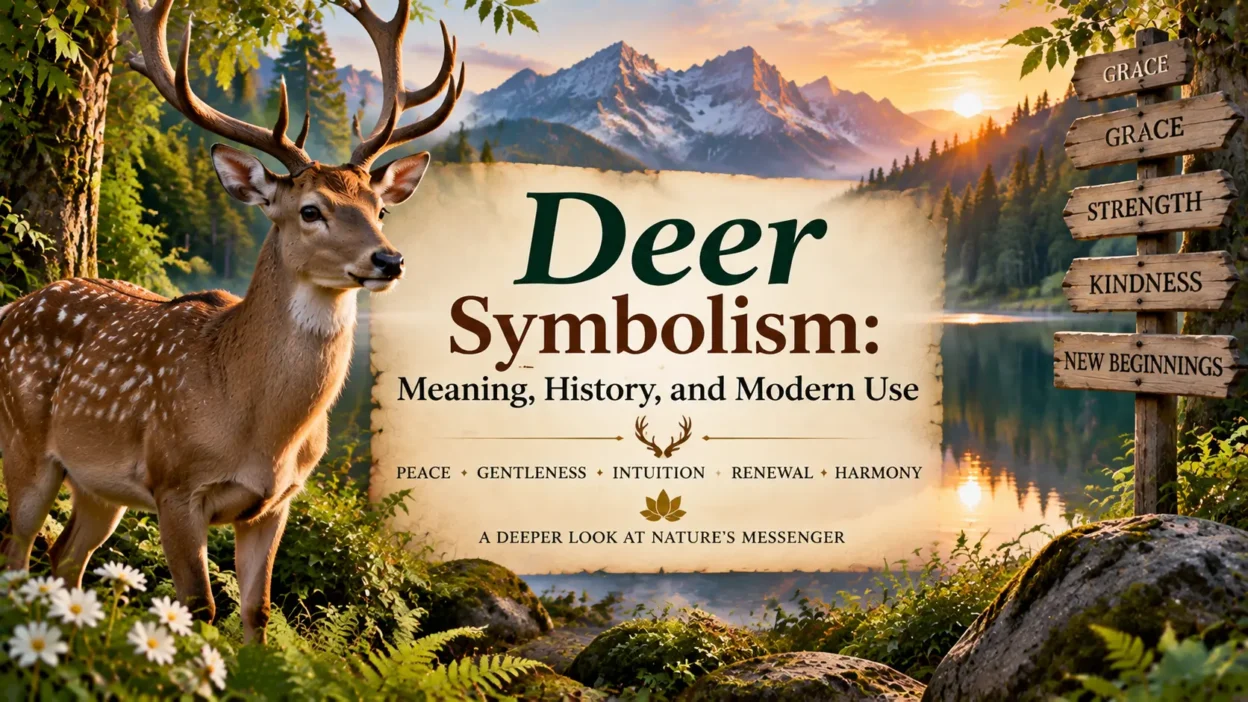
Deer have long appeared in human stories, artwork, and traditions because of their graceful appearance, alert nature, and connection with forests and natural spaces. Animal symbolism deer often represents gentleness, renewal, awareness, and a respectful relationship with the natural world. In modern American culture, deer images appear in outdoor design, tattoos, holiday decorations, and personal expressions of identity.
The meaning of deer changes depending on the cultural setting. A deer may represent innocence and kindness in one tradition, while another may connect it with hunting heritage, survival, or spiritual guidance. Understanding deer symbolism requires looking at history, folklore, religion, and the ways people use this animal today.
Quick Answer
Deer symbolism commonly represents gentleness, renewal, and harmony with nature in modern American culture, especially in art, personal identity, and outdoor traditions. Historically, deer have also been associated with fertility, protection, spiritual connection, and transformation in many cultures.
TL;DR
- Deer symbolize gentleness, awareness, and natural harmony.
- Ancient traditions connected deer with renewal and fertility.
- Americans often view deer through nature and wildlife culture.
- Deer tattoos can represent personal growth and resilience.
- Religious traditions use deer as signs of devotion.
- Modern designs use deer for calm and connection.
What the Deer Symbol Looks Like and Where People Encounter It
The deer is recognized by its slender body, long legs, large ears, and, in males of many species, branching antlers. Deer live across many parts of the world, including forests, grasslands, and suburban areas. In the United States, species such as the white-tailed deer are familiar parts of rural landscapes and wildlife experiences.
Because people frequently encounter deer near forests, parks, and country areas, the animal often becomes connected with ideas of wilderness, balance, and peaceful surroundings. Its quiet movements and ability to remain alert in changing environments contribute to many symbolic interpretations.
Deer imagery appears in paintings, logos, jewelry, clothing, home decorations, tattoos, holiday designs, and outdoor-themed products. The symbol can feel personal because many people associate deer with memories of nature, childhood experiences, family traditions, or meaningful places.
What Deer Commonly Means in the United States
In the United States, deer are often connected with nature, gentleness, and peaceful living. Many Americans see deer as a reminder of wildlife conservation, forests, and the importance of protecting natural habitats.
The meaning also depends on personal experience. Someone who enjoys hiking may view a deer as a symbol of connection with the outdoors. A person who remembers seeing deer near a family home may associate the animal with comfort and nostalgia.
Deer also have a place in American hunting culture. For many hunters, deer represent responsibility, tradition, respect for wildlife, and knowledge of the natural environment. This creates a different interpretation from the purely decorative image of a peaceful forest animal.
| Context | Meaning in the USA | Common Associations | Notes |
|---|---|---|---|
| Nature and outdoors | Connection with wildlife | Forests, balance, conservation | Common in outdoor design |
| Tattoos | Personal growth and identity | Gentleness, strength, renewal | Meaning varies by person |
| Home decor | Calm atmosphere | Rustic style, nature themes | Popular in woodland designs |
| Holidays | Seasonal traditions | Winter scenes, forests | Often appears in winter artwork |
| Hunting culture | Respect for wildlife | Skill, responsibility, tradition | Connected with outdoor heritage |
Ancient Roots and Early Deer Symbolism
Deer symbolism developed in many early societies because humans observed the animal closely. Deer were valued for their speed, sensitivity, and ability to survive in forests. Their seasonal changes, especially the growth and shedding of antlers, became linked with cycles of renewal and transformation.
In ancient European traditions, deer were often connected with forests, fertility, and the relationship between humans and nature. The animal appeared in myths and artwork as a creature associated with wild landscapes and sacred spaces.
Antlers became an important part of deer symbolism because they grow again after being shed. Many cultures interpreted this natural process as a sign of regeneration, growth, and the possibility of starting again.
Native American traditions also include many deer stories and teachings, although meanings differ among individual nations and communities. In some traditions, deer are associated with kindness, sensitivity, hunting knowledge, and respect for living creatures.
Deer Symbolism in Mythology and Folklore
Deer appear in myths from different regions because their behavior inspired stories about beauty, movement, and connection with unseen forces.
In Greek mythology, deer were connected with Artemis, a figure linked with wild places and animals. The deer represented the natural world that humans were expected to respect rather than control completely.
In Celtic folklore, deer were sometimes connected with enchanted forests and spiritual encounters. Stories often presented deer as creatures that could guide humans toward hidden knowledge or important discoveries.
In Japanese traditions, deer have a special cultural role, especially around sacred places. Deer are often viewed as animals connected with spiritual environments and respectful relationships between humans and nature.
Although these traditions differ, a common theme appears: deer are often portrayed as creatures that exist between the human world and the natural world.
Deer Symbolism in Native American Traditions
Deer hold important meanings in many Native American cultures, but interpretations are not identical across all tribes and nations. Each community has its own stories, teachings, and relationships with animals.
Some traditions associate deer with gentleness, compassion, and the ability to move carefully through life. The animal’s alertness may represent awareness and understanding of surroundings.
Deer may also appear in teachings about hunting ethics. The relationship between humans and animals is often presented as one requiring gratitude, respect, and responsibility rather than simple ownership.
Modern discussions of Native American deer symbolism should recognize that these meanings belong to specific cultural traditions and should not be reduced to one universal explanation.
Emotional and Psychological Meaning of Deer
Many people respond emotionally to deer because the animal combines softness with survival ability. A deer appears calm, but it must remain aware of danger and adapt quickly.
This combination creates several common psychological associations:
- Gentleness: Deer are often connected with kindness and peaceful behavior.
- Awareness: Their alert nature represents attention and sensitivity.
- Adaptability: Their survival skills reflect adjustment to changing conditions.
- Renewal: Growing antlers suggest cycles of change and rebuilding.
For some people, deer imagery provides a reminder to approach life with patience while remaining prepared for challenges. The symbol often represents a balance between vulnerability and strength.
Deer Symbolism in Religion and Spiritual Traditions
Deer appear in several religious and spiritual traditions, often representing devotion, purity, awareness, or a connection between humans and the natural world. The meaning depends on the beliefs and stories of each tradition.
In Christianity, deer are sometimes associated with spiritual longing and the search for closeness with God. The image of a deer seeking water appears in biblical poetry, where it represents a desire for spiritual fulfillment and guidance. Because of this association, deer imagery may appear in religious artwork and personal expressions of faith.
In Buddhism, deer are strongly connected with compassion and peaceful teachings. The Deer Park is traditionally recognized as the place where Buddha delivered his first teaching, making deer an important symbol in Buddhist art and history.
In Hindu traditions, deer can appear in stories and artwork connected with forests, meditation, and spiritual journeys. Their gentle nature often supports associations with calmness and harmony.
Across religions, deer are rarely viewed as symbols of domination or aggression. Instead, they commonly represent qualities such as humility, awareness, and respect for life.
Why Deer Appear in Tattoos and Personal Identity
Deer tattoos have become popular because the animal allows people to express several different ideas through one image. A deer can represent personal growth, connection with nature, family memories, or a desire for a calmer lifestyle.
The antlers are often the most meaningful feature in deer tattoos. Since antlers grow back after being shed, they can symbolize recovery, change, and rebuilding after difficult experiences.
Common deer tattoo interpretations include:
- A doe: Often represents gentleness, care, protection, or feminine qualities.
- A stag with antlers: Frequently represents strength, maturity, confidence, or transformation.
- A deer in a forest scene: Often reflects love for nature, adventure, or peaceful living.
- A geometric deer design: May combine traditional symbolism with modern artistic style.
Tattoo meanings are personal rather than fixed. The same deer image can represent completely different experiences depending on the person wearing it.
Deer Symbolism in Home Design, Fashion, and Art
Deer imagery is common in American home decor, especially in rustic, woodland, and outdoor-inspired styles. Designers often use deer shapes, antlers, and forest scenes to create a connection with natural environments.
A deer figure in a home may communicate:
- A love of the outdoors
- Appreciation for wildlife
- A peaceful atmosphere
- Interest in traditional craftsmanship
Deer also appear in clothing, accessories, and artwork. Outdoor brands may use deer imagery to represent wilderness, exploration, or environmental awareness.
In fashion and graphic design, deer symbols often create a softer visual message compared with symbols associated with power or competition. Their appearance suggests balance, simplicity, and natural beauty.
Deer in American Holidays and Seasonal Culture
Deer are especially visible in American winter traditions. Images of reindeer, forests, and snowy landscapes are common during the holiday season.
The association between deer and Christmas largely comes from the cultural popularity of Santa Claus’s reindeer. Through stories, songs, and decorations, reindeer became symbols of celebration, generosity, and childhood imagination.
It is important to distinguish between ordinary deer symbolism and reindeer traditions. While they share biological similarities, reindeer symbolism developed through specific cultural stories connected with winter celebrations.
Beyond holidays, deer also appear in seasonal artwork representing autumn forests, changing landscapes, and the beauty of natural cycles.
Modern Deer Symbolism in Digital Culture and Pop Culture
Today, deer imagery continues to appear across digital platforms, entertainment, and online communities. The symbol often communicates themes of calmness, nature, and individuality.
Social media users may share deer images to express:
- A connection with outdoor life
- Appreciation for peaceful environments
- Personal transformation
- Interest in wildlife photography
In movies, books, and games, deer are often used to represent innocence, mystery, survival, or the relationship between humans and nature. Their role varies depending on the story. A deer may appear as a gentle creature, a guide through a forest setting, or a reminder of environmental themes.
Modern usage has expanded deer symbolism beyond traditional meanings while keeping many original associations with nature and renewal.
Common Misunderstandings About Deer Symbolism
Although deer are usually viewed positively, their symbolism is sometimes oversimplified. A common mistake is assuming that every deer image has the same meaning across all cultures.
Several misunderstandings are worth considering:
Deer always represent weakness:
Their gentle appearance does not mean they symbolize helplessness. Deer also represent awareness, adaptation, and survival.
All antler symbolism means the same thing:
Antlers may represent renewal in some contexts, but their meaning depends on the cultural and personal setting.
Deer symbolism is only spiritual:
Many people use deer imagery simply because they appreciate wildlife, art, or outdoor culture.
All traditions interpret deer identically:
Different societies and communities have developed their own meanings based on local experiences and beliefs.
Understanding the symbol requires considering where and why it is being used.
How Deer Symbolism Has Changed Over Time
The meaning of deer has evolved as human relationships with nature have changed. Early societies often viewed deer through survival, hunting, and spiritual perspectives. The animal was connected with food, forests, and seasonal cycles.
Later traditions emphasized symbolic qualities such as purity, gentleness, and renewal. Religious art, folklore, and literature added new interpretations.
In modern America, deer symbolism often combines several ideas:
- Wildlife appreciation
- Personal identity
- Outdoor lifestyle
- Family memories
- Environmental awareness
- Emotional calm
The deer has moved from being primarily an animal of survival and mythology to a broader cultural symbol used in personal and artistic expression.
Deer Symbolism Compared With Other Animal Symbols
Animals often represent different human qualities depending on their behavior and cultural associations. Comparing symbols helps explain why deer have a unique place in human imagination.
| Animal | Common Symbolic Meaning | Main Difference From Deer |
|---|---|---|
| Deer | Gentleness, renewal, awareness | Represents sensitivity and balance |
| Wolf | Loyalty, independence, instinct | Often represents strength and community |
| Bear | Protection, power, endurance | More connected with physical strength |
| Eagle | Vision, freedom, leadership | Associated with height and authority |
| Butterfly | Change and transformation | Focuses more on visible personal change |
Deer symbolism stands apart because it combines softness with alertness. It suggests a quiet form of strength rather than force.
Frequently Asked Questions About Deer Symbolism
What does a deer symbolize spiritually?
A deer often symbolizes awareness, compassion, renewal, and a respectful relationship with nature. Spiritual interpretations vary depending on the religious or cultural tradition involved.
What does a deer tattoo usually mean?
A deer tattoo may represent personal growth, connection with nature, recovery after challenges, or a meaningful life experience. The exact meaning depends on the individual’s reason for choosing the design.
Are deer considered positive symbols?
In many cultures, deer are viewed positively because they are associated with kindness, peace, renewal, and harmony. However, meanings can change depending on cultural context.
What does a deer with antlers symbolize?
A deer with antlers is often connected with growth, maturity, and transformation because antlers naturally shed and regrow. Some traditions also associate antlers with strength and seasonal cycles.
Why are deer common in American decorations?
Deer appear in American decorations because they connect with outdoor culture, rustic design, winter traditions, and holiday imagery. Their appearance often creates a feeling of natural beauty and calm.
Do different cultures have different deer meanings?
Yes. Deer meanings vary across cultures. Some emphasize spirituality and compassion, while others focus on nature, hunting traditions, renewal, or mythology.
Is deer symbolism connected only to spirituality?
No. Many people use deer symbols for artistic, decorative, cultural, or personal reasons without a spiritual meaning.
Conclusion
Deer have become meaningful symbols because they represent a combination of qualities that people continue to value: gentleness, awareness, renewal, and respect for the natural world. Across mythology, religion, art, and modern culture, deer have carried different meanings shaped by human relationships with nature.
In the United States, animal symbolism deer reflects both traditional ideas and modern personal expression. A deer may represent outdoor identity, emotional balance, family memories, or a connection with wildlife.
The continued presence of deer imagery shows how a familiar animal can carry different meanings across generations while remaining connected to ideas of harmony, adaptation, and thoughtful living.


