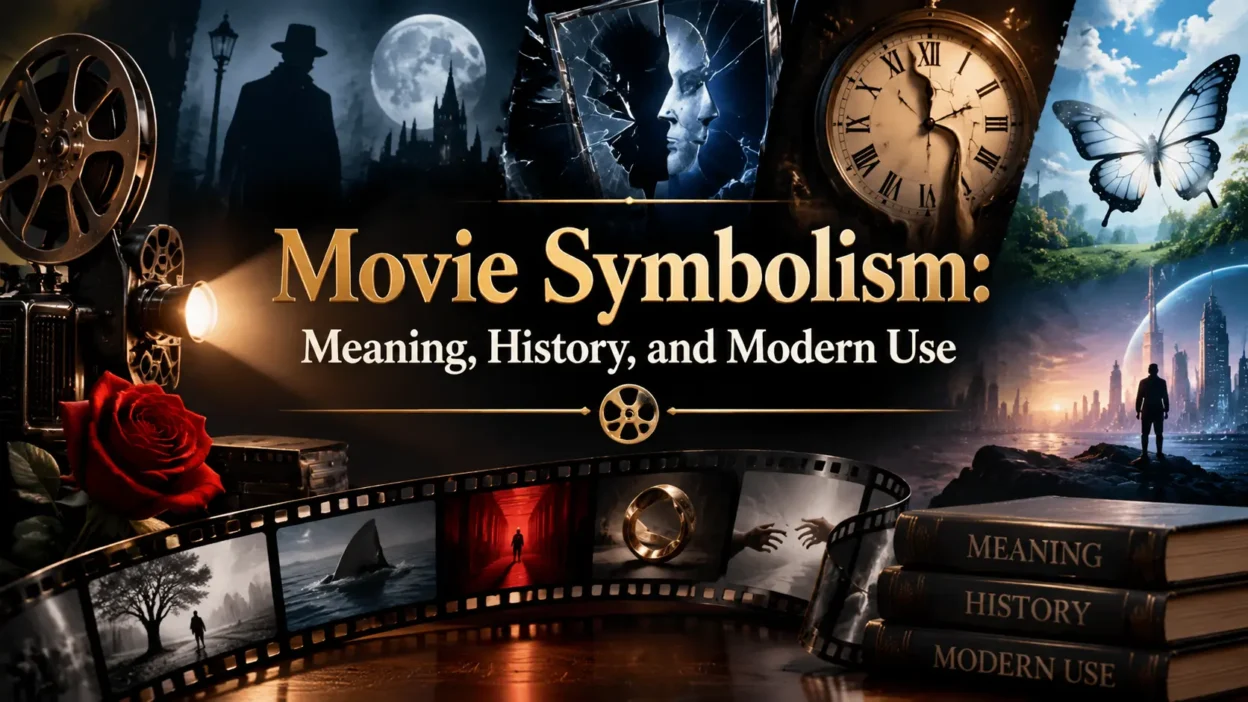
Movies do more than tell stories through dialogue and action. Directors, writers, and filmmakers often use objects, colors, characters, locations, and visual details to communicate ideas without directly explaining them. Movie symbolism refers to the use of images, scenes, sounds, and story elements that represent deeper ideas, emotions, or cultural meanings.
In modern American culture, movie symbols appear everywhere, from superhero films and horror movies to romantic dramas and animated stories. A simple object like a rose, a mirror, a door, or a road can represent love, identity, change, fear, or personal growth depending on how it appears in a story.
Understanding these symbols helps viewers notice the creative choices behind films and recognize how movies connect with human experiences. Symbolism also changes over time because society, technology, and cultural values influence how audiences interpret visual messages.
Quick Answer
Movie symbolism commonly represents ideas, emotions, and themes through visual elements in films, such as colors, objects, characters, and settings. Historically, filmmakers used symbols to express social beliefs, personal struggles, and cultural values, and modern American movies continue using them to add meaning beyond the surface story.
TL;DR
- Movies use symbols to express hidden ideas and emotions.
- Colors, objects, and settings often carry symbolic meanings.
- Film symbolism grew from theater, art, and storytelling traditions.
- American audiences connect symbols with identity and culture.
- Modern films use symbolism in genres from horror to animation.
What Movie Symbolism Means and Why It Matters
A movie symbol is an element that represents something beyond its literal purpose. For example, a storm in a film may represent conflict, while a sunrise may suggest hope or a fresh beginning. The meaning usually comes from the story context rather than from the object alone.
Film symbolism matters because movies combine visual storytelling with human emotions. A filmmaker may use a repeated image, a specific color, or a character’s action to guide viewers toward a particular feeling or idea.
Unlike direct explanations, symbols allow audiences to create personal interpretations. Two viewers may understand the same scene differently because their experiences and cultural backgrounds influence how they read the symbol.
How Symbols Developed in Film History
Symbolism in movies developed from older storytelling traditions, including theater, paintings, literature, mythology, and folklore. Before modern cinema existed, artists used symbolic images to communicate religious beliefs, social messages, and emotional themes.
Early filmmakers borrowed many techniques from stage performances and visual arts. Silent films especially depended on symbolism because actors could not rely on spoken dialogue. A facial expression, an object, or a repeated image often carried important meaning.
As filmmaking evolved, directors began using symbolism more intentionally. Movies became not only entertainment but also a way to explore politics, identity, relationships, and human psychology.
Common Types of Symbols Used in Movies
Filmmakers use many forms of symbolism to communicate ideas. Some symbols are easy to recognize, while others require viewers to analyze the story.
| Symbol Type | Meaning in Movies | Common Associations | Notes |
|---|---|---|---|
| Colors | Emotional or thematic messages | Red with passion, danger, or anger | Meaning changes by context |
| Objects | Personal or story-related ideas | Rings, keys, mirrors, weapons | Often connected to characters |
| Locations | Life situations or emotions | Houses, forests, roads | Settings can reflect inner struggles |
| Weather | Mood and change | Storms, rain, sunlight | Common in dramatic scenes |
| Animals | Character traits or themes | Strength, freedom, loyalty | Often linked with folklore |
Color Symbolism in American Movies
Colors are among the most common symbolic tools in films. Directors use color choices to influence emotions and highlight important themes.
Red often represents passion, danger, power, or strong emotions. In romantic films, red may suggest love and attraction, while in thrillers it can create a sense of threat.
Black is frequently connected with mystery, grief, power, or uncertainty. Many American crime and superhero films use dark colors to create serious moods or represent moral conflicts.
White can symbolize innocence, peace, or new beginnings, although some films use it to show emptiness or isolation.
Blue is often associated with calmness, sadness, distance, or reflection. Filmmakers may use blue lighting to create emotional or thoughtful scenes.
Color symbolism is not universal. A color’s meaning depends on the character, story, and cultural setting.
Objects as Symbols in Film Stories
Objects often become meaningful because characters interact with them repeatedly. A simple item can represent memories, relationships, goals, or personal struggles.
A wedding ring may symbolize commitment, loyalty, or conflict within a relationship. A broken watch may represent lost time or regret. A photograph may represent memories and a connection to the past.
Many American movies use objects as emotional anchors. Audiences remember these objects because they become connected to important moments in a character’s journey.
For example, a character carrying an old family item may represent heritage and personal identity rather than just owning a physical object.
Nature Symbolism in Movies
Nature has always played an important role in storytelling. Filmmakers often use landscapes, plants, animals, and weather to reflect human emotions.
Forests may represent discovery, danger, or the unknown. Oceans can symbolize freedom, uncertainty, or emotional depth. Mountains often represent challenges, ambition, or achievement.
Weather is another common symbolic tool. Rain may appear during moments of sadness or transformation, while sunlight often accompanies hope or success.
In American films, nature symbolism appears in many genres, including adventure movies, westerns, fantasy films, and dramas.
Character Symbolism and Personal Identity
Characters themselves can represent larger ideas. A hero may symbolize courage, justice, or personal growth, while a villain may represent fear, corruption, or uncontrolled ambition.
Modern American cinema often uses characters to explore identity. Superhero films, for example, frequently examine responsibility, belonging, and the challenges of being different.
A character’s clothing, appearance, habits, or choices may also communicate symbolic meaning. A person changing their style during a movie can represent personal transformation.
Character symbolism allows audiences to connect fictional stories with real human experiences.
Religious and Mythological Symbolism in Movies
Many films borrow symbols from religious traditions and mythology. These references help filmmakers explore themes such as sacrifice, redemption, destiny, and morality.
Common examples include journeys, resurrection themes, angels, demons, creation stories, and battles between good and evil.
However, movies often adapt these symbols creatively rather than following traditional meanings exactly. A filmmaker may use a religious symbol to discuss personal struggles rather than make a direct religious statement.
Mythological symbolism also appears frequently in fantasy and science fiction films. Ancient legends provide familiar patterns that help audiences understand new stories.
Movie Symbolism in United States Culture
In the United States, movies are an important part of cultural expression. Films reflect American values, concerns, dreams, and social changes.
Symbols in American movies often connect with ideas such as freedom, independence, family, success, and overcoming challenges.
The open road is a common American film symbol. It often represents freedom, exploration, or searching for a new identity. This idea appears in road movies, westerns, and coming-of-age stories.
The home is another important symbol. It may represent safety, family connections, childhood memories, or personal struggles.
Because American audiences come from diverse backgrounds, the same symbol can have different meanings depending on individual experiences.
Why Movie Symbols Appear in Modern Entertainment
Modern films continue using symbolism because visual storytelling remains one of the strongest ways to communicate ideas quickly. A filmmaker can show a character standing alone in an empty room and immediately create feelings of loneliness without adding a long explanation.
Today’s movies use symbolism across nearly every genre. Horror films often use darkness, isolated locations, and unsettling objects to represent fear or hidden problems. Science fiction films use technology, artificial worlds, and futuristic settings to explore questions about humanity and society.
Animated movies also rely heavily on symbols. A journey, a lost object, or a changing environment can represent emotional growth in ways that younger and older audiences can understand.
Streaming platforms have also increased interest in symbolic storytelling. Viewers now discuss theories, hidden meanings, and visual clues online, creating new conversations around how films communicate ideas.
Symbolism in Movie Tattoos and Personal Style
Movie-inspired tattoos are one of the most visible ways people carry film symbolism into everyday life. Fans often choose symbols from movies because they represent personal memories, values, or emotional connections.
A person may tattoo a fictional character to represent courage, a quote to remember a life lesson, or an object from a film because it represents a meaningful experience.
For example, a symbol from a favorite childhood movie may represent nostalgia and personal history. A superhero symbol may communicate strength or determination. A fantasy symbol may represent imagination and creativity.
However, the meaning of a movie tattoo depends on the person wearing it. A symbol that represents bravery for one person may represent friendship or a personal memory for another.
| Movie Symbol | Personal Meaning | Common Reasons People Choose It |
|---|---|---|
| Character symbols | Identity and personal values | Connection with a favorite character |
| Quotes | Motivation or memories | Reminder of important lessons |
| Fantasy symbols | Imagination and belonging | Love for fictional worlds |
| Objects from films | Personal experiences | Emotional connection to a story |
The Psychological Meaning Behind Film Symbols
Movie symbolism works because humans naturally search for meaning in images and experiences. People often connect objects and visuals with emotions, memories, and personal beliefs.
A repeated symbol in a movie can create an emotional connection because viewers begin associating it with a character’s journey. A simple object may become important because of the events surrounding it.
Psychologically, symbols allow filmmakers to communicate complex ideas in a simple form. A character opening a door may represent opportunity, while a character refusing to enter may represent fear or hesitation.
Symbols also allow audiences to participate in storytelling. Instead of receiving every message directly, viewers interpret clues and create their own understanding.
This personal involvement can make movies feel more meaningful and memorable.
Movie Symbolism in Horror, Fantasy, and Science Fiction
Different movie genres often use specific types of symbols because each genre explores different human concerns.
Horror movies frequently use symbols connected with fear, death, isolation, and uncertainty. Old houses, mirrors, shadows, and abandoned places often represent hidden fears or unresolved problems.
Fantasy films commonly use magical objects, mythical creatures, and imaginary worlds to explore themes such as courage, friendship, and personal discovery.
Science fiction movies often use advanced technology, artificial intelligence, and space exploration as symbols for human ambition, curiosity, and concerns about the future.
These genres show how symbols can transform fictional stories into discussions about real human experiences.
Symbolism in Movies, Weddings, Holidays, and Public Culture
Movies influence how Americans understand many cultural symbols. Film scenes often reinforce or reshape meanings connected with celebrations, relationships, and traditions.
Wedding scenes commonly use symbols such as rings, flowers, white clothing, and family gatherings. Movies often present these elements as signs of love, commitment, and emotional connection.
Holiday movies also create strong symbolic associations. Christmas films frequently use lights, decorated trees, snow, and family homes to represent togetherness and tradition.
Public culture is also influenced by famous movie symbols. Certain costumes, objects, or character designs become recognizable beyond the original film because audiences connect them with larger ideas.
Common Misunderstandings About Movie Symbolism
Not every detail in a movie has a hidden meaning. Some viewers assume that every color, object, or camera choice represents a secret message, but filmmakers often include elements for practical or artistic reasons.
Symbol interpretation should consider the full story. A red object does not always mean danger, and a dark scene does not always represent evil. Context determines meaning.
Another misunderstanding is that there is only one correct interpretation. While filmmakers may have specific intentions, audiences can develop different meanings based on their experiences.
A balanced approach recognizes both artistic choices and personal interpretation.
When Movie Symbols Are Misused or Distorted
Some movie symbols become separated from their original context and receive new meanings outside the film.
A symbol created to represent a fictional idea may later become associated with unrelated movements, trends, or online communities. In these situations, understanding the original story helps separate the creator’s message from later interpretations.
Marketing can also change how audiences view symbols. A studio may emphasize a particular image because it sells merchandise, even if the symbol had a more complex meaning in the movie.
Understanding the difference between original meaning and later use helps viewers analyze symbols more carefully.
How Movie Symbolism Has Changed Over Time
Film symbolism has changed as technology, culture, and audience expectations have evolved.
Early movies relied heavily on simple visual symbols because filmmakers had fewer storytelling tools. Modern films can use advanced editing, sound design, special effects, and digital techniques to create more complex symbolic messages.
Social changes have also influenced symbolism. Modern movies often explore identity, diversity, mental health, technology, and social relationships through new symbolic approaches.
Audiences today are also more active in interpreting films. Online discussions, fan communities, and video essays have expanded conversations about symbolism beyond the theater.
The Future of Symbolism in Movies
As filmmaking technology continues to develop, symbolism will likely become even more creative. Virtual reality, interactive storytelling, and digital experiences may create new ways for audiences to understand symbols.
Artificial intelligence and advanced visual effects may change how filmmakers design symbolic scenes, but the basic purpose will remain the same: using images and stories to communicate human ideas.
The future of film symbolism will continue balancing technology with traditional storytelling methods.
Frequently Asked Questions About Movie Symbolism
What does movie symbolism usually represent?
Movie symbolism usually represents ideas, emotions, themes, or character development through visual elements. Directors use symbols to communicate messages that may not be explained directly through dialogue.
Why do filmmakers use symbolism in movies?
Filmmakers use symbolism because it allows them to express complex ideas in memorable ways. Symbols can create emotional connections and encourage audiences to think more deeply about a story.
Do movie symbols always have hidden meanings?
No, not every detail in a movie has a hidden meaning. Some elements exist for visual style, storytelling needs, or practical reasons, while others are intentionally symbolic.
What do movie tattoos symbolize?
Movie tattoos often symbolize personal connections, memories, values, or admiration for a particular story or character. Their meaning depends on the person who chooses the design.
How does American culture influence movie symbolism?
American culture influences movie symbolism through ideas about freedom, family, success, identity, and personal growth. Many films use symbols that reflect common American experiences and values.
Can the same movie symbol have different meanings?
Yes. A symbol can have different meanings depending on the story, cultural background, and personal experiences of the viewer. Context plays an important role in interpretation.
Are movie symbols connected to mythology and religion?
Many movie symbols borrow ideas from mythology, religion, and folklore. Filmmakers often adapt these traditional symbols to explore modern themes and human experiences.
Conclusion
Movies use symbols to communicate ideas that words alone cannot always express. Colors, objects, characters, locations, and visual patterns help filmmakers explore emotions, cultural values, and human experiences.
In American culture, movie symbolism continues to shape how audiences understand stories, characters, and personal identity. From classic films to modern streaming productions, symbols remain an important part of how movies create meaning.
The most effective film symbols work because they connect fictional stories with real emotions, allowing viewers to discover meanings that feel personal and relevant.


