
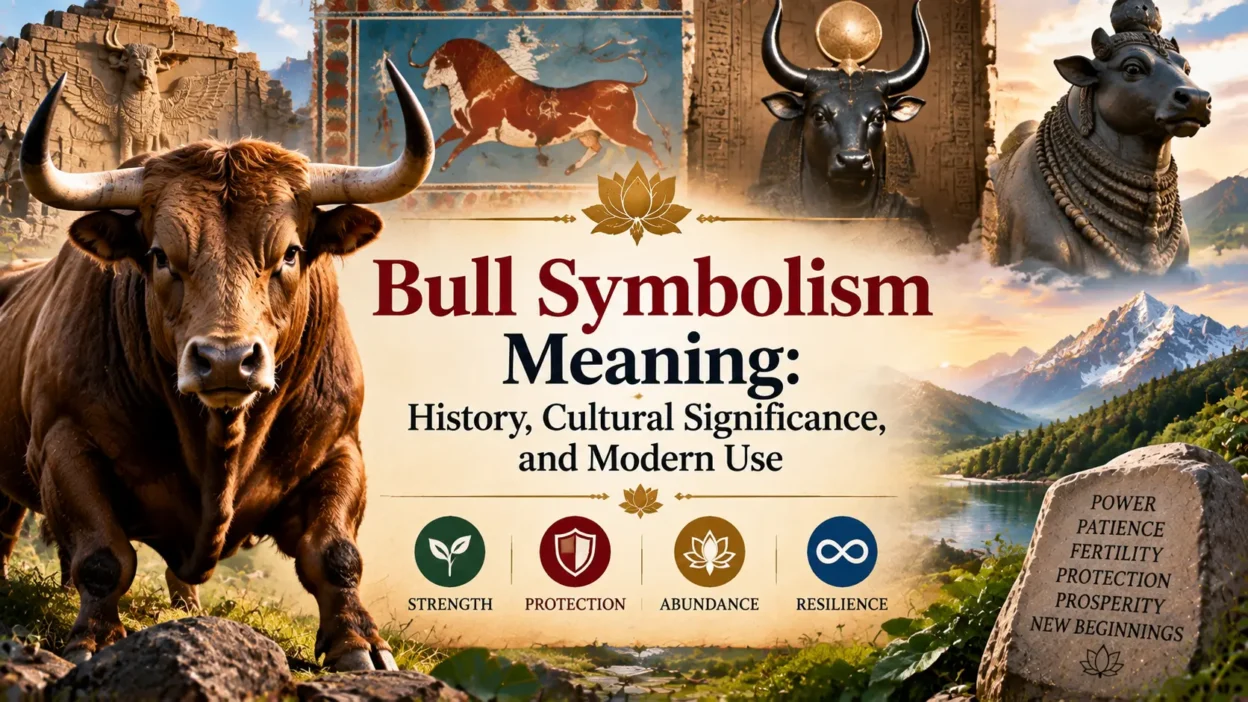
The bull has been one of the most recognized animal symbols across human cultures, representing strength, determination, fertility, and resilience. The bull symbolism meaning often connects to ideas of physical power, confidence, leadership, and stability, making it a common image in mythology, art, personal identity, and modern design.
From ancient religious traditions to American ranch culture, the bull has carried different meanings depending on the society viewing it. Some people see it as a symbol of courage and protection, while others associate it with stubbornness, aggression, or uncontrolled force. Understanding the bull requires looking at both its positive and challenging interpretations.
Today, bulls appear in tattoos, logos, sports imagery, fashion, financial culture, and decorative art. Their symbolism continues to evolve while remaining connected to the animal’s natural traits: strength, endurance, and determination.
Quick Answer
Bull symbolism meaning commonly represents strength, confidence, determination, and leadership in modern American culture, especially in areas like sports, personal identity, and business imagery. Historically, bulls have also symbolized fertility, protection, sacrifice, and sacred power in many ancient traditions.
TL;DR
- Bulls symbolize strength, courage, and determination.
- Ancient cultures connected bulls with fertility and divine power.
- Americans often view bulls as signs of toughness and resilience.
- Bull tattoos commonly represent personal strength and confidence.
- The symbol can also represent stubbornness or aggression.
- Modern culture uses bulls in sports, brands, and finance.
What the Bull Symbol Represents
A bull is a male cattle animal known for its muscular build, horns, physical power, and ability to endure difficult conditions. Because of these natural characteristics, humans have used the bull as a symbol for qualities associated with strength and survival.
The bull commonly represents:
- Physical strength — its size and power make it a natural symbol of force.
- Determination — bulls are associated with persistence and forward movement.
- Confidence — the animal’s posture and presence communicate self-assurance.
- Fertility and abundance — many agricultural societies connected bulls with reproduction and prosperity.
- Protection — bulls were often viewed as guardians because of their defensive nature.
However, symbolism depends heavily on context. A bull can represent controlled strength or uncontrolled aggression depending on how it appears.
Common Bull Meanings in the United States
In the United States, the bull often represents toughness, independence, and persistence. American culture has strong connections with cattle ranching, farming, rodeo traditions, and Western imagery, which have shaped modern views of the animal.
Many Americans associate bulls with:
| Context | Meaning in the USA | Common Associations | Notes |
|---|---|---|---|
| Ranch culture | Strength and endurance | Farming, hard work, independence | Connected with Western identity |
| Sports | Power and determination | Competition, victory, teamwork | Used by many athletic groups |
| Business | Confidence and growth | Investment, ambition, risk-taking | Often seen in financial language |
| Tattoos | Personal strength | Courage, resilience, identity | Chosen for bold visual impact |
| Decor and art | Stability and protection | Masculine energy, tradition | Common in rustic designs |
The bull is especially common in American branding because it communicates confidence and reliability. Businesses often use bull imagery when they want to suggest energy, growth, and competitive spirit.
Ancient Roots of Bull Symbolism
The symbolic importance of bulls dates back thousands of years. Early agricultural societies depended on cattle for food, farming, and economic survival, which gave the animal special importance.
In ancient civilizations, bulls were often connected with:
- fertility
- agricultural success
- royal authority
- religious ceremonies
- supernatural power
Because bulls helped humans cultivate land and support communities, many cultures viewed them as symbols of prosperity and life.
The animal’s horns also contributed to its symbolic meaning. Horns were often associated with power, protection, and connection to the divine because they appeared strong and visually impressive.
Bull Symbolism in Ancient Mesopotamia and Egypt
In ancient Mesopotamia, bulls were associated with strength, kingship, and divine authority. Images of powerful bulls appeared in sculptures and religious art, showing the animal as a representation of protection and supernatural force.
Ancient Egypt also gave bulls important religious meaning. The Apis bull was one of the most significant sacred animals in Egyptian culture. It was connected with ideas of fertility, renewal, and divine presence.
The Egyptians did not view the bull only as a powerful animal. They connected it with religious beliefs about life, death, and spiritual continuation.
Bull Symbolism in Greek and Roman Traditions
Greek mythology contains several important bull-related stories. The bull often appeared as a symbol of strength, transformation, and divine power.
One famous example is the story of Zeus appearing as a bull in Greek mythology. This association connected the bull with authority and supernatural influence.
The ancient Mediterranean world also linked bulls with fertility and agricultural abundance. Festivals involving bulls reflected their importance in religious and social life.
Romans continued many traditions involving bulls, including ceremonial sacrifices where the animal represented offerings to the gods.
Bull Symbolism in Hindu and Religious Traditions
In Hindu traditions, the bull has a respected symbolic role. The bull Nandi is associated with Lord Shiva and represents devotion, strength, patience, and righteousness.
Nandi is often shown sitting peacefully near Shiva temples. Unlike images that focus only on physical power, this representation emphasizes discipline, loyalty, and spiritual dedication.
The symbolism shows that strength does not always mean aggression. A powerful being can also represent calmness, service, and faithfulness.
The Bull in Native American and Indigenous Perspectives
Different Indigenous cultures have their own relationships with cattle and buffalo symbolism. It is important to distinguish the bull from the American bison, which holds separate and significant meanings among many Native American communities.
The bison has traditionally represented survival, nourishment, and respect for nature in many Indigenous traditions. Because of their similar appearance, people sometimes confuse the two symbols.
The bull itself is more strongly connected with domesticated cattle traditions, farming, and ranch life in American history.
Emotional and Psychological Meaning of the Bull
The bull often represents qualities people want to develop within themselves.
Psychologically, the symbol may communicate:
Strength Under Pressure
The bull represents the ability to face challenges without easily giving up. People may choose bull imagery because it reflects endurance during difficult periods.
Confidence and Self-Belief
A bull standing firmly with raised horns can represent confidence and personal power.
Determination
The image of a bull moving forward is often connected with persistence and goal achievement.
Controlled Power
A mature interpretation of the bull focuses not only on force but also on control. True strength requires discipline.
Bull Symbolism in Tattoos and Personal Identity
Bull tattoos are popular because the animal creates a bold visual statement. People often choose bull designs to represent personal characteristics or life experiences.
Common bull tattoo meanings include:
- overcoming obstacles
- inner strength
- courage
- family heritage
- ambition
- determination
Different tattoo styles can change the meaning:
- A realistic bull may emphasize power and toughness.
- A minimalist bull may represent confidence and simplicity.
- A geometric bull may suggest balance and modern identity.
- A bull skull design may connect with Western themes, mortality, and transformation.
The meaning ultimately depends on the person wearing the symbol.
Bull Symbolism in Business, Finance, and Popular Culture
The bull has a strong connection with business and financial language in the United States.
A “bull market” describes a period when investors generally expect prices to rise. This term comes from the idea of a bull pushing upward with its horns.
In popular culture, bulls often appear in:
- company logos
- sports mascots
- advertising
- clothing designs
- entertainment imagery
The bull communicates ambition, competition, and forward movement.
Positive and Negative Meanings of the Bull
Like many symbols, the bull has both positive and negative interpretations.
| Positive Meaning | Negative Meaning |
|---|---|
| Strength | Stubbornness |
| Courage | Aggression |
| Protection | Anger |
| Determination | Recklessness |
| Stability | Excessive pride |
The difference often depends on whether the bull’s power is controlled or uncontrolled.
A calm bull can represent patience and reliability, while an attacking bull may represent anger or conflict.
Common Misunderstandings About Bull Symbolism
One common misunderstanding is that the bull always represents aggression. While bulls are physically powerful animals, many cultures viewed them as symbols of fertility, protection, and responsibility.
Another misunderstanding is confusing bulls with all cattle-related symbols. Cows, oxen, buffalo, and bulls may share some associations, but each animal has distinct cultural meanings.
The interpretation should always consider the cultural setting and the specific image being used.
Modern Use of Bull Symbolism
Today, bull imagery appears in many areas of everyday life.
Fashion
Bull designs appear on clothing, accessories, and jewelry because they create a strong and confident appearance.
Home Decor
Bull artwork is common in rustic and Western-inspired interiors. It often represents tradition, strength, and connection to rural life.
Social Media
People use bull imagery online to communicate ambition, motivation, confidence, and personal growth.
Branding
Companies choose bull symbols when they want to suggest reliability, energy, and competitive strength.
How Bull Symbolism Has Changed Over Time
The meaning of the bull has shifted as societies changed.
Ancient communities often viewed bulls through religious and agricultural perspectives. The animal represented survival, fertility, and connection with divine forces.
Modern societies usually focus more on personal qualities such as confidence, ambition, and resilience.
Although the religious meanings have become less common in everyday American use, the basic associations with strength and determination remain.
Frequently Asked Questions About Bull Symbolism
What does a bull symbolize spiritually?
A bull can symbolize spiritual strength, patience, devotion, and protection in some traditions. Certain religions connect bulls with sacred qualities, while others focus more on agricultural or cultural meanings.
What does a bull tattoo symbolize?
A bull tattoo often represents strength, courage, determination, and personal resilience. Some people choose it to express confidence or connection with their heritage.
Is a bull a positive symbol?
A bull can be a positive symbol when it represents courage, stability, and controlled strength. However, it may also represent stubbornness or aggression depending on the context.
Why are bulls associated with power?
Bulls are associated with power because of their size, muscular build, horns, and historical role in farming societies. These traits influenced their symbolic connection with strength and authority.
What does a bull represent in American culture?
In American culture, bulls commonly represent toughness, independence, ambition, and competitive spirit. They appear frequently in sports, business, and Western-inspired designs.
Are bulls and buffalo symbols the same?
No. Bulls and buffalo have different histories and meanings. Although they may look similar in some artistic representations, they represent different animals and cultural traditions.
Conclusion
The bull symbolism meaning reflects a long relationship between humans and an animal associated with strength, survival, and determination. Across cultures, bulls have represented everything from agricultural prosperity and sacred power to confidence and personal resilience.
In modern American life, the bull continues to appear in tattoos, business imagery, sports, and personal expression. Its meaning depends on how people use it, but its central message remains connected to endurance, confidence, and controlled strength.
Whether viewed as a cultural symbol, personal emblem, or artistic image, the bull represents the idea of standing firmly and moving forward with purpose.


