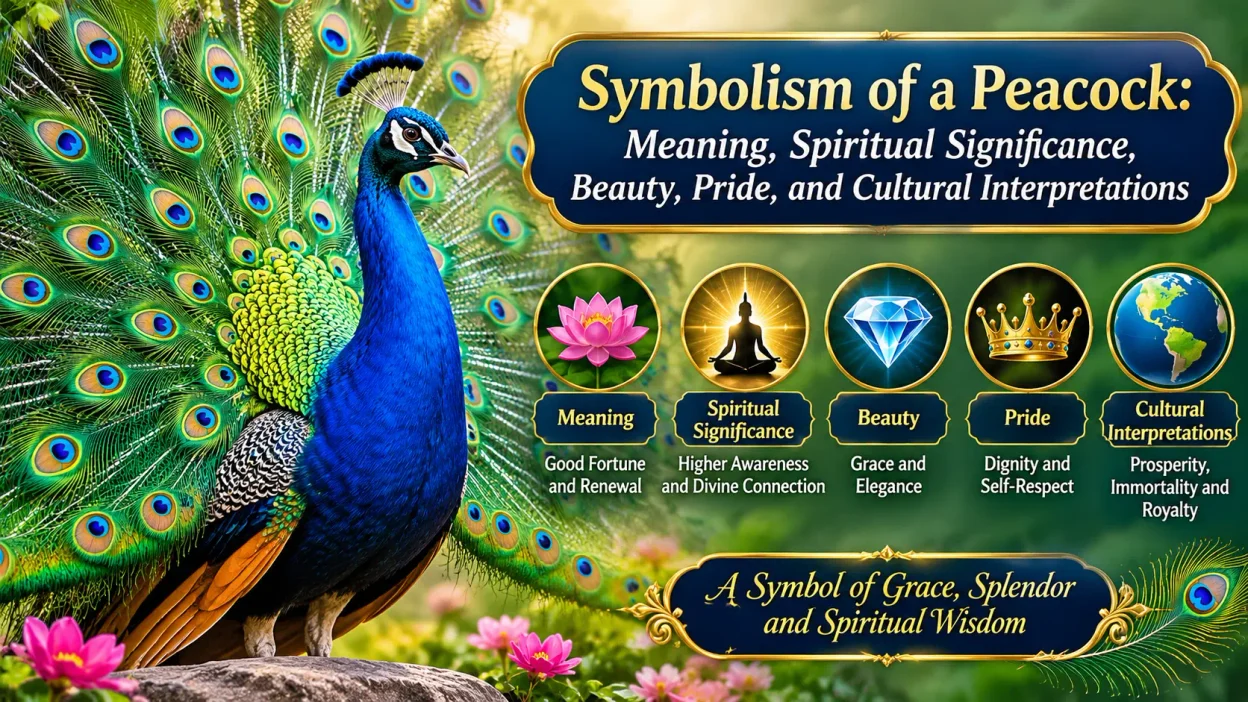
The peacock is one of the most recognizable and visually striking birds in the world. Its brilliant feathers, colorful patterns, and dramatic display have made it a powerful symbol in mythology, religion, art, and literature. Across different cultures, the peacock represents beauty, pride, confidence, renewal, immortality, spiritual awareness, and protection.
Its remarkable tail feathers often attract attention because of their eye-like patterns, which have inspired associations with watchfulness, wisdom, and divine vision. The bird’s ability to display its feathers has also made it a symbol of self-expression, elegance, and confidence.
However, peacock symbolism is not always positive. In some traditions and literary works, the bird can represent vanity, excessive pride, and the danger of becoming too focused on outward appearance.
In this article, we explore the symbolism of a peacock, its spiritual meanings, cultural significance, religious associations, dream interpretations, and the lessons this magnificent bird can offer.
What Does a Peacock Symbolize?
A peacock commonly symbolizes:
- Beauty: Grace, elegance, and appreciation of physical appearance.
- Pride: Confidence, self-respect, and sometimes excessive vanity.
- Renewal: Personal transformation and fresh beginnings.
- Immortality: Eternal life and spiritual continuity in certain traditions.
- Protection: Watchfulness and awareness.
- Wisdom: Spiritual understanding and insight.
- Confidence: Expressing individuality without hiding your qualities.
- Prosperity: Good fortune, abundance, and success in some cultural traditions.
- Spiritual awakening: Awareness, personal growth, and a deeper understanding of life.
- Love and attraction: Romance, beauty, devotion, and courtship.
These meanings vary depending on cultural traditions, religious beliefs, and the context in which the peacock appears.
Spiritual Meaning of a Peacock
In modern spiritual interpretations, the peacock is often associated with confidence, transformation, inner beauty, and spiritual awareness. Its colorful feathers can represent the many qualities and experiences that make a person unique.
1. Beauty and Self-Expression
One of the strongest meanings of a peacock is beauty. Its colorful feathers symbolize elegance, creativity, and the freedom to express individuality.
Spiritually, the bird can encourage people to appreciate their natural qualities instead of constantly comparing themselves with others.
It reminds us that genuine beauty can include confidence, kindness, intelligence, and character rather than appearance alone.
2. Pride and Self-Confidence
The peacock’s dramatic display makes it a natural symbol of pride and confidence.
It can represent the courage to stand out, recognize personal achievements, and express yourself openly.
However, its symbolism also carries a warning: confidence becomes unhealthy when it turns into arrogance or a belief that one is better than others.
3. Transformation and Renewal
Peacocks periodically replace old feathers with new ones through molting. This natural process has inspired associations with renewal, growth, and transformation.
In spiritual interpretations, a peacock may represent leaving behind outdated beliefs, recovering from difficult experiences, and entering a new stage of life.
It can serve as a reminder that change is a natural part of personal development.
4. Spiritual Awareness
The eye-like patterns on peacock feathers are frequently interpreted as symbols of awareness, insight, and watchfulness.
Some spiritual traditions associate these patterns with divine vision or the ability to recognize deeper truths.
In modern interpretations, the peacock can encourage people to become more conscious of their thoughts, actions, and surroundings.
5. Protection and Good Fortune
In several cultural and religious contexts, peacocks have positive associations with protection, prosperity, and good fortune.
Their striking appearance and symbolic associations have made them popular in decorative art, architecture, and spiritual imagery.
However, the belief that a peacock guarantees protection or luck is a cultural or personal interpretation rather than a universal fact.
Peacock Symbolism in Different Cultures
The peacock has a rich history in different parts of the world. Its meaning changes across religious traditions, mythology, and artistic practices.
Peacock Symbolism in Hinduism
In Hindu traditions, the peacock has important associations with divine beauty, wisdom, victory, and protection.
It is especially connected with Kartikeya, also known as Skanda or Murugan, who is often depicted riding a peacock. In this context, the bird can represent courage, the overcoming of negative forces, and divine power.
The peacock is also associated with Saraswati in some artistic and regional traditions, although her most widely recognized vehicle is the swan or hamsa.
Krishna is frequently depicted wearing a peacock feather in his crown. This feather has become an important visual feature of his traditional imagery and is associated with beauty, divine love, and grace.
Peacock Symbolism in Buddhism
In Buddhist traditions, the peacock can symbolize wisdom, transformation, and the ability to turn difficulties into opportunities for spiritual growth.
Some Buddhist interpretations connect the bird’s ability to consume poisonous plants with the idea of transforming negative experiences and mental poisons into wisdom.
The peacock is also associated with certain Buddhist deities and artistic traditions. Its meaning varies across Buddhist cultures and schools.
Peacock Symbolism in Christianity
In early Christian art, the peacock became associated with immortality, resurrection, and eternal life.
This connection developed partly from ancient beliefs about the bird’s flesh being incorruptible. Although this belief is not scientifically accurate, it influenced the peacock’s symbolic use in Christian art.
Peacocks appear in some early Christian mosaics, paintings, and decorative designs as reminders of spiritual life beyond death.
The bird’s annual feather renewal also contributed to its association with resurrection and renewal.
Peacock Symbolism in Greek Mythology
In Greek mythology, the peacock is strongly associated with Hera, the queen of the gods.
According to a well-known myth, Hera placed the eyes of the many-eyed giant Argus on the peacock’s feathers after his death. This story explains the eye-like markings on the bird’s tail in Greek mythological tradition.
As a result, the peacock became associated with watchfulness, dignity, royalty, and divine authority.
Peacock Symbolism in Roman Culture
The Romans associated the peacock with Juno, their goddess of marriage and queen of the gods, who was closely identified with the Greek Hera.
The bird became a symbol of royalty, status, beauty, and divine power. Peacock imagery also appeared in Roman decorative art and funerary contexts.
Peacock Symbolism in Persian Culture
In Persian art and cultural imagery, the peacock has often represented beauty, royalty, elegance, and paradise.
Its vivid colors and impressive feathers made it a popular decorative motif in textiles, carpets, architecture, and artistic designs.
In some interpretations, the bird also represents spiritual beauty and the relationship between the earthly and heavenly worlds.
Peacock Symbolism in Chinese Culture
In Chinese cultural traditions, the peacock has associations with beauty, dignity, rank, prosperity, and good fortune.
Historically, peacock feathers were used in official dress and decorations to communicate status and honor.
The bird also appears in Chinese art as a symbol of elegance, positive fortune, and social prestige.
Peacock Symbolism in Islamic Art and Culture
Peacocks appear in various forms of Islamic and Persian-influenced art, including decorative patterns, manuscripts, textiles, and architectural designs.
In some mystical and literary interpretations, the peacock represents beauty, the soul, and the relationship between worldly appearance and spiritual reality.
However, there is no single universal Islamic interpretation of the peacock, and its meaning depends on the specific artistic or cultural context.
What Does a Peacock Feather Symbolize?
Peacock feathers are often considered symbolic objects in their own right. Their bright colors and distinctive eye-like markings have inspired many spiritual and cultural interpretations.
Common meanings include:
- Wisdom: The eye-like pattern represents insight and awareness.
- Protection: The feather is sometimes used as a symbolic reminder of watchfulness.
- Beauty: Its colors represent elegance and creativity.
- Renewal: The replacement of feathers suggests growth and transformation.
- Good fortune: In some traditions, peacock feathers are associated with prosperity.
- Spiritual connection: The feather can represent devotion and awareness of the divine.
In Hindu traditions, Krishna’s peacock feather is particularly meaningful. It is commonly interpreted as an expression of divine beauty, humility, and grace.
Peacock Symbolism by Color
The peacock’s colors contribute significantly to its symbolic meaning. Although interpretations vary, different shades can suggest different qualities.
Blue Peacock Symbolism
<PRIVATE_PERSON>Blue is one of the most recognizable colors in peacock feathers. It is commonly associated with wisdom, confidence, calmness, dignity, and spiritual awareness.
A blue peacock may symbolize emotional balance, clear communication, and self-expression.
Green Peacock Symbolism
Green often represents nature, growth, prosperity, renewal, and harmony.
In modern interpretations, green peacock imagery can symbolize personal development, abundance, and a connection with the natural world.
White Peacock Symbolism
White peacocks are rare color variations rather than a separate species. Their pale appearance has inspired associations with purity, peace, spiritual awareness, and transformation.
In some Christian-inspired interpretations, a white peacock may also suggest resurrection and eternal life.
Black Peacock Symbolism
Black peacock imagery is sometimes associated with mystery, individuality, strength, and hidden potential.
Because entirely black peacocks are not a standard natural color variety, black peacock symbolism is often based on artistic or fantasy representations.
Golden Peacock Symbolism
Gold is commonly associated with wealth, royalty, achievement, and divine light.
A golden peacock can therefore represent success, confidence, abundance, and personal excellence in modern symbolic interpretations.
Peacock Symbolism in Dreams
Dreaming about a peacock can have different interpretations depending on the dream’s details and the emotions you experience.
In modern dream symbolism, peacocks often represent confidence, recognition, beauty, self-expression, and personal growth.
Dreaming of a Beautiful Peacock
Seeing a beautiful peacock in a dream may reflect confidence, creativity, and the desire to express your personality.
It may also represent a growing appreciation of your abilities and achievements.
Dreaming of a Peacock Spreading Its Feathers
A peacock displaying its feathers may symbolize self-confidence, attention, recognition, and the desire to be appreciated.
Depending on the dream’s emotional tone, it could also suggest excessive pride or concern about other people’s opinions.
Dreaming of a White Peacock
A white peacock may represent purity, peace, renewal, and spiritual reflection.
It could reflect a desire to move beyond past difficulties and begin a new chapter.
Dreaming of a Flying Peacock
A flying peacock may symbolize freedom, ambition, confidence, and the desire to overcome limitations.
It can also represent the courage to pursue opportunities that once seemed difficult.
Dreaming of a Dead Peacock
A dead peacock may symbolize disappointment, lost confidence, fading recognition, or a period of personal change.
It does not necessarily predict a negative event. It may simply reflect feelings about a changing situation.
Dreaming of a Peacock Feather
A peacock feather in a dream may represent beauty, awareness, protection, or a desire for spiritual understanding.
Its meaning depends on how the feather appears and how you feel during the dream.
Dream interpretations are subjective and should not be treated as guaranteed predictions.
Peacock Symbolism in Love and Relationships
In love and relationships, the peacock often represents attraction, romance, beauty, devotion, and self-confidence.
Its elaborate courtship display makes it a natural symbol of admiration and the desire to attract a partner.
Common relationship meanings include:
- Romance: Expressing affection and attraction.
- Beauty: Appreciating a partner’s unique qualities.
- Confidence: Feeling comfortable with your identity in a relationship.
- Loyalty: Building trust and emotional commitment.
- Admiration: Recognizing and appreciating one another.
- Self-respect: Maintaining individuality while sharing a relationship.
However, the peacock can also symbolize vanity or the desire for attention. In this context, it may remind people that genuine love requires more than physical attraction.
Peacock Symbolism in Literature and Art
Peacocks have appeared in literature, paintings, architecture, poetry, and decorative traditions for centuries.
Their colorful appearance makes them effective symbols for exploring themes such as beauty, wealth, vanity, immortality, and transformation.
Beauty and Luxury
Artists often use peacocks to represent elegance, luxury, and high social status. Their impressive feathers make them visually suitable for scenes involving royalty and celebration.
Pride and Vanity
In literature, a peacock can represent excessive self-admiration. Its habit of displaying its feathers has made it a familiar metaphor for people who seek attention or focus too much on appearance.
Immortality and Resurrection
In early Christian art, peacock imagery could suggest eternal life and resurrection.
Transformation and Renewal
The bird’s changing plumage has also inspired writers and artists to use it as an image of renewal, personal development, and the beauty of change.
Peacock as a Spirit Animal
In modern spiritual practices, the peacock is sometimes described as a spirit animal or symbolic guide.
People who connect with peacock symbolism may associate it with confidence, creativity, self-expression, and the courage to be visible.
Confidence and Authenticity
The peacock encourages people to recognize their strengths and express their individuality without unnecessary fear.
Embracing Your Beauty
Its symbolism can remind people that beauty is not limited to physical appearance. Personal qualities, kindness, creativity, and self-respect also contribute to a person’s value.
Developing Awareness
The eye-like patterns on its feathers can represent observation and awareness. In this interpretation, the peacock encourages people to look beyond surface appearances.
Finding Balance
The bird can also symbolize the balance between confidence and humility. It reminds people to celebrate their achievements without looking down on others.
These spirit-animal meanings belong primarily to contemporary spiritual interpretation and are not universal beliefs shared by every culture.
Is Seeing a Peacock a Sign of Good Luck?
In several cultural traditions, peacocks are associated with prosperity, beauty, protection, and good fortune.
Seeing a peacock may therefore feel like a positive experience, particularly for people who connect the bird with spiritual blessings or new opportunities.
In modern symbolism, seeing a peacock can be interpreted as a reminder to:
- Appreciate your unique qualities.
- Welcome personal growth.
- Express your creativity.
- Build confidence.
- Recognize opportunities.
- Maintain a balance between pride and humility.
However, there is no scientific evidence that seeing a peacock predicts future events or guarantees good luck. Its meaning is best understood through personal beliefs and cultural context.
Peacock Symbolism in Tattoos
Peacock tattoos are popular because of their colorful appearance and rich symbolic associations.
A peacock tattoo may represent beauty, confidence, renewal, pride, spiritual awareness, or individuality.
Popular designs include:
| Tattoo design | Common meaning |
|---|---|
| Full peacock | Beauty, confidence, and individuality |
| Peacock feather | Awareness, protection, and renewal |
| White peacock | Purity, peace, and transformation |
| Blue peacock | Wisdom, dignity, and self-expression |
| Peacock with flowers | Beauty, growth, and harmony |
| Peacock with a crown | Royalty, achievement, and pride |
| Flying peacock | Freedom, ambition, and personal growth |
Some people also choose peacock tattoos to celebrate cultural heritage, religious devotion, or a meaningful personal experience.
What Does a Peacock Teach Us?
Peacock symbolism offers several lessons that can be applied to everyday life.
- Celebrate your individuality: You do not need to hide your strengths or personality to fit in.
- Balance confidence with humility: Be proud of your achievements without becoming arrogant.
- Embrace transformation: Personal growth often requires leaving old habits and beliefs behind.
- Look beyond appearances: Beauty is meaningful, but character and values matter just as much.
- Practice awareness: Pay attention to your decisions, surroundings, and relationships.
- Express creativity: Allow your talents and ideas to become part of your identity.
- Respect differences: Every individual has qualities that make them unique.
Conclusion
The symbolism of a peacock is rich and diverse, representing beauty, pride, confidence, renewal, immortality, protection, and spiritual awareness. Its magnificent feathers have inspired religious traditions, mythology, literature, and art across different parts of the world.
In Hinduism, the peacock is connected with deities such as Kartikeya and is featured in Krishna’s traditional imagery. In Christianity, it became an important symbol of resurrection and eternal life in early Christian art. Greek mythology associated the bird with Hera and the watchful eyes of Argus.
The peacock also carries a more complex message. While it can represent confidence and self-expression, it may also warn against vanity and excessive pride.
Ultimately, the peacock reminds us to celebrate our individuality, embrace personal growth, and recognize that true beauty comes from both outward expression and inner character.
Frequently Asked Questions (FAQs)
1. What does a peacock symbolize spiritually?
Spiritually, a peacock commonly symbolizes beauty, confidence, renewal, wisdom, protection, and spiritual awareness. Its colorful feathers are often associated with personal growth and self-expression.
2. Is a peacock a symbol of good luck?
In several cultural traditions, peacocks are associated with prosperity, protection, and good fortune. However, seeing one does not scientifically predict future luck or success.
3. What does a peacock symbolize in Christianity?
In early Christian art, the peacock symbolized immortality, resurrection, and eternal life. These associations were influenced partly by ancient beliefs about the bird’s flesh.
4. What does a peacock symbolize in Hinduism?
In Hindu traditions, the peacock is associated with Kartikeya, also known as Murugan or Skanda, and appears in imagery connected with Krishna. It can represent beauty, divine power, victory, and spiritual devotion.
5. What does a peacock symbolize in Greek mythology?
In Greek mythology, the peacock is associated with Hera. According to myth, the eyes of Argus were placed on its feathers, making the bird a symbol of watchfulness, dignity, and divine authority.
6. What does a peacock feather symbolize?
A peacock feather commonly represents beauty, wisdom, awareness, protection, renewal, and spiritual connection. Its eye-like pattern is especially associated with watchfulness in various interpretations.
7. What does a white peacock symbolize?
A white peacock often symbolizes purity, peace, spiritual awareness, renewal, and transformation. In Christian-inspired interpretations, it can also represent resurrection and eternal life.
8. What does a peacock symbolize in love?
In love, the peacock can symbolize attraction, admiration, beauty, confidence, and romance. It can also remind people to balance physical attraction with genuine emotional connection.
9. What does it mean to dream about a peacock?
Dreaming about a peacock may represent confidence, beauty, recognition, creativity, and self-expression. Its meaning depends on the dream’s details and the emotions experienced by the dreamer.
10. Does a peacock symbolize pride or arrogance?
Yes. The peacock can symbolize both healthy pride and excessive vanity. It may represent confidence and self-respect, but it can also serve as a warning against becoming overly concerned with appearance or recognition.
11. What does a peacock symbolize in Buddhism?
In some Buddhist traditions, the peacock represents wisdom and the transformation of negative qualities into spiritual understanding. It is also connected with certain Buddhist deities and artistic traditions.
12. What does a peacock tattoo symbolize?
A peacock tattoo can symbolize beauty, individuality, confidence, renewal, pride, spirituality, and creativity. The exact meaning depends on the tattoo design and the wearer’s personal beliefs.