
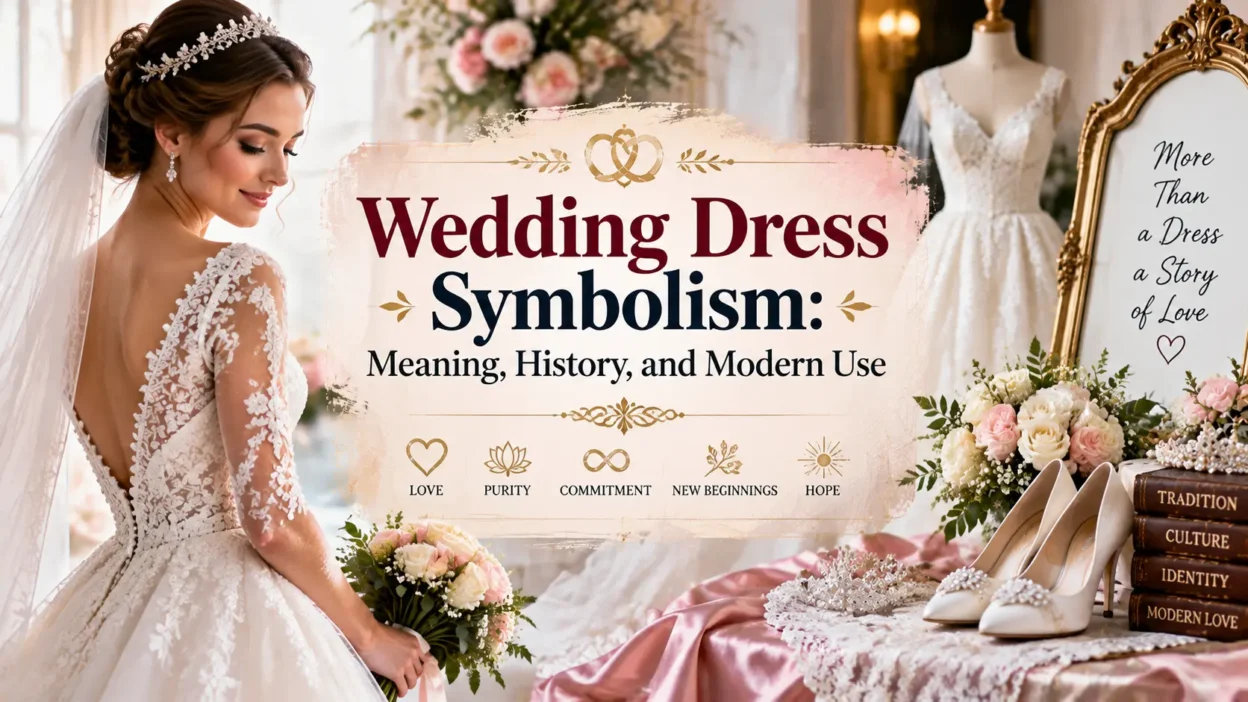
A wedding dress is more than a garment worn during a ceremony. Across cultures, wedding dress symbolism represents ideas about love, commitment, identity, family traditions, social values, and personal expression. While many modern brides choose dresses based on style, comfort, or personality, the design, color, and details of a gown often carry meanings shaped by centuries of cultural practices.
In the United States, the wedding dress is commonly associated with romance, celebration, and the beginning of a new chapter. The traditional white gown remains one of the most recognized bridal images, but modern interpretations have expanded to include many colors, styles, and personal choices.
Understanding the symbolism behind wedding dresses helps explain why certain fabrics, colors, and designs continue to appear in ceremonies around the world.
Quick Answer
Wedding dress symbolism commonly represents love, commitment, celebration, and a bride’s personal identity in modern American culture. Historically, wedding gowns have also represented family traditions, social status, religious values, and cultural expectations connected to marriage.
TL;DR
- White dresses often symbolize purity and new beginnings.
- Wedding gowns reflect cultural traditions and personal identity.
- Fabrics and designs communicate elegance, wealth, and emotion.
- American bridal fashion blends tradition with individuality.
- Different cultures use varied colors and styles.
- Modern brides redefine traditional meanings.
What a Wedding Dress Represents in Modern American Culture
In the United States, a wedding dress usually represents commitment, partnership, and the emotional importance of marriage. It is often viewed as a visual symbol of a bride’s transition into a new stage of life.
The meaning of a wedding gown today is not limited to one idea. For some people, it represents romance and tradition. For others, it expresses creativity, independence, family heritage, or personal confidence.
Modern brides often select dresses that reflect their own stories. A vintage gown may represent family connection, while a simple modern dress may symbolize a preference for minimalism and authenticity.
The wedding dress also plays an important role in the shared experience of the ceremony. Because it appears in photographs, celebrations, and memories, it becomes connected with the emotional meaning of the wedding day itself.
Ancient Roots Behind Bridal Clothing Traditions
The tradition of special wedding clothing existed long before the modern white wedding gown. Ancient societies used marriage ceremonies to strengthen family relationships, create alliances, and mark important social transitions.
In many early cultures, brides wore clothing that reflected their community’s values rather than a universal style. Colors, decorations, and materials often showed wealth, family background, or regional identity.
For example, ancient Roman brides wore garments connected with religious customs and marital rituals. Their clothing helped distinguish the wedding ceremony from everyday life.
In medieval Europe, wealthy families often used weddings to display status. A bride’s clothing could include expensive fabrics, detailed embroidery, and jewelry to demonstrate the family’s resources and social position.
The idea of a specific “bridal look” developed gradually as societies created stronger traditions around marriage ceremonies.
Why White Wedding Dresses Became Popular
The white wedding dress is one of the strongest symbols associated with modern weddings, especially in the United States. However, white was not always the standard bridal color.
Before the 19th century, brides commonly wore dresses in various colors. Many women selected their best dress rather than purchasing a gown designed specifically for marriage.
The popularity of white wedding dresses increased after Queen Victoria wore a white gown for her 1840 wedding to Prince Albert. Her choice attracted widespread attention and influenced bridal fashion among many European and American communities.
Over time, white became associated with ideas such as:
- new beginnings
- elegance
- celebration
- innocence
- formal tradition
Today, many brides choose white because of its connection to classic wedding imagery rather than because of a single symbolic meaning.
The Meaning of Different Wedding Dress Colors
Although white remains popular, wedding dresses appear in many colors. Each color can communicate different emotions or cultural associations.
| Dress Color | Meaning in the USA | Common Associations | Notes |
|---|---|---|---|
| White | Tradition and celebration | Elegance, new beginnings | Most recognized bridal color |
| Ivory | Warmth and softness | Classic, romantic style | Popular alternative to bright white |
| Red | Passion and confidence | Love, strength | Important in several cultures |
| Blue | Calmness and loyalty | Peace, devotion | Sometimes used as a “something blue” element |
| Gold | Luxury and celebration | Wealth, achievement | Common in decorative details |
Color meanings are not fixed rules. A bride’s personal experience, family background, and cultural traditions often influence what a dress color represents.
Fabric and Design Symbolism in Wedding Dresses
The materials used in a wedding gown can also carry symbolic meanings. Designers often use fabrics and details to create a specific emotional impression.
Lace is commonly associated with romance, craftsmanship, and vintage beauty. Its detailed patterns can create a connection with traditional bridal styles.
Silk has long been linked with luxury and refinement because of its smooth texture and historical value.
Tulle often creates a light, graceful appearance and is frequently used in veils and flowing skirts.
Embroidery and beadwork may represent artistic skill, cultural heritage, or family traditions. Some brides include handmade details or inherited decorations to honor relatives and personal history.
The design of a wedding dress can communicate personality. A structured gown may suggest confidence and formality, while a simple dress may reflect modern elegance and practicality.
Wedding Dress Symbolism Across Different Cultures
Wedding clothing traditions vary widely around the world. While Western-style white gowns are globally recognizable, many cultures use different colors, designs, and meanings.
In many South Asian weddings, red bridal clothing is traditionally connected with prosperity, love, and celebration. Detailed embroidery and jewelry often represent cultural heritage and family customs.
In Chinese wedding traditions, red clothing has historically been associated with happiness, luck, and prosperity. Some brides wear red dresses during ceremonies because of these cultural connections.
In some African wedding traditions, clothing patterns and colors may represent ancestry, community identity, and regional heritage.
These examples show that wedding dress symbolism depends heavily on cultural context. A color or design that represents one idea in one society may communicate something different elsewhere.
Emotional and Psychological Meaning of Wedding Dresses
A wedding dress often carries emotional meaning because it represents one of the most memorable moments in a person’s life. Beyond fabric and design, the gown can become connected with feelings of hope, commitment, family connection, and personal transformation.
For many brides, wearing a wedding dress creates a sense of entering a special moment that differs from everyday life. The clothing helps mark the importance of the ceremony and creates a visual connection between personal identity and the role of becoming a spouse.
Psychologically, clothing can influence how people feel about themselves. A carefully chosen wedding gown may help a bride feel confident, comfortable, and represented. The style, fit, and details allow someone to communicate personality without words.
A wedding dress can also carry memories. Some people wear a family member’s gown, include a relative’s fabric, or add meaningful details to honor loved ones. In these cases, the dress becomes a connection between generations rather than simply a fashion choice.
Religious and Spiritual Meanings Connected to Bridal Clothing
Wedding clothing often has religious and spiritual associations, although interpretations differ among communities.
In some Christian wedding traditions, the white wedding dress became connected with ideas of devotion, modesty, and the sacred nature of marriage. However, the meaning of the color varies between denominations and individuals.
In Jewish weddings, clothing choices may reflect cultural customs, modesty practices, and the importance of the marriage covenant. Specific traditions can differ depending on community and family background.
In Hindu wedding traditions, bridal clothing often includes symbolic colors, jewelry, and designs connected with prosperity, family, and spiritual blessings. The clothing is part of a larger ceremony filled with cultural meanings.
In Muslim wedding traditions, bridal clothing varies widely across regions. Many brides choose garments that reflect cultural heritage, family traditions, and personal preferences while following religious values.
The symbolism of wedding clothing is therefore shaped by both faith and culture. There is no single universal meaning shared by all religious communities.
How Wedding Dresses Reflect Identity and Personal Expression
Modern wedding dresses are increasingly viewed as a form of self-expression. While traditional gowns remain popular, many brides choose designs that reflect their lifestyle, personality, and values.
Some common modern choices include:
- minimalist dresses for a simple and modern aesthetic
- vintage gowns to connect with earlier fashion eras
- colorful dresses to challenge traditional expectations
- sustainable fabrics to reflect environmental values
- custom designs that tell a personal story
The wedding dress can communicate many aspects of identity, including cultural background, fashion preferences, family relationships, and individual creativity.
For some brides, following tradition feels meaningful. For others, changing tradition creates a more authentic experience. Both approaches show how symbols evolve according to personal interpretation.
Wedding Dresses in Fashion, Media, and Popular Culture
Wedding dresses have become powerful images in fashion and entertainment. Movies, television shows, celebrity weddings, and social media have influenced how people imagine the ideal bridal look.
Designer wedding gowns often represent craftsmanship, luxury, and artistic creativity. Fashion houses create bridal collections that combine traditional elements with current trends.
Popular culture has also expanded ideas about what a wedding dress can represent. Films may use bridal clothing to symbolize romance, independence, transformation, or even conflict depending on the story.
Social media platforms have changed bridal fashion by allowing people to share unique styles, destination weddings, and personalized ceremonies. Brides today often look beyond traditional magazines and choose inspiration from global fashion trends.
The modern wedding dress exists between tradition and innovation. It respects historical meanings while allowing new interpretations.
Why Wedding Dresses Appear in Art and Photography
Wedding dresses have long been important subjects in visual art and photography because they represent significant human experiences.
Photographers often focus on bridal gowns because the clothing captures emotion, detail, and ceremony. The dress becomes part of the visual memory of the wedding day.
Artists may use wedding clothing to explore themes such as:
- love and partnership
- social expectations
- family traditions
- cultural identity
- personal change
In photography, details such as lace, veils, flowers, and fabric movement help tell the story of the person wearing the dress.
The symbolic importance of the gown makes it more than a background element. It becomes part of the narrative of the celebration.
Common Misunderstandings About Wedding Dress Symbolism
Many assumptions about wedding dresses come from simplified interpretations rather than historical reality.
One common misunderstanding is that white wedding dresses have always represented purity. While this association became popular in modern Western culture, the meaning of white clothing has changed over time and differs between cultures.
Another misunderstanding is that every bride must follow traditional wedding clothing rules. In reality, wedding fashion has always changed according to society, economics, location, and personal preference.
Some people also assume that expensive dresses have stronger symbolic meaning. However, symbolism usually comes from personal connection, cultural importance, or emotional value rather than price.
A handmade dress, a simple gown, or a family heirloom can carry as much meaning as a luxury designer creation.
How Wedding Dress Symbolism Has Changed Over Time
The meaning of bridal clothing has evolved as societies changed.
In earlier periods, wedding clothing often emphasized family status, wealth, and social connections. Marriages were frequently connected with family alliances, so clothing could represent social position.
During the Victorian era, the white wedding dress gained popularity and became strongly connected with Western bridal traditions.
In the 20th century, wedding dresses became more accessible as fashion industries expanded. Brides began choosing from wider ranges of styles, prices, and designs.
Today, wedding clothing reflects a combination of tradition and individuality. Many people still appreciate classic white gowns, but others choose dresses that represent cultural heritage, personal beliefs, or modern lifestyles.
The symbol has not disappeared; instead, its meaning has become broader.
Modern Uses of Wedding Dress Symbolism Beyond Weddings
Wedding dress imagery appears in many areas beyond the ceremony itself.
People may use bridal clothing themes in:
- anniversary celebrations
- fashion photography
- museum exhibitions
- cultural events
- costume design
- social media storytelling
Some couples preserve wedding dresses as family keepsakes, while others transform gowns into new items such as jewelry pieces, decorations, or memorial objects.
The continued presence of wedding dress imagery shows how strongly society connects clothing with memory and emotional experiences.
Wedding Dress Symbolism in Everyday Design and Decoration
Wedding-inspired designs appear in invitations, home decorations, jewelry, and event styling because bridal imagery communicates celebration and elegance.
Elements such as lace patterns, white flowers, pearls, and flowing fabrics are often used in wedding-related designs.
These decorative choices are not only about appearance. They create associations with romance, ceremony, and meaningful occasions.
However, modern designers often reinterpret these elements in fresh ways, using different colors and styles to create contemporary expressions.
Frequently Asked Questions
What does a wedding dress symbolize in American culture?
In American culture, a wedding dress commonly symbolizes love, commitment, celebration, and the importance of the marriage ceremony. Many people also see it as a reflection of personal style and identity.
Why are wedding dresses traditionally white?
White wedding dresses became popular in Western culture after Queen Victoria’s 1840 wedding. Over time, white became associated with formal bridal traditions, elegance, and new beginnings.
Does a colored wedding dress have a different meaning?
Yes, different colors can carry different associations. For example, red may represent celebration and love in some cultures, while blue may suggest loyalty or calmness.
What does a wedding dress symbolize in different religions?
Religious interpretations vary widely. Some traditions connect wedding clothing with devotion, modesty, family values, or spiritual commitments, while others focus more on cultural customs.
Can a nontraditional wedding dress still have symbolic meaning?
Yes. A nontraditional dress can represent individuality, cultural heritage, personal beliefs, or a couple’s unique relationship. Symbolism comes from personal and cultural meaning, not only traditional designs.
Why do people keep old wedding dresses?
Many people preserve wedding dresses because they represent memories, family connections, and important life events. Some pass them down to future generations or reuse parts of the fabric.
Is the white wedding dress tradition universal?
No. White wedding dresses are especially associated with Western traditions. Many cultures use different colors, designs, and clothing styles to represent marriage and celebration.
Conclusion
A wedding dress is a symbol shaped by history, culture, personal choices, and emotional connections. In modern America, wedding dress symbolism often represents love, commitment, celebration, and personal identity, while its historical meanings include family traditions, social customs, and cultural values.
Although styles and preferences continue to change, wedding dresses remain meaningful because they connect clothing with one of life’s most important ceremonies. The most meaningful gown is not necessarily the most expensive or traditional one, but the one that reflects the story and values of the person wearing it.


