
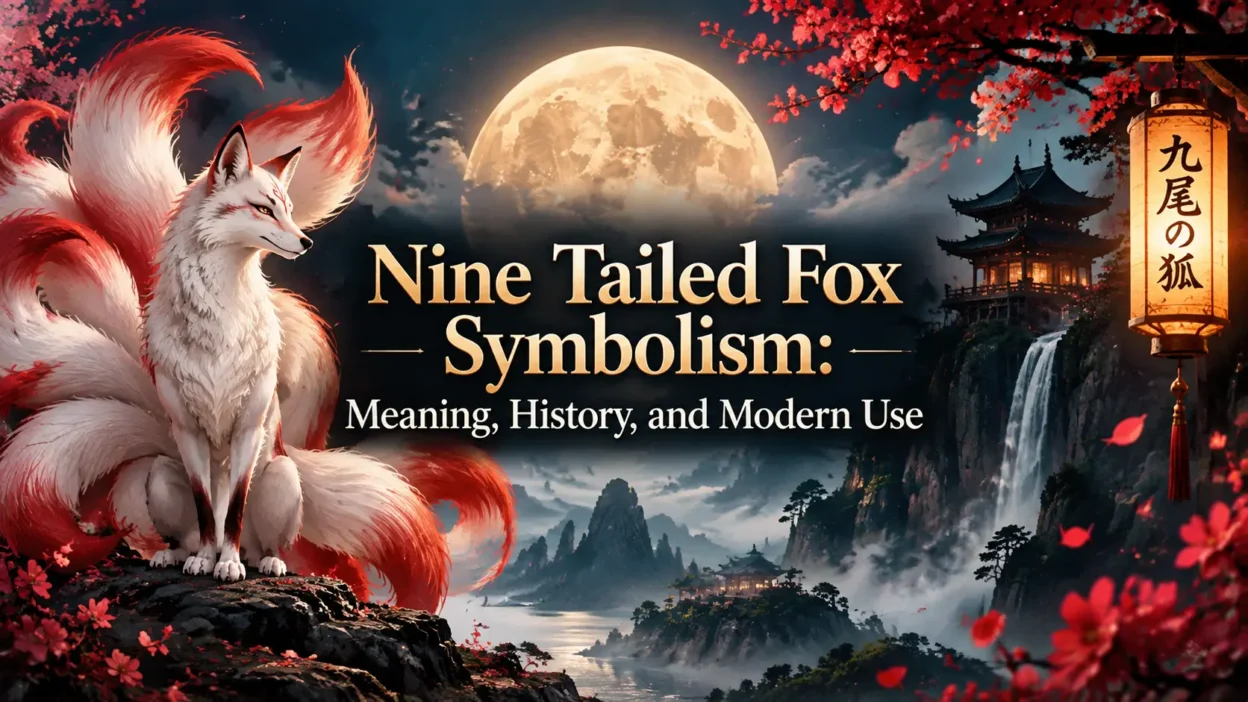
The nine tailed fox is a mythical creature found in East Asian folklore, often shown as a fox with nine flowing tails and supernatural abilities. Nine tailed fox symbolism represents transformation, intelligence, mystery, beauty, and the complicated relationship between appearance and identity. In modern American culture, this creature appears in fantasy stories, tattoos, anime-inspired art, and personal designs that reflect curiosity about change and self-discovery.
The image of a fox with multiple tails comes from ancient stories in China, Korea, and Japan, where the creature developed different meanings over many centuries. Sometimes it represented wisdom and spiritual growth, while other traditions portrayed it as a dangerous shapeshifter capable of deception.
Today, Americans often encounter the nine tailed fox through movies, games, animation, fashion, and online communities. Its meaning depends heavily on the context: some people see it as a symbol of intelligence and independence, while others connect it with fantasy, feminine power, or personal transformation.
Quick Answer
Nine tailed fox symbolism commonly represents transformation, intelligence, and adaptability in modern American culture, especially in fantasy art, tattoos, and personal identity designs. Historically, it has also been associated with shapeshifting, spiritual power, wisdom, and caution in East Asian folklore.
TL;DR
- Represents transformation, intelligence, and adaptability.
- Originated in East Asian myths and folklore.
- Carries different meanings across cultures.
- Often appears in modern fantasy media.
- Used in tattoos and personal artwork.
- Can symbolize beauty and deception.
What the Nine Tailed Fox Looks Like and Where It Appears
The nine tailed fox, often called a fox spirit, is usually illustrated as a fox with nine large tails extending behind its body. Artists may portray it as a normal fox with magical features or as a human-like figure capable of changing forms.
The creature appears in traditional paintings, folklore stories, sculptures, literature, and modern entertainment. In contemporary American culture, many people recognize it from anime, video games, fantasy novels, and films influenced by Asian mythology.
The nine tails are an important visual feature. They often suggest age, experience, spiritual development, or extraordinary abilities. In many stories, a fox gains additional tails as it grows older and becomes wiser.
What It Commonly Means in the United States
In the United States, the nine tailed fox does not have one fixed meaning because it entered popular culture mainly through entertainment and global interest in Asian mythology. Many Americans associate it with personal growth, independence, intelligence, and the ability to adapt.
People who choose the nine tailed fox for artwork or tattoos often connect it with ideas such as overcoming change, embracing different sides of personality, or developing hidden talents.
Its meaning in the U.S. is often shaped by fantasy culture rather than traditional religious beliefs. A person may view it as a creative symbol of reinvention rather than a supernatural figure.
| Context | Meaning in the USA | Common Associations | Notes |
|---|---|---|---|
| Tattoos | Transformation and individuality | Growth, identity, strength | Often chosen for personal stories |
| Fantasy Media | Magic and intelligence | Mythical creatures, imagination | Popular in games and animation |
| Art and Decor | Mystery and beauty | Creativity, elegance | Used as an eye-catching design |
| Personal Identity | Change and adaptability | Self-discovery, independence | Meaning depends on the person |
Ancient Roots and Early Symbolism
The nine tailed fox has roots in ancient Chinese mythology, where fox spirits were often connected with supernatural abilities and transformation. One of the earliest ideas was that foxes could gain spiritual power as they aged, eventually developing multiple tails.
In Chinese traditions, the creature known as the huli jing could have positive or negative qualities. Some stories described fox spirits as wise beings with knowledge beyond humans, while others presented them as tricksters who used their abilities to deceive.
Over time, the concept spread throughout East Asia. Each culture adapted the fox spirit according to its own values, creating different interpretations of the same mythical figure.
Chinese Interpretations of the Nine Tailed Fox
In Chinese folklore, fox spirits were closely connected with transformation and supernatural knowledge. A fox that lived for many years was sometimes believed to gain magical abilities, including the power to take human form.
Some stories presented fox spirits as intelligent creatures capable of helping humans. Others warned about their ability to manipulate emotions or create illusions.
This contrast became one of the defining features of the symbol. The fox was not simply good or evil; it represented complexity, cleverness, and the unpredictable nature of appearances.
Korean Folklore and the Gumiho Tradition
In Korean mythology, the nine tailed fox is known as the gumiho. Traditional Korean stories often portrayed the gumiho as a creature that could transform into a beautiful woman and interact with humans.
Many older tales presented the gumiho as dangerous, especially in stories where it attempted to gain human qualities through deception. However, modern Korean media has changed this image significantly.
Contemporary dramas, comics, and films often portray the gumiho as a sympathetic character dealing with loneliness, identity, love, and the desire to belong. This shift shows how symbols can change as societies reinterpret old stories.
Japanese Meaning and the Kitsune Connection
In Japan, the nine tailed fox is connected with the kitsune tradition. Japanese folklore includes many types of fox spirits, ranging from mischievous tricksters to sacred protectors.
Some kitsune are associated with the deity Inari Ōkami and are viewed as guardians connected with prosperity and agriculture.
Japanese stories often describe kitsune gaining more tails as they become older and wiser. A nine tailed fox is considered one of the most powerful forms, representing advanced knowledge and spiritual development.
Transformation and Identity Symbolism
One of the strongest meanings of the nine tailed fox is transformation. Because the creature can change forms, it represents the idea that identity is not always fixed.
Many modern readers connect this symbolism with personal development, life changes, and discovering new aspects of themselves.
The symbol can also represent the difference between how someone appears to others and who they truly are. This makes it especially relevant in stories about hidden abilities, secrets, and self-acceptance.
Intelligence, Strategy, and Adaptability
Foxes have long been associated with cleverness in many cultures. The nine tailed fox expands this idea by adding supernatural intelligence and experience.
In modern American interpretations, the creature often represents someone who thinks creatively, survives difficult situations, and adapts to changing environments.
This meaning explains why the symbol appears frequently in fantasy games and stories where characters rely on strategy rather than physical strength.
Beauty, Mystery, and the Balance Between Good and Bad
The nine tailed fox often carries a dual meaning. Its beauty and intelligence can attract admiration, but its ability to deceive creates uncertainty.
This balance makes it different from simple symbols of goodness or innocence. The creature represents complexity and the idea that people can have many sides.
In modern storytelling, this quality makes the nine tailed fox appealing because characters are often written with both strengths and flaws.
Emotional and Psychological Meaning
From a psychological perspective, the nine tailed fox can represent personal change and hidden parts of the self. Its shapeshifting ability connects with themes of identity, adaptation, and emotional growth.
For some people, the symbol reflects the process of becoming a new version of themselves after major life experiences.
It can also represent confidence in individuality. A person who chooses this symbol may be expressing independence, creativity, or a connection with imagination.
Nine Tailed Fox Symbolism in Tattoos and Personal Style
Nine tailed fox tattoos have become popular among people interested in mythology, fantasy, and East Asian-inspired artwork.
Common tattoo meanings include:
- Personal transformation
- Intelligence and creativity
- Independence
- Mystery
- Strength after challenges
The design can vary widely. Some tattoos focus on the fox’s elegant appearance, while others highlight flames, flowers, traditional patterns, or dramatic fantasy elements.
Because the symbol has many interpretations, people often choose it for personal reasons rather than a single universal meaning.
Modern Use in Media, Games, and Pop Culture
The nine tailed fox appears frequently in global entertainment. Anime, video games, fantasy novels, and online communities have introduced the creature to millions of American audiences.
One well-known example is the character Kurama from the anime series Naruto, which helped popularize the concept internationally.
Modern portrayals often move away from the older image of a dangerous spirit. Many newer stories present the creature as a complex character with emotions, struggles, and personal goals.
Common Misunderstandings About the Symbol
A common misunderstanding is that the nine tailed fox always represents evil or deception. While some traditional stories describe dangerous fox spirits, other traditions present them as wise, protective, or spiritually advanced beings.
Another misconception is that every nine tailed fox reference has the same meaning. Cultural background matters. A symbol from Korean folklore may carry different associations than one from Japanese or Chinese traditions.
Understanding the original context helps avoid reducing the creature to a simple fantasy image.
How the Meaning Has Changed Over Time
The nine tailed fox has changed from a folklore creature into a global cultural symbol. Ancient stories often focused on supernatural abilities, warnings, and moral lessons.
Modern interpretations emphasize creativity, identity, emotional complexity, and personal transformation.
This evolution shows how symbols continue to develop as they move between cultures and generations. A creature once limited to regional folklore now represents a wide range of ideas around the world.
FAQ About Nine Tailed Fox Symbolism
What does a nine tailed fox symbolize?
A nine tailed fox symbolizes transformation, intelligence, adaptability, and mystery. Its meaning changes depending on cultural background and personal interpretation.
Is the nine tailed fox a good or bad symbol?
The nine tailed fox can represent both positive and negative qualities. Some traditions describe it as wise and spiritual, while others portray it as a trickster.
What does a nine tailed fox tattoo mean?
A nine tailed fox tattoo often represents personal growth, independence, creativity, or overcoming change. The meaning usually depends on the wearer’s personal connection.
Is the nine tailed fox religious?
The nine tailed fox is mainly connected with folklore and mythology rather than a single religion. Some traditions connect fox spirits with spiritual beliefs, while others treat them as legendary creatures.
Why does the fox have nine tails?
The nine tails often represent age, wisdom, and increased supernatural ability. In many stories, a fox gains more tails as it becomes more powerful.
How is the nine tailed fox viewed in America?
In America, the creature is mostly viewed through fantasy, animation, gaming, and artistic culture. Many people associate it with creativity, transformation, and mythology.
Conclusion
The nine tailed fox has developed many meanings across different cultures, from a mysterious spirit in ancient folklore to a symbol of creativity and personal change in modern media. Its ability to transform makes it a powerful image for ideas about identity, adaptation, and hidden potential.
Today, nine tailed fox symbolism reflects both its traditional roots and its modern role in American art, entertainment, and personal expression. Its meaning depends on the story, culture, and individual connection behind the symbol.


