
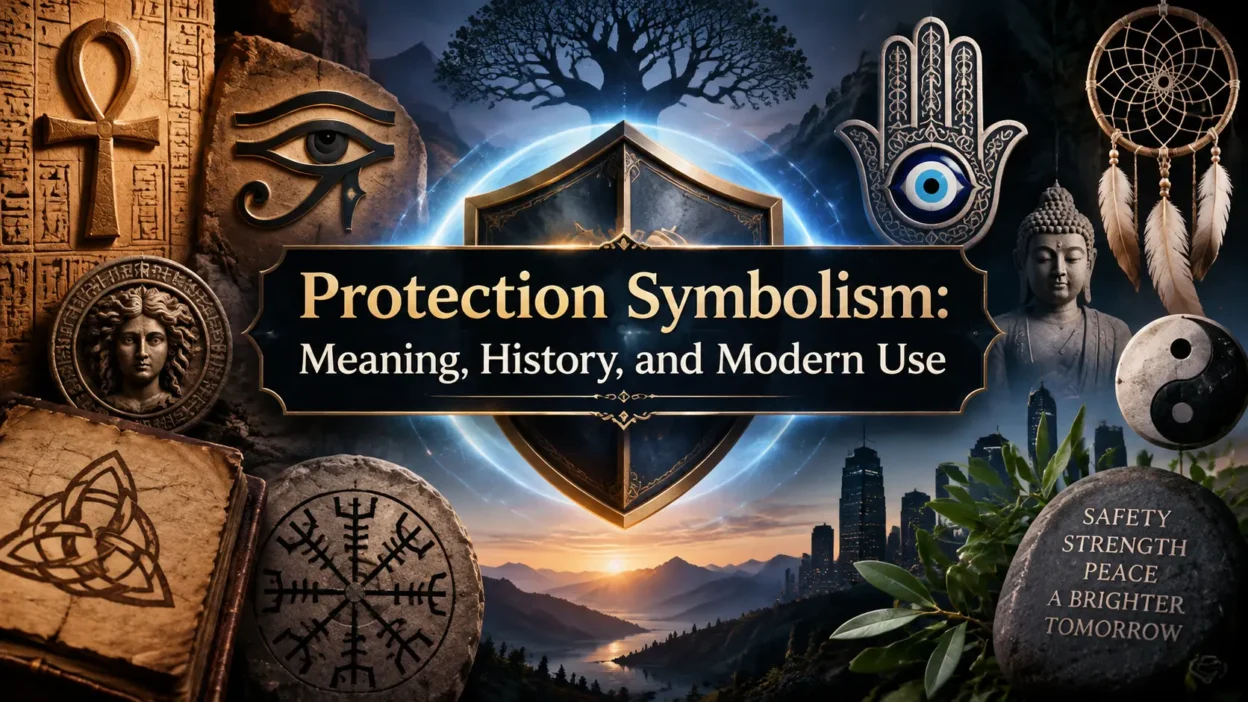
Protection symbols appear in many parts of human life, from jewelry and tattoos to architecture, religious objects, family traditions, and personal belongings. Protection symbolism commonly represents safety, defense, guidance, and the desire to guard people or places from harm.
People use protective symbols because they communicate feelings that are difficult to express with words. In modern American culture, these symbols often represent emotional security, personal strength, family connection, faith, and resilience rather than only physical protection.
Quick Answer
Protection symbolism commonly represents safety, security, and the desire to guard against harm in modern American culture, especially through jewelry, tattoos, religious items, and personal designs. Historically, protective symbols were connected to beliefs about spiritual defense, guardianship, luck, and community traditions across many cultures.
TL;DR
- Protection symbols represent safety, defense, and personal security.
- Ancient cultures used symbols for spiritual and physical protection.
- Americans often view them as reminders of strength and care.
- Religious symbols provide protection through faith and devotion.
- Tattoos and jewelry express personal protection meanings today.
- Some protective symbols have changed meanings over time.
What Protection Symbols Look Like and Where People Find Them
Protection symbols come in many forms because different cultures developed their own ways of expressing safety and defense. Some are simple shapes, while others are detailed objects, animals, plants, or religious designs.
Common examples include:
- The eye symbol: Often associated with protection from harmful intentions or negative forces.
- The cross: Represents faith, salvation, and spiritual protection for many Christians.
- The shield: Represents defense, strength, and safety.
- Animals such as lions, wolves, and elephants: Often symbolize guardianship and courage.
- Knots and circles: Frequently represent unity, completeness, and protection.
In the United States, these symbols appear in homes, necklaces, tattoos, clothing designs, memorial items, wedding decorations, and personal accessories. Their meanings depend heavily on personal beliefs and cultural background.
What It Commonly Means in the United States
In American culture, protective symbols usually focus on emotional and personal meanings rather than literal protection from danger.
Many people choose these symbols to represent:
- Safety for themselves or loved ones
- Strength during difficult experiences
- Faith and spiritual comfort
- Connection to family heritage
- Personal growth after challenges
For example, a person may wear a necklace with a religious symbol because it represents their faith and provides emotional reassurance. Someone may choose a guardian animal tattoo because it reflects courage, independence, or protection of family.
Protection symbols are also common in home design. Items placed near entrances, displayed on walls, or included in artwork often represent welcoming energy, family safety, and a sense of belonging.
| Context | Meaning in the USA | Common Associations | Notes |
|---|---|---|---|
| Jewelry | Personal safety and reminders | Faith, love, family | Often worn daily |
| Tattoos | Identity and resilience | Strength, survival, courage | Usually personal meaning |
| Home Decor | Protection of space | Comfort, belonging | Used as meaningful design |
| Religious Objects | Spiritual guidance | Faith and devotion | Depends on tradition |
| Family Symbols | Heritage and connection | Legacy, loyalty | Passed through generations |
Ancient Roots and Early Protective Traditions
The human desire for protection is one of the oldest reasons symbols developed. Before modern safety systems existed, many societies used visual signs, objects, and rituals to represent protection from physical threats, illness, uncertainty, and spiritual concerns.
Ancient Egyptians used protective symbols such as the Eye of Horus, which was associated with healing, restoration, and protection. Amulets featuring animals, gods, and sacred designs were commonly carried as personal objects.
In ancient Rome and Greece, protective imagery often appeared in household objects, jewelry, and military symbols. Figures connected with strength and guardianship were used to represent courage and defense.
Across different regions, protective symbols developed because people wanted visible reminders of safety and hope. The meaning often came from stories, religious beliefs, and cultural experiences.
Religious Meanings Connected to Protection
Religion has played a major role in shaping protective symbolism. Many faith traditions use objects, signs, and images to represent divine care or spiritual guidance.
In Christianity, the cross is widely understood as a symbol of faith, sacrifice, and spiritual protection. Many Christians wear crosses as personal expressions of belief and connection with God.
In Judaism, symbols such as the mezuzah placed on doorposts represent faith, remembrance, and connection to religious teachings. Some people view it as a blessing over the home.
In Islam, protective practices may include the use of specific prayers and verses from the Quran for spiritual comfort and protection. Cultural traditions surrounding protective objects vary widely among Muslim communities.
Protection meanings also appear in Buddhism, Hindu traditions, Indigenous cultures, and other belief systems. Each tradition connects protection with its own understanding of spirituality, balance, and responsibility.
Protection Symbolism in American Culture
The United States has a diverse population with many cultural traditions, so protective symbols often carry multiple meanings.
Native American communities have many symbols connected with protection, respect for nature, animals, ancestors, and spiritual relationships. Meanings vary among nations and should be understood within specific cultural contexts.
Immigrant communities have also brought protective traditions from around the world. Objects, patterns, and family customs may continue across generations as reminders of heritage.
American military culture frequently uses protective imagery as well. Shields, eagles, flags, and guardian figures often represent defense, service, and commitment.
In everyday life, Americans may choose protective symbols not because they believe the object itself creates safety, but because it represents values they want to remember.
Why People Choose Protective Symbols for Tattoos
Protection-themed tattoos are popular because they allow people to carry meaningful symbols permanently. Unlike temporary decorations, tattoos often represent personal stories, important relationships, or life experiences.
Common protective tattoo ideas include:
- Guardian animals
- Religious symbols
- Protective eyes
- Shields and armor imagery
- Family symbols
- Nature elements
A person may choose a wolf tattoo to represent loyalty and protection of loved ones. Another person may select a lotus flower because it represents growth through hardship.
Modern tattoo culture often combines traditional symbolism with personal interpretation. The same image can represent different things depending on the person wearing it.
Emotional and Psychological Meaning of Protective Symbols
Protective symbols can influence emotions because humans naturally connect visual images with memories, beliefs, and personal experiences.
A symbol can act as a reminder of:
- A loved one’s support
- Personal courage
- Recovery after hardship
- Important values
- A spiritual connection
Psychologically, these objects may provide comfort by creating a sense of identity and continuity. A person who wears a family symbol may feel connected to previous generations. Someone carrying a meaningful object may feel reminded of their own strength.
The symbol itself does not provide measurable physical protection, but its emotional meaning can be significant.
Protective Animals and Their Symbolic Meanings
Animals have long been used as symbols of guardianship because people observe qualities such as strength, loyalty, and survival in nature.
Some common examples include:
Lion: Often represents courage, leadership, and defense.
Wolf: Frequently connected with loyalty, family bonds, and protection.
Bear: Often symbolizes strength, courage, and guardianship.
Elephant: In many cultures, represents wisdom, memory, and family protection.
Eagle: Commonly associated in the United States with freedom, vision, and strength.
Animal symbolism appears in artwork, tattoos, logos, and personal items. However, meanings can change between cultures, so context matters.
Protection in Jewelry, Fashion, and Personal Objects
Jewelry has been one of the most common ways people carry protective symbols. Necklaces, bracelets, rings, and charms allow individuals to keep meaningful designs close.
In modern fashion, protective symbols are often chosen for both appearance and personal meaning. A person may wear a charm because it reminds them of family, faith, or an important life event.
Examples include:
- Cross necklaces
- Eye-shaped pendants
- Guardian animal charms
- Family crest jewelry
- Meaningful rings
These objects often become personal reminders rather than simply decorative items.
How Protection Symbols Appear in Homes and Design
Home spaces often include symbols connected with comfort, safety, and belonging. Interior design frequently uses protective imagery because people want their homes to feel peaceful and personal.
Examples include:
- Religious artwork
- Family heirlooms
- Animal sculptures
- Cultural decorations
- Traditional patterns
A protective symbol near an entrance may represent welcoming guests while honoring personal beliefs. In many homes, the meaning comes from the story behind the object rather than the object alone.
Cross-Cultural Interpretations Around the World
Protective symbols appear in nearly every region, but their meanings differ.
In parts of Europe, protective traditions include household charms, religious objects, and folklore symbols. In Asia, symbols connected with harmony, luck, balance, and spiritual protection are common in many communities.
African traditions include protective objects and designs connected with ancestors, community, and spiritual relationships. Indigenous cultures around the world often connect protection with nature, animals, and ancestral wisdom.
These traditions show that protection symbols are not limited to one belief system. They reflect a universal human desire for safety and connection.
Common Misunderstandings About Protective Symbols
Because protective symbols appear in many cultures, they are sometimes misunderstood or used without understanding their original meaning.
A symbol that represents protection in one culture may have a different meaning somewhere else. For example, an image used as a spiritual sign may later become a fashion trend without its original context.
Some symbols have also been adopted by groups or movements that changed their public meaning. When this happens, it is important to separate the original cultural meaning from later uses.
Understanding the background of a symbol helps people use it respectfully.
How Protection Symbolism Has Changed Over Time
Protective symbols have evolved as societies changed. Earlier communities often connected them directly with survival, religion, and protection from unknown forces.
Today, many people interpret them more personally. A protective symbol may represent mental strength, emotional healing, family love, or overcoming a difficult period.
Modern culture has transformed many traditional symbols into expressions of identity. The meaning is often shaped by individual experience as much as by historical tradition.
Modern Uses of Protection Symbols in Digital Culture
Protective symbols have also entered online spaces. People use symbolic images in profile pictures, usernames, artwork, and digital designs.
In social media culture, protective imagery can communicate:
- Personal values
- Community belonging
- Emotional strength
- Support for loved ones
Digital platforms have allowed traditional symbols to reach new audiences while also creating new interpretations.
FAQ About Protection Symbolism
What does protection symbolism usually represent?
Protection symbolism usually represents safety, defense, guidance, and care. In modern American culture, people often use protective symbols as reminders of personal values, faith, or relationships.
Are protective symbols connected to religion?
Many protective symbols have religious connections, but not all are religious. Some represent family, courage, identity, nature, or personal experiences.
What does a protection tattoo symbolize?
A protection tattoo often represents strength, survival, loyalty, or the desire to guard something important. The meaning depends on the chosen design and the person’s personal story.
Do protective symbols actually protect people?
Many people view protective symbols as meaningful reminders rather than objects with proven physical effects. Their importance often comes from emotional, cultural, or spiritual beliefs.
Why are protective symbols common in American homes?
Protective symbols are common in American homes because they can represent family, faith, heritage, and comfort. They often help people create spaces that feel personal and meaningful.
Can the same protective symbol have different meanings?
Yes. A symbol’s meaning can change depending on culture, religion, history, and personal interpretation. Context is important when understanding any protective image.
Conclusion
Protection symbols represent humanity’s ongoing desire for safety, connection, and reassurance. Across cultures, people have used images, objects, and designs to express care for themselves, their families, and their communities.
Today, protection symbolism is understood in the United States through many personal and cultural lenses. Whether found in jewelry, tattoos, homes, or traditions, these symbols continue to represent values people choose to carry with them.
The meaning of a protective symbol often comes from the story behind it. A simple image can become a reminder of faith, courage, family, or the experiences that shape a person’s life.


