
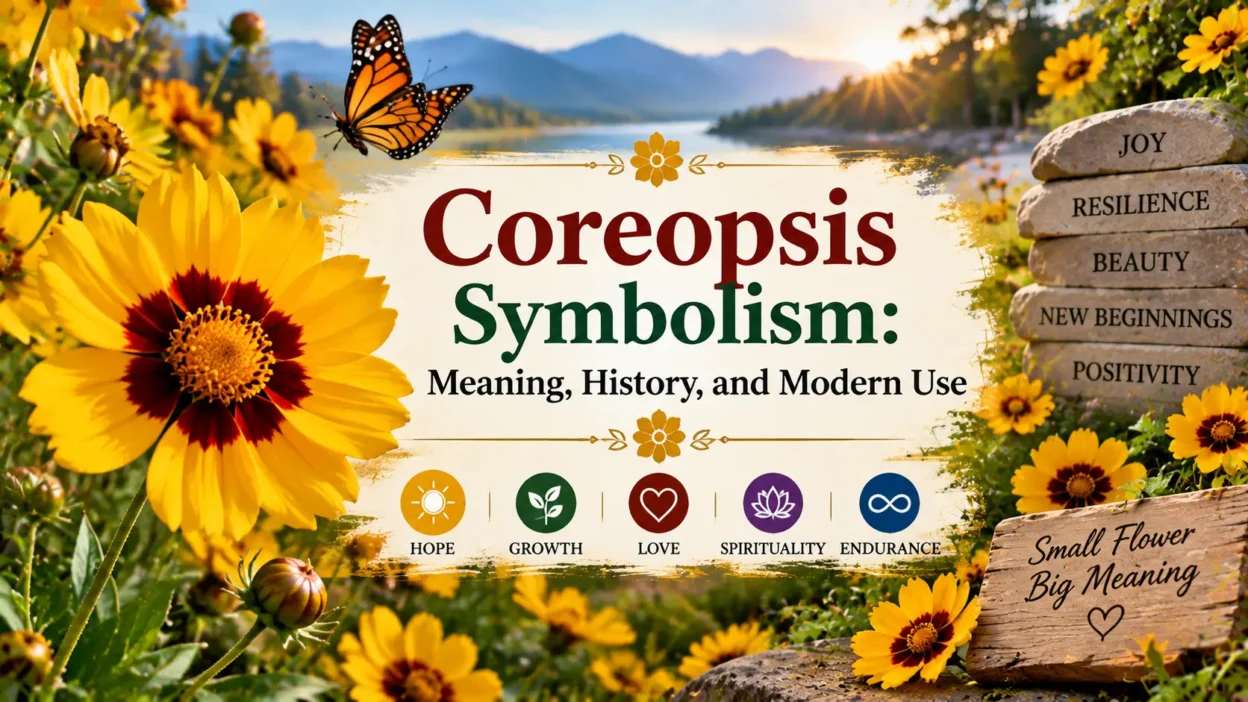
Coreopsis symbolism is often connected with happiness, optimism, friendship, and appreciation in modern American flower culture. This bright wildflower is recognized for its sunny appearance and is commonly associated with positive emotions, warmth, and cheerful connections between people.
Coreopsis, sometimes called tickseed, is a flowering plant known for its golden-yellow, red, pink, or orange blooms. Native to North America, it appears in gardens, wildflower landscapes, bouquets, and public planting projects across the United States. Its simple beauty and ability to grow in many environments have helped it develop meanings linked to resilience, joy, and natural beauty.
The flower’s symbolism comes from both its physical characteristics and its cultural use. While some meanings are rooted in traditional flower language, others have developed through modern gardening, gifting, and personal expression.
Quick Answer
Coreopsis symbolism commonly represents happiness, friendship, and positive energy in modern American culture, especially in gardens, gifts, and floral designs. Historically, the flower has also been associated with nature, resilience, and appreciation because of its North American origins and long-lasting blooms.
TL;DR
- Coreopsis represents happiness, friendship, and optimism.
- Native American landscapes shaped its natural symbolism.
- Yellow blooms often suggest joy and warmth.
- Gardeners value it for resilience and adaptability.
- Modern uses include gifts, tattoos, and decor.
- Meanings vary across cultures and personal experiences.
What Is Coreopsis and Why Is It Symbolic?
Coreopsis is a group of flowering plants in the daisy family, scientifically known as Coreopsis. The plant produces small, bright flowers with a central disk and delicate petals that resemble other members of the sunflower family.
Many species grow naturally across North America, especially in open fields, prairies, meadows, and coastal areas. Because of its ability to bloom in sunny locations and tolerate different conditions, coreopsis has become a favorite choice for gardens and pollinator-friendly landscapes.
The flower’s appearance plays an important role in its symbolism. Its bright colors often remind people of sunlight, warmth, and cheerful moments. A flower that continues blooming through challenging conditions naturally became connected with endurance and a positive outlook.
Core Meaning of Coreopsis Symbolism in the United States
In the United States, coreopsis is most commonly understood as a flower representing joy, friendship, and appreciation. Its cheerful appearance makes it suitable for occasions where people want to express kindness without the stronger romantic associations connected with roses or other traditional flowers.
Coreopsis is often viewed as a symbol of:
| Context | Meaning in the USA | Common Associations | Notes |
|---|---|---|---|
| Friendship | Appreciation and connection | Gifts, celebrations | Often chosen for cheerful messages |
| Gardens | Joy and natural beauty | Wildflower landscapes | Popular native planting choice |
| Yellow flowers | Happiness and warmth | Sunshine, optimism | Color influences interpretation |
| Personal style | Individual expression | Tattoos, artwork | Meaning depends on the person |
| Environmental use | Resilience and nature | Pollinator gardens | Represents harmony with nature |
Unlike flowers with fixed meanings in traditional flower dictionaries, coreopsis symbolism is flexible. Many people interpret it through personal memories, cultural background, and the setting where they encounter the flower.
Ancient Roots and Natural Origins of Coreopsis Meaning
Coreopsis does not have a single ancient symbolic tradition like the lotus in Asian religions or the rose in European romance. Its symbolism developed more gradually through its relationship with North American landscapes.
Indigenous communities across North America used native plants for practical purposes, including food, medicine, and cultural practices. Different Native nations had their own relationships with local plants, and meanings depended on regional traditions. Coreopsis species were valued as part of local ecosystems, although specific symbolic interpretations varied among communities.
The flower’s connection to open landscapes, seasonal cycles, and natural abundance helped create associations with renewal and connection to the earth.
European settlers later encountered many North American wildflowers and began incorporating them into gardens and botanical studies. Over time, coreopsis became recognized as a dependable ornamental flower, strengthening its association with beauty and adaptability.
The Role of Color in Coreopsis Symbolism
Color strongly influences how people interpret coreopsis flowers. Different shades can communicate different emotions.
Yellow Coreopsis
Yellow is the most familiar color associated with coreopsis. In American culture, yellow flowers often represent:
- Happiness
- Friendship
- Energy
- Encouragement
- Warmth
A yellow coreopsis bouquet may feel like a message of support or appreciation rather than romance.
Pink and Red Coreopsis
Pink and red varieties can suggest:
- Affection
- Care
- Emotional connection
- Admiration
These colors may create a softer or more personal meaning.
Orange Coreopsis
Orange flowers are often linked with:
- Creativity
- Enthusiasm
- Confidence
- Celebration
Because coreopsis comes in several colors, its meaning can shift depending on the variety chosen.
Coreopsis Symbolism in American Gardens
Gardening is one of the strongest areas where coreopsis symbolism appears today. Many American gardeners plant coreopsis because it represents cheerful growth and a connection with local nature.
The flower is especially valued because it:
- Attracts pollinators such as bees and butterflies
- Handles sunny conditions well
- Provides seasonal color
- Works in native plant gardens
For many homeowners, planting coreopsis is not only about appearance. It can represent a desire to create a welcoming outdoor space and support local ecosystems.
Public gardens and community landscapes also use coreopsis because it creates a feeling of openness and natural beauty. Its presence in parks and roadside plantings has helped associate it with shared outdoor spaces.
Emotional and Psychological Meaning of Coreopsis
Flowers often influence emotions through their colors, shapes, and personal memories. Coreopsis tends to create feelings connected with optimism and comfort.
Its bright blooms may remind people of:
- Summer days
- Open fields
- Childhood gardens
- Simple happiness
- Fresh beginnings
Psychologically, people often respond positively to flowers with warm colors because they are visually connected with sunlight and energy. However, emotional meaning is personal. A coreopsis flower may represent something completely different depending on someone’s experiences.
For one person, it may symbolize friendship. For another, it may represent a favorite place, a loved one, or a meaningful memory.
Coreopsis in Gifts, Weddings, and Celebrations
Coreopsis is not as commonly used in traditional wedding bouquets as roses, peonies, or lilies, but it has gained popularity in informal and nature-inspired floral arrangements.
Its symbolism makes it suitable for:
- Friendship gifts
- Thank-you bouquets
- Summer celebrations
- Garden-themed weddings
- Appreciation gestures
Because it feels cheerful and natural, coreopsis works well for occasions focused on happiness rather than formal romance.
A bouquet containing coreopsis can communicate warmth and gratitude while maintaining a relaxed, approachable style.
Coreopsis Symbolism in Tattoos and Personal Expression
Flower tattoos often represent personal values, memories, or connections to nature. Coreopsis tattoos are less common than rose or sunflower tattoos, which makes them a more distinctive choice.
People may choose a coreopsis tattoo to represent:
- A love of wildflowers
- Personal growth
- Happiness after difficult times
- Connection to a specific place
- Appreciation for nature
The design can also reflect regional identity because coreopsis is strongly connected with North American landscapes.
Some people choose realistic botanical designs, while others combine coreopsis with butterflies, landscapes, names, or meaningful dates.
Cross-Cultural Interpretations of Coreopsis
Coreopsis does not have one universal symbolic meaning across all cultures. Its interpretations are mostly influenced by local relationships with the plant.
In places where coreopsis is grown as an ornamental flower, people often connect it with:
- Beauty
- Cheerfulness
- Natural simplicity
Because flower symbolism changes between cultures, meanings should not be treated as fixed rules. A flower’s significance depends on history, language, traditions, and personal experience.
The broader idea of flowers representing emotions is widespread globally, but specific meanings attached to coreopsis are more modern and regional.
Modern Uses of Coreopsis Symbolism
Today, coreopsis appears in many forms beyond gardens. Its symbolism is used in:
Home Decor
Artwork featuring coreopsis can create a feeling of brightness and connection with nature. Floral prints often use it to bring outdoor beauty indoors.
Social Media and Digital Culture
People share images of coreopsis flowers to represent:
- Seasonal beauty
- Gardening achievements
- Nature appreciation
- Positive moments
Fashion and Design
Coreopsis patterns appear in clothing, stationery, and handmade products, especially those inspired by botanical themes.
Environmental Movements
Because many coreopsis species support pollinators, the flower can represent awareness of native plants and ecological responsibility.
Common Misunderstandings About Coreopsis Symbolism
One misunderstanding is that every flower has a strict meaning that applies everywhere. In reality, flower symbolism changes over time and depends on cultural context.
Another misconception is that coreopsis always represents happiness. While joy is a common association, the flower can represent different ideas depending on color, situation, and personal meaning.
It is also important not to confuse symbolic interpretations with scientific facts. A flower’s appearance may inspire certain emotions, but those meanings come from human culture rather than the plant itself.
How Coreopsis Meaning Has Changed Over Time
Coreopsis began primarily as a native wildflower connected with North American environments. Its meaning expanded as people cultivated it in gardens and included it in decorative traditions.
Earlier associations focused on nature, seasonal cycles, and usefulness. Modern interpretations emphasize emotional themes such as happiness, friendship, and appreciation.
This change reflects a broader pattern in flower symbolism. Meanings are created through relationships between people and plants, not simply inherited unchanged from the past.
FAQ About Coreopsis Symbolism
What does coreopsis symbolize?
Coreopsis commonly symbolizes happiness, friendship, appreciation, and optimism. Many people associate it with cheerful energy because of its bright colors and sunny appearance.
What does a yellow coreopsis flower mean?
A yellow coreopsis flower is often associated with joy, warmth, encouragement, and friendship. It is commonly viewed as a positive flower rather than a romantic symbol.
Is coreopsis a good flower for gifts?
Yes, coreopsis can be a thoughtful gift, especially for friends, coworkers, or someone who needs encouragement. Its cheerful appearance makes it suitable for expressing appreciation.
What does a coreopsis tattoo symbolize?
A coreopsis tattoo may represent happiness, resilience, nature connection, or a meaningful personal memory. The meaning depends on the individual’s reason for choosing the design.
Does coreopsis have religious symbolism?
Coreopsis does not have a widely recognized religious meaning in major traditions. However, some people may personally connect it with spiritual ideas related to nature, gratitude, or renewal.
Why is coreopsis popular in American gardens?
Coreopsis is popular because it is attractive, adaptable, and supports pollinators. Many gardeners appreciate it as a symbol of natural beauty and environmental awareness.
Is coreopsis a symbol of love?
Coreopsis is not traditionally considered a primary symbol of romantic love. It is more commonly connected with friendship, happiness, and appreciation.
Conclusion
Coreopsis symbolism reflects the simple beauty of a flower closely connected with North American landscapes. Its bright blooms have become associated with happiness, friendship, appreciation, and the ability to flourish in changing conditions.
While its meanings are not fixed across every culture, coreopsis continues to hold a positive place in American gardens, floral designs, personal artwork, and nature-focused lifestyles. Today, coreopsis symbolism represents the everyday moments that bring warmth, connection, and optimism into people’s lives.


