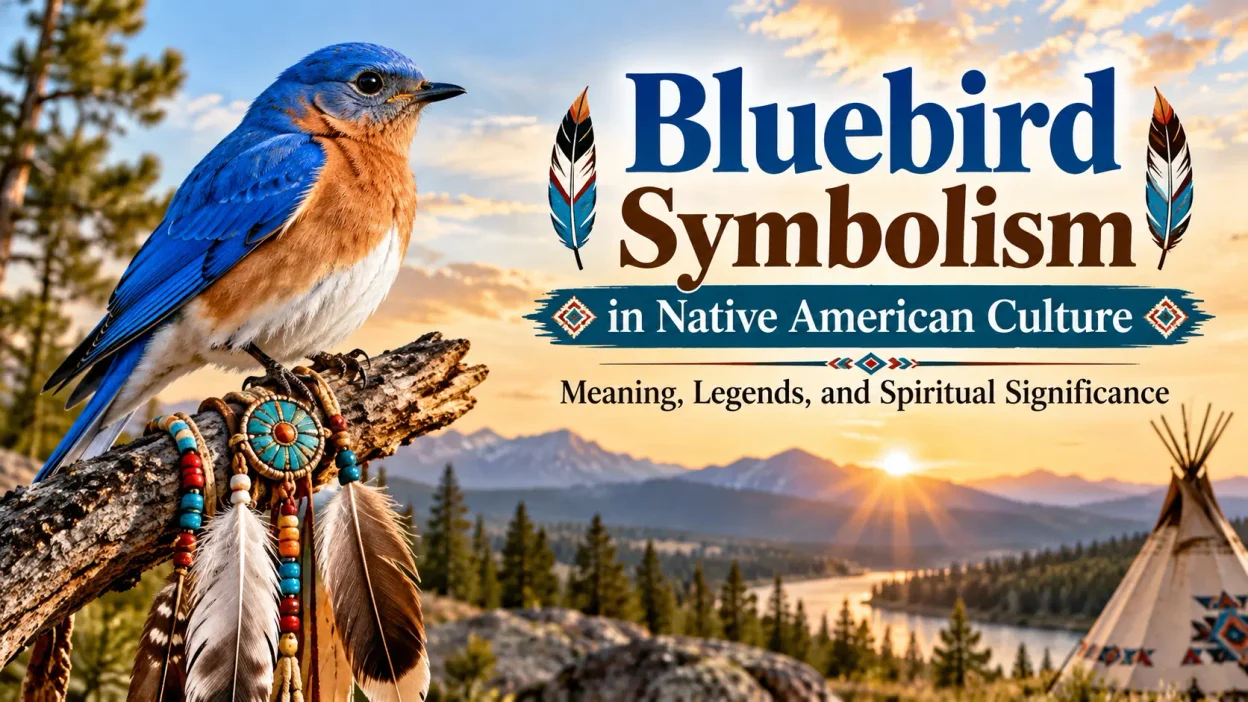
Bluebird symbolism in Native American traditions is connected with several meaningful themes, including spring, renewal, sunlight, transformation, and the relationship between people and the natural world. In specific Indigenous stories and ceremonial traditions, the bluebird appears as a figure associated with seasonal change, the morning sun, and the rhythms of life.
However, there is no single interpretation shared by all Native American nations. Indigenous peoples of North America have distinct languages, histories, spiritual practices, and oral traditions. The meaning of a bluebird in an Iroquois story, for example, may differ from its significance in Navajo or Pima traditions.

Native Languages
+1
The bluebird’s bright plumage and cheerful song have also inspired broader associations with happiness and hope in modern American culture. Those popular meanings overlap with some Indigenous stories, but they should not be confused with the specific beliefs of individual nations.
Exploring bluebird symbolism respectfully means looking at particular traditions, understanding the stories in which the bird appears, and recognizing that Indigenous cultures are living communities rather than a single collection of ancient symbols.
Quick Answer: What Does a Bluebird Symbolize in Native American Traditions?
In some Native American traditions, the bluebird is associated with spring, renewal, sunlight, transformation, and the natural cycles of life. Iroquois stories connect its song with the return of spring, Navajo traditions associate the mountain bluebird with the morning sun, and a Pima story explains how the bluebird acquired its blue feathers.
These meanings vary by nation and story. They should not be treated as universal beliefs shared by all Indigenous peoples.
TL;DR
- Spring and renewal: In an Iroquois story, the bluebird’s song helps drive away winter.
- Sunlight and dawn: Navajo traditions associate the mountain bluebird with the rising sun and morning.
- Transformation: A Pima story tells how the bluebird gained its blue color.
- Sun-related stories: A Cochiti story includes Bluebird among the children of the Sun.
- Cultural diversity: Bluebird symbolism differs across Indigenous nations and should be discussed in its specific context.
- Modern interpretation: People may use the bluebird as a personal symbol of hope, happiness, or new beginnings, while distinguishing these meanings from traditional teachings.
1. Bluebird Symbolism and the Meaning of Spring
One of the best-known themes in bluebird symbolism is the return of spring. This association appears in an Iroquois tradition in which the bluebird’s song helps drive away a destructive figure connected with winter.
In this story, the bluebird is more than a beautiful bird. Its song signals a change in the natural world, connecting birdsong with the retreat of cold weather and the return of life.
Spring is an important seasonal transition in many societies because it brings warmer temperatures, new plant growth, and renewed activity among animals. In the Iroquois story, the bluebird becomes part of a narrative explaining the struggle between winter and the arrival of spring.
Native Languages
+1
The symbolism can be understood through several related themes:
- Renewal: The movement from a cold season toward new growth.
- Hope: The promise of a more favorable season after hardship.
- Vitality: The return of activity and life to the landscape.
- Change: The understanding that even difficult conditions eventually shift.
These are interpretations of the story’s themes, not a claim that every Indigenous nation considers the bluebird a universal symbol of spring.
2. Bluebird Symbolism in Iroquois Tradition
In a story recorded in accounts of Iroquois mythology, the bluebird is associated with the defeat or retreat of the destructive force of winter.
The figure commonly identified as Tawiscaron, also rendered with variant spellings in retellings, is associated with winter and destructive cold. The bluebird’s song drives this figure away, allowing spring to return.
This story connects an observable feature of the natural world—the sound of a bird—with a larger explanation of seasonal change. Rather than representing happiness in a general sense, the bluebird plays a specific role in a story about the recurring relationship between winter and spring.
Native Languages
+1
What Does the Iroquois Bluebird Story Represent?
The story can be interpreted as expressing the power of seasonal renewal and the importance of the transition from hardship to growth.
The bluebird’s song becomes a sign that winter’s hold is weakening. The bird does not need to overpower winter through physical strength; its role is expressed through sound and the seasonal change associated with it.
This offers a useful way to understand why birds can carry important roles in oral traditions. Their behavior, movements, and calls are part of the natural world through which people observe and explain changing seasons.
It is important to remember that Iroquois peoples include distinct nations, and a story recorded in one source should not automatically be assumed to represent every Haudenosaunee community or its current teachings.
3. Bluebird Symbolism in Navajo Tradition

Navajo tradition provides another important example of bluebird symbolism, particularly through the mountain bluebird’s association with the sun and the morning.
Accounts of Navajo ceremonial tradition describe a Bluebird Song that calls attention to the arrival of dawn. The song encourages the listener to wake and greet the new day, connecting the bird with the transition from darkness to daylight.
The song is also associated with the Ye’iibicheii, or Nightway, ceremonial tradition, where it has been described as occurring near sunrise at the close of the ceremony.
Bathtub Bulletin
+1
The Bluebird and the Rising Sun
In this context, the bluebird is associated with the rhythm of the day. Its role is not simply to represent a pleasant mood; it is connected to the arrival of morning and the act of rising to greet it.
The symbolism may evoke:
- Dawn: The transition from night to daylight.
- Awareness: Becoming attentive to the world around you.
- Daily renewal: Beginning a new day.
- Connection with nature: Recognizing the rhythms of the natural environment.
These themes emerge from a specific ceremonial and cultural context. Navajo songs and ceremonies have their own meanings, protocols, and living traditions, so they should not be reduced to generalized spiritual slogans.
4. The Pima Bluebird Legend: Transformation and Change
One widely retold Indigenous bird story explains how the bluebird acquired its vivid blue color. The story is attributed to the Pima people, also known as the Akimel O’odham.
In this account, the bluebird was once dull in appearance. It discovered a special lake and repeatedly bathed in its water while singing about becoming blue. After several days, its feathers fell away, and eventually it emerged with beautiful blue plumage.
The story explains the bird’s distinctive appearance through a process of change. Versions of the story have appeared in collections of Native American folklore, including the Handbook of Native American Mythology.
BLACK TRIBE
+1
What Does the Legend Teach About Transformation?
In a modern symbolic reading, the story can suggest that transformation requires patience and a willingness to pass through an uncomfortable stage.
The bluebird does not change instantly. Its transformation unfolds over time, with the loss of its old feathers forming part of the process.
Possible themes include:
- Transformation: Becoming different from what you were before.
- Patience: Allowing change to take place gradually.
- Renewal: Emerging from a difficult transition with a new appearance.
- Humility: Recognizing that growth may involve vulnerability.
These are interpretive lessons drawn from the story, not necessarily a statement of its complete traditional meaning to Pima or Akimel O’odham people today.
The legend also demonstrates why oral stories are important to cultural history: they can explain the characteristics of animals while connecting those characteristics to broader ideas about life and the natural world.
5. Bluebird Symbolism in Cochiti Pueblo Tradition
A story associated with the Cochiti Pueblo people connects Bluebird with the Sun. In the account, Bluebird is one of the children of the Sun, linking the bird to light and the arrival of morning.
The story is known through ethnographic collections, including Ruth Benedict’s Tales of the Cochiti Indians, published in 1932. It belongs to a particular Pueblo tradition and should not be treated as representative of every Pueblo community.
Bathtub Bulletin
+1
The Connection Between Bluebird and Sunlight
The association between Bluebird and the Sun places the bird within a story about light, family relationships, and the natural order.
In a contemporary interpretation, this connection may suggest:
- Light: The arrival of daylight.
- Vitality: The energy associated with the sun.
- Family relationships: The role of kinship within the story.
- The natural world: The connection between living beings and larger natural forces.
The significance of this story lies in its particular cultural context, not in a claim that all Indigenous traditions identify bluebirds as children of the Sun.
6. Bluebirds, Weather, and the Natural World
Some recorded accounts of Cherokee traditions associate bluebirds with the wind and weather. In these accounts, bluebirds were believed to predict or influence weather conditions.
Native Languages
+1
This association reflects a broader feature of many traditional knowledge systems: animals are observed as part of a connected environment, and their behavior can carry meaning within stories or seasonal practices.
Birds respond to changing conditions through movement, feeding, nesting, and vocalization. Observations of these behaviors have long been part of people’s relationships with the natural world.
However, traditional beliefs about weather should be distinguished from modern meteorological evidence. A bluebird’s appearance is not a reliable general-purpose forecast, and the meaning of the bird varies according to the particular tradition being discussed.
The symbolic connection between birds and weather nevertheless highlights an important idea: the natural world can be understood through close attention to its living patterns.
7. Bluebird Symbolism in Hopi Tradition
Some accounts of Hopi tradition identify the bluebird with the western direction. The bird is described in certain sources as a directional guardian associated with the west.
Native Languages
+1
Directional symbolism can be significant in cultural systems where places, colors, natural elements, and ceremonial practices are connected. However, a direction’s meaning cannot be interpreted accurately without understanding the specific tradition in which it appears.
For this reason, it is best to treat the reported Hopi bluebird association as a particular cultural reference rather than a universal Native American teaching.
The Hopi people have their own histories, ceremonial traditions, and relationships with the natural world. Their bird symbolism should be understood within that cultural context rather than blended indiscriminately with Navajo, Iroquois, or other Indigenous traditions.
8. Bluebird Symbolism and Indigenous Relationships With Birds
Birds have important roles in numerous Indigenous North American traditions. Their symbolism varies widely: particular birds may appear in origin stories, ceremonial practices, clan identities, or accounts of relationships between humans and the natural world.
Research on Southwestern Indigenous art and pottery documents the presence of birds in the visual traditions of communities including the Zuni, Acoma, and Zia. Bird imagery can connect to stories, rain, the sky, and the spiritual significance of the natural environment.
Columbia University Libraries
+1
The bluebird is one example within this much broader world of bird symbolism.
Its meaning in a particular story may be related to its song, color, habitat, seasonal appearance, or role in a narrative. Another bird in the same cultural tradition may carry an entirely different significance.
This diversity matters because it prevents us from treating Indigenous cultures as if they all share one set of beliefs.
9. The Meaning of Blue: Color and Transformation
The bluebird’s color is an important part of its visual identity. In the Pima story about the bird’s feathers, blue plumage is the outcome of a remarkable transformation.
In modern symbolic interpretation, blue is often associated with the sky, water, calmness, and openness. These are broad contemporary associations, however, and they should not automatically be attributed to every Indigenous tradition.
The Pima story itself focuses on how the bird acquires its distinctive color. Its symbolism can be explored through the process of change rather than assuming that the color has one universal spiritual meaning.
The bluebird’s vivid appearance also illustrates how animals become memorable symbols through their physical characteristics. A bird’s color, movement, or call can help shape the stories people tell about it.
10. Bluebird Symbolism in Modern American Culture
Beyond specific Indigenous traditions, the bluebird has become a familiar symbol of happiness, hope, and good fortune in broader American popular culture.
The phrase “bluebird of happiness” helped establish this association, and bluebirds frequently appear in children’s literature, decorative art, greeting cards, and inspirational imagery.
These popular meanings can overlap with themes of renewal and the arrival of spring, but they are not interchangeable with Indigenous teachings.
In modern life, people may use the bluebird to represent:
- Hope: Maintaining optimism during a difficult period.
- Happiness: Appreciating small moments of joy.
- New beginnings: Moving into a new stage of life.
- Personal growth: Reflecting on change and resilience.
- Connection with nature: Appreciating birds and their habitats.
These are contemporary symbolic interpretations. They should be presented separately from the specific stories and ceremonies associated with Indigenous nations.
11. What Does Seeing a Bluebird Mean?
Some people interpret seeing a bluebird as a sign of hope, renewal, or an approaching positive change. Such interpretations are common in modern spiritual writing and personal symbolism.
Within the Indigenous traditions discussed above, however, the meaning depends on the particular story or cultural context. It would be inaccurate to claim that every Native American nation regards a bluebird sighting as a universal omen.
A bluebird appearing in your garden may simply be a natural encounter with wildlife. You can still find personal meaning in the experience without assuming it predicts an event.
For example, you might take a sighting as an opportunity to reflect on a fresh start, appreciate the natural world, or remember a meaningful story about seasonal change.
The distinction is important: personal symbolism can be meaningful without being presented as a universal Indigenous belief or a supernatural guarantee.
12. How to Interpret Bluebird Symbolism Respectfully
When exploring bluebird symbolism in Native American culture, it helps to begin with a specific nation, story, or source rather than searching for one universal meaning.
A respectful approach includes the following principles:
- Name the tradition. Identify whether a story is associated with the Iroquois, Navajo, Pima, Cochiti, Hopi, or another community.
- Distinguish stories from modern interpretations. Explain when an idea comes from a recorded tradition and when it is a contemporary symbolic reading.
- Avoid universal claims. Do not assume that all Indigenous peoples share the same beliefs.
- Recognize living cultures. Indigenous nations continue to maintain, develop, and interpret their traditions today.
- Use reliable sources. Prefer cultural institutions, ethnographic records, and Indigenous sources when available.
This approach helps preserve the richness of bluebird symbolism without flattening different cultural traditions into a single simplified narrative.
Frequently Asked Questions
1. What does a bluebird symbolize in Native American culture?
In specific Native American traditions, the bluebird is associated with spring, sunlight, renewal, and transformation. The meaning varies by nation and story; there is no single bluebird interpretation shared by all Indigenous peoples.
2. What does the bluebird symbolize in Iroquois tradition?
In a recorded Iroquois story, the bluebird’s song drives away a destructive figure associated with winter, allowing spring to return. The story connects the bird with seasonal change and renewal.
Native Languages
+1
3. What does a bluebird mean in Navajo tradition?
Accounts of Navajo tradition associate the mountain bluebird with the sun and morning. A Bluebird Song calls attention to the arrival of dawn and is associated with the Ye’iibicheii ceremonial tradition.
Bathtub Bulletin
+1
4. What is the Pima legend about the bluebird?
In a widely recorded Pima story, a bird that was originally dull in color repeatedly bathes in a special lake and eventually emerges with blue feathers. The story explains the bluebird’s appearance through a process of transformation.
BLACK TRIBE
+1
5. Is the bluebird a symbol of good luck in Native American traditions?
Some modern interpretations describe bluebirds as positive signs, but it is inaccurate to claim that every Indigenous nation regards them as universal symbols of good luck. The bird’s significance depends on the particular tradition and story.
6. What does the bluebird symbolize spiritually?
In modern personal spirituality, a bluebird may represent hope, renewal, happiness, or transformation. In Indigenous traditions, its meaning must be understood within the specific cultural context rather than assumed to be universal.
7. Are bluebirds sacred in all Native American cultures?
No. Indigenous nations have distinct traditions and relationships with animals. Bluebirds have specific roles in some recorded traditions, but their significance should not be generalized to all Native American cultures.
Conclusion
Bluebird symbolism in Native American traditions includes several meaningful associations, especially spring, sunlight, renewal, and transformation. An Iroquois story connects the bird’s song with the return of spring, Navajo tradition associates the mountain bluebird with the morning sun, and a Pima legend explains how the bird gained its blue feathers.
These examples reveal how a familiar animal can become part of stories that explain seasonal change, natural beauty, and relationships between living beings and the world around them.
At the same time, Indigenous cultures are diverse, and the bluebird does not have one universal meaning across all nations. Understanding its symbolism requires attention to the particular community, story, and historical source involved.
Ultimately, the bluebird can serve as a meaningful symbol of renewal and hope in modern personal interpretation. Its deeper cultural significance, however, is best appreciated by respecting the distinct traditions in which it appears.