
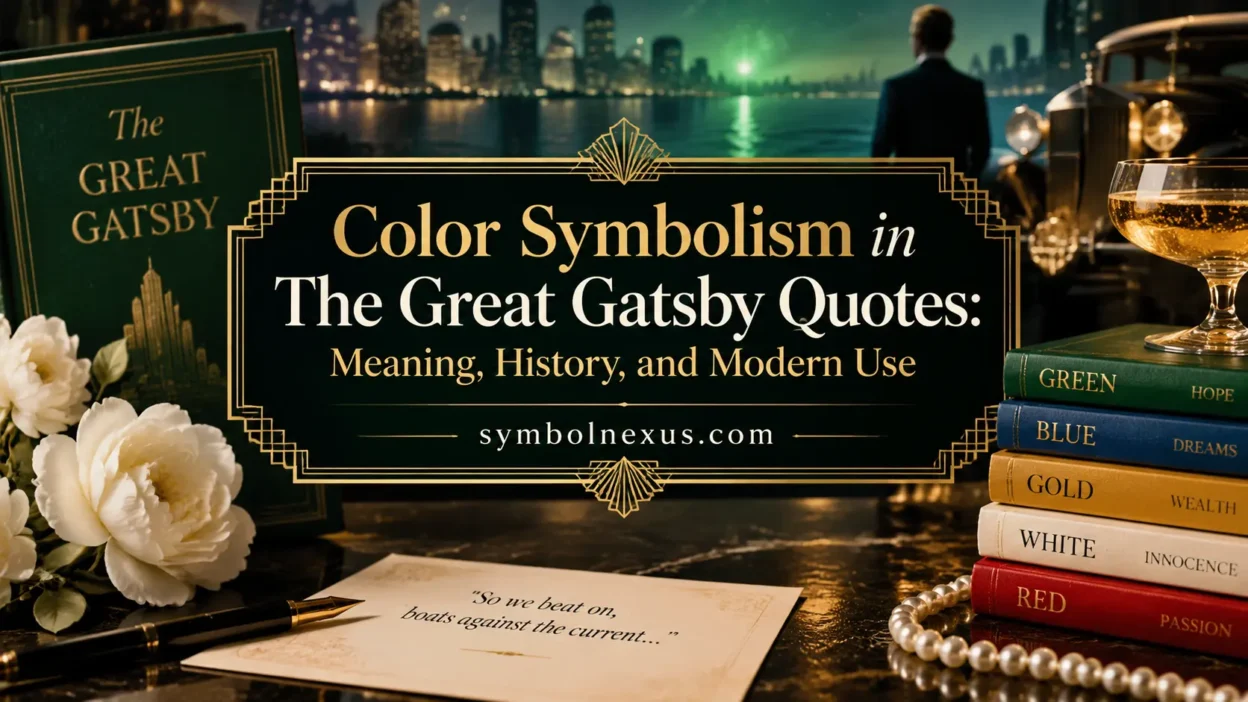
Color symbolism in The Great Gatsby quotes reveals how F. Scott Fitzgerald used colors to represent dreams, wealth, identity, love, and social divisions in 1920s America. The novel’s colors are not only descriptions of clothing, places, and objects; they often reflect characters’ emotions, ambitions, and hidden realities.
Published in 1925, The Great Gatsby remains one of the most studied American novels because its symbols continue to connect with modern ideas about success, appearance, and the pursuit of happiness. Fitzgerald’s use of color helps readers understand the contrast between glamorous images and the struggles underneath.
From Gatsby’s green light across the bay to Daisy Buchanan’s white dresses, each color carries meaning shaped by the characters and the society around them. These choices allow readers to explore themes such as the American Dream, social class, illusion, and personal identity.
Quick Answer
Color symbolism in The Great Gatsby quotes commonly represents ideas such as ambition, wealth, purity, illusion, and social status in American culture. Fitzgerald used colors like green, white, gold, and gray to reflect characters’ dreams, conflicts, and the reality behind the glamorous world of the 1920s.
TL;DR
Green represents dreams, ambition, and future hopes.
White reflects beauty, innocence, and social privilege.
Gold symbolizes wealth, luxury, and material success.
Gray shows emptiness, poverty, and moral decay.
Colors reveal hidden truths behind appearances.
Why Fitzgerald Used Colors as Symbols
Fitzgerald wrote The Great Gatsby during the Jazz Age, a period known for economic growth, parties, fashion changes, and changing social values in the United States. Color became an effective literary tool because it allowed him to show the difference between what characters appeared to be and what they actually experienced.
In the novel, colors often work on two levels. The first level is physical: readers see a yellow car, a white dress, or a green light. The second level is symbolic: those objects suggest deeper ideas about desire, identity, and society.
American culture during the 1920s placed strong attention on appearance. Wealthy families displayed status through clothing, homes, automobiles, and entertainment. Fitzgerald used these visual details to question whether outward success truly created happiness.
Green Symbolism in The Great Gatsby Quotes
Green is one of the most important colors in the novel because it represents Gatsby’s dreams and his desire for a different future. The famous green light at the end of Daisy’s dock becomes the central image connected to hope and longing.
Gatsby watches the green light across the water because it represents Daisy and the life he believes he can achieve. However, the symbol becomes larger than romantic love. It also represents the American Dream and the human desire to reach something that always seems slightly beyond reach.
The color green has traditionally been associated with growth, renewal, and possibility. In American culture, green often connects with progress, opportunity, and new beginnings. Fitzgerald uses this familiar association but adds complexity by showing that dreams can become unrealistic when they are built on illusions.
A key example appears when Nick describes Gatsby reaching toward the green light. The image suggests that Gatsby is not only reaching for Daisy but also chasing an ideal version of himself.
The Green Light and the American Dream
The green light reflects one of the novel’s biggest questions: Can people truly recreate their lives and achieve their dreams?
Gatsby believes money and determination can erase the past. He transforms himself from James Gatz into Jay Gatsby, builds a mansion, and creates a wealthy identity. Yet the green light shows that some desires remain distant even when someone gains success.
For many modern American readers, the green light represents personal goals, ambition, and future possibilities. It can apply beyond Gatsby’s story to anyone pursuing a dream that feels difficult to achieve.
However, Fitzgerald also presents a warning. A dream can inspire people, but an unrealistic dream can lead to disappointment.
White Symbolism in Daisy and Gatsby’s World
White appears throughout The Great Gatsby, especially in descriptions of Daisy Buchanan, her clothing, and wealthy environments. The color often represents beauty, elegance, and social refinement, but Fitzgerald also uses it to reveal hidden emptiness.
Daisy is frequently associated with white imagery. Her appearance creates an impression of innocence and charm. However, the novel gradually reveals that this image does not fully represent her personality or choices.
In traditional Western symbolism, white often suggests purity, honesty, and innocence. In American culture, white is commonly connected with weddings, formal clothing, clean design, and fresh beginnings. Fitzgerald challenges these associations by showing that appearances can hide complicated realities.
Daisy’s white dresses and surroundings create a polished image, but beneath that surface exists privilege, carelessness, and emotional uncertainty.
Gold and Yellow: Wealth, Luxury, and False Success
Gold and yellow represent wealth, status, and material attraction in The Great Gatsby. These colors frequently appear around Gatsby’s parties, expensive possessions, and the wealthy world of East Egg.
Gold traditionally symbolizes value and achievement. In many cultures, gold connects with power, success, and importance. In 1920s America, it also represented financial prosperity and social status.
Fitzgerald uses gold imagery to show both attraction and criticism. Gatsby’s wealth creates admiration, but it does not guarantee acceptance into old-money society.
Yellow has a more complicated meaning. While it can suggest brightness and energy, Fitzgerald often uses it to show artificial glamour. Gatsby’s yellow car becomes an example of how luxury can create attention while also leading toward destruction.
The difference between gold and yellow is important. Gold suggests lasting value, while yellow often suggests something flashy or temporary.
Color Symbolism in The Great Gatsby Quotes: Meaning, History, and Modern Use
Gray Symbolism and the Valley of Ashes
Gray is one of the bleakest colors in The Great Gatsby. Fitzgerald connects gray with the Valley of Ashes, an industrial wasteland located between the wealthy communities of West Egg and East Egg and the city of New York. The gray landscape represents the forgotten people and consequences hidden behind the wealth and luxury of the Jazz Age.
The Valley of Ashes is described as a place covered with industrial waste where people struggle in poverty. Its gray appearance creates a sharp contrast with the bright colors of Gatsby’s parties and the expensive lifestyles of wealthy characters.
Gray often symbolizes emptiness, hopelessness, and emotional distance. In the novel, it reflects how the pursuit of wealth creates inequality. While characters like Gatsby, Daisy, and Tom enjoy luxury, others live among the remains of that prosperity.
George Wilson, who owns a repair shop in the Valley of Ashes, is closely connected with this gray symbolism. His life represents the people left behind by a society focused on money and status.
The color also suggests moral uncertainty. Many characters appear successful, but their choices reveal selfishness and carelessness. Gray becomes a visual reminder that the glamorous world of the wealthy has a darker side.
Gray and the Hidden Cost of the American Dream
In modern American interpretation, gray symbolism in The Great Gatsby connects with discussions about inequality, social class, and the limits of success.
The American Dream often suggests that hard work can lead to achievement. Fitzgerald does not completely reject this idea, but he questions what happens when success depends only on wealth and appearance.
The Valley of Ashes shows that economic growth can create both winners and people who are ignored. The gray landscape represents the human cost behind an attractive image of prosperity.
Blue Symbolism in The Great Gatsby
Blue appears less prominently than green, white, or yellow, but it contributes to the novel’s emotional atmosphere. Blue often connects with imagination, sadness, distance, and dreams.
Gatsby’s world contains many examples of blue imagery. His parties, his mysterious personality, and the atmosphere around his mansion create a sense of fantasy. Blue helps build the feeling that Gatsby exists between reality and illusion.
Traditionally, blue is associated with calmness, loyalty, and reflection. In American culture, it can also represent sadness or emotional isolation. Fitzgerald uses these different meanings to show Gatsby’s complicated personality.
Gatsby appears confident and successful, but he is emotionally separated from the people around him. His wealth attracts crowds, yet he remains alone.
Blue and the Difference Between Appearance and Reality
One important idea in The Great Gatsby is the difference between what people see and what actually exists. Blue contributes to this theme by creating an atmosphere of beauty and imagination.
Gatsby creates an impressive image of himself, but much of his identity depends on a dream that cannot fully become reality. Blue symbolism supports this feeling of distance between fantasy and truth.
For modern readers, blue imagery in the novel can represent personal dreams, memories, and the emotional spaces people create when reality does not match their hopes.
Major Color Meanings in The Great Gatsby
| Color | Meaning in the USA | Common Associations | Role in the Novel |
|---|---|---|---|
| Green | Hope, ambition, future goals | Growth, money, opportunity | Gatsby’s dream and the green light |
| White | Beauty, status, appearance | Purity, elegance, innocence | Daisy’s image and wealthy society |
| Gold/Yellow | Wealth and luxury | Success, attraction, materialism | Parties, possessions, social status |
| Gray | Poverty and emptiness | Loss, decay, uncertainty | Valley of Ashes and forgotten people |
| Blue | Imagination and emotion | Dreams, sadness, distance | Gatsby’s fantasy world |
How Americans Interpret The Great Gatsby Colors Today
Modern American readers often view Fitzgerald’s colors through themes that still exist today: wealth inequality, social media images, personal branding, and the search for success.
Green remains strongly connected with ambition. Many people relate the green light to personal goals, career dreams, and hopes for the future. The symbol works beyond Gatsby’s romantic desire because it represents the human tendency to chase something ahead.
White continues to represent appearance and social image. In modern culture, white clothing, luxury homes, and clean designs often communicate sophistication. However, The Great Gatsby encourages readers to question whether attractive appearances reveal the full truth.
Gold and yellow remain connected with wealth and status. Luxury brands, jewelry, and expensive products often use gold imagery to communicate value and success.
Gray has become especially relevant in modern conversations about inequality. The Valley of Ashes can be compared with discussions about communities affected by economic differences.
Blue continues to represent emotional complexity. Modern audiences often connect blue symbolism with loneliness, reflection, and dreams that exist beyond ordinary life.
Color Symbolism in Modern Fashion, Tattoos, and Design
The colors from The Great Gatsby continue to influence modern creative expression. Designers, artists, and readers often use these colors because their meanings remain easy to understand.
Green tattoos may represent growth, ambition, or a personal goal someone continues to pursue. Some people choose green imagery as a reminder of future possibilities.
White designs often represent simplicity, elegance, or new beginnings. In weddings and fashion, white still carries strong cultural associations with celebration and presentation.
Gold tattoos and jewelry commonly suggest achievement, confidence, or luxury. The connection between gold and success remains strong in American culture.
Gray designs often communicate seriousness, memory, or emotional experiences. Gray is frequently used in minimalist art because it creates a quiet and reflective mood.
Blue artwork and fashion choices can represent creativity, peace, or emotional depth. These meanings connect with the same ideas Fitzgerald explored through imagination and longing.
Color Symbolism in Education and Pop Culture
Because The Great Gatsby is widely taught in American schools, its color symbolism has become part of literary education. Students often study the novel’s colors to understand how writers use objects and images to communicate themes.
The green light remains one of the most recognized literary symbols in American classrooms. It represents Gatsby’s dreams while also raising questions about whether ambition can become unrealistic.
Films and adaptations of the novel often emphasize color visually. Directors use bright party colors, luxury tones, and darker shades to highlight the contrast between appearance and reality.
Modern discussions of the novel also connect its colors with current issues, including wealth display, online identity, and the pressure to create a perfect public image.
Common Misunderstandings About Gatsby’s Colors
One common mistake is assuming that every color has only one meaning. Fitzgerald’s symbolism is more complex. A single color can represent different ideas depending on the scene and character.
For example, green represents hope, but it can also represent money and unrealistic desire. White can suggest beauty, but it can also reveal emptiness behind appearances.
Another misunderstanding is believing that Fitzgerald created completely new meanings for these colors. Instead, he used familiar cultural associations and adapted them to explore American society in the 1920s.
The colors work because readers recognize their traditional meanings while noticing how Fitzgerald changes them.
How Color Meanings Have Changed Since the 1920s
The meanings of colors have evolved as American culture has changed. Some associations remain strong, while others have gained new interpretations.
Green still connects with opportunity and ambition, but modern audiences may also associate it with environmental awareness and sustainability.
White continues to represent elegance and simplicity, but many people now view it through broader ideas of identity and personal style.
Gold remains connected with wealth, although modern culture often questions whether material success creates genuine happiness.
Gray has become a common symbol in discussions about uncertainty, emotional experiences, and social challenges.
Blue continues to represent imagination and emotion, appearing frequently in art, technology design, and personal expression.
Fitzgerald’s use of color remains effective because these symbols continue changing while keeping recognizable meanings.
Controversies and Misuse of Color Symbolism in The Great Gatsby
Color symbolism in The Great Gatsby is widely studied, but readers sometimes interpret the colors too narrowly. A common mistake is treating every color as having one fixed meaning. Fitzgerald’s symbols work because they are connected to characters, situations, and larger social themes.
For example, green is often described only as a symbol of hope. While it does represent Gatsby’s dreams, it also connects with money, ambition, and the desire to recreate the past. Gatsby’s dream is inspiring, but the novel also shows how chasing an impossible ideal can create disappointment.
White is another color that requires careful interpretation. Some readers view white only as a symbol of purity because of its traditional meaning in Western culture. However, Fitzgerald uses white in a more complicated way. Daisy’s white imagery creates an impression of elegance and innocence, but the story reveals that wealth and beauty can hide selfish choices.
Gold and yellow can also be misunderstood. Gold traditionally suggests value and success, while yellow often appears as a brighter but less genuine version of luxury. Fitzgerald uses these colors to question whether material possessions represent true achievement.
Another issue is applying modern meanings directly to a 1920s novel. Color associations change over time and across cultures. A symbol that feels obvious to a modern reader may have carried additional social meanings during Fitzgerald’s era.
The most accurate way to understand the novel’s colors is to consider both traditional symbolism and the specific role each color plays in the story.
Religious and Cultural Interpretations of Gatsby’s Colors
Although The Great Gatsby is not a religious text, some colors in the novel connect with broader cultural traditions.
White has long been associated with purity, ceremonies, and spiritual ideas in many Western traditions. However, Fitzgerald uses this association to explore the difference between appearance and reality.
Green appears in many cultures as a symbol of growth, renewal, and life. In the novel, this connection helps explain why Gatsby’s green light feels connected to possibility and future dreams.
Gold has historically represented wealth, power, and achievement in many societies. Fitzgerald uses this familiar association to examine the attraction and limitations of financial success.
Gray does not usually carry the same positive associations as other colors. Across many cultures, gray can represent aging, uncertainty, or loss. The Valley of Ashes reflects these ideas through its lifeless landscape.
These cultural connections help explain why Fitzgerald’s color choices remain understandable to readers today.
Why Color Symbolism Still Matters in American Literature
The colors in The Great Gatsby continue to matter because they reflect questions that remain relevant in the United States. People still think about success, identity, social class, and the difference between public image and private reality.
Modern society places strong attention on visual presentation. Social media profiles, fashion choices, home design, and personal branding all rely on images and colors to communicate identity.
Fitzgerald’s use of color reminds readers that appearances can influence how people are judged. A luxurious image may suggest success, but it does not always reveal happiness or character.
For this reason, students, writers, and artists continue examining the novel’s colors. They provide a simple visual way to understand complex human experiences.
Frequently Asked Questions
What does color symbolism represent in The Great Gatsby?
Color symbolism in The Great Gatsby represents ideas such as dreams, wealth, social class, identity, and emotional conflict. Fitzgerald uses colors to show both the attractive surface of the Jazz Age and the problems hidden beneath it.
What does the green light symbolize in The Great Gatsby?
The green light symbolizes Gatsby’s hopes, especially his desire for Daisy and his belief in a better future. It also represents the larger American Dream and the challenge of reaching an ideal that may always remain distant.
Why is white important in The Great Gatsby?
White represents beauty, elegance, and social privilege, especially through Daisy Buchanan. However, Fitzgerald also uses white to show that attractive appearances can hide complicated truths.
What does the color gray represent in The Great Gatsby?
Gray represents emptiness, poverty, and the negative consequences of extreme social inequality. The Valley of Ashes uses gray imagery to show the people and places ignored by wealthy society.
Why does Fitzgerald use gold and yellow colors?
Gold and yellow represent wealth, luxury, and material attraction. Fitzgerald uses these colors to show both the appeal of money and the danger of valuing appearance over genuine happiness.
How does The Great Gatsby use colors to show the American Dream?
Fitzgerald uses colors to show both the hope and problems connected with the American Dream. Green represents ambition and possibility, while gray reveals the inequality and disappointment that can exist behind success.
Are the colors in The Great Gatsby still meaningful today?
Yes. Modern readers still connect the novel’s colors with topics such as ambition, social image, wealth, and personal identity. The symbols remain relevant because these human concerns continue in American culture.
Conclusion
Fitzgerald’s use of color transforms ordinary details into meaningful reflections of American life. Green, white, gold, yellow, gray, and blue each reveal different parts of the characters’ dreams, struggles, and identities.
The meaning of color symbolism in The Great Gatsby quotes comes from the way Fitzgerald connects visual images with deeper ideas about ambition, wealth, love, and social expectations. His colors do not provide simple answers; they encourage readers to question what success and happiness truly mean.
Today, the novel’s color symbolism continues to influence literature classes, creative work, fashion, and popular discussions because its themes remain connected to modern experiences. The colors of Gatsby’s world remind readers that appearances can be powerful, but understanding what lies beneath them is often more important.


