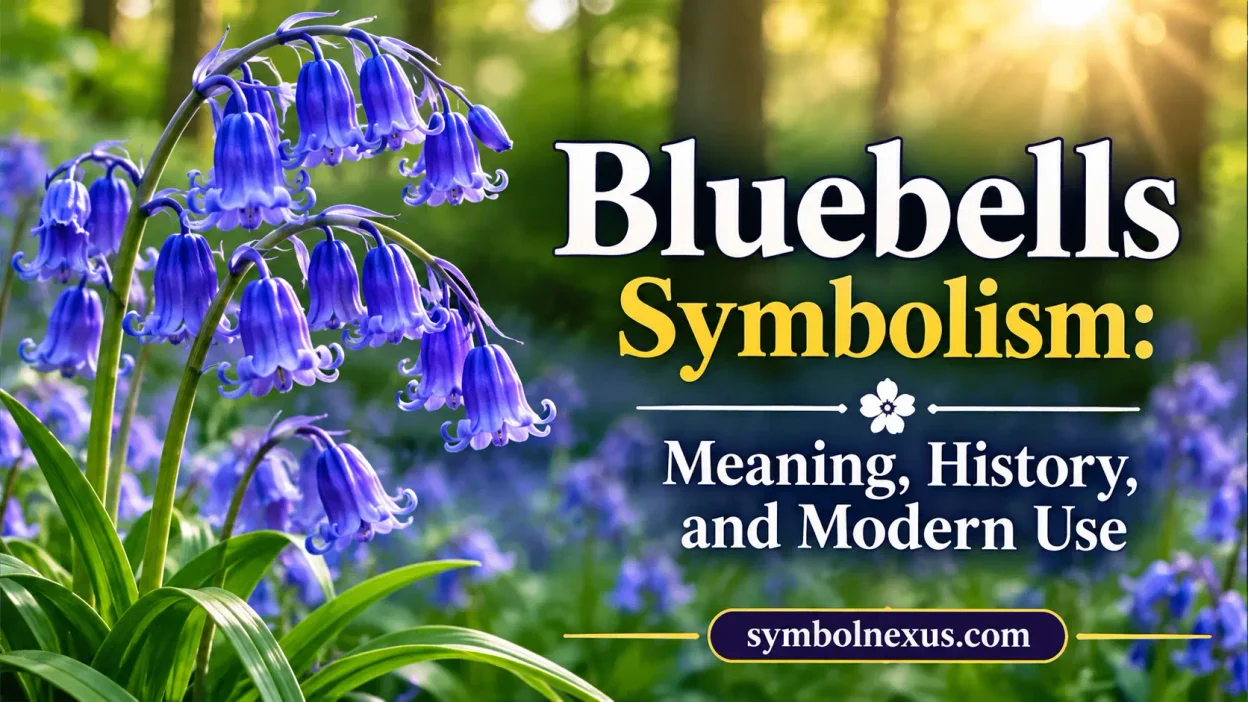
Bluebells are among the most enchanting flowers of spring. Their delicate, bell-shaped blossoms create beautiful carpets of blue and violet across woodland floors, bringing color and life to landscapes after winter. Although they appear delicate, these flowers carry a rich history of symbolism, folklore, and cultural significance.
Bluebells symbolism is commonly associated with humility, gratitude, constancy, kindness, and everlasting love. Their gentle appearance and ability to return year after year have made them meaningful symbols of loyalty, emotional connection, and renewal. In British folklore, however, bluebells have a more mysterious reputation. They are often connected with fairies, magical woodland gatherings, enchantment, and supernatural warnings.
The flower also has a place in literature, romantic traditions, and the Victorian language of flowers. Writers have used bluebells to express beauty, longing, solitude, and the peaceful atmosphere of nature.
Whether growing in an ancient woodland, appearing in a bouquet, or inspiring a piece of artwork, bluebells communicate meanings that go beyond their appearance. Understanding their symbolism reveals a fascinating connection between nature, love, folklore, and human emotion.
Quick Answer: What Do Bluebells Symbolize?
Bluebells commonly symbolize humility, gratitude, constancy, kindness, and everlasting love. Their recurring spring appearance represents renewal and the return of hope, while their delicate blue flowers are associated with peace, sincerity, and emotional devotion. In British folklore, bluebells are also connected with fairies, enchantment, magical woodland spaces, and mysterious warnings. Their exact meaning depends on cultural traditions and personal interpretation.
TL;DR: Bluebells Symbolism
- Humility: Their delicate appearance represents modesty and simplicity.
- Gratitude: Bluebells symbolize appreciation for life’s small blessings.
- Everlasting love: Their dependable return each spring connects them with loyalty and lasting affection.
- Constancy: They represent faithfulness, stability, and emotional commitment.
- Kindness: Their gentle appearance is associated with warmth and compassion.
- Fairy folklore: British legends connect bluebells with magical woodland creatures and enchantment.
- Renewal: Their spring flowering represents hope, fresh beginnings, and the return of life.
- Remembrance: In some cultural and personal traditions, bluebells are associated with memory, grief, and honoring loved ones.
1. General Meaning of Bluebells
Bluebells are delicate woodland flowers recognized by their drooping, bell-shaped blossoms and beautiful blue-violet color. They often grow in large groups, creating the appearance of a blue carpet across the forest floor.
Their general symbolism is closely connected with modesty, gratitude, loyalty, and lasting affection.
Unlike flowers that communicate strong passion or dramatic emotions, bluebells often represent gentle and sincere feelings. Their quiet beauty suggests that meaningful things do not always need to be impressive or attention-seeking.
The flower’s ability to return each spring also contributes to its association with constancy and renewal.
Some of the most common symbolic meanings of bluebells include:
- Humility and modesty.
- Gratitude and appreciation.
- Everlasting love.
- Loyalty and constancy.
- Kindness and compassion.
- Peace and emotional sincerity.
- Renewal and new beginnings.
- Mystery and enchantment.
These meanings make bluebells suitable symbols of relationships, personal growth, remembrance, and the beauty of the natural world.
2. Bluebells Symbolism: Humility and Modesty
One of the traditional meanings of bluebells is humility.
Their small, downward-facing flowers create an impression of modesty. Unlike flowers with large, upright blossoms, bluebells often appear quietly beneath trees and woodland plants.
Their appearance can symbolize a person who does not need constant attention or recognition to demonstrate their value.
Bluebells may therefore represent:
- Modesty and simplicity.
- Respect for others.
- Quiet confidence.
- Appreciation without pride.
- Beauty without arrogance.
The flower reminds us that genuine worth does not always need to be displayed openly.
In personal relationships, bluebells can symbolize someone who expresses affection through thoughtful actions rather than dramatic gestures.
3. Bluebells Symbolism: Gratitude and Appreciation
Bluebells are also associated with gratitude.
Their appearance in spring brings a welcome change after the cold and darker months of winter. When they cover woodland floors with color, they create a natural reminder of the beauty that returns with each new season.
This seasonal transformation contributes to their symbolic connection with appreciation.
A bluebell can represent gratitude for:
- The beauty of nature.
- Family and friendships.
- Small moments of happiness.
- Personal achievements.
- New opportunities.
- Emotional support and kindness.
Giving bluebells may communicate appreciation for someone who has made a positive difference in your life.
Their symbolism also encourages people to recognize ordinary experiences as meaningful rather than waiting for major events to feel grateful.
4. Bluebells Symbolism: Everlasting Love and Constancy
Bluebells have a long-standing association with everlasting love and constancy in the language of flowers.
Their ability to return to the same woodland areas each spring provides a natural image of loyalty and continuity. Even after the flowers disappear, their bulbs remain underground, ready for another growing season.
This recurring pattern can represent a relationship that continues through changing circumstances.
Bluebells may symbolize:
- Faithfulness.
- Long-lasting affection.
- Emotional commitment.
- Trust and loyalty.
- A love that survives distance and time.
- Strong connections between family members and partners.
In romantic symbolism, bluebells express a quieter form of love. Rather than representing intense passion, they communicate sincerity, patience, and dependable affection.
They can therefore be meaningful flowers for anniversaries, romantic gifts, and celebrations of lasting relationships.
5. Bluebell Flower Symbolism in Different Colors
Bluebells are most familiar in shades of blue and violet, but some varieties and individual plants produce flowers in other colors.
Their color can influence how people interpret their symbolism.
Blue Bluebell Symbolism: Peace and Loyalty
Blue is the color most strongly associated with bluebells.
Blue flowers commonly suggest calmness, sincerity, trust, and emotional stability. These associations complement the bluebell’s traditional meanings of constancy and everlasting love.
A blue bluebell can symbolize:
- Peace and tranquility.
- Loyalty and faithfulness.
- Sincere affection.
- Emotional balance.
- Gratitude and appreciation.
Its gentle color makes it a meaningful symbol of dependable relationships and inner peace.
Purple Bluebell Symbolism: Mystery and Spirituality
Some bluebells appear violet or purple, giving them a slightly different symbolic impression.
Purple is often associated with imagination, mystery, creativity, and spirituality.
A purple-toned bluebell may therefore represent:
- Mystery and enchantment.
- Imagination and creativity.
- Spiritual reflection.
- Individuality.
- Emotional depth.
These are broader color associations rather than fixed historical meanings specifically assigned to purple bluebells.
White Bluebell Symbolism: Innocence and Remembrance
White bluebells are uncommon compared with the familiar blue varieties.
White flowers are frequently associated with purity, innocence, peace, and remembrance.
A white bluebell can therefore be interpreted as a symbol of sincere feelings, peaceful memories, and emotional renewal.
It may also be used in personal arrangements to honor someone or represent a fresh beginning.
Pink Bluebell Symbolism: Affection and Tenderness
Pink forms are less commonly associated with traditional bluebell symbolism, but pink flowers generally communicate tenderness, affection, and kindness.
A pink bluebell may represent:
- Gentle love.
- Emotional warmth.
- Compassion.
- Friendship.
- Appreciation.
These meanings are modern interpretive associations rather than established traditional bluebell flower-language definitions.
Bluebell Color Meaning Table
| Bluebell colorPossible symbolic meaning | |
|---|---|
| Blue | Peace, loyalty, constancy |
| Violet or purple | Mystery, imagination, spirituality |
| White | Purity, innocence, remembrance |
| Pink | Tenderness, affection, kindness |
The bluebell’s traditional meanings are not determined by color alone. Cultural background and personal associations also influence its symbolism.
6. Bluebells in British Folklore and Fairy Legends
Bluebells have a particularly mysterious place in British folklore.
Their natural habitat helps explain these associations. Large groups of bluebells often grow in old woodlands, where their colorful flowers create an almost magical atmosphere during spring.
Traditional stories describe bluebell woods as places where fairies gather and perform supernatural activities.
According to some legends, fairies use bluebells to summon others to woodland meetings. The ringing of their imaginary bells was believed to signal a gathering of magical creatures.
Other stories suggest that picking or disturbing bluebells could attract bad luck.
Some traditional beliefs include:
- Fairies used bluebells to lure travelers into enchanted places.
- Hearing a bluebell ring could be interpreted as a supernatural warning.
- Picking a bluebell could lead someone astray.
- Trampling a bluebell patch could disturb the fairies living there.
- A woodland filled with bluebells could be enchanted territory.
These stories vary across regions and should be understood as folklore rather than factual descriptions of supernatural events.
The association with fairies gives bluebells a symbolic connection with mystery, imagination, hidden worlds, and the unknown. <Cite refs={[“turn141804search1″,”turn141804search2″,”turn141804search12”]}/>
7. Bluebells Symbolism in Victorian Flower Language
During the Victorian era, flowers were commonly used to communicate feelings and messages.
This tradition became known as the language of flowers, or floriography.
People selected flowers based on their symbolic meanings and used bouquets to express affection, admiration, gratitude, or disappointment.
Bluebells developed several positive meanings within this tradition, including:
- Humility.
- Constancy.
- Gratitude.
- Everlasting love.
- Kindness.
These associations made bluebells suitable symbols of sincere affection and dependable relationships.
Traditional flower folklore also included unusual customs involving the blossoms.
One belief suggested that someone who could carefully turn a bluebell flower inside out without tearing it would eventually win the heart of the person they loved.
Another story claimed that wearing a garland of bluebells would make someone unable to tell a lie.
Such beliefs demonstrate how bluebells became connected with romance, honesty, and magical traditions. <Cite refs={[“turn141804search1″,”turn141804search4″,”turn141804search16”]}/>
8. Bluebells Symbolism in Love and Relationships
Bluebells are meaningful flowers for expressing sincere affection and emotional commitment.
Their traditional connection with everlasting love makes them particularly suitable for representing relationships built on trust and loyalty.
Unlike flowers that symbolize intense passion, bluebells often communicate gentle and consistent affection.
They can represent:
Faithfulness: The flower’s recurring seasonal appearance can symbolize a relationship that remains strong over time.
Emotional connection: Bluebells can express affection that does not depend on constant attention or grand gestures.
Trust: Their traditional association with constancy makes them suitable symbols of dependable relationships.
Lasting commitment: Their connection with everlasting love can represent a desire to remain together through life’s changes.
Kindness: Bluebells can also communicate tenderness and appreciation between partners.
A bluebell bouquet may therefore be a thoughtful gift for someone who values sincerity, emotional closeness, and lasting love.
9. Bluebells Symbolism in Weddings and Marriage
Bluebells can represent loyalty, humility, and lasting affection, making them meaningful flowers for wedding celebrations.
Their gentle blue color also complements the traditional association between blue and faithfulness in some wedding customs.
Bluebells may be included in:
- Bridal bouquets.
- Wedding table arrangements.
- Ceremony decorations.
- Floral photography.
- Wedding anniversary gifts.
- Decorative garden settings.
Their symbolic meaning can represent a couple’s desire to build a relationship based on trust, patience, and mutual respect.
Bluebells may also connect with the familiar wedding tradition of wearing something blue. However, the claim that bluebells directly originated this custom is not established.
For modern couples, the flower’s strongest message is its association with constancy and lasting affection.
10. Bluebells Symbolism in Spirituality
From a modern spiritual perspective, bluebells can symbolize humility, gratitude, peace, and a connection with nature.
Their quiet appearance and seasonal return provide opportunities for reflection on personal growth and emotional balance.
Some spiritual interpretations include:
Spiritual humility: Bluebells can remind people to remain modest and appreciate the value of simple experiences.
Gratitude: Their spring appearance can encourage appreciation for renewal and life’s natural cycles.
Inner peace: Their gentle blue color can inspire calmness and emotional reflection.
Faithfulness: Their association with constancy can represent commitment to personal values and meaningful relationships.
Renewal: Their return after winter can symbolize hope and the possibility of starting again.
These are modern symbolic interpretations rather than universal religious teachings.
11. Bluebells Symbolism in Literature and Poetry
Bluebells have inspired poets and writers for generations.
Their woodland appearance, delicate shape, and seasonal beauty make them useful symbols in poetry and literature.
Writers have used bluebells to explore themes such as:
- Natural beauty.
- Solitude and reflection.
- Childhood memories.
- Love and longing.
- Spring and renewal.
- Mystery and imagination.
- The relationship between humans and nature.
The English poet Emily Brontë wrote a poem titled “The Bluebell,” reflecting the flower’s emotional and natural beauty.
John Keats also referred to the bluebell in his poem “Fancy,” describing it through the image of a jewel-like spring flower.
The flower’s presence in literature demonstrates how a simple woodland plant can become a powerful image of memory, emotion, and the beauty of the natural world. <Cite refs={[“turn141804search2″,”turn141804search4″,”turn141804search7”]}/>
12. Bluebells Symbolism in Remembrance and Death
Although bluebells are commonly associated with love and gratitude, they can also carry associations with remembrance and grief.
Their connection with woodland settings and the passing seasons can inspire thoughts about memory, loss, and the continuation of life.
In some British regional traditions, bluebells have been associated with death and mourning. Their appearance in quiet woodland environments may also create an atmosphere of reflection.
A bluebell can represent:
- Memories of someone who has passed away.
- Love that continues after loss.
- Peaceful remembrance.
- The passage of time.
- Hope after grief.
- A lasting emotional connection.
Some people choose to remember loved ones through bluebell woodland visits or nature-inspired memorials.
The flower’s return each spring can also provide a comforting image of continuity and renewal.
13. Bluebells Symbolism in Tattoos
Bluebell tattoos can represent love, loyalty, humility, gratitude, and personal transformation.
Their bell-shaped flowers and slender stems create attractive designs that can be adapted to different artistic styles.
A bluebell tattoo may carry several personal meanings.
Everlasting love: A bluebell can represent a relationship that remains meaningful over time.
Remembrance: It may honor someone who has passed away or preserve a special memory.
Humility: The flower can symbolize modesty and appreciation for simple things.
Spiritual growth: Its seasonal return can represent personal renewal and emotional development.
Mystery: Its connection with fairy folklore can inspire designs involving enchantment, imagination, and magical woodland imagery.
Bluebell tattoos may be combined with butterflies, leaves, woodland scenery, birds, or other flowers to create a more personal design.
The color, placement, and additional imagery can all influence the tattoo’s meaning.
14. Bluebells Symbolism in Nature and Environmental Awareness
Bluebells have a special relationship with woodland environments.
English bluebells, scientifically known as Hyacinthoides non-scripta, are bulbous perennial plants that flower in spring. They are especially associated with ancient British woodlands, where large populations can create impressive carpets of blue flowers.
Their early flowering allows them to take advantage of sunlight before the tree canopy becomes dense.
Bluebells also provide nectar for insects, including bees, hoverflies, and some woodland butterflies.
Their presence can therefore represent:
- The beauty of natural ecosystems.
- Seasonal renewal.
- Biodiversity.
- Environmental protection.
- The importance of woodland habitats.
- The connection between plants and wildlife.
Bluebells are also vulnerable to habitat disturbance and competition from non-native species and hybrids. In the United Kingdom, native bluebells receive legal protection against certain forms of commercial collection and destruction.
Respecting bluebell habitats is an important way to protect the natural beauty that gives these flowers their symbolic importance. <Cite refs={[“turn141804search0″,”turn141804search1″,”turn141804search5”]}/>
15. Bluebell Symbolism Compared with Other Flowers
Bluebells share some symbolic meanings with other flowers, especially those associated with love, purity, and remembrance. However, their connection with woodland folklore and humility gives them a distinctive identity.
| FlowerCommon symbolic meanings | |
|---|---|
| Bluebell | Humility, gratitude, constancy, everlasting love |
| Forget-Me-Not | Remembrance, loyalty, lasting connection |
| Lily of the Valley | Humility, purity, happiness |
| Rose | Romantic love, passion, beauty |
| Violet | Modesty, faithfulness, spiritual reflection |
| Snowdrop | Hope, renewal, and new beginnings |
| Daisy | Innocence, simplicity, and happiness |
Bluebells stand out because their symbolism combines gentle affection with fairy folklore and the natural beauty of spring woodlands.
16. Lessons We Can Learn from Bluebell Symbolism
Bluebells offer several meaningful lessons that can be applied to everyday life.
1. Appreciate simple beauty. Their delicate appearance reminds us that something does not need to be large or dramatic to be valuable.
2. Practice gratitude. Their return each spring encourages appreciation for the natural world and ordinary moments.
3. Remain loyal. Their traditional connection with constancy highlights the importance of trust and dependable relationships.
4. Stay humble. Bluebells symbolize the value of modesty and quiet confidence.
5. Welcome renewal. Their seasonal flowering provides a reminder that difficult periods do not last forever.
6. Respect nature. Their woodland habitats demonstrate the importance of protecting plants and the ecosystems that support them.
The flower’s most enduring lesson is that genuine beauty and meaningful connections often grow quietly over time.
Frequently Asked Questions
1. What do bluebells symbolize?
Bluebells commonly symbolize humility, gratitude, constancy, kindness, and everlasting love. They are also associated with renewal, peace, and mystery because of their spring flowering and traditional fairy folklore.
2. What do bluebells symbolize in love?
In love, bluebells symbolize faithfulness, lasting affection, trust, and emotional commitment. Their traditional association with everlasting love makes them meaningful representations of relationships that remain strong over time.
3. What is the spiritual meaning of bluebells?
In modern spiritual interpretations, bluebells represent humility, gratitude, inner peace, renewal, and a connection with nature. They can remind people to appreciate simple experiences and remain faithful to their personal values.
4. Why are bluebells associated with fairies?
British folklore describes bluebell woodlands as places where fairies gather. Some stories suggest that fairies use the flowers to summon others or enchant travelers. These legends developed partly because bluebell-covered woodlands can create a magical-looking landscape.
5. What does a bluebell symbolize in the language of flowers?
In the Victorian language of flowers, bluebells are associated with humility, constancy, gratitude, kindness, and everlasting love. Their meanings make them suitable symbols of sincere affection and dependable relationships.
6. What does a white bluebell symbolize?
A white bluebell can be interpreted as a symbol of purity, innocence, peace, and remembrance. White bluebells are uncommon compared with the familiar blue varieties.
7. Are bluebells a symbol of death or remembrance?
In some British regional traditions, bluebells have associations with death and grief. They can also represent remembrance, peaceful reflection, and love that continues after loss. These meanings vary according to local folklore and personal experience.
8. What does a bluebell tattoo symbolize?
A bluebell tattoo can represent everlasting love, loyalty, humility, gratitude, remembrance, and personal growth. Some designs also draw inspiration from the flower’s association with fairies and magical woodlands.
Conclusion
Bluebells symbolism reflects a beautiful combination of humility, gratitude, constancy, kindness, and everlasting love. Their delicate flowers and dependable return each spring have made them meaningful symbols of loyalty, renewal, and emotional connection.
Their cultural history adds another layer to their significance. British folklore connects bluebells with fairies, enchantment, and mysterious woodland traditions, while Victorian flower language associates them with modesty, gratitude, and lasting affection. Writers and poets have also used their natural beauty to express love, solitude, memory, and the changing seasons.
Whether viewed as a symbol of sincere love, a reminder to appreciate life’s simple blessings, or a flower connected with magical folklore, the bluebell carries a message of quiet beauty and lasting meaning.
Ultimately, bluebells remind us that the most meaningful things in life are not always the loudest or most noticeable. Like these delicate woodland flowers, genuine love, gratitude, and loyalty often grow quietly and return year after year.