
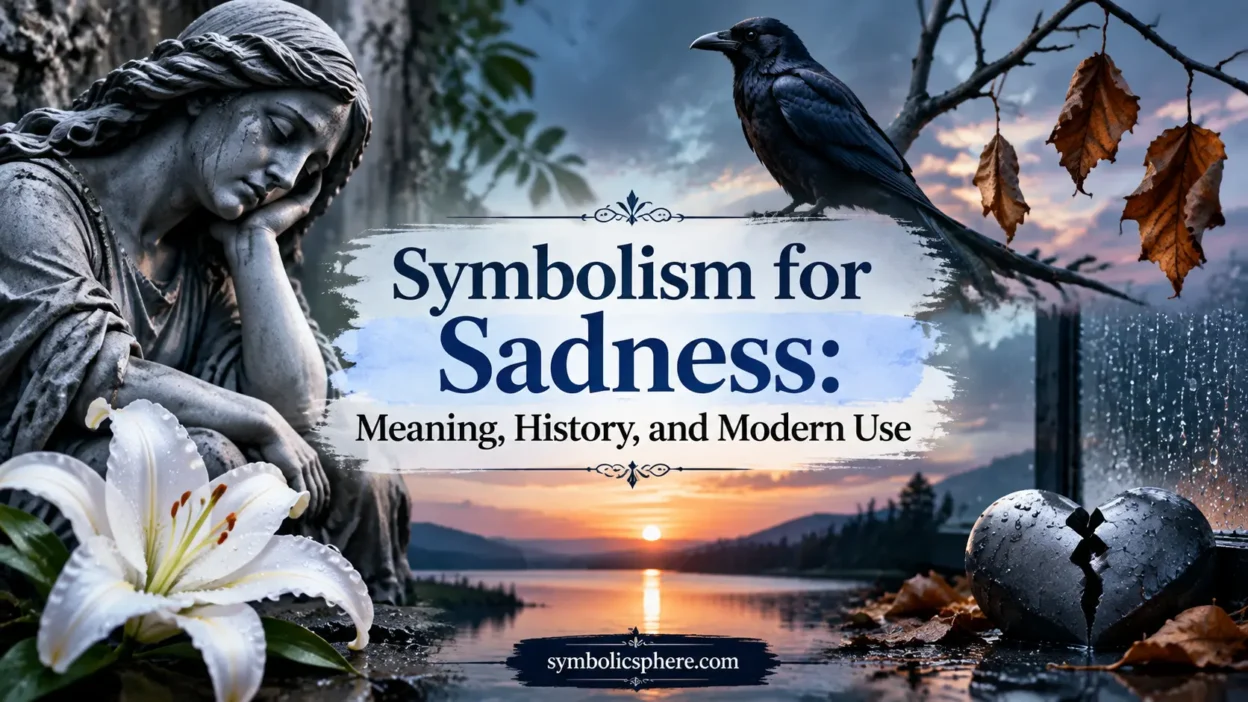
Sadness is a universal human emotion, and symbolism for sadness helps people express feelings that are often difficult to describe with words. Across cultures, people have used colors, objects, animals, plants, weather, and artistic images to represent grief, loneliness, reflection, and emotional pain.
From black clothing worn during mourning to rain appearing in literature and films, symbols of sadness allow individuals and communities to communicate loss, memory, and emotional experiences. In modern American culture, these symbols appear in art, tattoos, music, fashion, home decor, and digital communication.
Understanding sadness symbolism is not only about negative emotions. Many symbols also represent healing, acceptance, personal growth, and the process of moving forward after difficult experiences.
Quick Answer
Symbolism for sadness commonly represents grief, loneliness, emotional pain, and personal reflection in modern American culture. Symbols such as rain, dark colors, wilted flowers, and empty spaces are often used to express loss, while many traditions also connect sadness symbols with healing and remembrance.
TL;DR
- Sadness symbols express grief, loss, and emotional reflection.
- Dark colors often represent mourning and sorrow.
- Rain and nature imagery connect with emotional experiences.
- Different cultures interpret sadness symbols differently.
- Modern art uses sadness symbols for personal expression.
- Many sorrow symbols also represent healing.
What Sadness Symbols Represent in Modern Culture
Sadness symbols give visual form to emotions that cannot always be explained directly. A person may use an image of a rainy window, a broken heart, or a fading flower to communicate feelings of heartbreak, loneliness, or remembrance.
In the United States, sadness symbolism appears frequently in creative expression. Artists, writers, musicians, and filmmakers use symbolic images to create emotional connections with audiences. A gray sky in a movie scene, for example, may suggest a character’s sadness without directly stating it.
However, sadness symbols do not always represent hopelessness. Many people use them to show honesty, emotional awareness, and acceptance of difficult life experiences.
Common Meanings Behind Sadness Symbolism
The meaning of a sadness symbol depends on the culture, situation, and personal experience behind it. Some symbols are widely recognized, while others have private meanings created by individuals.
Common associations include:
| Symbol | Meaning in the USA | Common Associations | Notes |
|---|---|---|---|
| Black color | Mourning and grief | Funerals, remembrance, loss | Often connected with formal mourning traditions |
| Rain | Emotional heaviness and reflection | Sadness, renewal, memories | Common in movies and literature |
| Wilted flowers | Loss and endings | Fading beauty, change | Also linked with life cycles |
| Broken heart | Emotional pain | Breakups, disappointment | Popular in art and digital communication |
| Empty spaces | Loneliness and absence | Missing someone, isolation | Used in photography and storytelling |
The Historical Roots of Sadness Symbols
People have used symbols to represent sadness for thousands of years. Ancient societies created rituals, clothing styles, and artistic images to express grief after death or major life changes.
In many early cultures, mourning practices included specific colors, objects, and behaviors. These traditions helped communities recognize emotional loss and provide support for grieving individuals.
For example, dark clothing became associated with mourning in many Western societies because it created a visible sign of respect and remembrance. Over time, this practice influenced modern funeral traditions in countries such as the United States.
Literature and art also played an important role in developing sadness symbolism. Poets and painters often used nature, seasons, and landscapes to represent human emotions.
Why Dark Colors Are Connected With Sadness
Colors are among the most common emotional symbols. Dark shades, especially black and gray, are frequently associated with sadness because of their connection with mourning and seriousness.
In American culture, black clothing has traditionally been worn at funerals as a sign of respect for someone who has died. The color creates a visual expression of loss and remembrance.
Gray is also commonly connected with sadness because it appears neutral, quiet, and distant. Writers and artists often use gray skies or gray environments to represent emotional uncertainty or loneliness.
However, color meanings are not universal. In some cultures, white is associated with mourning, while others use bright colors to celebrate the life of someone who has passed away.
Rain and Storms as Symbols of Sadness
Rain is one of the most recognizable natural symbols connected with sadness. In storytelling, a rainy scene often appears when a character experiences grief, loneliness, or emotional struggle.
The connection between rain and sadness comes partly from human observation. Dark clouds, reduced sunlight, and quiet surroundings can create a mood that feels reflective or heavy.
American films and literature frequently use rain during emotional moments. A character walking alone in the rain may represent heartbreak, isolation, or a period of personal change.
At the same time, rain has another meaning: renewal. Water can symbolize cleansing, recovery, and a fresh beginning after emotional difficulty.
Flowers and Plants That Represent Sadness
Flowers often symbolize emotions because their growth cycles reflect human experiences. Some flowers represent happiness and love, while others are connected with loss and remembrance.
Wilted flowers are commonly used as symbols of sadness because they represent change, endings, and the passage of time. A fading flower can remind people that beautiful moments may not last forever.
Certain flowers also appear in mourning traditions. Lilies, roses, and other memorial flowers are often used during funerals because they communicate respect, love, and remembrance.
In modern America, people may choose specific flowers for tattoos, memorial gardens, or artwork to honor someone important or express personal emotions.
Animals Associated With Sadness Symbolism
Animals have been used as emotional symbols in myths, stories, and artwork for centuries. Some animals are connected with sadness because of their behaviors, appearances, or roles in folklore.
The dove, for example, can represent mourning and peace. It is often used in memorial settings because it suggests the continuation of love and memory.
The owl is sometimes connected with loneliness, silence, and nighttime reflection. In literature, an owl may represent solitude or thoughtful observation.
Wolves can symbolize isolation because stories often portray a lone wolf separated from its group. However, meanings vary, and the same animal may represent strength, independence, or survival in other contexts.
Sadness Symbolism in American Art and Storytelling
American art, music, and literature often use symbols to communicate emotional experiences. Rather than directly explaining sadness, creators use images that allow audiences to interpret feelings personally.
Common examples include:
- Empty rooms representing absence
- Autumn leaves representing change
- Dark landscapes representing emotional struggles
- Broken objects representing loss
- Mirrors representing self-reflection
In movies and television, visual symbols help viewers understand characters’ emotions. A quiet scene, muted colors, or an abandoned location can communicate sadness without dialogue.
Music also relies heavily on symbolism. Lyrics, album artwork, and performances often use emotional symbols to express heartbreak, memories, and personal struggles.
Symbolism for Sadness: Meaning, History, and Modern Use (Part 2)
Sadness Symbols in Tattoos and Personal Expression
Tattoos are one of the most personal ways people use symbols to communicate emotions. A sadness-related tattoo may represent a difficult experience, the memory of someone important, emotional growth, or a period of personal change.
In the United States, people often choose sadness symbols not because they want to remain connected to pain, but because the symbol represents a meaningful chapter of life. A broken heart, a rain cloud, a fading flower, or a memorial image can serve as a reminder of survival and transformation.
Common sadness-related tattoo symbols include:
- Broken hearts: Often represent heartbreak, loss, or emotional recovery.
- Rain clouds: May express sadness, reflection, or acceptance of difficult emotions.
- Wilted flowers: Can symbolize endings, memories, and the temporary nature of life.
- Birds leaving a branch: Often represent letting go, freedom, or moving forward.
- Hourglasses: May represent time passing after a painful experience.
The meaning of a tattoo depends on the person wearing it. A symbol associated with sadness for one person may represent strength and healing for another.
Psychological Meaning of Sadness Symbols
From a psychological perspective, symbols help people process emotions. Humans naturally use images and objects to organize complex feelings, especially emotions that are difficult to express directly.
A sadness symbol can provide a way to communicate experiences such as grief, disappointment, loneliness, or change. Seeing or creating a meaningful symbol may help people reflect on their emotions and understand their personal stories.
For example, someone who keeps a photograph, wears a piece of jewelry, or displays a memorial object may use that item as a connection to a person, place, or moment that matters.
Sadness symbols can also support emotional expression. Art therapy, journaling, and creative activities often use symbolic images to help individuals explore feelings in a safe and personal way.
Religious and Spiritual Interpretations of Sadness Symbols
Many religious traditions recognize sadness as a natural part of human life. Symbols connected with grief often focus on remembrance, compassion, faith, and hope.
In Christianity, symbols such as the cross may represent suffering, sacrifice, and the possibility of renewal. The image of a candle is also commonly used in memorial settings because it represents remembrance and spiritual reflection.
In some Buddhist traditions, sadness is connected with the understanding that change and loss are unavoidable parts of existence. Symbols may focus on acceptance, awareness, and emotional balance.
Different religions interpret sorrow-related symbols in different ways, but many share the idea that sadness can be connected with love, memory, and personal transformation.
How Americans Use Sadness Symbols Today
Modern American culture uses sadness symbolism in many forms. These symbols appear in personal spaces, entertainment, fashion, and online communication.
Common modern uses include:
Art and Design
Artists use sadness symbols to explore themes such as identity, loss, and human experience. Paintings, photography, and digital artwork often include lonely landscapes, faded colors, or emotional figures.
Home Decor
Some people use meaningful objects in their homes to remember loved ones or represent personal experiences. Memorial displays, photographs, candles, and artwork can carry emotional symbolism.
Social Media
Online platforms have changed how people express emotions. Emojis, images, captions, and profile designs often use sadness-related symbols to communicate feelings quickly.
Examples include:
- Broken heart emojis
- Rain imagery
- Black-and-white photographs
- Sad character illustrations
These symbols allow people to share emotions while leaving room for personal interpretation.
Cross-Cultural Meanings of Sadness Symbols
Sadness symbols do not have identical meanings everywhere. Cultural background strongly influences how people understand emotional imagery.
| Culture or Tradition | Sadness Symbol Example | Meaning |
|---|---|---|
| Western traditions | Black clothing | Mourning and respect after loss |
| Japanese culture | Falling cherry blossoms | Beauty, change, and temporary life |
| Mexican traditions | Memorial offerings | Honoring and remembering loved ones |
| Buddhist traditions | Impermanence symbols | Acceptance of change and suffering |
| Christian traditions | Cross imagery | Suffering, sacrifice, and hope |
A symbol that represents grief in one society may represent beauty, transformation, or spiritual reflection in another.
Sadness Symbolism in Literature and Popular Culture
Writers and creators have used sadness symbols for centuries to make emotional experiences more understandable. Symbolism allows audiences to connect with characters and stories on a deeper level.
Common examples in storytelling include:
- Winter: Often represents isolation, hardship, or emotional coldness.
- Autumn: Frequently symbolizes endings, aging, and change.
- Empty houses: Represent absence, memories, or loneliness.
- Broken objects: Suggest emotional damage or lost relationships.
- Nighttime: Can represent uncertainty, reflection, or sadness.
In American movies and books, these symbols help create emotional atmosphere. A lonely road, a quiet room, or a fading photograph can communicate feelings without directly explaining them.
Common Misunderstandings About Sadness Symbols
Sadness symbols are sometimes misunderstood because people assume they only represent negative emotions. However, many symbols connected with sorrow also communicate love, memory, and recovery.
For example, a memorial tattoo may appear sad to someone unfamiliar with its meaning, but for the person wearing it, the symbol may represent gratitude and connection.
Another misunderstanding is that dark colors or emotional artwork always indicate unhappiness. Many artists use darker themes to explore important topics, express creativity, or show emotional honesty.
The meaning of a symbol depends on context, culture, and personal experience.
How Sadness Symbolism Has Changed Over Time
The meaning of sadness symbols has evolved as societies have changed. In earlier periods, many sadness symbols were closely connected with public mourning rituals and religious traditions.
Today, sadness symbols are often more personal. People choose symbols based on individual experiences rather than following strict cultural rules.
For example, wearing black was once strongly connected with formal mourning practices. Today, black clothing may represent fashion, personality, professionalism, or artistic style as well as grief.
Similarly, tattoos and digital symbols have expanded the ways people communicate emotions. A symbol can now represent a private memory, a personal challenge, or a message shared with others.
Positive Meanings Hidden Within Sadness Symbols
Although sadness symbols are connected with difficult emotions, many also represent hope and growth.
A broken heart can symbolize healing after heartbreak. A fallen leaf can represent accepting change. Rain can represent both sadness and new beginnings.
Many people use sorrow-related symbols because they show emotional honesty. Recognizing sadness can be part of understanding personal experiences and developing resilience.
The strongest sadness symbols often contain both sides of human emotion: the pain of losing something and the meaning created afterward.
Frequently Asked Questions About Sadness Symbolism
What is the most common symbol for sadness?
The broken heart is one of the most widely recognized symbols of sadness, especially for emotional pain caused by relationships or loss. Other common symbols include rain, dark colors, wilted flowers, and empty spaces.
Why is rain considered a symbol of sadness?
Rain is associated with sadness because its quiet, dark, and reflective qualities often match emotional experiences such as grief and loneliness. However, rain can also symbolize cleansing, renewal, and emotional recovery.
What colors symbolize sadness?
Black, gray, and dark blue are commonly associated with sadness in many Western cultures. However, color meanings vary across societies, and some cultures connect different colors with mourning or remembrance.
What does a sadness tattoo usually mean?
A sadness tattoo may represent grief, a personal struggle, lost relationships, memories, or emotional growth. The meaning depends on the individual’s personal story and the symbol chosen.
Are sadness symbols always negative?
No. Many sadness symbols also represent love, remembrance, acceptance, and healing. They often show that difficult experiences can have personal meaning.
What flower symbolizes sadness?
Wilted flowers commonly symbolize sadness because they represent endings and change. Some memorial flowers are also associated with remembrance and honoring people who have passed away.
How are sadness symbols used in modern American culture?
Sadness symbols appear in tattoos, artwork, music, movies, fashion, home decor, and social media. People often use them to express emotions, preserve memories, or share personal experiences.
Conclusion
Symbolism for sadness helps people express grief, loneliness, reflection, and emotional change through images, colors, objects, and natural elements. From traditional mourning practices to modern tattoos and digital communication, these symbols continue to provide ways for people to share feelings that words may not fully capture.
Sadness symbols are not only about pain. They can represent love, memory, acceptance, and the process of healing. Their meaning changes across cultures and personal experiences, making each symbol a reflection of the person and story behind it.
Understanding these symbols allows us to see sadness not only as an emotion of loss, but also as a meaningful part of human experience and connection.


