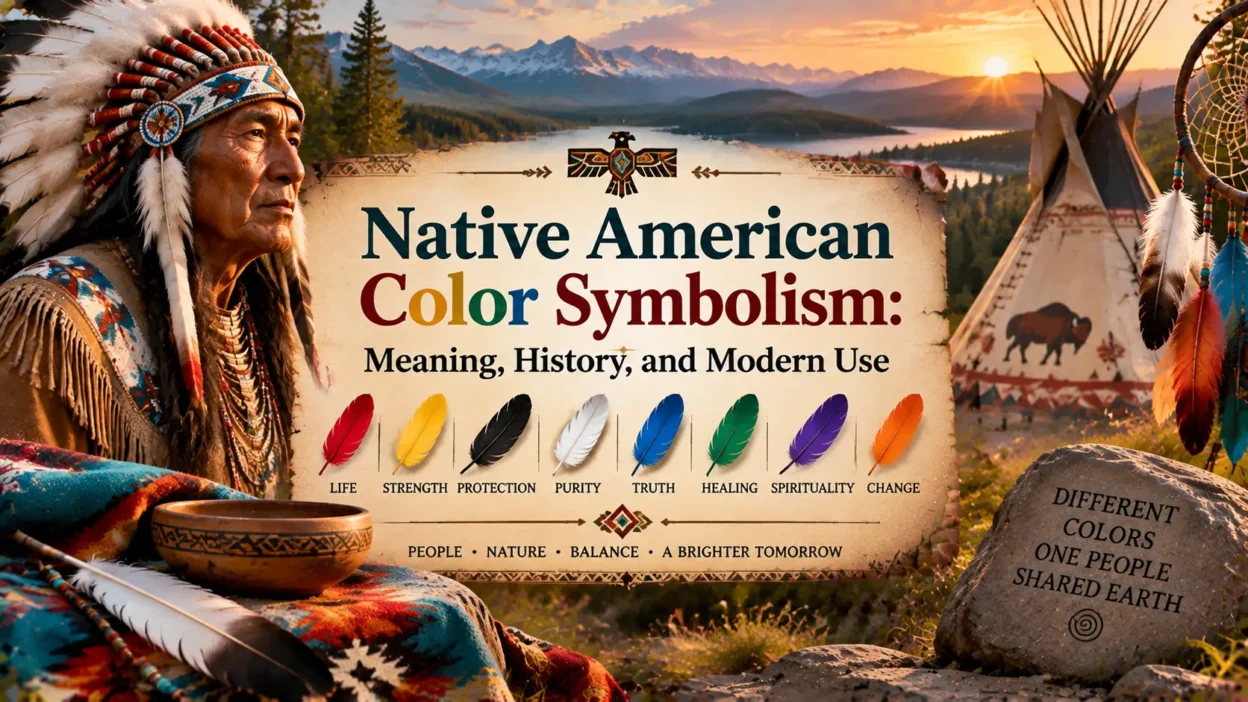
Colors have always played an important role in Native American traditions, ceremonies, artwork, clothing, and storytelling. Native American color symbolism refers to the ways different Indigenous nations use colors to express ideas about nature, spirituality, identity, emotions, and relationships with the world around them.
However, there is no single universal Native American color system. Hundreds of Indigenous nations across North America have their own languages, histories, beliefs, and artistic traditions. A color that represents one idea in one community may have a different meaning elsewhere.
Understanding these meanings requires looking at specific cultural traditions while recognizing that Indigenous symbolism is diverse and living. Today, Native American colors continue to appear in art, jewelry, clothing, architecture, ceremonies, and contemporary designs.
Quick Answer
Native American color symbolism commonly represents connections between people, nature, spirituality, and cultural identity in many Indigenous traditions. Colors may symbolize elements, directions, emotions, life stages, or ceremonial meanings, although interpretations differ among Native nations.
TL;DR
- Colors connect Indigenous traditions with nature and spirituality.
- Meanings vary between Native nations and communities.
- Red often represents life, strength, and relationships.
- White may symbolize peace, purity, or balance.
- Colors remain important in modern Native art.
Why Colors Matter in Native American Traditions
For many Indigenous cultures in North America, colors are not simply decorative choices. They often carry relationships between humans, animals, landscapes, seasons, and spiritual beliefs.
Colors appear in many areas of traditional life, including:
- ceremonial clothing
- pottery and weaving
- beadwork
- paintings
- storytelling
- body decoration
- religious objects
- architecture
A color may connect to a natural source such as the earth, sky, plants, animals, or minerals. For example, pigments historically came from materials like clay, charcoal, plants, shells, and stones.
Because Indigenous communities developed in different environments, their color meanings often reflect local landscapes. Desert communities, Plains nations, woodland groups, and Arctic peoples developed different artistic traditions based on their surroundings.
Ancient Roots of Color Symbolism in Indigenous Cultures
The symbolic use of color existed in North America long before European contact. Archaeological evidence shows that Indigenous peoples used natural pigments for thousands of years in artwork, tools, clothing, and ceremonial objects.
Common natural sources included:
| Color | Natural Source | Traditional Associations |
|---|---|---|
| Red | Ochre, minerals, plants | Life, vitality, earth, strength |
| Black | Charcoal, burned materials | Night, transformation, protection |
| White | Clay, shells, light materials | Peace, balance, purity |
| Yellow | Clay, plants, minerals | Sun, warmth, renewal |
| Blue | Minerals and dyes | Sky, water, spiritual connections |
These meanings were not fixed rules. A community’s environment, stories, ceremonies, and beliefs shaped how colors were understood.
Common Color Meanings in Native American Culture
Although meanings vary widely, certain associations appear frequently across different Indigenous traditions.
Red: Life, Strength, and Connection
Red is one of the most significant colors in many Native traditions. Because red is associated with blood, earth, and life itself, it often represents vitality, courage, and human connection.
Some Indigenous communities associate red with:
- physical life
- strength
- energy
- sacrifice
- the earth
Red pigments were also important in ceremonial practices because they could represent a connection between humans and the natural world.
In modern Native artwork, red may still appear as a symbol of identity, history, and resilience.
White: Peace, Balance, and Spiritual Clarity
White is often connected with ideas of peace, harmony, and balance. Its association with snow, clouds, light, and cleanliness influences many interpretations.
White may represent:
- calmness
- spiritual awareness
- honesty
- unity
- renewal
Some Native nations use white in ceremonial contexts, but the meaning depends on the specific tradition. It should not be assumed that every Indigenous group views white in the same way.
Black: Mystery, Protection, and Transformation
Black often carries complex meanings. In some traditions, it can represent darkness, night, or unknown forces. In others, it may symbolize protection, strength, or transformation.
The meaning of black often depends on context.
For example, black may relate to:
- the night sky
- deep earth
- spiritual journeys
- change and renewal
Modern interpretations sometimes simplify black as negative, but many Indigenous traditions view it as a natural part of balance.
Yellow: Sunlight, Growth, and Knowledge
Yellow is frequently connected with the sun, warmth, and the energy needed for life.
Possible associations include:
- sunlight
- harvest
- growth
- happiness
- wisdom
Because many Indigenous cultures have strong relationships with seasonal cycles, colors connected to natural changes often carry important meanings.
Yellow can represent the relationship between humans and the forces that support life.
Blue: Sky, Water, and Spiritual Relationships
Blue is often associated with the sky, water, and natural forces beyond the human world.
Depending on the tradition, blue may symbolize:
- the heavens
- rivers and oceans
- calmness
- protection
- spiritual connection
Blue pigments were historically more difficult to create than some other colors, which sometimes gave them special importance in artwork and decoration.
Green: Nature, Plants, and Renewal
Green is commonly connected with the natural world because of its relationship with plants, forests, and growing seasons.
Green may symbolize:
- renewal
- healing
- balance with nature
- fertility
- life cycles
Many Indigenous cultures emphasize relationships between humans and the environment, making green a meaningful color in contemporary Indigenous art and environmental movements.
Color Symbolism and the Four Directions
One of the most recognized concepts connected with Native color symbolism is the relationship between colors and the four directions.
However, the specific colors assigned to directions differ among Native nations. There is no single four-direction color system shared by all Indigenous peoples.
A general example found in some traditions includes:
| Direction | Possible Color Association | Common Themes |
|---|---|---|
| East | Yellow | Sunrise, beginnings, awareness |
| South | Red | Growth, warmth, life |
| West | Black | Evening, reflection, transformation |
| North | White | Cold, wisdom, balance |
These associations are examples only. Individual nations may use different colors and meanings based on their own teachings.
Colors in Native American Art and Ceremonial Traditions
Color plays an important role in many forms of Native American art, including pottery, beadwork, textiles, painting, carving, and basketry. Artists often choose colors based on cultural teachings, personal expression, and relationships with the materials they use.
Beadwork and Clothing
Beadwork is one of the most recognized forms of Indigenous artistic expression in North America. Colors in beadwork can communicate family connections, community identity, personal experiences, and artistic traditions.
Traditional clothing may include carefully selected colors that represent:
- tribal identity
- important life events
- relationships with ancestors
- connection to land
- ceremonial purposes
For example, a pattern may include colors connected to animals, plants, landscapes, or spiritual teachings important to a particular community.
It is important to understand that Native clothing designs are not simply decorative patterns. Many designs carry cultural knowledge passed between generations.
Colors in Ceremonies and Spiritual Practices
Many Indigenous ceremonies use colors in meaningful ways. Paint, clothing, objects, and natural materials may be selected according to specific teachings.
Color can help express relationships between:
- humans and nature
- physical and spiritual worlds
- individuals and communities
- past generations and present life
Some ceremonial objects may include colors connected to:
- seasonal changes
- healing traditions
- prayers
- protection
- community gatherings
However, ceremonial meanings are often specific to individual nations and may not be publicly shared. Not every Indigenous symbol or color meaning is available for outside interpretation.
Native American Color Symbolism in the United States Today
In modern America, Native-inspired colors appear in many places, including museums, fashion, public art, education, and cultural events.
Contemporary Native artists often combine traditional knowledge with modern techniques. They may use colors to discuss:
- Indigenous identity
- historical experiences
- environmental concerns
- cultural survival
- personal stories
Many Native artists today are not simply preserving old traditions. They are creating new forms of expression while maintaining connections to their communities.
Colors in Native American Art Movements
Contemporary Indigenous artists use color in paintings, photography, sculpture, and digital art.
Modern artworks may explore themes such as:
- Indigenous history
- land rights
- family heritage
- language preservation
- relationships with nature
Colors can communicate emotions and ideas without following a single traditional meaning.
For example, an artist may use bright colors to celebrate cultural renewal or darker colors to reflect historical struggles. The meaning comes from the artist’s message and cultural background.
Native Colors in Fashion, Jewelry, and Design
Native-inspired colors appear frequently in jewelry, clothing, and interior design. Turquoise, earth tones, natural colors, and geometric patterns are often associated with Southwestern Indigenous art.
Turquoise especially has strong connections with many Native communities, including jewelry traditions among some Southwestern nations. It has been valued for its beauty and cultural importance.
However, Native designs are not only about appearance. Many patterns and color combinations represent specific histories and traditions.
When non-Native designers use Indigenous-inspired colors and patterns, respectful understanding matters. Using designs without recognizing their cultural origins can remove the meaning behind them.
Native American Color Symbolism in Tattoos
Native-inspired tattoos are common among people interested in Indigenous imagery, nature symbolism, and personal identity. Colors may be used alongside animals, landscapes, feathers, arrows, or traditional-inspired designs.
Common reasons people choose these tattoos include:
- connection with nature
- admiration for Indigenous cultures
- personal transformation
- family heritage
- spiritual reflection
However, people should be careful when using Indigenous symbols without cultural connection. Some images have specific meanings that belong to particular communities.
A tattoo inspired by Native traditions should be approached with respect and awareness rather than treating Indigenous symbols as general decoration.
Color Psychology and Emotional Meaning
Colors influence human emotions across many cultures, including Native communities. While psychology does not assign one universal meaning to every color, people often associate colors with certain feelings.
| Color | Emotional Associations | Symbolic Themes |
|---|---|---|
| Red | Energy, courage, passion | Life, strength, connection |
| White | Calmness, clarity | Peace, balance, renewal |
| Black | Reflection, seriousness | Change, protection, mystery |
| Yellow | Warmth, optimism | Sun, growth, knowledge |
| Blue | Calmness, openness | Sky, water, spirituality |
These associations can overlap with broader human experiences, but Native interpretations are shaped by specific cultural traditions rather than universal color rules.
Common Misunderstandings About Native Color Symbolism
One of the biggest misunderstandings is the belief that all Native American nations share the same symbols and meanings.
North America has hundreds of Indigenous nations, each with different:
- languages
- histories
- ceremonies
- artistic traditions
- teachings
A color meaning from one nation should not automatically be applied to another.
Another common misunderstanding is viewing Native symbolism as something from the past only. Indigenous cultures continue to evolve, and Native artists, writers, designers, and communities create new meanings today.
Cultural Appropriation and Respectful Use of Indigenous Colors
The popularity of Native-inspired designs has created discussions about cultural appreciation and cultural appropriation.
Cultural appreciation involves learning about traditions, respecting their origins, and recognizing the communities connected to them.
Cultural appropriation can happen when:
- sacred symbols are used as decoration
- designs are copied without credit
- cultural meanings are removed from their original context
- stereotypes replace real understanding
For example, using a color pattern simply because it looks attractive may ignore the history and identity behind that design.
Respectful engagement means understanding that Indigenous art and symbolism are living cultural expressions, not just visual styles.
How Native Color Meanings Have Changed Over Time
The meanings of colors have changed as Indigenous communities experienced new historical situations, including colonization, migration, and cultural exchange.
Some traditional meanings have continued through generations, while others have developed new interpretations.
Modern Native communities may use colors to express:
- cultural pride
- survival
- activism
- environmental awareness
- connections between generations
Today, color can represent both traditional teachings and contemporary Indigenous experiences.
Native American Colors in Public Life and Popular Culture
Native-inspired colors appear in many areas of American public life, including:
- museum exhibitions
- educational programs
- cultural festivals
- artwork
- documentaries
- community events
At the same time, popular culture sometimes presents simplified versions of Native traditions. Movies, advertisements, and commercial products may combine different Indigenous symbols without recognizing their separate origins.
Learning the cultural background behind colors helps create a more accurate understanding.
Why Native American Color Symbolism Still Matters Today
Colors continue to matter because they connect visual expression with memory, identity, and relationships with the natural world.
For Native communities, colors may represent:
- ancestral knowledge
- cultural belonging
- respect for nature
- personal stories
- community values
For people learning about Indigenous traditions, understanding color symbolism offers a way to appreciate the diversity and complexity of Native cultures.
Frequently Asked Questions
What does Native American color symbolism mean?
Native American color symbolism describes how Indigenous nations use colors to express ideas connected with nature, spirituality, identity, and cultural traditions. Meanings differ because each Native nation has its own history and teachings.
Do all Native American tribes use the same color meanings?
No. Native American nations have different languages, traditions, and symbolic systems. A color that has one meaning in one community may represent something different in another.
What does red symbolize in Native American traditions?
Red is often associated with life, strength, earth, and connection. However, its exact meaning depends on the specific Indigenous tradition where it appears.
What colors are associated with the four directions?
Some Indigenous traditions connect colors with the four directions, but there is no single system used by all Native nations. Different communities have their own teachings about directional colors.
Are Native American colors used in modern fashion and tattoos?
Yes, Native-inspired colors appear in fashion, jewelry, and tattoos. People should learn the cultural background of designs and avoid using meaningful symbols without understanding their origins.
Why is it important to understand Native color meanings?
Understanding Native color meanings helps people recognize Indigenous cultures as diverse and living traditions rather than treating symbols as simple decorations.
Conclusion
Native American color symbolism reflects relationships between people, nature, history, and cultural identity. Colors may represent life, balance, transformation, spirituality, and community connections, but their meanings depend on the specific Indigenous nation and tradition.
Today, Native colors continue to appear in art, clothing, ceremonies, and contemporary creative work. Learning about these meanings with respect helps people appreciate the diversity of Indigenous cultures and the stories behind the colors they use.
Colors are not just visual choices. In many Native traditions, they carry memories, teachings, and connections that continue from one generation to the next.