
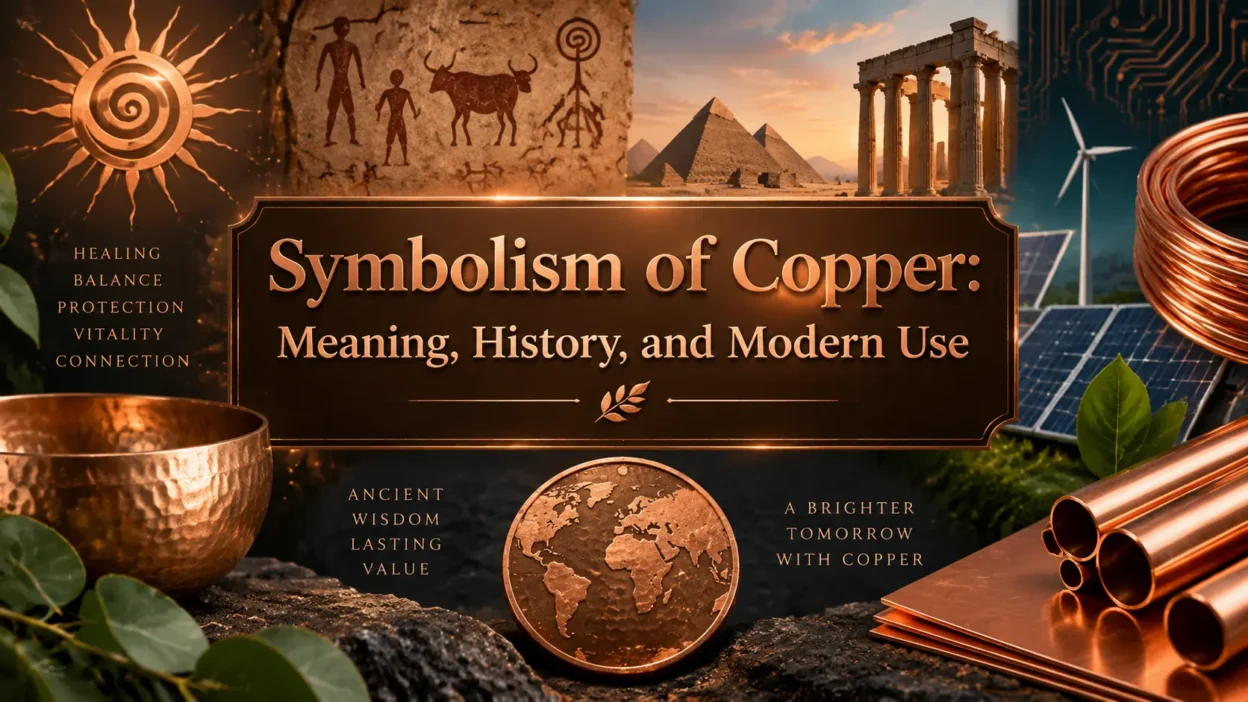
Copper is one of the oldest metals used by humans, appearing in tools, artwork, architecture, jewelry, and everyday objects for thousands of years. The symbolism of copper is often connected with warmth, connection, healing traditions, creativity, and human craftsmanship. In modern American culture, copper is also viewed as a material that represents durability, natural beauty, and a balance between tradition and innovation.
Unlike precious metals such as gold and silver, copper has a more familiar and practical identity. People encounter it in electrical wiring, kitchen items, coins, buildings, and decorative designs. Its reddish-orange color and ability to develop a unique patina over time have helped shape its symbolic meanings across different societies.
Quick Answer
Copper commonly symbolizes connection, warmth, creativity, and resilience in modern American culture, especially in design, jewelry, and personal expression. Historically, it has also represented craftsmanship, trade, healing traditions, and human progress because of its long role in tools, art, and technology.
TL;DR
- Copper represents warmth, creativity, and human connection.
- Ancient civilizations valued copper for tools and craftsmanship.
- Americans associate copper with design, homes, and innovation.
- Copper jewelry often symbolizes individuality and strength.
- Its changing surface represents aging and transformation.
- Modern industries connect copper with technology and progress.
What Copper Looks Like and Where People Find It
Copper is a reddish-brown metal known for its warm color, shine, and ability to change appearance over time. Freshly polished copper has a bright orange-red appearance, while older copper often develops a green or blue surface layer called patina.
People see copper in many parts of daily life, including electrical systems, plumbing, cookware, coins, sculptures, roofs, jewelry, and architectural details. Its combination of beauty and usefulness makes it different from metals that exist mainly for decoration.
The physical qualities of copper influence its symbolism. Its warm color creates associations with comfort and energy, while its ability to conduct electricity connects it with communication and connection. Its long lifespan links it with endurance and preservation.
What Copper Commonly Means in the United States
In the United States, copper is often associated with creativity, reliability, and a connection between the past and future. Designers frequently use copper tones in homes because the color creates a feeling of warmth and natural elegance.
Copper also has a strong relationship with American industry. It plays an important role in electrical systems, construction, and technology. Because of this, many people connect copper with progress, innovation, and practical achievement.
In personal style, copper jewelry and decorations often communicate a preference for natural materials, handcrafted objects, and designs that feel unique rather than mass-produced.
| Context | Meaning in the USA | Common Associations | Notes |
|---|---|---|---|
| Jewelry | Individuality and warmth | Beauty, creativity, personal style | Often chosen for unique appearance |
| Home Decor | Comfort and natural elegance | Rustic, modern, handcrafted design | Popular in kitchens and interiors |
| Technology | Connection and progress | Electricity, communication, innovation | Essential industrial material |
| Art and Craft | Human creativity | Skill, tradition, handmade work | Used by artists and makers |
| Patina | Change and aging | History, transformation, character | Often valued in architecture |
Ancient Roots and Early Symbolism of Copper
Copper has one of the longest relationships with human civilization. Ancient communities discovered that copper could be shaped into tools, weapons, ornaments, and household objects. This discovery changed human technology and helped create the period known as the Copper Age.
Early civilizations valued copper because it combined usefulness with beauty. Ancient Egyptians used copper tools and created copper-based objects for daily life and religious practices. The metal was also connected with craftsmanship because producing copper objects required specialized knowledge.
In ancient societies, metals often carried symbolic meanings because they were linked with human achievement. Copper represented the ability to transform natural materials into useful creations.
Its early connection with tools and artistic objects helped establish copper as a symbol of skill, invention, and human creativity.
Copper Symbolism in Ancient Cultures
Different cultures developed their own interpretations of copper based on their relationship with the metal.
In ancient Egypt, copper was connected with craftsmanship, protection, and practical knowledge. Copper tools helped build important structures, and copper-based materials appeared in decorative and ceremonial objects.
In ancient Greece and Rome, copper was associated with the planet Venus because copper was connected to the goddess Aphrodite or Venus in traditional metal symbolism. This created links between copper and ideas such as beauty, love, attraction, and artistic expression.
Across various cultures, copper often represented balance because it was neither as rare as gold nor as ordinary as basic materials. It occupied a middle position between practicality and beauty.
Copper Symbolism in Color Psychology
Copper’s meaning is strongly influenced by its color. The reddish-orange tone creates associations with energy, comfort, and creativity.
In color psychology, warm metallic shades often create feelings of confidence and friendliness. Copper does not usually appear as distant or formal as silver, and it does not carry the same luxury associations as gold. Instead, it feels approachable and connected to everyday life.
Many interior designers use copper tones to create spaces that feel welcoming. Copper-colored lighting, furniture details, and decorative pieces can add warmth without making a room feel overly expensive or artificial.
The color also suggests transformation because copper changes naturally over time. A new copper surface and an aged copper surface can look completely different while remaining the same material.
The Emotional Meaning of Copper
Copper often represents human connection because of its ability to conduct electricity. Although this is a scientific property, it has influenced symbolic interpretations of copper as a bridge between people, ideas, and systems.
Many people associate copper with:
- communication
- creativity
- comfort
- resilience
- adaptability
- craftsmanship
A copper object can feel personal because the material often changes through contact, weather, and age. Unlike materials that remain unchanged, copper develops visible signs of time.
This quality gives copper a symbolic relationship with memory. An old copper item may represent experiences, history, and the value of things that become more meaningful over time.
Copper in Jewelry and Personal Expression
Copper jewelry has become popular among people who prefer natural-looking materials and handcrafted designs. Rings, bracelets, necklaces, and artistic pieces often use copper because of its distinctive color and changing appearance.
In modern American fashion, copper jewelry can symbolize:
- individuality
- artistic taste
- connection with nature
- appreciation for handmade items
Some people also choose copper jewelry because of traditional beliefs about metals and wellness. However, scientific evidence does not support many claims that copper jewelry provides specific health benefits.
The strongest symbolism of copper jewelry comes from its appearance and personal meaning. A copper bracelet or necklace can represent creativity, memories, or a preference for authentic materials.
Copper in Homes, Architecture, and Design
Copper has a special place in American architecture and home design. It appears in roofs, lighting fixtures, kitchen items, sculptures, and decorative accents.
Architects often appreciate copper because it ages naturally. A copper roof may begin with a bright metallic color and gradually develop a green patina. Many people see this change as a sign of character rather than damage.
In home design, copper represents:
- warmth
- stability
- craftsmanship
- natural beauty
Copper details are common in farmhouse, rustic, industrial, and modern interior styles because the material works well with wood, stone, glass, and other natural elements.
Copper in Religion and Spiritual Traditions
Copper has appeared in many religious and spiritual traditions because of its physical qualities, color, and connection with human craftsmanship. Different communities have given copper different meanings, but many interpretations connect it with purification, protection, connection, and transformation.
In some Hindu traditions, copper vessels are used in rituals and daily practices because copper has cultural associations with purity and sacred preparation. Copper objects may appear in religious settings because the metal has a long history of being valued for both practical and ceremonial purposes.
In ancient European traditions, copper’s connection with Venus created symbolic links to love, beauty, fertility, and artistic expression. This association came from the traditional relationship between metals, planets, and mythological figures.
In some spiritual communities today, copper is viewed as a symbolic material that represents balance between the physical and emotional worlds. These interpretations are cultural or personal beliefs rather than scientifically proven properties.
The meaning of copper in religion depends greatly on the tradition using it. For some groups, it represents sacred practice, while for others it simply reflects human creativity and connection with nature.
Copper Symbolism in Native American and Indigenous Traditions
Copper has an important place in several Indigenous cultures, especially those located near natural copper sources. Native communities in North America used copper for tools, ornaments, and trade items long before modern industrial mining.
The Great Lakes region, especially areas around what is now Michigan, has a long history of Indigenous copper use. Ancient communities shaped naturally occurring copper into tools and decorative objects.
In many Indigenous contexts, materials from the earth can carry meanings connected with respect for nature, ancestry, and survival. Copper objects may represent skill, relationship with the land, and knowledge passed between generations.
However, Indigenous cultures are diverse, and copper does not hold one universal meaning across all Native communities. Its symbolism depends on the specific group, region, and historical context.
Copper Meaning in Different Cultures Around the World
Copper has developed many symbolic meanings because civilizations across the world discovered and used it independently.
In Chinese traditions, copper has historically been connected with coins, wealth, and prosperity. Copper currency played an important role in Chinese history, which helped associate the metal with trade and economic activity.
In African cultures, copper and copper alloys were often used for artistic objects, jewelry, and ceremonial items. These objects could represent status, creativity, and social identity.
In European traditions, copper became linked with beauty and artistic expression because of its association with Venus. Copper objects were valued not only for function but also for decoration and craftsmanship.
Although meanings differ, many cultures recognize copper as a material that connects human creativity with natural resources.
Copper Symbolism in Modern American Culture
Today, copper appears in many areas of American life, from technology to fashion. Its symbolism has expanded beyond traditional meanings and now reflects ideas connected with innovation, sustainability, and personal style.
The technology industry gives copper a modern identity. Because copper efficiently carries electricity, it plays a major role in power systems, electronics, and communication networks. This practical importance has strengthened its association with connection and progress.
In environmental conversations, copper is often discussed as a valuable recyclable material. This has created additional associations with sustainability and responsible resource use.
In popular design trends, copper represents a balance between old and new. A copper lamp, kitchen item, or decorative piece can create a connection between traditional craftsmanship and modern interiors.
Copper Tattoos and Personal Symbolism
Copper is less common as a tattoo image than symbols like animals, flowers, or celestial objects, but when it appears in tattoo designs, it often carries personal meanings related to strength, creativity, and transformation.
A copper-colored tattoo may represent:
- personal growth
- connection with nature
- resilience through change
- appreciation for craftsmanship
- warmth and individuality
Some designs combine copper imagery with elements such as gears, plants, minerals, or geometric patterns. These combinations can create meanings connected with creativity, science, history, or personal identity.
Like all tattoos, the meaning depends on the person wearing it. A copper tattoo does not have one fixed interpretation.
Copper in Art, Fashion, and Popular Design
Artists and designers often use copper because it provides both visual appeal and symbolic value. The metal’s warm tone can make objects feel handcrafted, natural, and connected to history.
In fashion, copper colors appear in clothing, accessories, makeup, and jewelry. These shades often create a feeling of confidence while remaining softer than brighter metallic colors.
In photography and digital design, copper tones are frequently used to create vintage, autumn, industrial, or luxury-inspired moods.
The popularity of copper in modern design shows how symbolism can evolve. A material once valued mainly for tools and trade now also represents creativity, aesthetics, and lifestyle choices.
The Connection Between Copper and Transformation
One of copper’s most recognizable qualities is its ability to change appearance. Over time, exposure to air and moisture creates patina, giving copper a green or blue surface.
This natural transformation has influenced symbolic interpretations. Many people view aged copper as an example of how objects can gain character through time rather than lose value.
Copper’s changing surface can represent:
- personal growth
- adaptation
- life experiences
- acceptance of aging
- renewal
Unlike materials that are valued only when they look new, copper often becomes more appreciated as it develops history.
This idea connects copper with the human experience. People also change over time, collecting memories and experiences that shape their identity.
Common Misunderstandings About Copper Symbolism
Copper has accumulated many symbolic interpretations, but some modern claims go beyond cultural meaning and enter the area of unsupported beliefs.
One common misunderstanding is that copper automatically provides healing or protection because of traditional associations. While copper has useful physical properties and medical applications in specific contexts, many symbolic or spiritual claims about copper are personal beliefs rather than established facts.
Another misunderstanding is assuming that copper has the same meaning everywhere. Symbolism changes between cultures, religions, and individuals.
A copper object may represent technology to one person, artistic creativity to another, and family history to someone else. Understanding the context prevents oversimplifying the symbol.
How Copper Symbolism Has Changed Over Time
The meaning of copper has evolved alongside human civilization. Early societies valued copper because it improved tools and allowed new forms of craftsmanship. Later cultures connected it with beauty, trade, art, and spiritual traditions.
During industrial development, copper became strongly associated with electricity, communication, and modern infrastructure. Today, it carries both historical and contemporary meanings.
Modern interpretations combine several layers:
- ancient craftsmanship
- technological progress
- natural beauty
- personal expression
- sustainability
Copper remains meaningful because it continues to serve practical purposes while also carrying emotional and cultural associations.
Frequently Asked Questions About Copper Symbolism
What does copper symbolize spiritually?
Copper is often associated with connection, balance, creativity, and transformation in spiritual traditions. These meanings come from cultural beliefs and historical uses rather than a single universal interpretation.
What does copper represent in American culture?
In the United States, copper often represents craftsmanship, innovation, warmth, and reliability. Its role in technology and design has made it a symbol connected with both tradition and progress.
What does a copper bracelet symbolize?
A copper bracelet can symbolize personal style, creativity, and appreciation for natural materials. Some people connect it with traditional wellness beliefs, but these ideas are cultural rather than scientifically proven.
Is copper a symbol of love?
Copper can represent love and beauty in some historical traditions because of its association with Venus, the Roman goddess connected with love and attraction. Modern interpretations may also connect copper with warmth and emotional connection.
Why does copper change color?
Copper changes color because it reacts with elements in the environment, creating a patina on its surface. Symbolically, this transformation is often viewed as representing aging, experience, and natural change.
Is copper considered a positive symbol?
Copper is generally viewed positively because it is associated with creativity, usefulness, connection, and endurance. However, its meaning can vary depending on cultural and personal context.
Conclusion
Copper represents more than a useful metal. Its warm color, changing surface, and long relationship with human civilization have created associations with creativity, connection, craftsmanship, and transformation.
From ancient tools to modern technology, copper has remained part of human progress. In the United States, it continues to appear in homes, art, jewelry, and industry because it combines practical value with visual character.
The symbolism of copper reflects the relationship between people and the materials they shape. It reminds us that objects can carry stories, and materials can gain meaning through the ways humans use and understand them.


