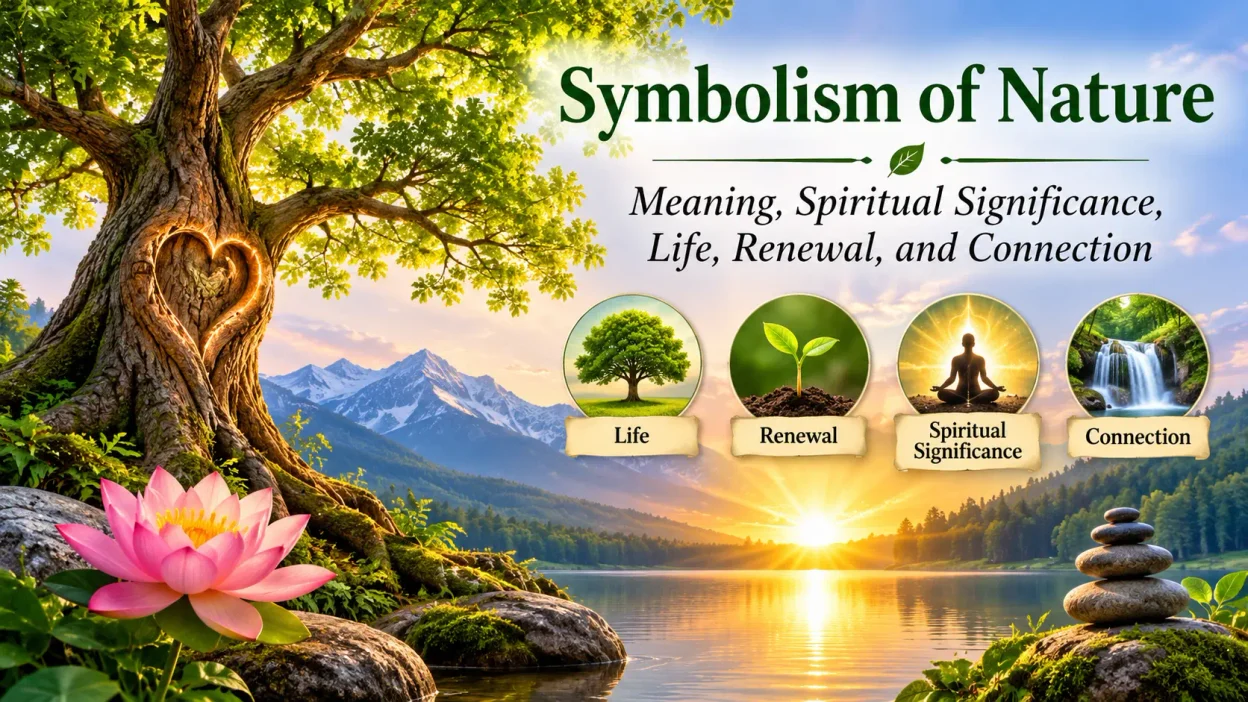
The symbolism of nature is deeply connected to life, growth, transformation, balance, freedom, and the relationship between humans and the natural world. From towering mountains and flowing rivers to delicate flowers and changing seasons, nature provides powerful images that people have used to express emotions, spiritual beliefs, cultural values, and important life experiences.
Throughout history, natural elements have appeared in mythology, religion, literature, art, folklore, and everyday traditions. A blooming flower may represent new beginnings, a storm may suggest emotional conflict, and a rising sun may symbolize hope after a difficult period. These interpretations allow people to understand complex ideas through familiar features of the environment.
Nature symbolism also reminds us that life is constantly changing. Trees lose their leaves and grow again, rivers continue moving, and seasons shift from darkness toward light. These natural cycles offer meaningful comparisons to human experiences, including personal growth, loss, healing, and renewal.
Whether you are exploring nature from a spiritual, cultural, literary, or personal perspective, its symbolism reveals how closely human life is connected to the world around us.
What Does Nature Symbolize?
Nature commonly symbolizes life, renewal, growth, freedom, harmony, transformation, and the interconnectedness of all living things. It represents the natural processes through which life develops, changes, and continues.
The meaning of a particular natural element depends on its appearance, behavior, cultural background, and context.
Here are some of the most common symbolic meanings associated with nature:
| Symbolic Meaning | Significance |
|---|---|
| Life | Birth, existence, vitality, and living energy |
| Growth | Learning, development, and personal progress |
| Renewal | Fresh beginnings and recovery |
| Freedom | Independence and release from limitations |
| Balance | Harmony between different forces |
| Transformation | Change and the natural cycles of life |
| Wisdom | Learning through observation and experience |
| Peace | Calmness, rest, and emotional stability |
| Abundance | Fertility, prosperity, and nourishment |
| Connection | Relationships between humans and the environment |
| Resilience | The ability to survive and recover |
| Mystery | The unknown and the complexity of the natural world |
Nature does not have one universal symbolic meaning. A forest may represent safety and spiritual discovery in one story, while suggesting danger or uncertainty in another. Context is essential when interpreting natural imagery.
1. Nature Symbolizes Life and Creation
One of the most fundamental meanings of nature is life itself. Plants grow, animals reproduce, rivers support ecosystems, and sunlight provides energy that sustains countless living organisms.
These processes have made nature a powerful symbol of creation and vitality.
A green landscape, flowering garden, or growing tree may represent the energy and beauty of existence. In spiritual and artistic interpretations, these images often suggest that life is constantly developing.
Nature’s connection with life can symbolize:
- Birth and new beginnings.
- Fertility and abundance.
- The development of living things.
- The relationship between humans and other organisms.
- The continuity of life across generations.
The natural world also reminds us that life depends on relationships. Plants, animals, fungi, microorganisms, water, soil, and sunlight interact in complex ways. This interconnectedness provides a meaningful symbol of cooperation and shared existence.
2. Nature Symbolizes Growth and Personal Development
Nature is closely associated with personal growth because living things develop through different stages.
A small seed gradually becomes a plant, while a young tree grows stronger over many years. These processes provide powerful metaphors for learning, patience, and self-improvement.
In personal symbolism, nature may represent the understanding that meaningful progress often happens gradually.
A tree can symbolize stability and maturity, while a flower opening may represent confidence or the discovery of personal potential.
Nature’s message about growth includes:
- Be patient with your progress.
- Accept that development takes time.
- Learn from difficult experiences.
- Recognize that change is part of life.
- Give yourself the conditions needed to grow.
Just as plants require sunlight, water, and healthy soil, personal development often requires support, effort, and a suitable environment.
3. Nature Symbolizes Renewal and New Beginnings
The changing seasons make nature one of the strongest symbols of renewal.
After winter, many plants begin growing again. Spring brings new leaves, flowers, and increased activity among wildlife. These changes have made the natural world an enduring image of hope and fresh opportunities.
Nature’s renewal symbolism can represent:
- Recovering after a difficult period.
- Beginning a new chapter.
- Releasing old habits.
- Rebuilding confidence.
- Finding hope after loss.
- Accepting personal transformation.
The cycle of growth, decline, and renewal also suggests that endings do not always represent permanent loss. Sometimes they create the conditions for something new to emerge.
4. Nature Symbolizes Freedom and Independence
Open landscapes, flowing rivers, flying birds, and vast oceans are often used to represent freedom.
These natural images suggest movement, possibility, and independence. A bird flying across an open sky may represent the desire to escape limitations, while a river moving toward the sea can symbolize the freedom to follow one’s path.
In literature and art, nature frequently provides an alternative to restrictive environments or social expectations.
Its symbolism of freedom may include:
- Independence and self-expression.
- Exploration and adventure.
- Personal choices.
- Breaking away from limitations.
- Discovering new possibilities.
Nature can also remind us that freedom requires responsibility. Living systems depend on balance, and human actions can affect the freedom and survival of other species.
5. Nature Symbolizes Balance and Harmony
Natural ecosystems are built through relationships among different organisms and environmental conditions.
Predators and prey, plants and pollinators, water and soil, and sunlight and shade all contribute to ecological processes.
These relationships have made nature a symbol of balance and harmony in many philosophical, artistic, and spiritual traditions.
A peaceful landscape may suggest emotional stability, while an ecosystem can represent the importance of cooperation and interdependence.
Nature’s symbolism of balance encourages us to:
- Respect different perspectives.
- Recognize the importance of moderation.
- Maintain healthy relationships.
- Appreciate the connection between people and their environment.
- Understand that individual actions can affect larger systems.
Harmony in nature does not mean that conflict or competition never occurs. Natural ecosystems contain both cooperation and struggle, making balance a dynamic process rather than a permanent state.
6. Nature Symbolizes Resilience and Strength
Natural environments often demonstrate remarkable resilience. Trees can survive harsh weather, certain plants grow in difficult conditions, and some ecosystems recover after disturbances.
These qualities have made nature a symbol of endurance and the ability to overcome adversity.
A tree standing through a storm may represent emotional strength, while a flower growing through a crack in concrete can symbolize hope and persistence.
Nature’s resilience symbolism can represent:
- Courage during difficult circumstances.
- The ability to recover after setbacks.
- Patience during uncertain periods.
- Adaptability and flexibility.
- Inner strength and determination.
The natural world also teaches that resilience does not always mean remaining unchanged. Sometimes survival requires adapting to new conditions.
7. Nature Symbolizes Peace and Emotional Healing
Many people associate natural environments with relaxation, reflection, and emotional comfort.
The sound of flowing water, the appearance of green landscapes, and the movement of trees in the wind can create a sense of calmness.
In literature and spiritual interpretation, peaceful natural settings often represent emotional healing and inner balance.
Nature may symbolize:
- Freedom from unnecessary distractions.
- Emotional rest and reflection.
- A renewed sense of perspective.
- Comfort during difficult experiences.
- Reconnection with oneself.
Spending time in natural environments may support well-being for many people, although symbolic interpretations of nature should not be confused with medical treatment or guaranteed healing.
Different Elements of Nature and Their Symbolic Meanings
Nature includes countless features, each with its own associations. Some elements have developed recognizable meanings across different cultures, while others carry highly personal or context-dependent interpretations.
| Natural Element | Common Symbolic Meaning |
|---|---|
| Trees | Life, stability, wisdom, and growth |
| Flowers | Beauty, love, renewal, and emotions |
| Mountains | Strength, ambition, and spiritual journeys |
| Rivers | Movement, time, and transformation |
| Oceans | Mystery, emotion, and infinity |
| Forests | Mystery, protection, and discovery |
| Sun | Life, energy, hope, and clarity |
| Moon | Cycles, intuition, and change |
| Rain | Cleansing, renewal, and emotional release |
| Wind | Freedom, movement, and invisible forces |
| Fire | Transformation, destruction, and purification |
| Earth | Stability, nourishment, and grounding |
| Stars | Guidance, hope, and wonder |
| Stones | Endurance, permanence, and strength |
| Clouds | Change, uncertainty, and imagination |
1. Tree Symbolism
<text> </text>
Trees are among the most recognizable symbols in nature. Their roots, trunks, branches, and leaves offer different associations with human life.
Roots may represent family history and personal foundations. The trunk can symbolize stability, while branches suggest expansion and new opportunities.
Trees commonly symbolize:
- Growth and development.
- Strength and resilience.
- Family and ancestry.
- Wisdom and longevity.
- Connection between different stages of life.
Different trees also carry distinct meanings. Oak trees are frequently associated with strength, while willow trees may represent flexibility, grief, and renewal.
2. Flower Symbolism
Flowers often symbolize beauty, love, emotions, and the temporary nature of life.
Their colors, shapes, fragrances, and blooming cycles have inspired meanings in art, literature, and cultural traditions.
Some familiar examples include:
- Roses: Love, passion, and devotion.
- Lilies: Purity, remembrance, and renewal.
- Sunflowers: Happiness, warmth, and optimism.
- Lavender: Peace, calmness, and devotion.
- Daisies: Innocence, simplicity, and new beginnings.
- Lotus flowers: Spiritual awakening and purity in several Asian religious traditions.
A flower’s symbolism may change according to its color, cultural context, and use.
3. Mountain Symbolism
Mountains commonly symbolize strength, endurance, ambition, and spiritual aspiration.
Their height and imposing appearance make them powerful images of challenges that require determination and patience.
In many stories and religious traditions, mountains are also associated with sacred encounters, revelation, isolation, and spiritual journeys.
A mountain can therefore represent both an external challenge and an internal journey toward personal understanding.
4. River Symbolism
Rivers are often associated with the passage of time, movement, transformation, and the continuous journey of life.
Because rivers flow from one place to another, they provide a natural metaphor for change and the movement from one stage of life to the next.
In some religious and cultural traditions, rivers also represent purification, fertility, and spiritual renewal.
A calm river may suggest peace and continuity, while a fast-moving river can symbolize uncertainty, powerful emotions, or rapid change.
5. Ocean Symbolism
The ocean is a powerful symbol of mystery, depth, emotion, and the unknown.
Its vastness makes it an image of infinity and possibilities beyond human understanding.
The ocean can symbolize:
- Deep emotions.
- Freedom and exploration.
- Mystery and uncertainty.
- The unconscious mind in some psychological interpretations.
- Life’s unpredictable experiences.
Calm seas may represent emotional peace, while violent waves can suggest conflict, fear, or overwhelming circumstances.
6. Forest Symbolism
Forests frequently represent mystery, protection, transformation, and discovery.
Their dense trees and hidden pathways can create a sense of wonder or uncertainty, making them common settings for myths, fairy tales, and adventure stories.
In literature, entering a forest may symbolize leaving familiar surroundings and beginning a journey of personal discovery.
A forest can represent both safety and danger depending on the story. It may be a peaceful refuge or a place where characters confront their fears.
7. Sun Symbolism
The sun is widely associated with life, energy, warmth, hope, and clarity.
Its light supports life on Earth and has inspired religious and cultural symbolism for thousands of years.
A rising sun may represent a fresh beginning, while sunlight breaking through clouds can suggest hope after uncertainty.
The sun may symbolize:
- Vitality and creation.
- Knowledge and enlightenment.
- Confidence and optimism.
- Renewal and fresh opportunities.
- Power and authority.
Its significance varies across cultures and religious traditions.
8. Moon Symbolism
The moon is commonly associated with cycles, change, mystery, intuition, and the passage of time.
Its changing appearance throughout the lunar cycle has made it a powerful symbol of transformation and renewal.
A full moon may represent completion or heightened emotion in some interpretations, while a new moon can symbolize beginnings and possibility.
The moon also appears in many religious, cultural, and literary traditions, where its meaning depends on the surrounding context.
9. Rain Symbolism
Rain can symbolize cleansing, emotional release, renewal, and nourishment.
Because rainfall supports plant growth and replenishes water supplies, it often represents life and fertility.
In stories, rain may also reflect sadness, grief, uncertainty, or emotional transformation.
Its meaning depends on the scene. Gentle rain may suggest peace and refreshment, while a destructive storm may represent conflict or loss.
10. Wind Symbolism
Wind represents movement, freedom, change, and invisible forces.
Although it cannot be seen directly, its effects are visible in moving trees, drifting clouds, and changing weather.
This makes wind a powerful metaphor for unseen influences, emotions, and changes that shape human experiences.
A gentle breeze may symbolize calmness and renewal, while strong winds can represent instability or powerful transformation.
Nature Symbolism Across Different Cultures
Nature has played an important role in the spiritual and cultural traditions of societies around the world. However, its meanings are not universal. The same natural element can represent different ideas depending on the religion, region, historical period, and community.
Nature Symbolism in Ancient Egyptian Culture
Ancient Egyptian religion included many natural symbols connected with the Nile, the sun, animals, and plant life.
The annual flooding of the Nile supported agriculture and was closely connected with fertility, abundance, and the continuation of life.
The lotus flower was also an important symbol in Egyptian art and religious imagery, where it could be associated with creation, rebirth, and the sun.
The sun itself held a central position in Egyptian religious traditions, including the worship of solar deities such as Ra.
Nature Symbolism in Greek Mythology
Nature appears throughout Greek mythology through gods, goddesses, sacred landscapes, plants, and animals.
Demeter was associated with agriculture and the fertility of the earth, while Artemis was connected with wild animals and wilderness.
The story of Persephone and Demeter became an important mythological explanation for seasonal change and the cycle of growth and dormancy.
Mountains, forests, rivers, and springs also appeared as places associated with divine presence and transformation.
Nature Symbolism in Hindu Traditions
Nature holds significant spiritual importance in many Hindu traditions.
Rivers such as the Ganges are regarded as sacred, and the river is associated with purification and spiritual significance.
The lotus is an important symbol in Hindu religious art and is connected with purity, beauty, and spiritual development.
Trees such as the banyan and peepal also have important religious and cultural associations in particular traditions.
These meanings are connected to specific religious teachings and practices rather than one general interpretation of nature.
Nature Symbolism in Buddhism
In Buddhist traditions, natural imagery is frequently used to explain impermanence, mindfulness, compassion, and awakening.
The lotus flower is particularly important because it grows in muddy water while producing a beautiful bloom. It is often used to represent the possibility of spiritual development despite difficult conditions.
The Bodhi tree is another major symbol because Siddhartha Gautama is traditionally understood to have attained enlightenment while meditating beneath a tree of this kind.
Nature can therefore provide visual lessons about change, patience, and the development of wisdom.
Nature Symbolism in Indigenous Traditions
Many Indigenous communities around the world maintain deep cultural, spiritual, and practical relationships with the natural environment.
Land, water, plants, animals, mountains, and particular landscapes may hold historical, ancestral, ceremonial, and spiritual significance.
However, Indigenous traditions are extremely diverse. There is no single Indigenous interpretation of nature that applies to all communities.
For example, particular Native American nations have distinct relationships with specific animals, plants, and landscapes. Similarly, Aboriginal Australian traditions include diverse relationships with Country, ancestral stories, and ecological knowledge.
Understanding these meanings requires attention to the specific community, place, and tradition involved.
Nature Symbolism in Literature and Art
Writers and artists frequently use nature to communicate emotions and ideas that are difficult to express directly.
A landscape can establish the atmosphere of a story, reflect a character’s emotional condition, or represent a larger philosophical theme.
Common examples include:
| Natural Image | Literary or Artistic Meaning |
|---|---|
| Spring | Rebirth, youth, and new beginnings |
| Winter | Isolation, hardship, or death |
| Autumn | Change, maturity, and decline |
| Summer | Energy, abundance, and happiness |
| Storm | Conflict, fear, and emotional turmoil |
| Garden | Order, beauty, and human care |
| Wilderness | Freedom, danger, and independence |
| Drought | Scarcity, emotional emptiness, and hardship |
| Sunrise | Hope, revelation, and a fresh start |
| Sunset | Endings, reflection, and the passage of time |
Nature as a Reflection of Human Emotions
In poetry and fiction, nature often reflects what characters are experiencing internally.
A dark sky may suggest sadness or uncertainty, while a peaceful garden may communicate emotional comfort.
This technique allows readers to understand a character’s feelings through the surrounding environment.
Nature as a Symbol of Transformation
Seasonal changes are especially useful in literature because they provide a recognizable pattern of transformation.
A story that begins in winter and ends in spring may suggest that a character has moved from emotional difficulty toward hope and renewal.
However, seasonal symbolism is not fixed. Winter can also represent peace, rest, or beauty, depending on the writer’s intentions.
Nature Symbolism in Dreams
Dreaming about nature can carry different personal meanings depending on the setting, emotional atmosphere, and details of the dream.
A peaceful forest may reflect a desire for rest, while a violent storm may relate to feelings of uncertainty or pressure.
Dream interpretation is subjective and should not be treated as a scientific prediction of future events.
| Nature Dream | Possible Interpretation |
|---|---|
| Walking through a forest | Self-discovery or uncertainty |
| Seeing a beautiful garden | Growth, peace, and emotional satisfaction |
| Climbing a mountain | Ambition and personal challenges |
| Crossing a river | Change or transition |
| Swimming in the ocean | Emotional depth or uncertainty |
| Watching a sunrise | Hope and new beginnings |
| Seeing a full moon | Reflection or emotional awareness |
| Standing in heavy rain | Emotional release or difficulty |
| Watching a storm | Conflict or overwhelming feelings |
| Seeing green trees | Growth, stability, and renewal |
The best way to understand a nature dream is to consider how you felt during it and whether its imagery connects with anything happening in your waking life.
What Does Nature Symbolize Spiritually?
From a spiritual perspective, nature may represent creation, interconnectedness, balance, renewal, and the relationship between human beings and the larger world.
Many spiritual traditions use natural imagery to explain ideas about existence, impermanence, responsibility, and transformation.
Common spiritual interpretations include:
Connection with life: Nature reminds us that humans are part of a larger living world.
Renewal: Seasonal cycles can represent the possibility of recovery and new beginnings.
Balance: Natural ecosystems offer examples of interdependence and changing relationships.
Wisdom: Observing the natural world can encourage patience, awareness, and humility.
Grounding: Earth, trees, and landscapes can symbolize stability and connection with the present moment.
Transformation: Growth and seasonal change can reflect personal and spiritual development.
These interpretations differ across religions and individuals. Nature does not carry one universal spiritual message.
Nature as a Symbol of Environmental Awareness
Nature symbolism is not limited to spiritual or artistic interpretations. It can also represent the importance of protecting the environment.
Forests, oceans, rivers, wildlife, and natural habitats support life on Earth. Their symbolic value often reflects their real ecological importance.
For example:
- Forests represent biodiversity, climate regulation, and ecological relationships.
- Rivers represent freshwater systems and the movement of nutrients.
- Oceans represent marine biodiversity and global climate processes.
- Flowers and pollinators represent relationships that support plant reproduction.
- Mountains represent habitats, water sources, and important landscapes.
Nature can therefore symbolize responsibility and the need to protect the systems that sustain life.
Environmental awareness gives nature symbolism a practical meaning: appreciating the natural world also means recognizing that human choices affect its future.
What Can the Symbolism of Nature Teach Us About Life?
Nature provides meaningful lessons about change, patience, resilience, and interconnectedness.
1. Growth takes time. Just as plants develop gradually, personal progress often requires patience and consistent effort.
2. Change is unavoidable. Seasons shift, landscapes evolve, and living things adapt. Human experiences also involve transitions.
3. Difficult periods can lead to renewal. A challenging stage does not necessarily define the rest of your life.
4. Everything is connected. Natural systems demonstrate how individual organisms depend on larger relationships.
5. Balance requires attention. Healthy ecosystems depend on changing relationships rather than one permanent condition.
6. Strength can include flexibility. Some organisms survive by adapting rather than resisting every environmental change.
7. The natural world deserves respect. Humans depend on the environment and have a responsibility to care for it.
These lessons make nature an enduring source of reflection in everyday life.
Frequently Asked Questions About Nature Symbolism
1. What does nature symbolize?
Nature commonly symbolizes life, growth, renewal, freedom, balance, transformation, resilience, and interconnectedness. Its meaning depends on the natural element and the cultural or personal context.
2. What is the spiritual meaning of nature?
Spiritually, nature may represent creation, harmony, interconnectedness, renewal, and the relationship between human beings and the world around them.
3. Why is nature a symbol of renewal?
Nature demonstrates renewal through seasonal cycles, plant growth, and the recovery of living systems. These processes provide metaphors for fresh beginnings and personal transformation.
4. What does nature symbolize in literature?
In literature, nature can represent human emotions, freedom, isolation, growth, conflict, and transformation. Writers often use landscapes and weather to reflect a character’s experiences.
5. What does a forest symbolize?
A forest commonly symbolizes mystery, protection, discovery, transformation, and the unknown. Its meaning depends on how it is presented in a particular story or cultural tradition.
6. What does water symbolize in nature?
Water often represents life, cleansing, emotional depth, movement, and renewal. Rivers, rain, lakes, and oceans can each carry different meanings.
7. What does a tree symbolize spiritually?
A tree may symbolize strength, stability, wisdom, growth, family, and the connection between different stages of life.
8. What does the sun symbolize?
The sun commonly represents life, energy, warmth, hope, clarity, and renewal. It is also an important symbol in many religious and cultural traditions.
9. What does the moon symbolize in nature?
The moon is frequently associated with cycles, change, mystery, intuition, and the passage of time. Its meaning varies across cultures and spiritual traditions.
10. Why is nature important in symbolism?
Nature provides familiar images that help people express complex ideas about life, emotions, spirituality, and change. Its patterns and elements make powerful metaphors for human experiences.
Conclusion: The Deeper Meaning of Nature Symbolism
The symbolism of nature reveals the powerful connection between the natural world and human experience. Trees represent growth and stability, rivers suggest movement and transformation, mountains symbolize strength, and flowers express beauty and renewal. Together, these natural elements provide meaningful ways to understand life, change, and personal development.
Across cultures, religions, literature, and art, nature has inspired people to explore ideas about creation, balance, freedom, resilience, and the passage of time. Although individual meanings differ, the natural world continues to offer powerful images for expressing human emotions and values.
Ultimately, nature symbolism reminds us that life is constantly changing and that growth often requires patience, balance, and adaptation. It also encourages us to recognize our connection with the environment and appreciate the living world that supports us.