
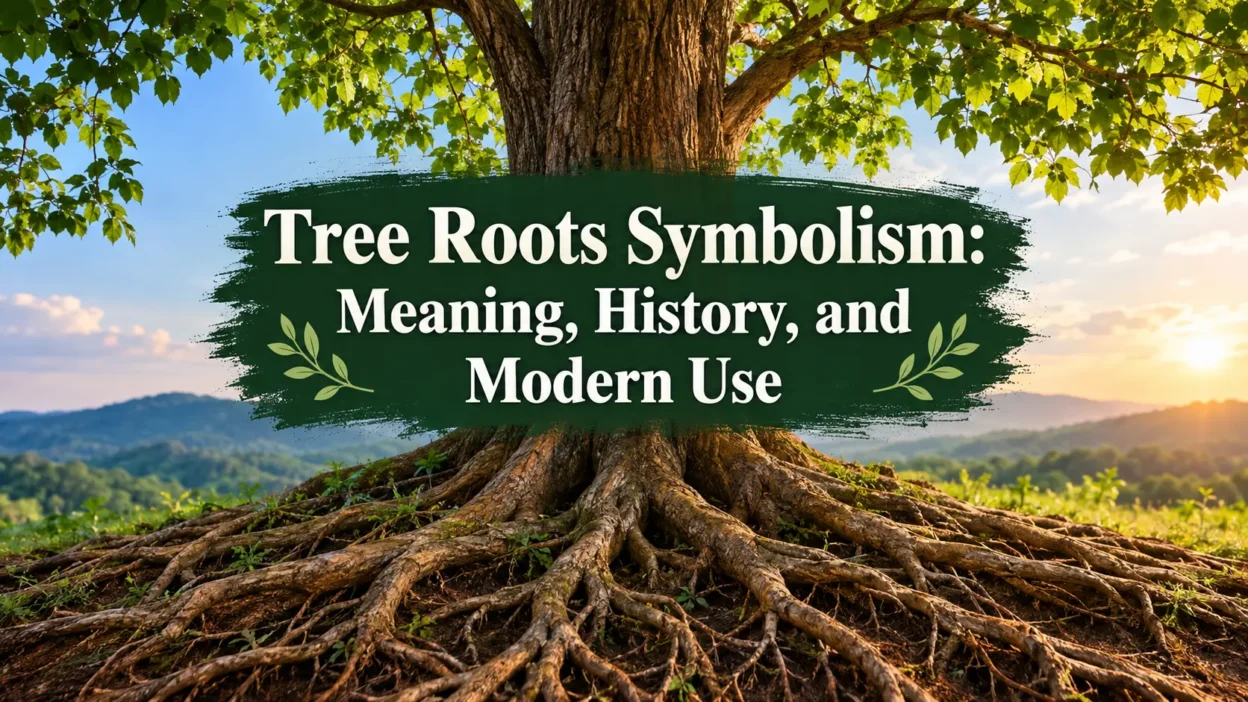
Tree roots symbolism is closely connected with ideas of stability, belonging, family heritage, and personal growth. Although roots usually remain hidden beneath the ground, they perform the essential work that allows a tree to survive, grow, and withstand changing conditions.
People are often drawn to the image of roots because it reflects experiences that feel universal. Most people seek a sense of connection, whether to family, community, culture, beliefs, or personal values. Roots provide a visual way to express those connections.
In modern American culture, roots appear in art, tattoos, home decor, education, environmental discussions, and family history projects. The image continues to resonate because it offers a simple but meaningful reminder that growth depends on a strong foundation.
Quick Answer
Tree roots symbolism most commonly represents stability, family connections, personal foundations, and resilience in modern American culture. Historically, roots have also symbolized ancestry, spiritual grounding, nourishment, and the unseen forces that support life and growth.
TL;DR
- Roots often symbolize stability and security.
- They are linked to family history and ancestry.
- Many cultures associate roots with life and nourishment.
- Americans often use roots to express belonging.
- Root imagery frequently appears in tattoos and artwork.
- The symbol highlights unseen support behind growth.
What Tree Roots Look Like and Why They Matter
Roots form the underground structure of a tree. They anchor it in the soil, absorb water and nutrients, and help it survive storms and droughts.
Because roots perform their work out of sight, they naturally became symbols for hidden strength. People often compare roots to the parts of life that cannot always be seen but remain essential. These may include family relationships, personal values, education, faith, cultural traditions, or life experiences.
The contrast between visible branches and invisible roots has made trees one of the most enduring symbolic images across many societies.
The Core Meaning of Tree Roots
Today, the most common symbolic meanings of tree roots include:
- Stability
- Grounding
- Family heritage
- Identity
- Strength
- Resilience
- Growth
- Support
Roots suggest that lasting success depends on a solid foundation. Just as a tree cannot thrive without healthy roots, people often view personal development as relying on strong values, supportive relationships, and a sense of purpose.
This meaning appears frequently in motivational writing, counseling, education, and personal reflection.
Ancient Origins of Root Symbolism
The symbolic importance of roots likely developed from direct observation of nature. Early farming communities depended on healthy plants and trees for survival. People noticed that strong roots often produced strong growth above ground.
Many ancient cultures viewed trees as connections between different parts of existence. The roots reached into the earth while branches extended toward the sky. This structure encouraged symbolic interpretations involving balance, connection, and continuity.
In various traditions, large trees became representations of the world itself. Their roots symbolized origins, hidden knowledge, ancestral connections, or the foundation of life.
Although interpretations varied, the idea of roots as a source of support appeared repeatedly across different regions and time periods.
Tree Roots as a Symbol of Family and Ancestry
One of the strongest modern meanings of roots involves family history.
Americans frequently use phrases such as “knowing your roots” or “returning to your roots.” These expressions suggest reconnecting with family traditions, hometowns, cultural backgrounds, or personal origins.
Genealogy projects have also strengthened this symbolism. Family trees often visually resemble actual trees, with roots representing earlier generations and branches representing descendants.
In this context, roots symbolize:
- Ancestors
- Heritage
- Family traditions
- Cultural identity
- Shared history
For many people, roots provide a sense of continuity between past and present generations.
What Tree Roots Symbolize in the United States
In the United States, root symbolism often focuses on identity and belonging.
Because American society includes people from many cultural backgrounds, questions about heritage and personal history remain important. Root imagery is commonly used when discussing immigration stories, family traditions, regional identity, and cultural pride.
Americans often interpret roots as representing:
| Context | Meaning in the USA | Common Associations | Notes |
|---|---|---|---|
| Family history | Ancestry and heritage | Genealogy, family trees | Very common use |
| Education | Strong foundations | Learning and growth | Often used metaphorically |
| Community | Belonging and connection | Local culture | Reflects shared identity |
| Personal growth | Stability and direction | Self-development | Popular in motivational contexts |
| Environment | Respect for nature | Conservation efforts | Increasingly common |
This focus on personal identity makes roots especially meaningful in modern American culture.
Roots and the Idea of Stability
A tree remains standing because its roots hold it firmly in place.
For this reason, roots often symbolize emotional stability and reliability. Someone described as “well rooted” is usually viewed as confident, grounded, and secure.
The symbol can also represent:
- Consistent values
- Emotional balance
- Long-term commitment
- Dependability
- Inner strength
This interpretation is especially common during periods of uncertainty. People frequently use root imagery to express a desire for steadiness when facing major life changes.
The Connection Between Roots and Growth
At first glance, roots and growth may seem like opposite ideas. Growth is visible, while roots remain hidden.
In symbolism, however, the two are closely connected. Roots remind people that meaningful growth often depends on unseen preparation. Skills, knowledge, relationships, and experiences create the foundation that supports future success.
This interpretation is common in education, leadership training, sports, and personal development. The message is straightforward: growth becomes stronger when it is built on a stable base.
The image encourages patience by recognizing that progress often begins below the surface before becoming visible.
Spiritual and Religious Interpretations
Many religious traditions have used trees and roots as symbolic images.
In Christianity, roots may represent faith, spiritual foundations, and a connection to God. Biblical passages sometimes use rooted plants and trees as examples of stability, wisdom, and spiritual growth.
In Judaism, trees have long served as symbols of life, continuity, and community. The image of deep roots can suggest enduring traditions passed through generations.
Some Eastern traditions connect roots with grounding, balance, and harmony with nature. In these contexts, roots symbolize the importance of remaining connected to fundamental principles while continuing to grow.
Although interpretations differ, the recurring theme is support from an enduring source.
Tree Roots in Mythology and Folklore
Myths from different cultures frequently feature enormous trees whose roots connect important realms of existence.
These stories often use roots to symbolize:
- Origins
- Hidden wisdom
- Cosmic order
- Ancestral knowledge
- Continuity between generations
Folklore sometimes portrays roots as pathways to forgotten knowledge or ancient memories. Because roots reach beneath the visible world, they became associated with things that exist beyond ordinary perception.
Such stories helped expand the symbolism of roots beyond practical concerns and into broader questions about identity and existence.
Emotional and Psychological Meaning
Psychologically, roots often represent a person’s sense of security.
People who feel connected to family, community, traditions, or personal values may describe themselves as rooted. Conversely, feeling uprooted can suggest isolation, uncertainty, or displacement.
Root symbolism commonly communicates:
- Safety
- Confidence
- Belonging
- Emotional support
- Self-understanding
Mental health professionals sometimes use tree imagery to help individuals explore the foundations of their identity. The metaphor works because most people understand the relationship between strong roots and healthy growth.
Tree Roots in Tattoos and Personal Expression
Tree root tattoos have become increasingly popular because they carry multiple layers of meaning.
Some people choose root designs to honor family heritage. Others use them to represent perseverance through difficult circumstances.
Common tattoo meanings include:
- Family connections
- Personal resilience
- Cultural identity
- Spiritual grounding
- Recovery after hardship
Many designs combine roots with branches, emphasizing the balance between origins and future growth. The image can communicate both where a person comes from and where they hope to go.
Roots in Art, Home Decor, and Design
Artists and designers often use roots to convey authenticity and connection.
In home decor, root imagery may symbolize family values, tradition, and stability. Decorative signs featuring trees and roots frequently appear in family-oriented spaces.
In visual art, roots can represent:
- Memory
- Identity
- Community
- Hidden influence
- Natural beauty
Designers also appreciate the visual complexity of root systems. Their branching patterns create striking images that feel both organic and meaningful.
Environmental and Ecological Symbolism
Modern environmental movements have added new dimensions to root symbolism.
Roots are now commonly associated with ecological health and sustainability. They prevent soil erosion, support ecosystems, and contribute to the survival of forests.
As environmental awareness has increased, roots have become symbols of:
- Conservation
- Interconnectedness
- Ecological responsibility
- Respect for nature
- Long-term sustainability
This interpretation has become especially visible in educational programs, conservation campaigns, and environmental artwork.
Common Misunderstandings About Tree Roots Symbolism
One misconception is that roots only represent the past.
While roots certainly connect to ancestry and history, they also support future growth. The symbol is not about remaining stuck in one place. Instead, it emphasizes having a foundation strong enough to allow development.
Another misunderstanding is that roots symbolize resistance to change. In reality, healthy root systems adapt continuously by expanding, seeking resources, and responding to environmental conditions.
The symbolism often combines stability with flexibility rather than choosing one over the other.
How the Meaning of Roots Has Evolved
Historically, root symbolism focused heavily on survival, agriculture, and connections to nature.
As societies became more urbanized, the meaning gradually expanded. People increasingly interpreted roots in terms of identity, family history, personal values, and psychological well-being.
In the twenty-first century, roots are often discussed alongside themes such as cultural heritage, environmental responsibility, and personal authenticity.
Despite these changes, the central idea remains remarkably consistent: growth depends on a stable source of support.
FAQ
What do tree roots symbolize most commonly?
Tree roots most commonly symbolize stability, family connections, personal foundations, and resilience. They represent the support systems that help people grow and thrive over time.
Are tree roots a positive symbol?
In most contexts, yes. Roots are usually associated with strength, belonging, security, and continuity, although they can occasionally represent attachment to the past depending on the situation.
What do tree root tattoos mean?
Tree root tattoos often symbolize family heritage, perseverance, identity, and personal growth. Many people choose them to honor their origins while recognizing their journey forward.
Do roots have religious symbolism?
Yes. Many religious traditions use roots to symbolize faith, spiritual grounding, wisdom, and continuity. The exact meaning varies by tradition, but support and stability are common themes.
What does being “rooted” mean?
Being rooted generally means feeling secure, grounded, and connected to important values, relationships, or traditions. The phrase often suggests emotional stability and a strong sense of identity.
Why are roots associated with ancestry?
Roots provide the foundation of a tree, making them a natural symbol for earlier generations. Just as roots support future growth, ancestors are often viewed as supporting future generations through culture, knowledge, and family traditions.
Can tree roots symbolize personal growth?
Yes. Roots often symbolize the foundations that make growth possible. The image suggests that meaningful progress develops from preparation, support, and strong personal values.
Conclusion
Tree roots symbolize far more than the underground parts of a tree. They represent stability, identity, family heritage, resilience, and the unseen foundations that support growth. Across cultures and throughout history, roots have served as reminders that lasting strength often begins beneath the surface.
In modern American life, tree roots symbolism continues to appear in family history projects, tattoos, environmental movements, artwork, and personal reflection. The image remains meaningful because it connects past, present, and future through a simple idea: strong growth depends on strong foundations.
Whether viewed through nature, culture, spirituality, or personal experience, roots remind us that where we come from can help shape where we are going.