
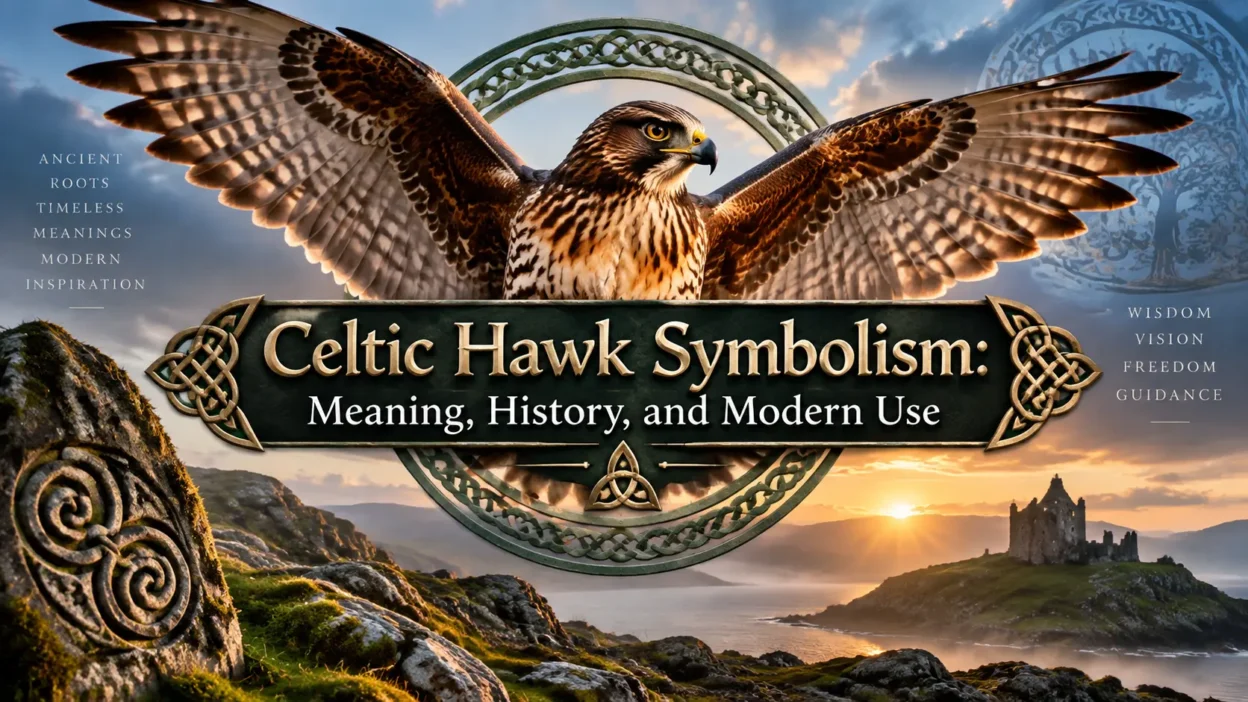
The hawk has long been viewed as a symbol of vision, awareness, independence, and connection between the physical and spiritual worlds. Celtic hawk symbolism reflects the bird’s role in Celtic traditions as a creature linked with wisdom, observation, transformation, and messages from the unseen world. While many modern interpretations come from Celtic mythology and folklore, today Americans often connect the hawk with personal growth, strength, and the ability to see situations clearly.
Hawks appear in stories, artwork, tattoos, jewelry, and spiritual discussions because of their impressive hunting skills and ability to soar high above the landscape. Their sharp eyesight and freedom of flight naturally created associations with insight and higher perspective.
Understanding the hawk’s symbolism requires looking at both its Celtic roots and how people interpret this bird today. The meaning has changed over time, moving from ancient folklore into modern expressions of identity, nature appreciation, and personal inspiration.
Quick Answer
Celtic hawk symbolism commonly represents vision, wisdom, independence, and awareness in modern American culture. In Celtic traditions, the hawk was connected with transformation, ancestral knowledge, and spiritual messages through myths and folklore.
TL;DR
- Hawks symbolize vision, wisdom, and clear perception.
- Celtic stories connect hawks with transformation.
- The bird represents independence and personal freedom.
- Americans use hawk imagery for identity and strength.
- Hawk tattoos often express awareness and courage.
- Misinterpretations sometimes confuse folklore with fact.
What the Hawk Represents in Celtic Tradition
In Celtic culture, the hawk was not simply a bird of prey. It represented observation, intelligence, and the ability to recognize hidden truths. Ancient Celtic communities closely watched animals and used their behaviors to understand the natural world.
The hawk’s ability to fly above the earth gave it a unique symbolic position. People associated its high viewpoint with seeing beyond ordinary concerns. A hawk could represent someone who looks at life from a wider perspective instead of focusing only on immediate problems.
The bird’s hunting ability also contributed to its meaning. A hawk waits patiently, watches carefully, and acts at the right moment. These qualities became connected with patience, strategy, and thoughtful decision-making.
Ancient Roots and Early Hawk Symbolism
Celtic symbolism developed from a close relationship with nature. Animals were often connected with stories about heroes, gods, ancestors, and supernatural events. Birds especially held important roles because their ability to move between earth and sky made them symbols of communication and transition.
The hawk appears in Celtic mythology through related birds of prey, especially the goshawk and other falcon-like birds. One famous example comes from the Irish mythological tradition involving the Hawk of Achill, a bird associated with extreme age, memory, and transformation.
In these stories, the hawk could represent survival across generations. It carried the idea that wisdom comes from experience and that nature preserves ancient knowledge.
The Hawk in Celtic Mythology and Folklore
Celtic myths often used animals to explain human qualities and life changes. The hawk was connected with knowledge, longevity, and transformation.
One important theme in Celtic folklore is shape-shifting. Some stories describe beings changing into animals to gain new abilities or represent different stages of existence. Birds of prey often appeared in these stories because they represented a higher viewpoint and connection with the sky.
The hawk’s symbolism was also connected with memory. Because the bird was seen as an old and observant creature, it became associated with lessons passed from one generation to another.
What Celtic Hawk Symbolism Means in the United States Today
In modern America, hawk symbolism is often understood through a combination of Native American, Celtic-inspired, and general nature symbolism. Many people see the hawk as a reminder to stay alert, trust personal judgment, and maintain independence.
People who choose hawk designs for tattoos, artwork, or jewelry often connect with ideas such as:
- personal freedom
- confidence
- overcoming challenges
- mental clarity
- connection with nature
Celtic-inspired hawk imagery is especially popular among people interested in ancestry, mythology, fantasy art, and historical symbols.
| Context | Meaning in the USA | Common Associations | Notes |
|---|---|---|---|
| Tattoos | Vision and independence | Strength, courage, identity | Often personalized |
| Jewelry | Protection and awareness | Nature connection | Celtic designs are common |
| Home Decor | Wisdom and freedom | Rustic, natural themes | Used as artistic symbolism |
| Personal Growth | Clear thinking | Change and confidence | Modern interpretation |
The Hawk as a Symbol of Vision and Awareness
One of the strongest meanings connected with the hawk is vision. Hawks have excellent eyesight, allowing them to detect movement from great distances. This natural ability influenced symbolic interpretations across many cultures.
In a symbolic sense, the hawk encourages people to look beyond surface details. It represents paying attention, recognizing opportunities, and understanding situations before acting.
For many Americans, the hawk serves as a reminder to slow down and observe carefully. Instead of reacting quickly, the hawk represents thoughtful awareness.
Connection Between Hawks and Transformation
Transformation is another important theme in Celtic hawk symbolism. Celtic traditions often viewed animals as guides through periods of change.
The hawk’s flight represents movement between different stages of life. It can symbolize leaving behind old habits, gaining a new perspective, or beginning a personal journey.
Modern interpretations often connect hawks with major life changes such as career shifts, personal growth, or emotional recovery. The symbol does not promise an easy path but represents awareness during times of transition.
Spiritual Meaning of Hawks in Celtic-Inspired Beliefs
Many people today interpret hawks spiritually, although these views vary widely. Some see the hawk as a messenger symbol because birds were traditionally associated with communication between earthly and spiritual realms.
In Celtic-inspired spirituality, the hawk may represent:
- guidance
- wisdom from ancestors
- awareness of hidden opportunities
- connection with nature
However, these meanings are modern interpretations rather than universal beliefs shared by all Celtic communities.
Hawk Symbolism in Celtic Art and Design
Hawks appear in modern Celtic-inspired artwork through detailed patterns, jewelry designs, and decorative pieces. Artists often combine hawks with Celtic knots, trees, circles, and other traditional-style elements.
A hawk within Celtic artwork may represent the connection between nature and human experience. The design often emphasizes balance, movement, and the relationship between the earth and sky.
Today, Celtic hawk designs are commonly found in:
- tattoos
- pendants
- paintings
- fantasy illustrations
- cultural artwork
Why People Choose Celtic Hawk Tattoos
Celtic hawk tattoos have become popular because they combine animal symbolism with historical-inspired design. People often select this imagery because it represents qualities they want to express.
Common meanings include:
- independence
- courage
- intelligence
- personal transformation
- family heritage
- connection to ancient traditions
The meaning depends on the person wearing the tattoo. Some choose it for Celtic ancestry, while others simply connect with the hawk’s natural characteristics.
Emotional and Psychological Meaning of the Hawk
Symbols often work because they represent qualities people admire or want to develop. The hawk can represent confidence, focus, and emotional strength.
Someone who identifies with the hawk may value independence and careful observation. The bird’s ability to remain calm while searching for opportunities can symbolize patience and emotional control.
In psychology, animal symbols can help people express parts of their identity. A hawk image may remind someone of resilience, personal goals, or the importance of maintaining perspective.
Celtic Hawk Symbolism Compared With Other Bird Symbols
Bird symbolism appears in many cultures, but each bird carries different associations.
The eagle is often linked with leadership and power. The owl commonly represents wisdom and mystery. The raven is frequently connected with prophecy and transformation.
The hawk is different because its symbolism focuses more on observation, precision, and awareness. Its meaning comes from the way it interacts with the natural world.
Cross-Cultural Meanings of Hawks
Although this article focuses on Celtic traditions, hawks appear as meaningful symbols in many cultures.
In ancient Egyptian culture, birds of prey were associated with divine protection and royalty. In some Native American traditions, hawks are respected as creatures connected with observation and messages, although meanings vary between nations and communities.
Across cultures, the hawk often represents qualities linked with the sky, vision, and awareness.
Common Misunderstandings About Celtic Hawk Symbolism
Modern discussions of symbolism sometimes combine different traditions together. A hawk meaning found online may mix Celtic folklore, Native American interpretations, and modern spiritual ideas.
It is important to remember that ancient Celtic communities did not have one single belief system. Different regions and time periods had different stories and interpretations.
The hawk is best understood as a symbol with many layers rather than a symbol with one fixed definition.
How Hawk Symbolism Has Changed Over Time
The meaning of the hawk has evolved from ancient folklore into modern personal expression.
In earlier Celtic traditions, hawks were connected with myths, transformation, and natural observation. Today, many people view hawks through themes of personal strength, freedom, and self-discovery.
Modern culture has expanded the symbol beyond mythology. Hawks now appear in branding, fashion, artwork, tattoos, and environmental discussions.
Modern Uses of Celtic Hawk Symbolism
Today, people encounter hawk symbolism in many forms:
- tattoo designs
- jewelry collections
- home artwork
- fantasy media
- nature photography
- cultural festivals
For some people, the hawk represents heritage. For others, it represents a personal reminder to stay focused and independent.
The symbol remains popular because its meanings connect with qualities many people value in modern life.
FAQs About Celtic Hawk Symbolism
What does Celtic hawk symbolism represent?
Celtic hawk symbolism represents vision, wisdom, awareness, and transformation. It is connected with the hawk’s ability to observe from above and its role in Celtic-inspired folklore.
Is the hawk a sacred animal in Celtic mythology?
The hawk held important symbolic meaning in Celtic stories, especially through themes of transformation and ancient knowledge. However, Celtic traditions varied by region, so interpretations were not identical everywhere.
What does a Celtic hawk tattoo mean?
A Celtic hawk tattoo often represents independence, courage, wisdom, and personal growth. The meaning depends on the individual’s connection with the design.
Does the hawk symbolize protection?
Many modern interpretations view the hawk as a protective symbol because of its awareness and watchful nature. This meaning comes from symbolic interpretation rather than one universal Celtic rule.
What is the spiritual meaning of seeing a hawk?
Some people interpret seeing a hawk as a reminder to pay attention, gain perspective, or trust their instincts. These interpretations are personal and differ between belief systems.
Is Celtic hawk symbolism the same as Native American hawk symbolism?
No. Both traditions may value hawks, but their meanings developed from different cultural backgrounds. Similar themes can appear without being the same tradition.
Why are hawks popular in modern symbolism?
Hawks remain popular because they represent qualities many people admire, including focus, freedom, intelligence, and confidence. Their natural abilities make them meaningful symbols in art and personal expression.
Conclusion
The hawk represents observation, independence, wisdom, and transformation across many symbolic traditions. In Celtic traditions, the bird became connected with ancient knowledge, change, and the ability to see beyond ordinary experiences.
Today, Celtic hawk symbolism continues to inspire people through tattoos, artwork, jewelry, and personal reflection. Its meaning has expanded from old folklore into a modern symbol of awareness, confidence, and connection with nature.
The hawk remains meaningful because it reflects a simple human desire: to understand life clearly and move forward with purpose.


