
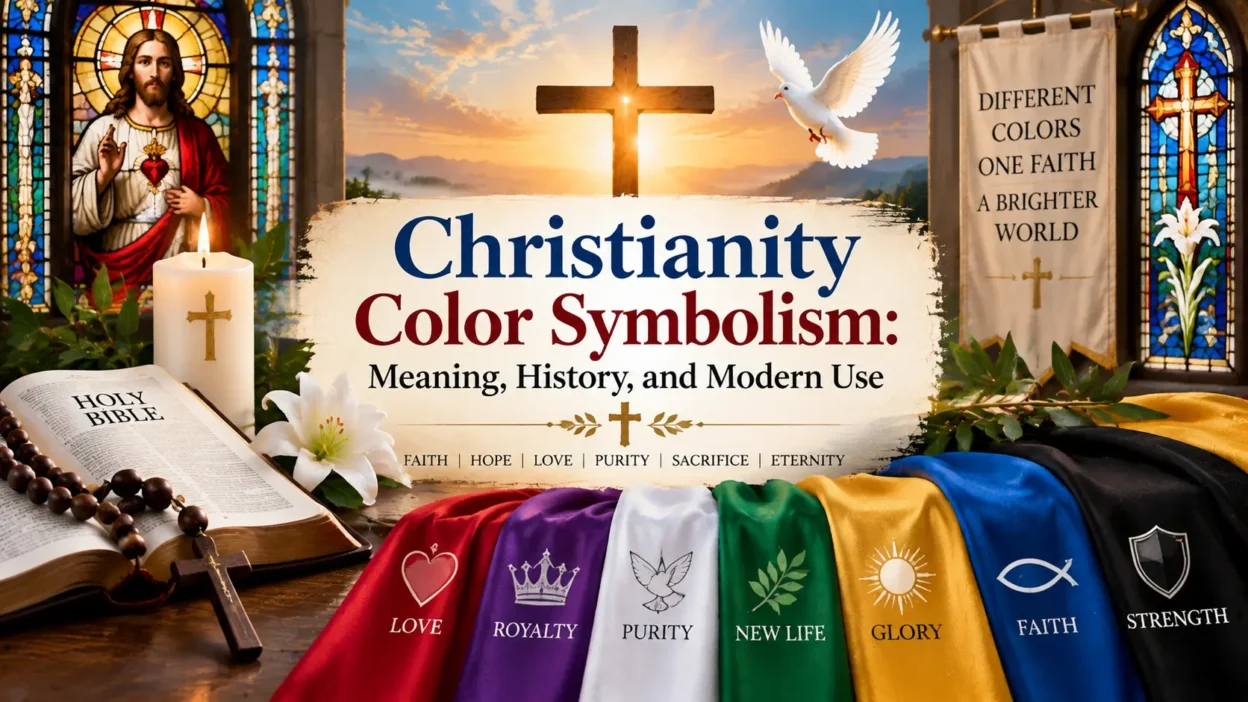
Colors have played an important role in Christian worship, art, and traditions for centuries. Christianity color symbolism explains how different colors communicate ideas about faith, spiritual themes, religious seasons, and important events in Christian life. From the white garments used during celebrations to the purple decorations seen during periods of reflection, colors help believers express meanings that words alone may not fully capture.
In the United States, Christian colors appear in churches, Christmas decorations, Easter celebrations, weddings, funerals, religious artwork, clothing, and personal expressions of faith. While specific meanings can vary between denominations, many Christian communities share similar associations based on biblical imagery, historical church traditions, and worship practices.
Understanding these colors reveals how Christianity uses visual language to connect believers with stories, emotions, and important moments in the faith.
Quick Answer
Christianity color symbolism commonly represents faith, worship, and spiritual themes through colors such as white for purity, red for sacrifice and the Holy Spirit, purple for reflection and royalty, and green for growth and renewal. Historically, these meanings developed through biblical imagery and church traditions that continue to influence Christian practices today.
TL;DR
- White represents purity, resurrection, and celebration.
- Red symbolizes sacrifice, love, and the Holy Spirit.
- Purple connects with repentance, royalty, and preparation.
- Green reflects spiritual growth and ordinary faith life.
- Black is often linked with mourning and solemn occasions.
- Christian colors appear in worship, art, holidays, and design.
Why Colors Matter in Christian Tradition
Christianity has always used symbols to communicate spiritual ideas. Early Christians relied heavily on images, objects, and visual elements to express beliefs, especially when many people could not read religious texts. Colors became part of this symbolic language because they could quickly create emotional and spiritual connections.
A color used inside a church is not simply decoration. It may mark a season in the Christian calendar, highlight a religious celebration, or remind worshippers of a particular teaching. For example, a church covered in white during Easter creates a different atmosphere from one decorated in purple during Lent.
However, Christian color meanings are not universal rules. Different denominations, cultures, and historical periods may interpret colors differently. The meanings commonly recognized today developed gradually through biblical references, European church traditions, and modern worship practices.
Biblical Foundations of Color Symbolism
The Bible mentions many colors in connection with objects, clothing, nature, and religious imagery. These references helped shape later Christian interpretations.
In biblical texts, colors often appear in descriptions of important items such as priestly garments, temple decorations, royal clothing, and visions of heaven. For example, purple appears in descriptions of royalty because purple dye was historically rare and expensive. White appears in connection with cleanliness, heavenly beings, and victory.
The Bible does not provide a complete official color system for Christianity. Instead, later Christian communities developed symbolic meanings by studying biblical themes and connecting them with worship traditions.
| Color | Meaning in Christianity | Common Associations | Notes |
|---|---|---|---|
| White | Purity and resurrection | Easter, baptism, celebration | Often used during joyful occasions |
| Red | Sacrifice and the Holy Spirit | Martyrdom, Pentecost | Represents both love and suffering |
| Purple | Repentance and royalty | Lent, Advent, preparation | Also linked with Christ’s kingship |
| Green | Growth and renewal | Ordinary Time, discipleship | Represents ongoing spiritual life |
| Black | Mourning and solemnity | Funerals, grief | Used differently among traditions |
White: Purity, Resurrection, and Celebration
White is one of the most recognized colors in Christian worship. It often represents purity, holiness, joy, and new beginnings.
In many Christian traditions, white is used during major celebrations such as Easter and Christmas. During Easter, white represents the resurrection of Jesus Christ and the victory of life over death. Churches may use white cloths, flowers, candles, and decorations to create a sense of celebration.
White is also connected with baptism. Many Christian communities associate white clothing with a person beginning a new spiritual life. The color reflects ideas of cleansing, renewal, and commitment to faith.
In American churches, white is commonly seen during weddings because it has become associated with purity and celebration. However, the modern wedding meaning of white clothing developed through cultural traditions as well as religious symbolism.
White also appears in Christian art. Angels, saints, and heavenly scenes are often depicted with white garments to communicate holiness or a connection with the divine.
Red: Sacrifice, Love, and the Holy Spirit
Red carries some of the strongest emotional meanings in Christian symbolism. It represents blood, sacrifice, love, and the presence of the Holy Spirit.
The connection between red and sacrifice comes from Christian teachings about the crucifixion of Jesus. Blood is central to many Christian interpretations of salvation, making red a reminder of suffering, devotion, and love.
Red is especially important during Pentecost, a celebration of the Holy Spirit descending upon the apostles. Churches often use red decorations during this period to represent spiritual fire and divine presence.
The color is also used when honoring Christian martyrs. Because many early believers faced persecution and death for their faith, red became associated with courage, commitment, and sacrifice.
In American Christian communities, red may appear during worship services, religious artwork, and church events connected with the Holy Spirit or remembrance of sacrifice.
Purple: Royalty, Repentance, and Preparation
Purple has a long connection with Christianity because of its historical association with kingship and authority.
In ancient times, purple dye was difficult and expensive to produce, making it a color often connected with rulers and wealth. Because Jesus is described in Christianity as the King of Kings, purple became linked with Christ’s authority and dignity.
At the same time, purple represents humility, reflection, and repentance. Many churches use purple during Lent, the season before Easter when Christians focus on prayer, sacrifice, and spiritual preparation.
Purple is also common during Advent in some traditions. During this period, it represents preparation for the coming of Christ.
In modern American churches, purple decorations often signal a reflective season rather than a celebration. The color encourages worshippers to think about faith, forgiveness, and spiritual renewal.
Christianity Color Symbolism: Meaning, History, and Modern Use
Green: Growth, Renewal, and Everyday Faith
Green is one of the most frequently used colors in Christian worship because it represents ongoing spiritual growth and the continuing journey of faith.
Many Christian traditions use green during Ordinary Time, the periods in the church calendar that are not focused on major celebrations such as Christmas or Easter. The color reflects the idea that faith is not limited to special events but develops through daily prayer, learning, service, and personal transformation.
The connection between green and growth comes naturally from the symbolism of plants and nature. A growing tree, a new leaf, or a field of crops can represent life, renewal, and the process of becoming stronger over time. Christian writers and artists have often used natural images to explain spiritual development.
In American churches, green is commonly seen for much of the year through altar cloths, banners, flowers, and seasonal decorations. It creates a visual reminder that believers continue developing their relationship with God beyond major religious holidays.
Green also appears in Christian schools, community programs, and faith-based organizations because it communicates hope, stability, and a commitment to long-term growth.
Black: Mourning, Sorrow, and Reflection
Black is often associated with grief, mourning, and solemn reflection in Christian traditions.
Unlike brighter colors used during celebrations, black communicates seriousness and remembrance. It may appear during funerals, memorial services, or specific periods of mourning. The color acknowledges human suffering, loss, and the reality of death.
In some Christian communities, black has historically been used during Good Friday services to reflect on the crucifixion of Jesus. The darkness of the color represents sorrow and the painful events leading to the resurrection.
However, black does not always represent only sadness. Some traditions also view it as a symbol of humility, simplicity, and spiritual seriousness. Religious leaders may wear black clothing as part of their daily attire to represent dedication and service.
In the United States, black is also influenced by broader cultural funeral traditions. Many Christians combine religious symbolism with local customs, making black a color connected with respect, remembrance, and dignity.
Blue: Mary, Heaven, and Spiritual Peace
Blue is not one of the earliest official Christian liturgical colors, but it has gained strong symbolic importance, especially in traditions connected with the Virgin Mary.
In many Christian artworks, Mary is shown wearing blue clothing. This association developed because blue pigments were historically valuable and were used to communicate honor, devotion, and importance. Over time, blue became strongly connected with Mary’s role as the mother of Jesus.
Blue also represents heaven, peace, faithfulness, and spiritual reflection. Because the sky is often viewed as a symbol of the heavens, blue naturally became connected with ideas of divine presence and hope.
In American Christian culture, blue appears in churches, religious artwork, Marian celebrations, and personal faith items. Some Christians choose blue decorations because they associate the color with calmness and trust.
The meaning of blue can differ between denominations. Some churches use it regularly, while others focus more on traditional liturgical colors such as white, red, purple, and green.
Gold: Glory, Divinity, and Heaven
Gold represents glory, holiness, celebration, and the greatness of God in many Christian traditions.
Because gold is rare and valuable, it has long been connected with kingship and honor. Christian artists have used gold backgrounds, halos, and decorations to express heavenly beauty and divine majesty.
Gold is especially common in religious artwork, church architecture, crosses, chalices, and ceremonial objects. Its bright appearance creates a connection with light, which is often used in Christianity as a symbol of God’s presence.
During major celebrations, some churches use gold instead of white or alongside white to emphasize joy and importance. It may appear during Christmas, Easter, or other significant religious occasions.
In American churches, gold is often seen in decorative elements rather than as a primary seasonal color. It communicates celebration, respect, and the sacred nature of worship spaces.
How Christian Color Symbolism Developed Through History
Christian color symbolism did not appear as a complete system in the earliest Christian communities. Instead, meanings developed gradually as churches created traditions for worship, art, and religious celebrations.
Early Christians used colors in artwork, clothing, and religious objects, but local customs varied widely. As Christianity became more organized, especially in Europe, churches began developing clearer patterns for using colors during the church calendar.
During the Middle Ages, churches increasingly used colors to mark different seasons and celebrations. Religious leaders connected colors with biblical stories, theological ideas, and worship experiences.
The development of stained glass windows also influenced Christian color symbolism. Medieval churches used colored glass to tell biblical stories visually. Bright reds, blues, golds, and whites helped communicate important religious themes to worshippers.
After the Protestant Reformation, different Christian groups approached symbolism differently. Some traditions continued using elaborate visual systems, while others simplified worship spaces and placed less emphasis on decorative symbolism.
Today, Christian color traditions continue to evolve. Many churches maintain historical practices while adapting them to modern worship styles.
Christianity Color Symbolism in the United States
In the United States, Christian colors appear across many areas of religious and cultural life.
Church buildings often use specific colors to reflect the Christian calendar. A visitor may notice different altar cloths, banners, flowers, or decorations depending on the season.
Common examples include:
- White during Easter and Christmas for celebration and joy
- Purple during Lent and Advent for preparation and reflection
- Red during Pentecost for the Holy Spirit
- Green during Ordinary Time for spiritual growth
- Black during memorial events for mourning and remembrance
Christian colors also appear outside traditional worship settings. Many Americans use religious colors in:
- wedding decorations
- Christmas displays
- Easter events
- religious artwork
- jewelry
- tattoos
- home decorations
- faith-based clothing
The meaning of a color often depends on personal belief. For one person, purple may represent repentance and prayer. For another, it may simply be a favorite color used in a religious setting.
Christian Colors in Holidays and Religious Celebrations
Major Christian holidays often have recognizable color associations.
Christmas
Christmas is commonly connected with:
- White: purity and celebration of Christ’s birth
- Red: love, sacrifice, and traditional Christmas decoration
- Green: everlasting life and renewal
In American culture, red and green dominate Christmas decorations. While many people associate these colors with the holiday season broadly, Christian communities may also connect them with religious themes.
Easter
Easter commonly uses:
- White: resurrection and victory
- Gold: celebration and glory
- Purple: preparation before Easter during Lent
Churches often shift from reflective colors before Easter to brighter colors during the celebration itself.
Pentecost
Pentecost is strongly associated with:
- Red: the Holy Spirit and spiritual fire
Many churches use red banners, clothing, and decorations to mark this event.
Modern Uses of Christian Colors in Personal Expression
Christian color symbolism continues beyond churches. Many people use religious colors to express identity, beliefs, and personal connections.
Tattoos
Religious tattoos often include colors with specific meanings. A red cross may represent sacrifice and devotion, while white elements may symbolize renewal or faith.
However, tattoo meanings are personal. A color used in a Christian tattoo may reflect individual experiences rather than a traditional interpretation.
Jewelry and Clothing
Cross necklaces, bracelets, and religious clothing often include symbolic colors. Blue, gold, white, and red are commonly chosen because of their associations with faith and spirituality.
Home Decor
Some Christians use colors in home spaces to create an atmosphere connected with prayer, peace, or celebration. Blue may create a feeling of calm, while gold may represent honor and celebration.
Common Misunderstandings About Christian Color Symbolism
Christian colors are sometimes presented as having fixed meanings that apply everywhere. In reality, interpretations can change depending on denomination, culture, and historical period.
For example, purple often represents repentance in Western Christian traditions, but colors may have different meanings in other religious or cultural settings.
Another misunderstanding is that every color mentioned in the Bible has an official Christian meaning. The Bible includes many colors, but later traditions developed most symbolic associations through interpretation and worship practices.
Colors also should not replace the central teachings of Christianity. They function as reminders and visual tools rather than independent sources of religious authority.
How Christianity Color Symbolism Continues to Change
Modern Christianity continues to adapt its use of colors.
Some churches maintain traditional seasonal systems, while others use colors more freely based on artistic style, community preferences, or worship themes.
Digital culture has also changed how religious colors appear. Christian organizations use colors in websites, social media graphics, event materials, and online communities to communicate messages visually.
Today, Christian color symbolism exists between tradition and personal expression. Historical meanings remain important, but individuals and communities continue adding new layers of interpretation.
Frequently Asked Questions
What is the most important color in Christianity?
There is no single most important color across all Christian traditions. White, red, purple, and green are among the most widely recognized because they are connected with major worship seasons and religious themes.
What does the color white mean in Christianity?
White commonly symbolizes purity, resurrection, holiness, and celebration. Many churches use white during Easter, Christmas, baptisms, and other joyful religious occasions.
What does red symbolize in Christianity?
Red represents sacrifice, love, and the Holy Spirit. It is often used during Pentecost and events connected with Christian martyrdom or remembrance.
Why is purple used during Lent?
Purple is used during Lent because it represents repentance, reflection, and preparation. It also connects with royalty and the belief that Jesus is the King.
Do all Christian churches use the same colors?
No. Different denominations and regions use colors differently. Some follow formal liturgical traditions, while others use fewer symbolic decorations.
What do Christian colors mean in tattoos?
Christian tattoo colors often represent personal faith, memories, or religious beliefs. Their meanings depend on the individual, although traditional associations may influence the design.
Is every color in the Bible symbolic?
Not always. Some colors in biblical passages are simply descriptions of objects, while others later became connected with symbolic interpretations through Christian tradition.
Conclusion
Christianity color symbolism shows how visual elements can communicate ideas about faith, worship, celebration, and reflection. Colors such as white, red, purple, green, black, blue, and gold developed meanings through biblical imagery, church traditions, and centuries of artistic expression.
In the United States, these colors continue to appear in churches, holidays, personal style, and religious artwork. Their meanings may vary between communities, but they remain a way for many Christians to connect visible symbols with spiritual ideas.
Understanding these colors provides a clearer view of how Christianity uses tradition, art, and visual language to express beliefs across generations.