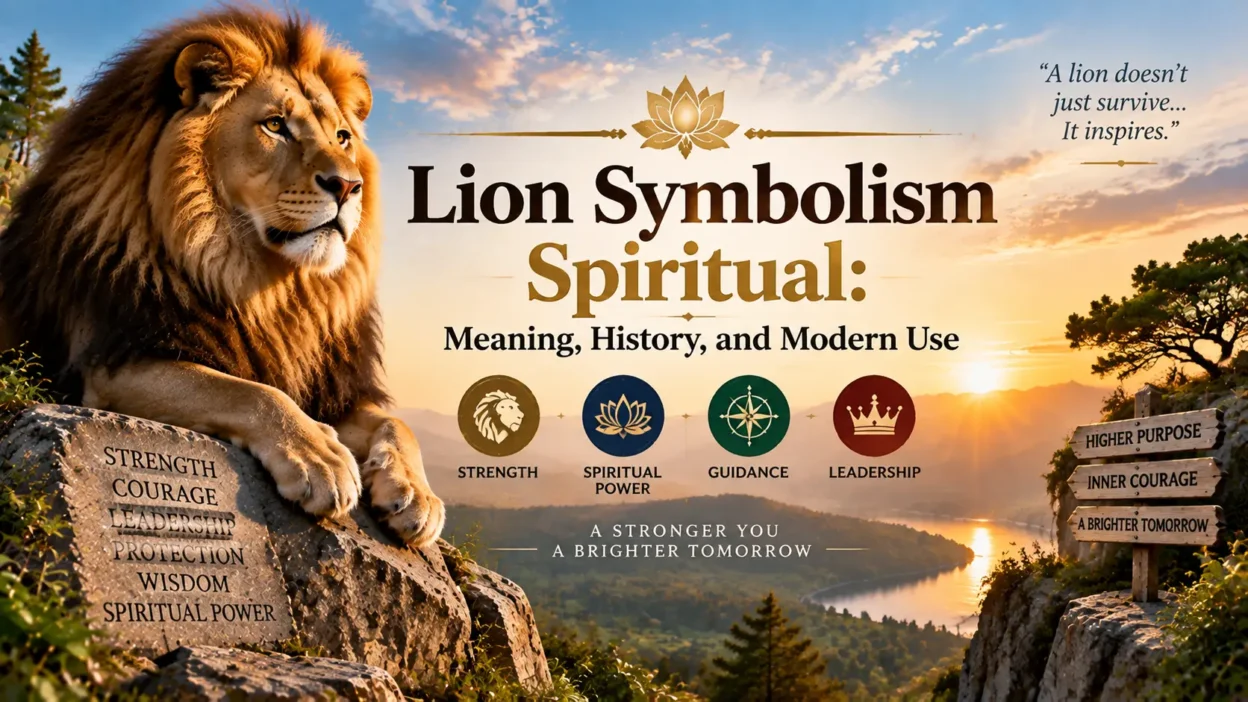
The lion has been recognized as a symbol of courage, authority, protection, and spiritual strength for thousands of years. Lion symbolism spiritual explores how this powerful animal represents inner confidence, leadership, faith, and personal transformation across different cultures and belief systems.
In modern American culture, lions appear in tattoos, jewelry, artwork, sports logos, home decoration, and religious designs. Many people connect with the lion because it represents qualities they value, such as bravery, resilience, loyalty, and the ability to overcome challenges.
Although lions are often associated with physical strength, their symbolic meaning goes beyond power. Across history, people have viewed the lion as a guardian, a leader, and a reminder of the courage needed to face difficult moments.
Quick Answer
Lion symbolism spiritual commonly represents courage, inner strength, protection, confidence, and leadership in modern American culture. Historically, lions have also symbolized divine authority, royalty, guardianship, and spiritual victory in many religious and cultural traditions.
TL;DR
- Lions symbolize courage, leadership, and personal strength.
- Ancient cultures linked lions with kings and protection.
- Christianity connects lions with faith and divine authority.
- Lion tattoos often represent resilience and transformation.
- Modern Americans use lions as identity symbols.
What Does a Lion Symbolize Spiritually?
The lion is one of the most powerful animal symbols because its natural qualities strongly influence human interpretation. Its size, roar, hunting ability, and protective behavior have made it a symbol of confidence and authority.
Spiritually, lions are often connected with:
- Courage: The ability to face fear and challenges.
- Strength: Physical, emotional, and mental resilience.
- Protection: Defending family, beliefs, and personal values.
- Leadership: Taking responsibility and guiding others.
- Wisdom: Using strength with control and understanding.
The spiritual meaning of a lion depends on the person and the culture interpreting it. For some people, a lion represents faith and divine protection. For others, it represents personal growth, confidence, or overcoming hardship.
Unlike simple symbols with one fixed meaning, the lion carries different messages depending on where and how it appears.
The Physical Image Behind Lion Symbolism
The lion’s appearance plays an important role in its symbolic meaning.
The male lion’s mane is often associated with dignity, maturity, and authority. Because the mane makes the animal appear larger and more impressive, many cultures connected it with leadership and status.
The lion’s roar represents communication, confidence, and presence. A roar can be heard across great distances, which is why people often connect lions with having a strong voice and standing up for oneself.
The lioness also carries important symbolism. Unlike the traditional focus on the male lion, lionesses represent:
- Protection
- Cooperation
- Family responsibility
- Strength through unity
Together, lions represent both individual power and community support.
Ancient Origins of Lion Symbolism
The symbolic importance of lions began thousands of years ago when ancient societies observed their role in nature.
Because lions were powerful predators, humans often viewed them as animals connected with authority and dominance. Ancient rulers used lion imagery to show strength, courage, and the ability to protect their people.
Ancient Egypt
In ancient Egypt, lions were connected with protection and divine power. Lion imagery appeared in temples, artwork, and religious objects.
Some Egyptian deities were represented with lion features, including figures connected with protection and destruction. The lion represented both the ability to defend and the power to overcome threats.
Egyptian rulers also used lion imagery to communicate authority and royal strength.
Mesopotamian Cultures
In ancient Mesopotamia, lions appeared frequently in art and royal symbolism.
Kings were sometimes shown hunting lions because defeating such a powerful animal represented leadership, bravery, and control over danger.
The lion became a visual symbol of a ruler’s ability to protect society.
Ancient Greece and Rome
Greek and Roman cultures also valued lion symbolism. Lions appeared in myths, sculptures, and decorative art.
They were often connected with heroism, bravery, and victory. The famous Nemean Lion from Greek mythology became a symbol of overcoming a seemingly impossible challenge.
Lion Symbolism in Religion and Spiritual Traditions
Religious traditions have given lions some of their most recognized symbolic meanings.
The Lion of Judah in Christianity
One of the best-known religious lion symbols is the Lion of Judah.
In Christianity, the Lion of Judah is associated with Jesus Christ and the biblical tribe of Judah. It represents:
- Spiritual authority
- Victory
- Strength through faith
- Divine protection
The lion appears in Christian art, churches, and religious discussions as a symbol connected with biblical heritage.
However, the meaning depends on context. A lion image in religious artwork may carry spiritual meaning, while the same image in fashion may simply represent confidence or personal identity.
Lions in Judaism
In Jewish tradition, the lion is connected with Judah, one of the twelve tribes of Israel. The association comes from biblical references that compare Judah to a lion.
Because of this connection, lions have appeared in Jewish art and cultural symbols for centuries.
Lions in Buddhism
In Buddhist traditions, lions are often connected with wisdom, confidence, and protection.
Lion statues are commonly placed near temples as guardians. The lion’s roar is sometimes used as a metaphor for teachings that spread truth and remove ignorance.
Hindu Traditions
In Hindu traditions, lions appear in connection with divine protection and courage.
The deity Narasimha, a figure with a lion-like form, represents protection and the defeat of evil forces. This tradition highlights the lion as a symbol of justice and divine strength.
Lion Symbolism in American Culture
In the United States, lion symbolism has developed beyond ancient and religious meanings.
Many Americans interpret lions through personal values such as:
- Determination
- Independence
- Achievement
- Confidence
- Family protection
Lions frequently appear in:
- Sports team logos
- Military-style designs
- Business branding
- Tattoos
- Jewelry
- Clothing
- Home artwork
For many people, the lion represents the qualities they want to show to the world. A person may choose a lion tattoo after overcoming a difficult period, marking a personal achievement or expressing confidence.
The lion also appears in American entertainment and popular culture, where it is often used to represent heroes, leaders, or powerful characters.
Lion Symbolism in Tattoos and Personal Identity
Lion tattoos are among the most popular animal designs because they allow people to express personal stories.
Common meanings include:
| Tattoo Style | Symbolic Meaning |
|---|---|
| Roaring Lion | Confidence, courage, defending beliefs |
| Lion With Crown | Leadership, ambition, authority |
| Lion Family | Protection and loyalty |
| Lion and Lioness | Partnership and balance |
| Lion With Flowers | Strength combined with beauty |
A lion tattoo does not have one universal meaning. The design, placement, and personal story behind it determine its significance.
Some people choose lions because they identify with leadership qualities. Others choose them as reminders of survival, healing, or personal growth.
Lion Symbolism in Dreams and Personal Reflection
Lions frequently appear in dreams, and many people look for symbolic meanings behind these experiences. Dream interpretation is personal and depends on an individual’s emotions, memories, and life situation rather than a universal rule.
In symbolic interpretations, a lion in a dream may represent:
- A need for confidence during a difficult situation
- A desire to take control of a personal challenge
- Protection from a powerful influence
- A reminder to use courage wisely
The behavior of the lion often changes the possible interpretation. A calm lion may suggest confidence and emotional control, while an aggressive lion may reflect feelings of fear, conflict, or pressure.
For some people, dreaming of a lion represents discovering hidden strength. For others, it may symbolize facing an intimidating situation in everyday life.
The important factor is not the lion alone but the relationship between the dreamer and the symbol.
The Emotional and Psychological Meaning of Lions
From a psychological perspective, animal symbols often represent human qualities people admire or struggle with.
The lion commonly represents the desire to feel:
- Strong during uncertainty
- Confident when making decisions
- Respected by others
- Capable of protecting loved ones
The lion’s image can act as a mental reminder of personal values. Someone recovering from a difficult experience may connect with a lion because it represents survival and rebuilding.
The symbol also reflects a balance between strength and responsibility. A lion is powerful, but it also lives within a social structure where cooperation matters.
This balance explains why lions are often viewed as symbols of mature leadership rather than simple dominance.
Lion Symbolism in Leadership and Authority
For centuries, lions have been connected with rulers, leaders, and people in positions of responsibility.
This association developed because lions were viewed as animals that controlled their environment and protected their territory.
Today, lion imagery is often used by:
- Companies that want to communicate confidence
- Sports teams seeking a competitive identity
- Organizations emphasizing courage and teamwork
- Individuals expressing leadership qualities
However, true leadership symbolism is not only about being strong. Many modern interpretations focus on qualities such as:
- Responsibility
- Fair decision-making
- Protection of others
- Emotional discipline
A lion symbol can represent a leader who uses strength carefully rather than aggressively.
Lion Symbolism in Colors
The color and style of a lion image can influence its meaning.
Different artistic versions create different emotional associations.
| Lion Appearance | Common Symbolic Meaning | Modern Associations |
|---|---|---|
| Golden Lion | Achievement and confidence | Success, ambition |
| White Lion | Purity and uniqueness | Spiritual reflection, rarity |
| Black Lion | Mystery and strength | Independence, bold identity |
| Red Lion | Passion and courage | Energy, determination |
| Lion With Blue Elements | Wisdom and calm leadership | Balance and trust |
These meanings are cultural interpretations rather than fixed rules. Artists and individuals often create their own meanings based on personal experiences.
Lion Symbolism in Home Decor and Art
Lion imagery appears in many homes because people associate it with protection, elegance, and confidence.
Decorative lion statues, paintings, and sculptures are often used to create a sense of strength and stability.
In interior design, lions may communicate:
- Luxury
- Traditional style
- Confidence
- Security
A lion placed near an entrance may be interpreted as a guardian symbol. In some cultures, statues of lions are used near buildings because they represent protection.
Modern American home design often uses lion artwork as a statement piece rather than a religious symbol. The meaning usually depends on the homeowner’s personal connection with the image.
Lion Symbolism in Popular Culture
Lions have a strong presence in American entertainment, especially in stories about heroes, kings, and transformation.
The lion often appears as a character or symbol representing:
- A journey toward maturity
- Discovering personal courage
- Protecting others
- Accepting responsibility
One well-known example is the use of lions in family entertainment, where they often represent leadership, growth, and the relationship between generations.
Sports organizations also use lions because the animal communicates competitiveness, confidence, and teamwork.
The popularity of lion imagery in movies, books, and branding shows how strongly people connect the animal with human qualities.
Positive and Negative Interpretations of Lion Symbolism
Although lions are usually associated with positive qualities, the symbol can have different interpretations.
Positive meanings include:
- Courage
- Protection
- Wisdom
- Confidence
- Leadership
- Loyalty
However, lions can also represent negative qualities when viewed differently:
- Pride becoming arrogance
- Power becoming control
- Strength becoming aggression
- Leadership becoming domination
This dual meaning appears in many symbolic traditions. A lion’s strength can protect others, but uncontrolled power can create harm.
Many modern interpretations focus on balance: having confidence without losing humility.
Common Misunderstandings About Lion Symbolism
Because lions are popular symbols, their meanings are sometimes simplified or misunderstood.
One common misunderstanding is that every lion image represents royalty or superiority. While lions have been connected with kingship, many modern uses focus on personal courage and identity instead.
Another misunderstanding is that lion symbolism has one universal meaning. In reality, interpretations differ across religions, cultures, and personal experiences.
A lion tattoo, for example, may represent faith for one person, family protection for another, and personal achievement for someone else.
The meaning comes from the relationship between the symbol and the person using it.
How Lion Symbolism Has Changed Over Time
The meaning of lions has evolved as societies changed.
In ancient civilizations, lions were strongly connected with rulers, gods, and protection. The symbol often represented external power and authority.
In modern societies, the lion has become more personal. Many people use it to represent internal qualities such as:
- Self-confidence
- Emotional strength
- Personal growth
- Courage during change
The shift shows how symbols adapt to human needs. The lion moved from representing mainly kings and institutions to representing individual identity and personal journeys.
Lion Symbolism Compared With Other Animal Symbols
Different animals represent different human qualities. Comparing symbols helps explain why lions remain popular.
| Animal Symbol | Common Meaning | Difference From Lion Symbolism |
|---|---|---|
| Eagle | Freedom and vision | Focuses more on perspective and independence |
| Wolf | Loyalty and teamwork | Emphasizes community and instincts |
| Bear | Protection and endurance | Represents patience and survival |
| Elephant | Wisdom and memory | Highlights experience and stability |
| Lion | Courage and leadership | Combines strength with authority |
The lion stands out because it combines ideas of bravery, protection, and leadership in one symbol.
Lion Symbolism in Modern Personal Growth
Many people today use lion symbolism as a reminder of personal development.
A lion image may represent a commitment to:
- Becoming more confident
- Facing fears
- Building discipline
- Protecting personal values
- Accepting responsibility
Unlike symbols that focus only on achievement, the lion often represents the process of becoming stronger.
For someone going through a major life change, a lion may serve as a visual reminder to remain courageous and focused.
Common Questions About Lion Symbolism Spiritual
What does a lion symbolize spiritually?
A lion spiritually represents courage, protection, confidence, leadership, and inner strength. Many traditions view the lion as a symbol of overcoming challenges, defending what matters, and developing personal courage.
The exact meaning depends on cultural background and personal beliefs. In religious contexts, lions may represent divine authority, while in personal symbolism they often represent resilience and self-confidence.
What does a lion tattoo symbolize?
A lion tattoo commonly symbolizes strength, bravery, leadership, and personal transformation. Many people choose lion tattoos to represent overcoming difficult experiences, protecting family, or expressing confidence.
The meaning can change depending on the design. A crowned lion may represent leadership, while a lion with a family may symbolize loyalty and protection.
Is the lion a religious symbol?
Yes, lions have important roles in several religious traditions. In Christianity, the Lion of Judah represents Jesus Christ and spiritual authority. In Judaism, the lion is connected with the tribe of Judah, while in some Buddhist and Hindu traditions, lions represent protection and divine strength.
However, a lion is not limited to religious meanings. Many people use lion imagery for cultural, artistic, or personal reasons.
What does a lion represent in Christianity?
In Christianity, the lion is often associated with the Lion of Judah, representing Jesus Christ, victory, courage, and spiritual authority.
The lion can also symbolize qualities such as faith, protection, and overcoming evil. Christian interpretations usually depend on the specific biblical reference or artistic context.
Are lions a symbol of good luck?
In some cultures, lions are viewed as protective symbols that bring strength and positive energy. Lion statues and artwork are sometimes used as guardians for buildings or personal spaces.
However, lions are not universally considered lucky symbols. Their meaning depends on cultural beliefs and individual interpretation.
What does a roaring lion symbolize?
A roaring lion often symbolizes confidence, authority, courage, and having a strong voice. Because a lion’s roar can travel over long distances, it is commonly interpreted as a symbol of presence and communication.
In personal symbolism, a roaring lion may represent standing up for yourself or expressing your truth.
What is the difference between a lion and lioness symbolically?
A lion is often associated with leadership, courage, and authority, while a lioness is commonly linked with protection, family, cooperation, and nurturing strength.
Both represent power, but they highlight different forms of strength. The lion often represents individual confidence, while the lioness emphasizes community and responsibility.
Conclusion
The meaning of lion symbolism spiritual is built around ideas of courage, protection, leadership, and inner strength. Across ancient civilizations, religious traditions, and modern American culture, lions have represented the ability to face challenges with confidence and responsibility.
Today, people connect with lion symbols in many ways. A tattoo may represent personal growth, a piece of artwork may express confidence, and a religious image may communicate faith and protection. The meaning depends on the person, culture, and situation.
The lion remains a meaningful symbol because it represents more than power. It reflects the human desire to become stronger, protect what matters, and approach life with courage and purpose.


