
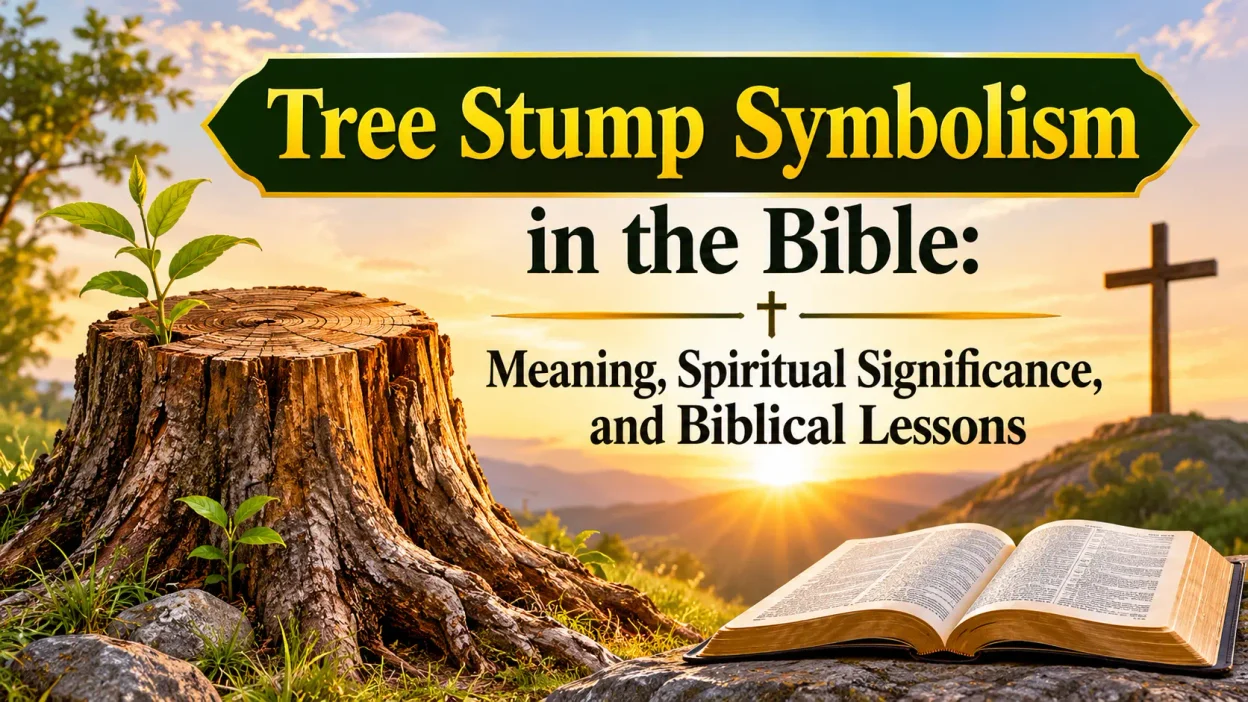
Trees hold deep symbolic meaning throughout the Bible. They often represent life, strength, prosperity, righteousness, and spiritual growth. But what about a tree stump? Unlike a flourishing tree, a stump is what remains after a tree has been cut down. It can represent loss, judgment, destruction, and the end of something once strong.
However, biblical imagery also gives the tree stump a more hopeful meaning. A stump can remain alive, preserve the possibility of new growth, and remind readers that an apparent ending does not always mean permanent destruction.
One of the most important biblical passages involving a tree stump appears in Isaiah 11:1, which describes a shoot growing from the stump of Jesse. This image points toward hope, restoration, and the coming of a righteous ruler.
In this article, we will explore tree stump symbolism in the Bible, its spiritual meanings, important biblical references, and the lessons it offers for faith and everyday life.
What Does a Tree Stump Symbolize in the Bible?
In biblical symbolism, a tree stump can represent several ideas:
- Judgment and destruction: A powerful tree being cut down can symbolize the fall of a proud person, kingdom, or nation.
- Humility: A tree stump can represent the removal of pride, power, and self-importance.
- Hope and restoration: New growth from an old stump can symbolize renewal after hardship.
- God’s faithfulness: The remaining stump can suggest that God’s promises continue even when circumstances look hopeless.
- A new beginning: A shoot emerging from a stump can represent unexpected opportunities and fresh spiritual growth.
The meaning depends on the biblical passage. A stump in a judgment scene may represent the downfall of something powerful, while a stump that produces new growth can represent hope and restoration.
1. A Tree Stump Symbolizes Judgment and Destruction
One of the clearest biblical associations of a cut-down tree is judgment. In Scripture, trees sometimes represent kings, kingdoms, or powerful individuals. When such a tree is cut down, the image can communicate the loss of authority and the consequences of pride.
In Daniel 4, King Nebuchadnezzar dreams of a great tree that is cut down. Its stump and roots are left in the ground, bound with iron and bronze.
The dream is interpreted as a message about Nebuchadnezzar’s downfall. Because of his pride, he will lose his royal position and live like an animal for a period of time. However, the preservation of the stump points toward the possibility of restoration.
This passage shows that a cut-down tree can represent:
- The loss of power and status
- The consequences of arrogance
- Divine judgment
- The temporary nature of earthly authority
The image also reminds readers that human power is not permanent and that pride can lead to a person’s downfall.
2. The Stump of Jesse Symbolizes Hope and Restoration
One of the most meaningful references to a stump appears in Isaiah 11:1:
“A shoot will come up from the stump of Jesse; from his roots a Branch will bear fruit.”
This verse presents a powerful image of new life emerging from something that appears to have been cut down.
Jesse was the father of King David, and his family line was associated with Israel’s royal history. The image of a stump suggests that the Davidic dynasty had experienced decline and appeared almost lifeless.
Yet Isaiah describes a new shoot growing from it.
In Christian interpretation, this prophecy is understood as pointing toward Jesus Christ, who comes from the lineage of David. The image communicates that God’s promise of a righteous king remains alive despite difficult circumstances.
The stump of Jesse can therefore symbolize:
- Hope after loss
- The continuation of God’s promises
- Restoration after a period of decline
- New life from an unexpected place
- The arrival of a righteous ruler
This is perhaps the strongest biblical foundation for understanding a tree stump as a symbol of hope.
3. A Tree Stump Represents Humility
A large, flourishing tree can represent strength, influence, and greatness. When it is cut down, only a low stump remains.
This change in appearance can symbolize humility and the removal of pride.
Daniel 4 provides an example through Nebuchadnezzar’s experience. His impressive position as king is taken away, reminding him that human greatness does not make anyone equal to God.
The story teaches that:
- Pride can lead to downfall.
- Human authority has limits.
- Success should encourage gratitude rather than arrogance.
- True greatness requires humility before God.
In this sense, a tree stump can serve as a reminder that worldly achievements are temporary.
4. A Tree Stump Symbolizes God’s Faithfulness
A stump may look lifeless, but it can preserve the roots of a tree. Under suitable conditions, new growth may emerge.
This natural image connects meaningfully with biblical themes of faithfulness and restoration.
The stump of Jesse in Isaiah 11:1 illustrates this idea. Although the royal family line appeared weakened, God’s promise had not disappeared.
The passage encourages readers to understand that difficult circumstances do not necessarily mean that God’s purposes have ended.
A tree stump can therefore remind believers that:
- God’s promises are not dependent on appearances.
- Hope can remain during difficult seasons.
- A period of loss does not always mean the end.
- Restoration may come in an unexpected way.
The stump itself is not presented as a magical object. Its meaning comes from the biblical message of God’s continuing faithfulness.
5. A Tree Stump Represents New Beginnings
A tree stump is often associated with an ending because it remains after a tree has been cut down. Yet the biblical image of a new shoot growing from Jesse’s stump gives it another dimension.
It can represent a new beginning after disappointment, failure, or a difficult season.
This symbolism encourages believers to consider that an ending may create space for something new.
For example, the image can be applied spiritually to:
- Beginning again after personal failure
- Rebuilding faith after disappointment
- Finding hope after losing something important
- Growing through challenging experiences
- Trusting God during uncertain periods
These are devotional applications of the biblical imagery rather than separate promises that every difficult situation will have a particular outcome.
6. A Tree Stump Symbolizes the Survival of a Remnant
The Bible frequently describes a remnant: a remaining group of people through whom God continues His purposes.
The imagery of a stump can help illustrate this theme. Although a tree has been cut down, something remains. That remaining part can become the starting point for future growth.
Isaiah’s prophecy about the stump of Jesse connects with the broader biblical theme that God’s purposes continue even when His people experience judgment, loss, or decline.
A stump may therefore represent:
- What remains after destruction
- The preservation of hope
- Continuity through difficult times
- The possibility of future restoration
This meaning is especially relevant when considering the biblical themes of renewal and God’s faithfulness.
7. A Tree Stump Represents the End of Earthly Power
The Bible sometimes uses trees to describe powerful rulers and nations. Their height, branches, and fruit can represent influence, prosperity, and authority.
When a tree is cut down, its destruction can symbolize the end of that power.
Daniel 4 is particularly important because Nebuchadnezzar’s tree dream describes the removal of his greatness. The stump remains, but his former glory is gone.
This imagery reminds readers that:
- Political power is temporary.
- Wealth and influence do not guarantee security.
- Human achievements cannot replace dependence on God.
- Every person remains accountable to divine authority.
The stump can thus represent the remains of something that once appeared powerful and permanent.
Important Bible Verses Related to Tree Stump Symbolism
The Bible does not assign one universal meaning to every tree stump. However, several passages provide important context for understanding its symbolism.
| Bible VerseMain MessageConnection to Tree Stump Symbolism | ||
|---|---|---|
| Isaiah 11:1 | A shoot grows from Jesse’s stump. | Hope, renewal, and the promised Messiah |
| Daniel 4:10–17 | A great tree is cut down. | Judgment and the downfall of pride |
| Daniel 4:23–26 | The stump and roots remain. | Preserved hope and eventual restoration |
| Job 14:7–9 | A tree can sprout again after being cut down. | Possibility of renewed life |
| Isaiah 6:13 | A stump remains after destruction. | Judgment and the preservation of a holy seed |
Job 14:7–9 — Hope After Being Cut Down
Job describes how a tree can have hope even after being cut down. Its stump may produce shoots again when it encounters water.
This passage uses nature to reflect on the difference between human mortality and the possibility of renewed life in the natural world.
It is not specifically a prophecy about the Messiah, but it offers a meaningful image of resilience and new growth.
Isaiah 6:13 — A Stump and a Holy Seed
Isaiah 6:13 describes a devastated land in which a stump remains, with the holy seed associated with that remaining stump.
The passage appears in a context of judgment and purification. Even after severe destruction, the image of something remaining suggests that the story is not entirely over.
It connects the stump with both judgment and the preservation of a future hope.
Spiritual Lessons From Tree Stump Symbolism in the Bible
The biblical imagery of a tree stump offers several lessons that believers can reflect on in everyday life.
1. Never Confuse an Ending With Complete Defeat
The stump of Jesse reminds readers that something can appear finished while hope remains. A difficult chapter does not necessarily define the rest of a person’s life.
2. Stay Humble During Times of Success
Nebuchadnezzar’s story demonstrates the danger of pride. The tree that once represented his greatness was cut down, reminding him that his authority was not permanent.
3. Trust God’s Promises During Difficult Seasons
Isaiah 11:1 presents new growth from an apparently lifeless stump. This image encourages believers to remain faithful even when they cannot see what may happen next.
4. Allow Difficult Experiences to Teach You
A stump can remind people of what has been lost, but it can also encourage reflection, patience, and personal growth.
5. Remember That Restoration May Look Different From the Past
A new shoot does not recreate the original tree exactly as it was. Similarly, restoration in life may involve a new direction rather than a return to previous circumstances.
Is a Tree Stump a Good or Bad Sign in the Bible?
A tree stump is not automatically a good or bad sign in biblical symbolism. Its meaning depends on the context.
When a tree is cut down as an image of judgment, the stump can represent loss, humiliation, and the end of earthly power.
When the stump remains as the source of new growth, it can represent hope, restoration, and the continuation of God’s promises.
For example, Daniel 4 uses the cut-down tree to describe Nebuchadnezzar’s humiliation, while Isaiah 11:1 uses Jesse’s stump to introduce an image of hope and the coming Messiah.
Therefore, the biblical message is not simply that a stump is positive or negative. It can communicate both the consequences of destruction and the possibility of renewal.
What Does a Tree Stump Mean in a Christian Spiritual Interpretation?
In Christian reflection, a tree stump can be understood as a reminder of God’s ability to bring hope out of circumstances that appear hopeless.
The stump of Jesse is especially important because Christians interpret Isaiah 11:1 as a prophecy fulfilled in Jesus Christ.
From this perspective, the image can encourage believers to:
- Trust God’s plan when life feels uncertain.
- Remain hopeful after disappointment.
- Practice humility instead of pride.
- Recognize that spiritual growth can follow difficult experiences.
- Remember the Christian message of redemption and restoration.
These interpretations arise from biblical themes. They should not be confused with claims that seeing a real tree stump is a supernatural message or prediction.
Frequently Asked Questions About Tree Stump Symbolism in the Bible
1. What does a tree stump symbolize in the Bible?
A tree stump can symbolize judgment, destruction, humility, survival, hope, and restoration. Its meaning depends on the passage in which it appears.
2. What is the stump of Jesse in the Bible?
The stump of Jesse appears in Isaiah 11:1. It represents the weakened Davidic royal line from which a new shoot will emerge. Christians traditionally understand this prophecy as referring to Jesus Christ.
3. Does a tree stump symbolize new beginnings in the Bible?
Yes, particularly through Isaiah 11:1 and the image of a shoot growing from Jesse’s stump. It represents hope and renewal emerging after a period of decline.
4. What does the tree stump in Daniel 4 mean?
In Daniel 4, the stump represents what remains after Nebuchadnezzar’s power is removed. Its preservation also points toward the restoration of his kingdom after he acknowledges God’s authority.
5. Does a tree stump represent God’s judgment?
It can. In passages such as Daniel 4 and Isaiah 6:13, the cutting down of a tree is associated with judgment, destruction, and the removal of pride or corruption.
6. What does a stump with new growth symbolize spiritually?
It can represent resilience, hope, renewal, and the possibility of restoration. In Christian reflection, it may remind believers that difficult circumstances do not necessarily mean that God’s purposes have ended.
7. What does Isaiah 11:1 teach about the stump of Jesse?
Isaiah 11:1 teaches that a new shoot will grow from Jesse’s stump. The verse presents hope for the continuation of the Davidic line and describes a righteous ruler who will bring justice and peace.
8. Is a tree stump a symbol of Jesus in Christianity?
The stump itself is not universally a direct symbol of Jesus. However, the shoot growing from Jesse’s stump in Isaiah 11:1 is traditionally understood by Christians as a prophecy pointing toward Jesus, the descendant of David.
9. What does Job 14:7–9 say about a tree stump?
Job describes a tree that can grow again after being cut down. Even when its stump appears old, water may cause new shoots to emerge. The passage uses this natural process as an image in a reflection on life and death.
10. Does seeing a tree stump mean God is sending a message?
The Bible does not teach that seeing an ordinary tree stump is automatically a supernatural message from God. Christians may use its biblical imagery as a personal reminder of humility, hope, and restoration, but should avoid treating every encounter as a divine prediction.
Conclusion
Tree stump symbolism in the Bible carries a meaningful combination of judgment and hope. A cut-down tree can represent the fall of pride, the loss of power, and the consequences of human wrongdoing. At the same time, a surviving stump can become an image of endurance and restoration.
The stump of Jesse in Isaiah 11:1 offers the clearest example of this hopeful meaning. From a seemingly lifeless remnant, a new shoot emerges, pointing in Christian interpretation toward Jesus Christ and the fulfillment of God’s promises.
Ultimately, the biblical image of a tree stump reminds readers that destruction does not always mean the end of the story. Even after loss and hardship, hope and renewal remain important themes in the message of Scripture.


