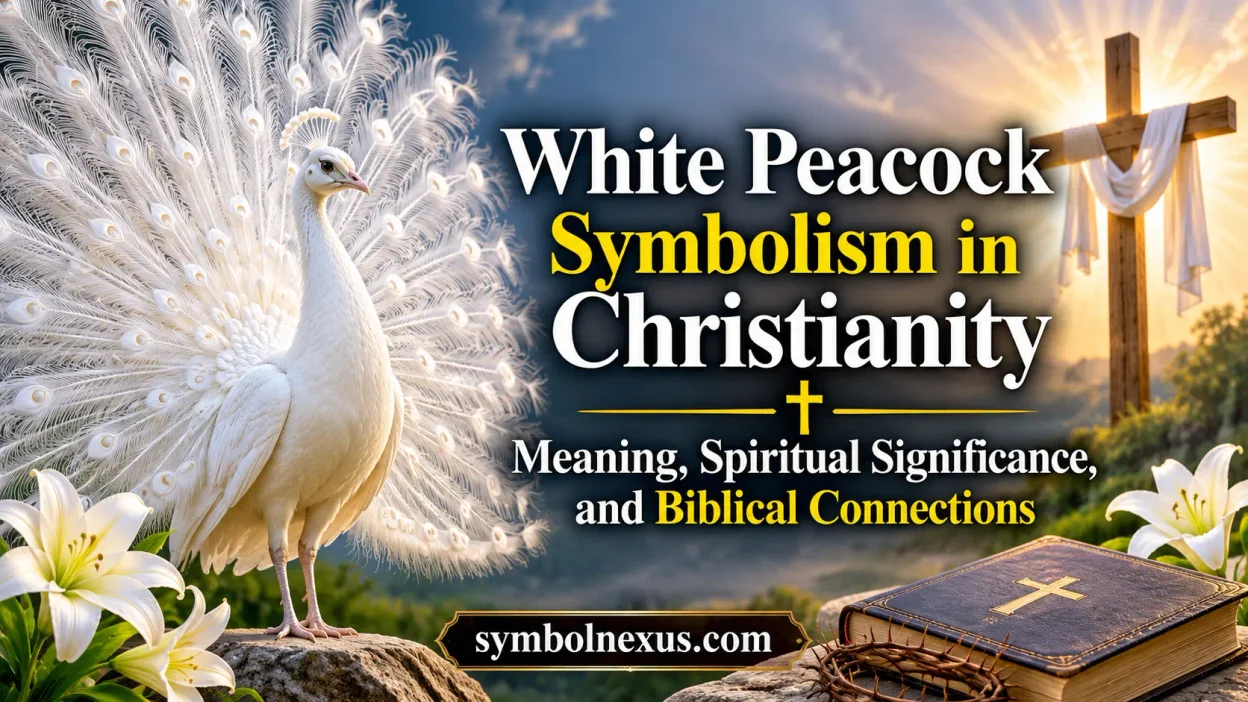
The white peacock is one of nature’s most striking birds. Its brilliant white feathers, graceful appearance, and impressive fan-shaped tail have made it a powerful symbol of beauty, purity, and spiritual mystery. In Christian-inspired art and symbolism, the peacock has also been associated with immortality, resurrection, and eternal life.
Although the Bible does not specifically describe a white peacock or assign it a direct Christian meaning, the bird has an interesting place in the history of Christian art. Early Christians adopted peacock imagery to express ideas about life beyond death and the hope of resurrection.
The white color adds another layer of symbolic interpretation. In Christian tradition, white is frequently associated with purity, holiness, righteousness, and divine glory. When these associations are combined with the peacock’s historical symbolism, the white peacock becomes a meaningful image of spiritual renewal and the promise of eternal life.
In this article, we will explore white peacock symbolism in Christianity, its spiritual meanings, historical associations, biblical connections, and lessons for Christian reflection.
What Does a White Peacock Symbolize in Christianity?
In Christian-inspired symbolism, a white peacock can represent several spiritual ideas:
- Purity and holiness: Its white feathers can symbolize spiritual cleanliness, innocence, and righteousness.
- Resurrection: Peacock imagery in early Christian art became associated with the hope of life after death.
- Immortality: The traditional belief that peacock flesh did not decay helped establish the bird as a symbol of eternal life.
- Divine beauty: Its impressive appearance can represent the beauty and wonder of God’s creation.
- Spiritual renewal: Its connection with resurrection and transformation can suggest a new beginning through faith.
- Glory and majesty: Its elegant appearance can symbolize heavenly splendor and the greatness of God.
These meanings combine Christian associations of the peacock with the traditional symbolism of the color white. They are symbolic interpretations rather than a specific biblical definition of a white peacock.
1. Purity and Holiness
One of the most recognizable Christian meanings associated with the white peacock is purity.
Throughout Christian art and tradition, white is frequently used to represent holiness, righteousness, innocence, and spiritual cleanliness. The color appears in depictions of angels, saints, heavenly garments, and other sacred imagery.
A white peacock brings these associations together through its completely white plumage.
Its appearance can serve as a visual reminder of:
- A pure heart and sincere faith
- Spiritual cleanliness
- Innocence and righteousness
- A desire to live according to God’s teachings
- The importance of inner goodness
In Christian reflection, the white peacock may encourage believers to focus on spiritual character rather than outward appearance.
A relevant biblical passage is Psalm 51:10, where David asks God to create a clean heart and renew a steadfast spirit within him. This verse connects naturally with the symbolism of purity and spiritual renewal.
2. Resurrection and Eternal Life
The peacock has a long history as a symbol of immortality and resurrection in Christian art.
In ancient times, people believed that peacock flesh did not decay after death. Although this belief is scientifically inaccurate, it influenced the bird’s symbolic meaning.
Early Christians adopted the peacock as an image of eternal life and the hope of resurrection. Its presence in religious mosaics, paintings, and decorative designs helped communicate the belief that death is not the final end.
For Christians, this symbolism connects with the resurrection of Jesus Christ and the promise of eternal life.
Important biblical connections include:
- John 11:25: Jesus describes himself as the resurrection and the life.
- 1 Corinthians 15:20–22: Paul explains the resurrection of Christ and the hope of resurrection for believers.
- John 3:16: The verse describes God’s promise of eternal life through faith in Jesus Christ.
The white peacock can therefore serve as a symbolic reminder of resurrection, hope, and life beyond death.
3. Immortality and the Promise of Eternal Life
The peacock’s association with immortality developed from ancient beliefs about its body and feathers.
Because people once believed that the bird’s flesh resisted decay, it became a symbol of life that continues beyond physical death.
Christian artists found this symbolism useful because it reflected an important teaching of the faith: eternal life comes through Jesus Christ.
The white peacock can consequently represent:
- The hope of eternal life
- Victory over death through Christ
- Faith in God’s promises
- The continuity of spiritual life
- Hope beyond earthly suffering
It is important to distinguish the historical symbolism of the bird from Christian doctrine. Christians believe in eternal life because of God’s promise through Christ, not because of any special property of peacocks.
4. Divine Beauty and God’s Creation
The white peacock’s graceful form and remarkable feathers can inspire reflection on the beauty of creation.
Christianity teaches that the natural world reflects God’s creative power and wisdom. Animals, plants, landscapes, and celestial bodies can all encourage people to appreciate the wonder of creation.
Psalm 19:1 expresses this idea by describing how the heavens declare the glory of God.
Similarly, Psalm 104 celebrates the variety and beauty of God’s creation.
The white peacock can symbolize:
- The beauty of God’s creative work
- Gratitude for the natural world
- The harmony and variety of creation
- Wonder and admiration for God’s power
- The connection between beauty and spiritual reflection
Its appearance can remind believers that natural beauty is something to appreciate with gratitude and humility.
5. Spiritual Renewal and Transformation
The peacock’s traditional association with resurrection makes it a meaningful image of spiritual renewal.
In Christianity, renewal is closely connected with repentance, forgiveness, and becoming a new person through faith.
Although the white peacock is not a biblical symbol specifically assigned to transformation, its association with new life makes it suitable for reflecting on this Christian theme.
Relevant biblical passages include:
- 2 Corinthians 5:17: Anyone who belongs to Christ is described as a new creation.
- Romans 12:2: Believers are encouraged to be transformed through the renewing of their minds.
- Ephesians 4:22–24: Paul describes putting away the old self and embracing a renewed life.
The white peacock can represent the desire to leave behind harmful habits, grow in faith, and develop a closer relationship with God.
6. Glory, Majesty, and Heavenly Beauty
A peacock’s impressive tail and graceful appearance naturally communicate majesty and splendor.
In Christian-inspired artwork, the peacock’s beauty can be used to suggest the magnificence of heaven and the glory of divine creation.
The white color adds associations with holiness and heavenly purity.
This symbolism can encourage believers to reflect on:
- God’s greatness and majesty
- The beauty of heavenly promises
- The glory associated with divine presence
- The importance of worship and gratitude
- The difference between earthly beauty and spiritual goodness
The white peacock can therefore represent heavenly beauty as a devotional image, although it is not an official or universal Christian emblem.
7. Faith, Hope, and Spiritual Encouragement
The historical Christian association between peacocks and resurrection also makes the bird a symbol of hope.
For believers, hope is not simply positive thinking. It is confidence in God’s promises, even during difficult circumstances.
The white peacock can serve as a reminder of:
- Faith during uncertain times
- Hope after loss
- Trust in God’s promises
- Strength during spiritual challenges
- Confidence in the resurrection of Christ
Romans 15:13 is particularly relevant because it describes God as the source of hope, joy, and peace through faith.
The bird’s symbolic meaning can encourage Christians to remain hopeful without treating an ordinary encounter with a peacock as a guaranteed supernatural message.
8. The White Peacock in Early Christian Art
The peacock has an important history in Christian visual culture.
In early Christian art, peacocks appeared in mosaics, tomb decorations, church designs, and other religious settings. Their association with immortality made them useful symbols of resurrection and eternal life.
Some ancient depictions show peacocks near fountains, trees, gardens, or other images associated with paradise.
The white peacock can be interpreted through this artistic tradition, with its color adding the Christian associations of purity and holiness.
However, not every historical peacock image was specifically white or intended to represent purity. The historical Christian symbolism generally concerns the peacock as a bird, while the additional meaning of white comes from broader Christian color symbolism.
9. Biblical Meaning of White and Peacock Symbolism
Although the Bible does not specifically discuss a white peacock, its two symbolic elements can be understood through broader biblical themes.
The Meaning of White in the Bible
White frequently appears in biblical descriptions of purity, righteousness, holiness, and heavenly glory.
Some relevant passages include:
- Isaiah 1:18: White as snow is used to describe the cleansing of sins.
- Revelation 3:4–5: White garments are associated with righteousness and purity.
- Revelation 7:9–14: A great multitude appears wearing white robes.
- Daniel 7:9: The Ancient of Days is described with clothing white as snow.
These passages help explain why white animals can be interpreted as symbols of purity in Christian-inspired artwork.
The Peacock in the Bible
The Bible does mention peacocks, but it does not assign them the specific Christian meanings of purity or resurrection.
In 1 Kings 10:22, peacocks are listed among the exotic goods brought by Solomon’s trading ships.
A similar reference appears in 2 Chronicles 9:21.
These passages provide historical and biblical context for the bird, but they do not describe a white peacock or establish it as a religious symbol.
The Christian symbolism of the peacock developed primarily through later artistic and cultural traditions.
10. White Peacock vs. Traditional Peacock Symbolism
A traditional peacock and a white peacock can share several symbolic associations, but their appearances may inspire different interpretations.
| Symbolic Feature | Traditional Peacock | White Peacock |
|---|---|---|
| Beauty | Beauty and visual splendor | Purity and elegant beauty |
| Immortality | Historical Christian association | The same association can apply |
| Resurrection | Hope of life after death | Resurrection combined with purity |
| Spiritual meaning | Renewal and divine creation | Holiness, renewal, and spiritual reflection |
| Appearance | Colorful feathers | White plumage |
| Christian context | Early Christian art and symbolism | Modern interpretation combining peacock and white symbolism |
The white peacock does not have a completely separate historical Christian tradition. Many of its meanings are interpretations that combine established peacock symbolism with the Christian significance of white.
11. What Does Seeing a White Peacock Mean Spiritually for Christians?
Some Christians may find personal spiritual encouragement in seeing a white peacock.
Its appearance may remind them of purity, hope, renewal, and the beauty of God’s creation.
Possible personal reflections include:
A reminder of purity: The bird’s white feathers may encourage someone to reflect on honesty, forgiveness, and spiritual growth.
A reminder of hope: Its connection with resurrection in Christian art may bring comfort during a difficult period.
A reminder of God’s creation: Its unusual appearance may inspire gratitude and appreciation for nature.
A reminder of renewal: The bird may encourage someone to consider positive changes in their spiritual life.
However, the Bible does not teach that seeing a white peacock is automatically a message from God, a prediction of good fortune, or a sign of a specific future event. Christians can appreciate such encounters without assigning them guaranteed supernatural meanings.
Frequently Asked Questions About White Peacock Symbolism in Christianity
1. What does a white peacock symbolize in Christianity?
A white peacock can symbolize purity, holiness, resurrection, immortality, spiritual renewal, and divine beauty. These meanings combine the historical Christian symbolism of peacocks with the broader Christian associations of the color white.
2. Is the white peacock mentioned in the Bible?
No. The Bible mentions peacocks in 1 Kings 10:22 and 2 Chronicles 9:21, but it does not specifically describe a white peacock or explain its symbolic meaning.
3. Does a peacock symbolize resurrection in Christianity?
Yes. In early Christian art, peacocks became associated with immortality and resurrection. This connection was influenced by an ancient belief that peacock flesh did not decay, a belief that is not scientifically accurate.
4. What does a white peacock symbolize spiritually?
In modern spiritual interpretation, a white peacock may represent purity, transformation, hope, divine beauty, and spiritual awareness. Its meaning depends on personal beliefs and cultural context.
5. Why is the peacock associated with eternal life?
Ancient people believed that peacock flesh resisted decay after death. Early Christians adopted this idea as an image of immortality and the hope of resurrection through Christ.
6. What does white symbolize in Christianity?
White commonly symbolizes purity, holiness, righteousness, innocence, and heavenly glory. Biblical examples include Isaiah 1:18 and Revelation 7:9–14.
7. Is seeing a white peacock a sign from God?
The Bible does not identify seeing a white peacock as a specific sign from God. A Christian may personally use the encounter as an opportunity to reflect on faith, hope, and the beauty of creation, but it should not be treated as a guaranteed divine prediction.
8. What is the difference between white and colorful peacock symbolism?
Both can share associations with beauty, immortality, and resurrection in Christian-inspired symbolism. The white peacock adds modern interpretations of purity and holiness because of the traditional Christian meaning of the color white.
9. Does a white peacock represent Jesus?
A white peacock is not an established direct symbol of Jesus in the Bible. However, its association with resurrection and eternal life can be used in Christian art and reflection to point toward the resurrection of Christ.
10. What Bible verses relate to white peacock symbolism?
Relevant passages include Isaiah 1:18 for purity, 1 Kings 10:22 for the biblical mention of peacocks, John 11:25 for resurrection, 1 Corinthians 15:20–22 for Christ’s resurrection, and 2 Corinthians 5:17 for spiritual renewal.
Conclusion
White peacock symbolism in Christianity brings together several meaningful ideas, including purity, holiness, resurrection, immortality, spiritual renewal, and divine beauty.
Although the Bible does not specifically identify the white peacock as a Christian symbol, the traditional peacock became associated with eternal life and resurrection in early Christian art. The bird’s white feathers add another layer of meaning through the Christian symbolism of purity and righteousness.
Ultimately, the white peacock can serve as a beautiful reminder of the hope found in Christ, the promise of eternal life, and the wonder of God’s creation. Its symbolism encourages believers to value spiritual growth, remain hopeful during difficult times, and appreciate the beauty of the world around them.