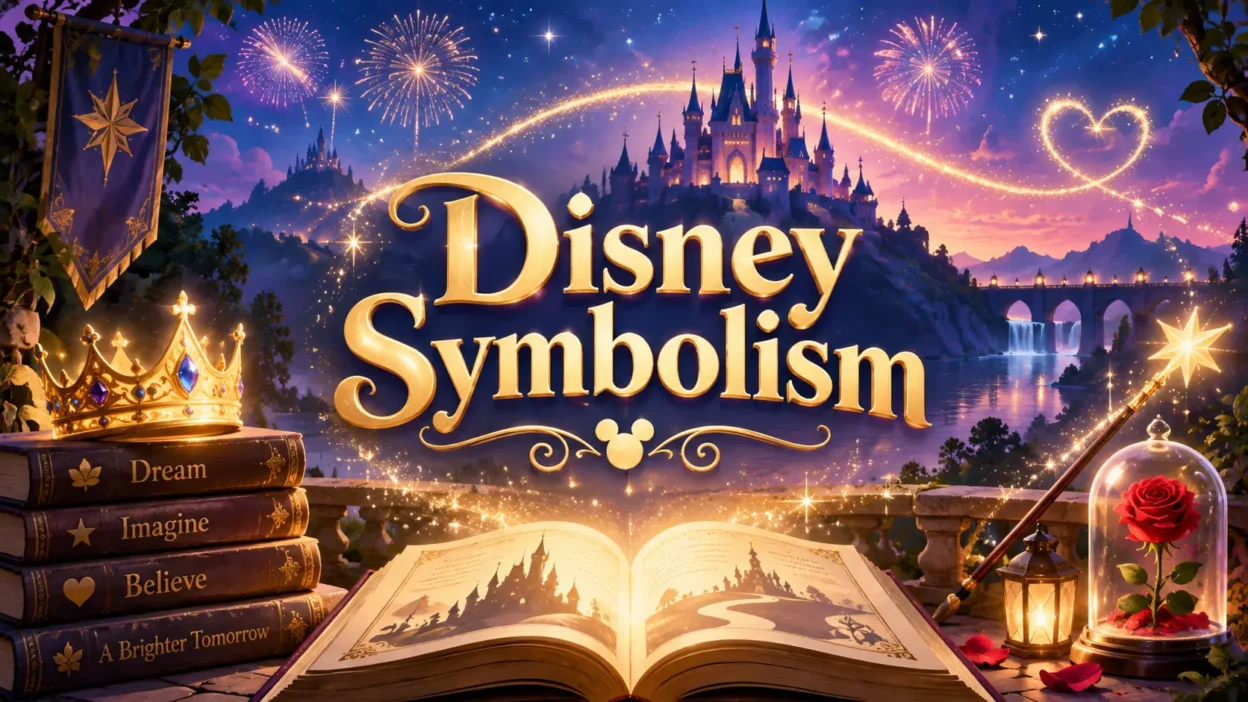
Disney has become one of the most recognizable parts of American popular culture, with characters, stories, and visual elements appearing in movies, theme parks, clothing, home decor, and everyday conversations. Disney symbolism refers to the meanings connected to Disney’s characters, themes, objects, colors, and storytelling patterns that represent ideas such as imagination, hope, friendship, courage, family, and personal growth.
For many Americans, Disney symbols are more than entertainment images. A castle can represent dreams and achievement, a character can represent a personal value, and a familiar song or scene can connect people with childhood memories. These meanings often develop from repeated storytelling, cultural traditions, and personal experiences.
Understanding Disney symbolism helps explain why Disney stories remain influential across generations. The symbols found in Disney films often reflect common human experiences, including overcoming challenges, discovering identity, building relationships, and finding purpose.
Quick Answer
Disney symbolism commonly represents imagination, hope, friendship, courage, and personal growth in modern American culture through characters, stories, and visual designs. Historically, Disney symbols developed from fairy tales, folklore, and storytelling traditions that evolved into modern themes of dreams, family, and resilience.
TL;DR
- Disney symbols represent dreams, courage, and imagination.
- Fairy tales shaped many Disney themes.
- Americans connect Disney with childhood memories.
- Characters often symbolize personal growth journeys.
- Disney designs influence fashion, decor, and events.
What Disney Symbols Represent in the United States
In the United States, Disney symbols often represent positive ideas connected with childhood, creativity, and emotional connection. The meaning depends on the specific character, story, or image, but many Disney symbols share common themes.
The castle from Disney’s opening logo represents dreams, possibility, and achievement. It creates the feeling of entering a world where ordinary limits can be challenged. For many viewers, the castle connects with ideas of ambition and imagination.
Disney characters also carry symbolic meanings. For example, Mickey Mouse often represents optimism, friendliness, and the company’s identity. Characters like Cinderella symbolize transformation, while characters like Mulan represent courage and self-discovery.
These meanings are not fixed rules. Different people may connect with Disney symbols based on their own memories and experiences.
| Context | Meaning in the USA | Common Associations | Notes |
|---|---|---|---|
| Disney Castle | Dreams and possibilities | Fantasy, achievement, imagination | Seen as a symbol of Disney itself |
| Mickey Mouse | Joy and friendliness | Childhood, creativity, optimism | One of the most recognized Disney images |
| Princess Characters | Growth and identity | Hope, courage, transformation | Meanings vary by story |
| Villains | Challenges and conflict | Fear, temptation, lessons | Often represent obstacles |
| Disney Parks | Escape and memories | Family, celebration, adventure | Connected with shared experiences |
The Historical Roots Behind Disney Symbolism
Disney symbolism developed from older storytelling traditions rather than appearing suddenly with modern films. Many Disney stories borrow ideas from European fairy tales, myths, legends, and folklore.
Early fairy tales often used symbols to teach lessons. Forests represented uncertainty, journeys represented personal growth, and magical objects represented change. Disney adapted these traditional storytelling methods for a modern audience.
When The Walt Disney Company began creating animated films, it transformed traditional symbols into memorable visual experiences. The studio used music, color, character design, and storytelling to make symbolic ideas easier for audiences to understand.
Over time, Disney created its own recognizable visual language. Certain images became connected with specific emotions, even outside individual movies.
How Fairy Tales Influenced Disney Meanings
Many Disney films are inspired by classic fairy tales that already contained symbolic messages. These stories often focused on transformation, personal challenges, and moral choices.
A princess leaving a difficult situation and discovering a better future is a common symbolic pattern. It reflects ideas about hope, independence, and change. However, modern interpretations often focus less on simply finding happiness and more on personal strength and identity.
Magical elements also carry symbolic meaning. A fairy godmother, enchanted object, or unusual creature often represents unexpected opportunities or support during difficult moments.
Disney’s approach made these traditional symbols accessible to new generations while adding modern emotional themes.
The Symbolism of Disney Characters
Disney characters often represent specific qualities, struggles, or life experiences. Their symbolic meanings come from their personalities, stories, and relationships.
Mickey Mouse represents friendliness and imagination. His simple design and cheerful personality helped make him a symbol of happiness and creativity.
Princess characters often represent different forms of growth. Snow White reflects kindness and innocence, Belle represents curiosity and love of learning, and Moana represents exploration and responsibility.
Heroes in Disney stories frequently symbolize perseverance. Characters face challenges but learn important lessons about confidence, family, and identity.
Villains also have symbolic roles. They often represent fear, selfishness, jealousy, or the misuse of power. Their presence creates contrast that helps audiences understand the hero’s values.
Color Symbolism in Disney Stories
Colors play an important role in Disney storytelling. Designers use colors to influence emotions and communicate character traits.
Bright colors often represent happiness, energy, and discovery. Warm colors may create feelings of comfort and excitement, while darker shades can suggest danger, mystery, or conflict.
Character colors can become strongly associated with personality. For example, a character’s clothing, environment, or magical effects often help audiences understand their role before the story explains it.
American audiences commonly recognize these visual signals because movies, animation, and advertising use similar color associations.
Disney Symbolism in American Childhood and Family Culture
Disney has a strong connection with American family traditions. Many families introduce children to Disney movies, visit theme parks together, or use Disney themes for celebrations.
Because of these experiences, Disney symbols often become connected with memories rather than only fictional stories. A Disney character on a birthday cake may represent childhood happiness. A favorite movie may remind someone of family moments.
Disney symbols can also represent nostalgia. Adults often return to Disney stories because they connect with earlier stages of life.
This emotional connection explains why Disney images remain popular among multiple generations.
Disney Symbolism in Theme Parks and Public Spaces
Disney theme parks use symbolism carefully to create specific emotional experiences. Every detail, including architecture, music, landscaping, and character appearances, contributes to the overall meaning.
The castle acts as a central symbol of possibility and fantasy. Walking toward it creates the feeling of entering a different world.
Rides and attractions often use storytelling symbols to create emotional journeys. Visitors may experience themes of adventure, discovery, friendship, or overcoming challenges.
For many Americans, Disney parks symbolize celebration, family connection, and temporary escape from everyday routines.
Disney Symbols in Fashion, Tattoos, and Personal Style
Disney symbols appear widely in personal expression. People use Disney images on clothing, jewelry, tattoos, accessories, and home decorations.
A Disney tattoo may represent childhood memories, a favorite character, personal values, or a meaningful life experience. The meaning depends heavily on the individual.
Some people choose symbols like Mickey ears because they represent happiness and nostalgia. Others choose specific characters because they identify with their struggles or personality traits.
Disney-inspired fashion also allows people to express creativity while connecting with familiar cultural images.
Emotional and Psychological Meaning of Disney Symbols
Disney symbols often work because they connect with basic human emotions. Stories about friendship, family, courage, and transformation reflect experiences many people understand.
Characters who overcome challenges can represent personal resilience. Viewers may see parts of their own lives in fictional journeys.
Nostalgia is another important factor. Familiar Disney images can bring back memories of childhood, family traditions, or important moments.
Psychologically, symbols become meaningful when people attach personal experiences to them.
Cross-Cultural Interpretations of Disney Symbols
Although Disney is strongly connected with American culture, its symbols appear worldwide. Different cultures may interpret the same characters and stories in unique ways.
A character representing independence in one culture may also represent family responsibility in another. Local traditions influence how audiences understand Disney stories.
Disney films often combine universal themes with cultural storytelling styles. Ideas such as kindness, courage, and friendship can be understood across many societies.
However, international audiences may not always share the same symbolic associations as American viewers.
Religious and Moral Themes in Disney Stories
Disney stories sometimes include moral ideas connected with kindness, sacrifice, forgiveness, and responsibility. These themes may overlap with values found in many religious and philosophical traditions.
For example, characters who show compassion or sacrifice often represent moral choices. Stories about redemption highlight the possibility of change.
Disney symbolism is generally cultural rather than religious, but some viewers connect certain themes with their personal beliefs.
The meaning usually depends on the viewer’s interpretation rather than a single official message.
Common Misunderstandings About Disney Symbolism
Disney symbols are sometimes given meanings that are not supported by the original stories. Online discussions can create exaggerated interpretations or rumors about hidden messages.
It is important to separate creative analysis from unsupported claims. Symbols can have different interpretations, but not every theory reflects the creators’ intentions.
Another misunderstanding is that Disney symbols only represent happiness. Many Disney stories include loss, conflict, fear, and difficult choices.
The combination of positive and negative experiences often makes the stories more meaningful.
How Disney Symbolism Has Changed Over Time
Disney symbolism has evolved as society and storytelling expectations have changed. Earlier Disney films often focused on traditional fairy tale structures, while newer stories frequently emphasize independence, cultural identity, and personal choices.
Modern characters often have more complex goals and challenges. They may not simply wait for change but actively create their own paths.
This shift reflects broader changes in American culture, where ideas about identity and success continue to develop.
Disney symbols remain recognizable, but their meanings continue to adapt with each generation.
Disney Symbolism in Modern Digital Culture
Social media has expanded how people use Disney symbols. Fans share artwork, quotes, themed content, and personal stories connected with Disney characters.
Digital communities allow people to create new meanings around familiar symbols. A character may become associated with a personal experience, friendship group, or online identity.
Disney imagery also appears in memes, online discussions, and creative projects.
This shows how symbols can continue changing after their original creation.
Frequently Asked Questions
What does Disney symbolism represent?
Disney symbolism represents ideas such as imagination, hope, courage, friendship, and personal growth. Specific meanings depend on the character, story, or image being discussed.
Why is the Disney castle considered symbolic?
The Disney castle symbolizes dreams, possibility, and entering a world of imagination. It became a visual representation of Disney’s storytelling identity.
What do Disney characters symbolize?
Disney characters often symbolize different human qualities and experiences. Heroes may represent courage and growth, while villains often represent challenges or negative traits.
Does Disney symbolism have religious meanings?
Disney symbolism is mainly cultural and storytelling-based rather than religious. Some viewers may connect certain themes with personal beliefs about morality, kindness, or sacrifice.
What does a Disney tattoo symbolize?
A Disney tattoo can represent childhood memories, favorite stories, personal values, or emotional connections. The meaning depends on the person who chooses the design.
Why are Disney symbols important in American culture?
Disney symbols are important because they connect with family traditions, entertainment, nostalgia, and shared cultural experiences. They appear in celebrations, media, fashion, and personal expression.
Conclusion
Disney symbols represent more than fictional characters and animated stories. They reflect ideas about imagination, personal growth, relationships, and the emotions people attach to meaningful experiences.
Disney symbolism continues to change as new generations create their own connections with characters, stories, and visual designs. In modern American culture, these symbols remain valuable because they combine storytelling with personal memories and everyday identity.
The lasting appeal of Disney symbols comes from their ability to represent familiar human experiences while allowing each person to create their own interpretation.


