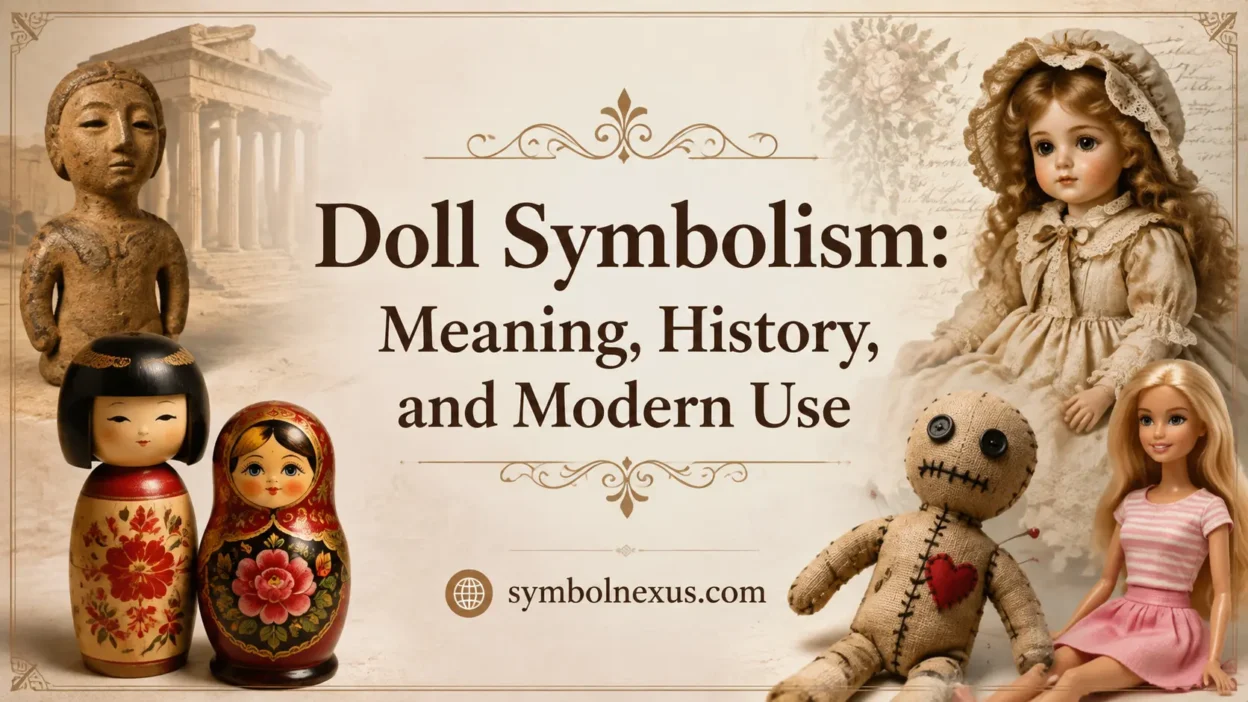
Dolls are more than childhood toys. Across cultures and generations, they have represented identity, memory, creativity, protection, family connections, and human experiences. Doll symbolism appears in childhood traditions, religious practices, art, storytelling, collections, and modern design, making dolls one of the most recognizable symbolic objects in human culture.
People often connect dolls with innocence and imagination, but their meanings can change depending on their appearance, purpose, and cultural setting. A handmade doll may represent family heritage, while an antique doll may symbolize history, nostalgia, or memories from the past.
In the United States, dolls have played an important role in childhood development, popular culture, and personal expression. From collectible dolls displayed in homes to dolls used in movies, holidays, and art, these figures continue to reflect how people understand identity, relationships, and human emotions.
Quick Answer
Doll symbolism commonly represents childhood, innocence, identity, and emotional connection in modern American culture. Historically, dolls have also symbolized cultural traditions, spiritual beliefs, family heritage, and human creativity through their roles in rituals, storytelling, and art.
TL;DR
- Dolls symbolize childhood, imagination, and emotional memories.
- Ancient dolls reflected rituals, beliefs, and cultural identity.
- American dolls often represent diversity and personal expression.
- Handmade dolls preserve family traditions and heritage.
- Doll symbolism changes through media, art, and design.
- Some dolls carry controversial or misunderstood meanings.
What Dolls Represent in Modern American Culture
In the United States, dolls are most commonly associated with childhood, learning, and imagination. They often represent early experiences of caring, creativity, and social development.
Children may use dolls to practice communication, explore emotions, and understand relationships. A doll can become a companion that helps a child create stories and express feelings.
Beyond childhood, dolls also represent nostalgia. Many adults keep childhood dolls because they remind them of family members, important moments, or earlier stages of life.
Collectible dolls have another meaning. They can represent craftsmanship, history, fashion, cultural identity, or personal interests. For collectors, a doll is often valued as an artistic object rather than simply a toy.
Ancient Roots and Early Symbolism of Dolls
Dolls have existed for thousands of years, with early examples appearing in ancient civilizations. Their purposes varied widely. Some were made as children’s toys, while others served ceremonial or symbolic roles.
In ancient societies, human-shaped figures were sometimes connected to fertility, protection, or religious practices. These objects reflected beliefs about life, family, and the relationship between humans and the spiritual world.
Archaeological discoveries show that dolls were created from materials such as wood, clay, cloth, and natural fibers. Their designs often reflected the clothing, hairstyles, and social customs of the communities that created them.
Over time, dolls moved from ritual objects into everyday household items, especially as societies placed greater emphasis on childhood and education.
The Symbolism of Dolls in American Childhood
American childhood culture has strongly shaped how people understand dolls today. Dolls often represent imagination, friendship, and learning.
Traditional baby dolls can symbolize caregiving and responsibility. Children may imitate family roles while playing, which helps them explore social behavior and emotions.
Fashion dolls often represent creativity, personal style, and changing ideas about identity. Their clothing, careers, and appearances reflect cultural conversations about independence, representation, and personal choice.
Dolls also appear during important childhood moments, such as birthdays and holidays. Because of these associations, they often become connected with family memories.
Cultural Traditions and Dolls Around the World
Different cultures give dolls unique meanings based on their traditions and beliefs.
In Japan, traditional dolls may represent beauty, history, and seasonal celebrations. Some Japanese dolls are displayed during cultural festivals and are connected with family hopes and traditions.
In parts of Latin America, handmade dolls can preserve local clothing styles, crafts, and cultural stories. They often represent community identity and artistic skill.
In some Indigenous communities, dolls have been used to teach younger generations about cultural values, clothing, and traditions.
These examples show that dolls are not limited to entertainment. They can carry stories about ancestry, values, and social identity.
Emotional and Psychological Meaning of Dolls
Dolls often have strong emotional associations because they represent human qualities in a small, familiar form.
A childhood doll may symbolize comfort, security, and emotional attachment. Many people remember a favorite doll because it was connected to important experiences during their early years.
Psychologically, dolls can also represent imagination and self-expression. Children often create personalities, stories, and relationships around dolls, allowing them to explore different emotions.
For adults, dolls may represent memories, creativity, or connections to the past. An old doll passed through generations can become a symbol of family history.
Dolls as Symbols of Identity and Representation
Modern doll culture increasingly focuses on representation. Many people view dolls as reflections of different cultures, appearances, careers, and lifestyles.
A doll that represents a specific community can help people see their own experiences reflected in toys and media. Representation has become an important part of conversations about identity and inclusion.
In the United States, dolls are often used to introduce children to different cultures, professions, and personal possibilities.
However, representation also requires careful consideration. Designs that simplify or stereotype a culture can create misunderstandings instead of meaningful connections.
Religious and Spiritual Interpretations of Dolls
Dolls have appeared in some religious and spiritual traditions, although their meanings vary significantly.
In certain cultures, human-shaped figures have been used in ceremonies, offerings, or protective practices. These uses are different from modern toy dolls and must be understood within their specific cultural context.
Some religious communities view dolls as educational tools, especially when teaching stories, traditions, or values to children.
At the same time, not every doll carries spiritual meaning. In most modern American settings, dolls are primarily connected with childhood, creativity, and personal memories.
Doll Symbolism in Art, Movies, and Popular Culture
Artists and filmmakers frequently use dolls because they can represent many human experiences.
In storytelling, dolls may symbolize innocence, memory, transformation, or the contrast between childhood and adulthood. A doll appearing in a movie does not always represent the object itself; sometimes it reflects themes about people and society.
Horror films have also changed public perceptions of dolls. Some fictional stories portray dolls as frightening objects, creating associations with fear and suspense.
These fictional portrayals are artistic interpretations rather than traditional meanings. The majority of cultural views still connect dolls with creativity, childhood, and personal connection.
Why People Use Dolls in Home Decor and Collections
Dolls appear in homes for many reasons beyond children’s play.
Collectors may display dolls because they appreciate historical clothing, craftsmanship, artistic design, or cultural value.
Decorative dolls can add personality to a space and may represent travel experiences, family traditions, or personal interests.
Antique dolls often carry emotional value because they preserve details about earlier periods, including fashion, materials, and social customs.
| Context | Meaning in the USA | Common Associations | Notes |
|---|---|---|---|
| Childhood toys | Imagination and learning | Friendship, care, creativity | Most common meaning |
| Collectibles | History and craftsmanship | Art, nostalgia, design | Valued by collectors |
| Family heirlooms | Memory and connection | Generations, tradition | Often emotionally important |
| Art and media | Storytelling and identity | Symbolism, creativity | Meaning depends on context |
Doll Symbolism in Tattoos and Personal Style
Although less common than animal or nature tattoos, doll-inspired designs can carry personal meanings.
Some people choose doll tattoos to represent childhood memories, innocence, or a connection to their younger self.
Others use doll imagery to express themes such as transformation, identity, nostalgia, or personal experiences.
The meaning depends heavily on the design. A traditional toy doll may suggest comfort and memories, while a broken or unusual doll design may represent change, loss, or emotional struggles.
How Doll Meanings Have Changed Over Time
The meaning of dolls has evolved as societies changed.
Early dolls could serve ceremonial or symbolic purposes. Later, they became strongly connected with childhood education and entertainment.
In modern times, dolls have expanded into areas such as fashion, collecting, digital culture, and social commentary.
The same doll can carry different meanings depending on the viewer’s age, culture, and personal experiences. A child may see a toy, while an adult may see a reminder of family history.
Common Misunderstandings About Doll Symbolism
Because dolls appear in different cultures and media, people sometimes assume they always have the same meaning.
One common misunderstanding is that dolls are always connected with supernatural beliefs. While some cultures have used human-shaped figures in spiritual practices, most dolls today are ordinary objects connected with play, art, and memories.
Another misconception comes from horror movies. Fictional portrayals have made some people associate dolls with fear, but this represents a specific entertainment genre rather than the broader cultural meaning of dolls.
Understanding the context behind a doll helps separate tradition, imagination, and fiction.
Modern Uses of Dolls in Digital and Popular Culture
Today, dolls continue to appear in online communities, social media, fashion trends, and creative projects.
People share collections, customize dolls, create handmade designs, and use dolls as artistic expressions.
Digital platforms have also expanded doll culture by allowing collectors and creators to connect globally. Customized dolls can represent personal stories, unique styles, and cultural backgrounds.
Modern doll culture shows that these objects remain adaptable symbols that reflect changing ideas about creativity and identity.
Positive and Negative Associations of Doll Symbolism
Dolls usually carry positive associations such as:
- Childhood memories
- Creativity
- Family connections
- Care and compassion
- Cultural traditions
However, dolls can also represent more complicated ideas:
- Loss of innocence
- Fear in fictional stories
- Social expectations
- Concerns about unrealistic appearances
The meaning depends on how the doll is created, presented, and interpreted.
Frequently Asked Questions
What does a doll symbolize spiritually?
A doll may symbolize different things spiritually depending on the culture. In some traditions, human-shaped figures have ceremonial meanings, while in modern American culture dolls are usually associated with childhood, memories, and creativity.
What does a doll tattoo symbolize?
A doll tattoo often represents childhood memories, innocence, personal transformation, or a connection to the past. The meaning changes depending on the style, expression, and design choices.
Why are dolls important in American culture?
Dolls are important in American culture because they are connected with childhood development, collecting, storytelling, and representation. They often reflect changing ideas about identity, diversity, and creativity.
Are dolls considered symbols of innocence?
Yes, many people associate dolls with innocence because they are linked with childhood and imagination. However, their meaning can also include history, identity, and cultural traditions.
What do antique dolls symbolize?
Antique dolls often symbolize history, craftsmanship, family memories, and connections between generations. Many collectors value them because they preserve details from earlier periods.
Why are dolls used in horror stories?
Dolls are used in horror stories because their human-like appearance creates contrast between innocence and fear. This is mainly a fictional storytelling technique rather than a traditional meaning of dolls.
Conclusion
Dolls represent much more than childhood toys. They reflect human creativity, memories, cultural traditions, and changing ideas about identity. From handmade figures passed through generations to modern collectible designs, doll symbolism continues to evolve with society.
In American culture, dolls are most often connected with imagination, emotional attachment, and personal expression. Their meaning depends on the story behind the doll, the person viewing it, and the culture that gives it value.
Whether displayed as art, remembered as a childhood companion, or used as a symbol of personal identity, dolls remain objects that connect everyday life with human experience.