
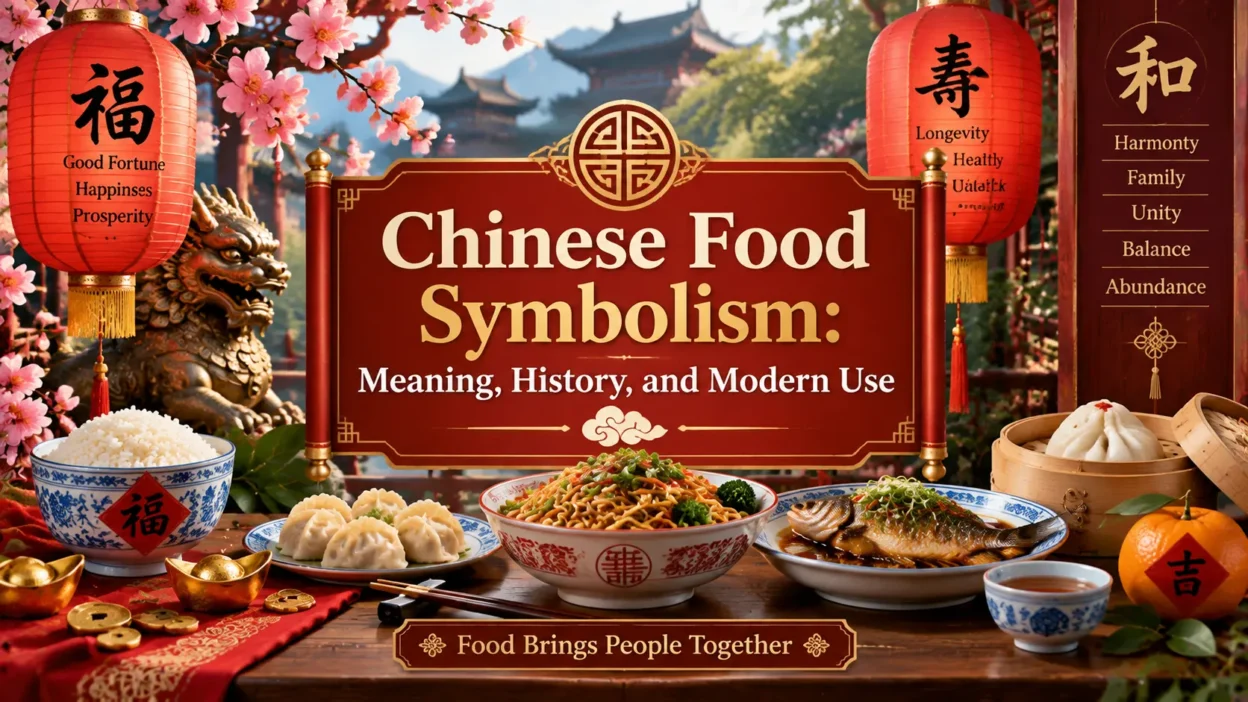
Food is more than something people eat. In many cultures, meals carry stories, memories, hopes, and social values. Chinese food symbolism reflects the belief that certain dishes, ingredients, shapes, and serving traditions can express ideas such as prosperity, harmony, longevity, family connection, and good fortune.
From Lunar New Year celebrations to weddings and family gatherings in the United States, Chinese foods often communicate messages beyond flavor. A whole fish may represent abundance, dumplings may suggest wealth, and noodles may symbolize a long life. These meanings come from language, history, regional traditions, and family customs rather than from one single belief system.
Understanding these symbols helps explain why certain foods appear at important events and why many Chinese American families continue to preserve traditional dishes while adapting them to modern life.
Quick Answer
Chinese food symbolism commonly represents luck, prosperity, family unity, and celebration in modern American culture, especially during holidays and special gatherings. Historically, many food meanings developed from Chinese language, folklore, regional customs, and traditions connected to harmony and good fortune.
TL;DR
- Chinese foods often represent luck, wealth, and family bonds.
- Dumplings symbolize prosperity through their shape and history.
- Fish dishes represent abundance during celebrations.
- Longevity noodles connect food with long life wishes.
- Lunar New Year traditions preserve symbolic meanings.
- Chinese American communities adapt food customs today.
Why Food Carries Symbolic Meaning in Chinese Culture
Food symbolism developed because meals have long been connected with family relationships, seasonal celebrations, and important life events. In traditional Chinese society, sharing food was not only about nourishment. It was also a way to show respect, maintain relationships, and express wishes for the future.
Many symbolic meanings come from word associations. In Chinese, some foods have names that sound similar to words connected with good fortune. Their appearance also influences meaning. Round shapes may suggest completeness, while long foods may represent continuity.
These ideas vary by region, family, and personal belief. Not every Chinese person assigns the same meaning to every dish, but many symbolic traditions remain familiar through generations.
Common Meanings Associated With Chinese Foods
Different foods carry different associations depending on their ingredients, appearance, and cultural history.
| Food or Symbol | Meaning in the USA | Common Associations | Notes |
|---|---|---|---|
| Dumplings | Wealth and prosperity | Lunar New Year, family meals | Shape resembles traditional Chinese currency |
| Fish | Abundance and success | New Year celebrations, banquets | Whole fish often represents completeness |
| Noodles | Longevity | Birthdays and special occasions | Long noodles are traditionally not cut |
| Oranges and Tangerines | Good fortune | Holidays and gifts | Their color connects with prosperity |
| Rice | Stability and abundance | Daily meals and ceremonies | A foundation of many Chinese cuisines |
These meanings are often strongest during celebrations, but they can also appear in everyday family traditions.
Ancient Roots and Early Symbolism of Food
Food symbolism in China has roots stretching back thousands of years. Early Chinese communities connected agriculture, seasonal cycles, and spiritual practices with food preparation.
Grains, fruits, and animals often carried meanings connected to survival and social order. Rice represented nourishment and stability in many southern regions, while wheat-based foods became important in northern areas.
Traditional festivals also shaped symbolic eating practices. During important occasions, certain foods were prepared because they represented wishes for health, harmony, or prosperity.
Over time, these meanings became woven into family customs, stories, and regional cuisines.
Lunar New Year Foods and Their Symbolic Meaning
Lunar New Year is one of the most important occasions for symbolic foods. Families often prepare dishes that express hopes for the coming year.
Fish is commonly served because its pronunciation in Mandarin is associated with the idea of having extra abundance. Dumplings are popular because their shape resembles ancient Chinese gold or silver ingots. Sweet rice cakes may represent progress or growth because their name is connected with the idea of reaching a higher level each year.
In the United States, Chinese American families may celebrate Lunar New Year with traditional dishes alongside locally available foods. The symbolic purpose often remains the same: bringing relatives together and beginning the year with positive wishes.
Dumplings as Symbols of Wealth and Family Connection
Dumplings are among the most recognized symbolic foods in Chinese culture. Their curved shape resembles ancient Chinese currency, which led to associations with wealth and financial success.
Making dumplings can also represent family cooperation. During celebrations, relatives may gather to prepare them together, turning cooking into a shared activity.
In Chinese American communities, dumplings often appear at holiday gatherings, restaurant celebrations, and family dinners. Their meaning comes not only from appearance but also from the relationships created around the table.
Fish Symbolism: Abundance and Success
Fish has a special place in Chinese food traditions because it represents abundance and having enough resources. The connection comes partly from language, as the Chinese word for fish sounds similar to a word associated with surplus.
Serving a whole fish can also symbolize completeness and unity. Some traditions keep the head and tail intact because the entire animal represents a complete beginning and ending.
For many Chinese American families, fish dishes remain connected with holiday meals, family celebrations, and hopes for prosperity.
Noodles and the Symbolism of Long Life
Long noodles are often associated with longevity because their length represents an extended life. They are commonly served during birthdays and other meaningful occasions.
A traditional belief suggests that cutting the noodles short may symbolically interrupt their meaning, so long noodles are often eaten whole.
Today, interpretations vary. Some people follow this tradition closely, while others simply enjoy noodles as a cultural food connected with celebration and family memories.
Fruit Symbolism in Chinese Traditions
Fruits often carry symbolic meanings because of their colors, shapes, and names. Oranges and tangerines are especially common during celebrations because their golden color is associated with prosperity.
Pomegranates may symbolize fertility and family growth because of their many seeds. Peaches are connected with longevity in Chinese folklore, partly because of their association with stories about immortality.
In Chinese American homes, fruit displays during holidays can serve both decorative and symbolic purposes.
The Role of Food in Chinese Weddings and Family Events
Food plays an important role in Chinese weddings and major family gatherings. Large meals symbolize generosity, respect, and the joining of families.
Certain dishes may be chosen because they represent harmony or a successful future. Seafood, poultry, and sweet foods frequently appear because they communicate positive wishes.
Chinese American weddings often combine traditional symbolic dishes with modern menus, reflecting both cultural heritage and individual preferences.
Religious and Spiritual Connections With Food
Chinese food symbolism can overlap with religious and philosophical traditions, including ideas influenced by Buddhism, Taoism, and folk practices.
Some foods are associated with offerings, gratitude, or respect for ancestors. During certain ceremonies, food may represent connection between generations and appreciation for family history.
However, symbolic food practices differ widely. Many people participate because of cultural tradition rather than religious belief.
How Chinese Food Symbolism Appears in the United States Today
In the United States, symbolic Chinese foods appear in homes, restaurants, festivals, and community events.
Chinese American families may prepare traditional dishes during Lunar New Year, birthdays, weddings, and reunions. Restaurants may highlight symbolic foods during holiday seasons, introducing these meanings to wider audiences.
Modern interpretations are often flexible. Some people value the historical meaning behind a dish, while others mainly appreciate the food as part of family identity and cultural celebration.
Chinese Food Symbolism in Modern Design and Popular Culture
Food symbolism also appears outside the dining table. Images of dumplings, oranges, lucky dishes, and festive meals are used in decorations, greeting cards, advertisements, and social media.
During Lunar New Year celebrations across the United States, symbolic foods often appear in cultural displays and community events.
These images help communicate ideas of celebration, connection, and heritage even when people are not familiar with every traditional meaning.
Common Misunderstandings About Symbolic Chinese Foods
One common misunderstanding is that every Chinese person views symbolic foods in exactly the same way. China contains many ethnic groups, regions, languages, and culinary traditions, so meanings can differ.
Another misunderstanding is treating food symbolism as a guarantee of luck or success. For many people, these foods represent hopes, memories, and cultural values rather than supernatural promises.
The symbolism usually comes from history, language, and tradition rather than a fixed rule shared by everyone.
How Meanings Have Changed Over Time
Chinese food symbolism has continued to evolve as communities move, adapt, and create new traditions.
Immigration brought Chinese food customs to the United States, where families combined traditional practices with local ingredients and lifestyles. Younger generations may preserve certain symbolic dishes while changing recipes or celebrations to fit modern life.
The meaning of these foods remains connected to family and culture, but each generation may interpret traditions in its own way.
Frequently Asked Questions
What does Chinese food symbolize?
Chinese food often symbolizes prosperity, family unity, celebration, and respect for tradition. Specific dishes can carry additional meanings based on their shape, name, or historical associations.
Why are dumplings considered lucky in Chinese culture?
Dumplings are associated with wealth because their shape resembles traditional Chinese currency. They also represent family connection because making them is often a shared activity during celebrations.
What does fish symbolize in Chinese culture?
Fish commonly symbolizes abundance and having extra resources. It is especially associated with celebrations such as Lunar New Year meals.
Why are noodles connected with longevity?
Long noodles represent a long life because their length is linked with continuity and endurance. They are often served at birthdays and special occasions.
Do Chinese Americans still follow food symbolism traditions?
Many Chinese Americans continue these traditions during holidays, weddings, and family gatherings. Others adapt them according to personal beliefs, regional background, and modern lifestyles.
Is Chinese food symbolism religious?
Some symbolic food traditions connect with religious or spiritual practices, but many are cultural customs shared by people with different beliefs.
Are all Chinese foods symbolic?
No. Many Chinese foods are simply enjoyed for taste and everyday meals. Symbolic meanings usually become more important during celebrations and meaningful events.
Conclusion
Chinese food symbolism represents ideas of prosperity, connection, celebration, and cultural memory. From dumplings associated with wealth to noodles linked with longevity, these traditions show how food can carry messages beyond taste.
In the United States, Chinese food symbolism continues to connect generations, preserve heritage, and create shared experiences around the table. Its meanings may change across families and communities, but the central idea remains: food can express hopes, relationships, and the values people choose to pass forward.


