
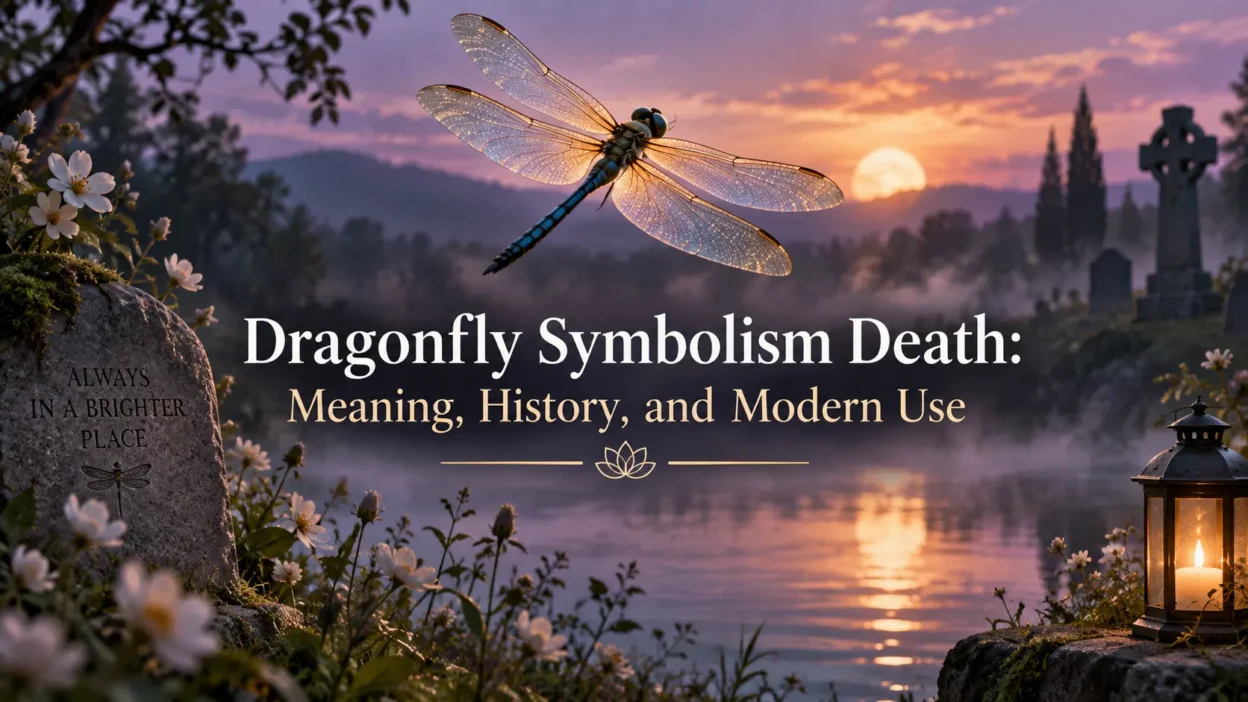
Dragonflies have long been connected with ideas of change, transition, and the mystery of life. In modern American culture, dragonfly symbolism death often represents remembrance, transformation, and the emotional connection people maintain with loved ones who have passed away. Rather than symbolizing death as an ending, many people view the dragonfly as a sign of movement from one stage of existence to another.
The dragonfly’s short life cycle, ability to move between water and air, and delicate appearance have made it a meaningful symbol across different cultures. People often notice dragonflies during moments of grief, memorial events, or personal reflection, which has strengthened their association with loss and renewal.
Today, dragonflies appear in tattoos, jewelry, garden designs, memorial decorations, and personal artwork. Their meaning depends on individual beliefs, cultural background, and personal experiences with life changes.
Quick Answer
Dragonfly symbolism death commonly represents remembrance, emotional healing, and the transition from physical life to spiritual memory in modern American culture. Historically, dragonflies have also been linked with transformation, renewal, and the connection between different stages of existence.
TL;DR
- Dragonflies symbolize remembrance after loss.
- They represent transformation and life transitions.
- Native traditions connect them with change.
- Americans use dragonflies in memorial designs.
- Tattoos often honor loved ones.
- Meanings vary across cultures and beliefs.
What the Dragonfly Represents in Modern American Culture
In the United States, dragonflies are often viewed as symbols of change rather than symbols of death alone. Many people associate them with moments when life takes a new direction, including personal growth, emotional recovery, and adapting after a major loss.
When someone experiences the death of a loved one, a dragonfly may become a comforting symbol because it suggests that memories continue even after physical separation. Some people believe seeing a dragonfly after a loss represents a reminder of someone special, although this interpretation comes from personal belief rather than scientific evidence.
The dragonfly’s connection to water and air also influences its meaning. Water is often associated with emotions and memories, while air represents movement and freedom. Together, these qualities create an image of transition between different experiences of life.
Why Dragonflies Became Connected With Death and Remembrance
The connection between dragonflies and death developed because of the insect’s unusual life cycle. A dragonfly begins life underwater as a nymph before transforming into a flying insect. This dramatic change naturally created associations with rebirth, adaptation, and moving from one state to another.
Many cultures have interpreted this transformation as a metaphor for human experiences. Birth, aging, loss, and personal change are all stages where people experience transitions. Because of this, the dragonfly became a symbol that helps people think about the relationship between endings and new beginnings.
In mourning traditions, symbols often provide emotional comfort. A dragonfly can represent the idea that although a person’s physical presence is gone, their influence, memories, and love remain.
Ancient Roots and Early Symbolic Meanings
Dragonflies have existed for millions of years, and humans have observed their unusual behavior for centuries. Different societies created their own interpretations based on local beliefs, environments, and storytelling traditions.
In some ancient cultures, insects connected with transformation were viewed as reminders of nature’s cycles. The dragonfly’s ability to emerge from water and take flight made it an example of dramatic change.
Japanese culture has traditionally associated dragonflies with courage, strength, and victory. In Native American traditions, dragonflies have often been connected with change, movement, and illusion because of their quick flight patterns.
These historical interpretations did not always focus directly on death. Instead, they emphasized transformation, which later influenced modern associations with grief and remembrance.
Dragonfly Symbolism in Native American Traditions
Native American interpretations of dragonflies differ among tribes because each community has unique traditions and stories. In many Indigenous cultures, dragonflies are associated with transformation, adaptability, and messages connected to the natural world.
Some traditions view dragonflies as symbols of change because they move between water and land environments. Their transformation from aquatic insects into flying creatures represents growth and a shift into a new phase.
However, it is important to avoid treating all Native American beliefs as one single interpretation. Different nations have their own cultural meanings, and the dragonfly does not represent the same idea everywhere.
How Americans Use Dragonflies During Grief and Memorials
In the United States, dragonflies have become common symbols in remembrance practices. Families may include dragonfly images on memorial cards, grave decorations, garden stones, or jewelry created in honor of someone who died.
A dragonfly design can serve as a personal reminder of a loved one’s personality, memories, or important moments shared together. Some people choose dragonfly artwork because it feels lighter and more hopeful than traditional mourning symbols.
Unlike symbols that focus only on sadness, dragonflies often represent continuing connection. They allow people to remember someone while also recognizing that life continues after loss.
| Context | Meaning in the USA | Common Associations | Notes |
|---|---|---|---|
| Memorials | Remembering someone who passed away | Love, memories, connection | Often used in personal tributes |
| Tattoos | Personal stories of loss or change | Healing, transformation | Meaning depends on the wearer |
| Jewelry | Keeping memories close | Comfort, emotional support | Popular as remembrance gifts |
| Garden Decor | Creating peaceful spaces | Nature, reflection | Common near memorial gardens |
| Art | Expressing emotions | Beauty, renewal | Used in personal and public designs |
Emotional Meaning of Dragonflies After Loss
Grief often creates a need for symbols that help people express feelings that are difficult to explain. Dragonflies can represent acceptance, hope, and the continuation of memories.
The insect’s movement can remind people that life changes constantly. After experiencing death, many individuals search for ways to honor the past while building a future. A dragonfly may represent that balance between remembering and moving forward.
Psychologically, symbols can help people create personal meaning during difficult experiences. A dragonfly does not remove grief, but it can become a meaningful object connected to healing and reflection.
Dragonfly Tattoos and Death-Related Meanings
Dragonfly tattoos are popular among people who want a permanent symbol connected to personal transformation or remembrance. Some individuals choose them after losing a family member, friend, or someone who influenced their life.
Common meanings behind dragonfly memorial tattoos include:
- Honoring a loved one’s memory
- Accepting life changes
- Representing emotional growth
- Celebrating freedom and individuality
- Remembering a meaningful relationship
The design style also affects the interpretation. A dragonfly with flowers may emphasize beauty and remembrance, while a simple outline design may represent a quiet personal connection.
Dragonflies in Jewelry, Fashion, and Home Decor
Dragonfly symbols appear frequently in American jewelry and decorative items because their design combines beauty with emotional meaning. Necklaces, bracelets, earrings, and rings often feature dragonflies as personal reminders of important experiences.
Home decorations may use dragonflies in gardens, paintings, wall art, and handmade crafts. Some people include dragonfly designs in spaces dedicated to reflection or remembrance.
In fashion, the dragonfly usually represents freedom, elegance, and personal expression. When connected with death, the meaning becomes more personal and often relates to someone’s individual memories.
Dragonfly Symbolism in Spiritual and Religious Interpretations
Dragonflies appear in many spiritual discussions because their life cycle naturally suggests ideas of change and transition. However, meanings vary widely depending on personal beliefs, religious traditions, and cultural background.
Some people connect dragonflies with the idea that life continues beyond physical existence. In these interpretations, the dragonfly may represent the soul, memory, or a spiritual connection with someone who has died. These beliefs are personal and are not shared by every religious tradition.
In Christianity and other faith communities, dragonflies are sometimes used as personal symbols of renewal or transformation. While the insect itself does not have a universal religious meaning, individuals may connect its changes in life stages with themes such as hope, resurrection, and spiritual growth.
The most common modern interpretation is not that a dragonfly predicts death or carries a supernatural message, but that it provides a meaningful image for people processing change and loss.
Positive and Negative Interpretations of Dragonfly Death Symbolism
The meaning of a dragonfly connected with death is usually positive or comforting, but interpretations can differ. Some people focus on the sadness of losing someone, while others focus on the beauty of memory and continued connection.
A dragonfly may represent:
- Positive meanings: remembrance, peace, healing, transformation, acceptance, and hope.
- Neutral meanings: change, movement, life cycles, and personal reflection.
- Negative interpretations: fear of loss, uncertainty, or the emotional pain connected with grief.
The dragonfly itself is not considered a negative symbol in most modern American settings. Instead, it often helps people express emotions surrounding difficult experiences.
| Interpretation | Meaning | Emotional Connection |
|---|---|---|
| Remembrance | Keeping a loved one’s memory alive | Love and connection |
| Transformation | Moving through life changes | Growth and adaptation |
| Healing | Recovering after loss | Peace and acceptance |
| Transition | Entering a new stage of life | Change and reflection |
Common Misunderstandings About Dragonfly Death Symbolism
One common misunderstanding is that seeing a dragonfly means death is approaching. This belief is not supported by scientific evidence and usually comes from folklore or personal interpretations.
Another misconception is that all cultures view dragonflies as symbols of the afterlife. In reality, meanings differ significantly. Some traditions focus on courage, beauty, nature, or change rather than death.
The meaning of a dragonfly depends on context. A dragonfly appearing in a garden, appearing in artwork, or being chosen for a memorial tattoo may carry completely different meanings.
Understanding these differences prevents people from treating one interpretation as the only correct meaning.
The Role of Dragonflies in Modern Digital Culture
Dragonflies have gained visibility online through social media, digital art, memorial posts, and personal storytelling. Many people share dragonfly images when discussing grief, recovery, or important life moments.
Online communities often use dragonfly imagery as a gentle way to talk about loss without focusing only on sadness. A photo of a dragonfly may accompany a message remembering someone who passed away or celebrating a meaningful memory.
Digital culture has also expanded the symbol’s audience. People who may not have grown up with dragonfly traditions can discover and adopt the symbol through artwork, online conversations, and personal experiences.
Color Meanings Associated With Dragonflies
The color of a dragonfly can influence its symbolic interpretation. Artists, tattoo designers, and jewelry makers often use different colors to communicate specific emotions.
| Dragonfly Color | Common Symbolic Meaning | Modern Use |
|---|---|---|
| Blue | Peace, trust, emotional healing | Memorial artwork and jewelry |
| Green | Growth, renewal, nature | Garden designs and tattoos |
| Purple | Spiritual reflection, creativity | Decorative art |
| Black | Mystery, strength, remembrance | Personal memorial designs |
| Red | Passion, courage, strong emotions | Bold tattoo styles |
These meanings come from general color associations rather than fixed rules. A person may choose a color because it reminds them of a specific memory, place, or individual.
Dragonfly Symbolism in Weddings, Gardens, and Life Celebrations
Although dragonflies are sometimes connected with death, they also appear in celebrations of life. Many Americans use dragonfly designs in weddings, garden decorations, and personal artwork because the symbol represents beauty and change.
In gardens, dragonflies are often appreciated because they are connected with healthy natural environments. Their presence can create a feeling of peace and connection with nature.
During celebrations of life ceremonies, dragonflies may appear in decorations because they provide a balance between honoring someone’s memory and celebrating the experiences they shared with others.
This broader use shows that the dragonfly is not only a symbol of loss. It also represents appreciation for life’s changing moments.
How Dragonfly Meaning Has Changed Over Time
The interpretation of dragonflies has evolved as societies change. Earlier traditions often focused on nature, transformation, and seasonal cycles. Modern interpretations increasingly connect the insect with emotional experiences such as grief, healing, and remembrance.
In the past, dragonflies were mainly understood through folklore and observation of nature. Today, personal experiences strongly influence their meaning. A person may see a dragonfly as a reminder of a loved one, while another may see it as a symbol of personal growth.
This flexibility is one reason the dragonfly remains meaningful. It allows people to create their own connection while still drawing from older cultural ideas.
Why Dragonflies Remain Meaningful in American Life
The dragonfly continues to appear in American culture because it combines several ideas people naturally relate to: change, beauty, movement, and memory.
Unlike symbols that have one strict definition, dragonflies allow personal interpretation. Someone experiencing grief may see comfort in the symbol, while someone starting a new chapter may see it as encouragement.
Its connection with nature also makes it approachable. People encounter dragonflies in parks, gardens, lakes, and outdoor spaces, making the symbol feel connected to everyday experiences.
For many Americans, the dragonfly represents the ability to remember the past while continuing to move forward.
Frequently Asked Questions
What does a dragonfly symbolize when someone dies?
A dragonfly often symbolizes remembrance, transformation, and emotional connection after someone’s death. Many people view it as a comforting reminder of a loved one’s memory rather than a symbol of death itself.
Is seeing a dragonfly after a death a sign?
Some people interpret seeing a dragonfly after a loss as a personal sign or meaningful moment. However, this belief depends on individual spirituality and personal experience rather than scientific evidence.
Are dragonfly tattoos connected to someone who passed away?
Yes, many people choose dragonfly tattoos to honor someone who has died. The design can represent memories, love, healing, and the lasting impact of that person’s life.
What does a dragonfly mean spiritually after death?
Spiritually, some people associate dragonflies with transition, renewal, or continued connection. Different cultures and individuals interpret the symbol in different ways.
Are dragonflies a positive symbol of death?
In most modern American interpretations, dragonflies are viewed positively when connected with death. They usually represent acceptance, remembrance, and hope rather than fear.
Do all cultures see dragonflies as symbols of death?
No. Many cultures associate dragonflies with change, courage, beauty, or nature instead. Death-related meanings are only one interpretation among many.
What does a black dragonfly symbolize after a loss?
A black dragonfly may represent remembrance, strength, mystery, or emotional reflection. Its meaning depends on the person using the symbol and the memories connected to it.
Conclusion
Dragonfly symbolism death represents how people use nature to understand difficult experiences such as grief, change, and remembrance. In modern American culture, the dragonfly often serves as a symbol of connection, healing, and the memories that remain after someone passes away.
From memorial jewelry and tattoos to gardens and personal artwork, dragonflies continue to help people express emotions that are difficult to put into words. Their meaning is shaped by culture, personal belief, and individual experiences.
Ultimately, the dragonfly reminds many people that life involves constant transitions, and meaningful connections can continue through memories, stories, and the impact people leave behind.


