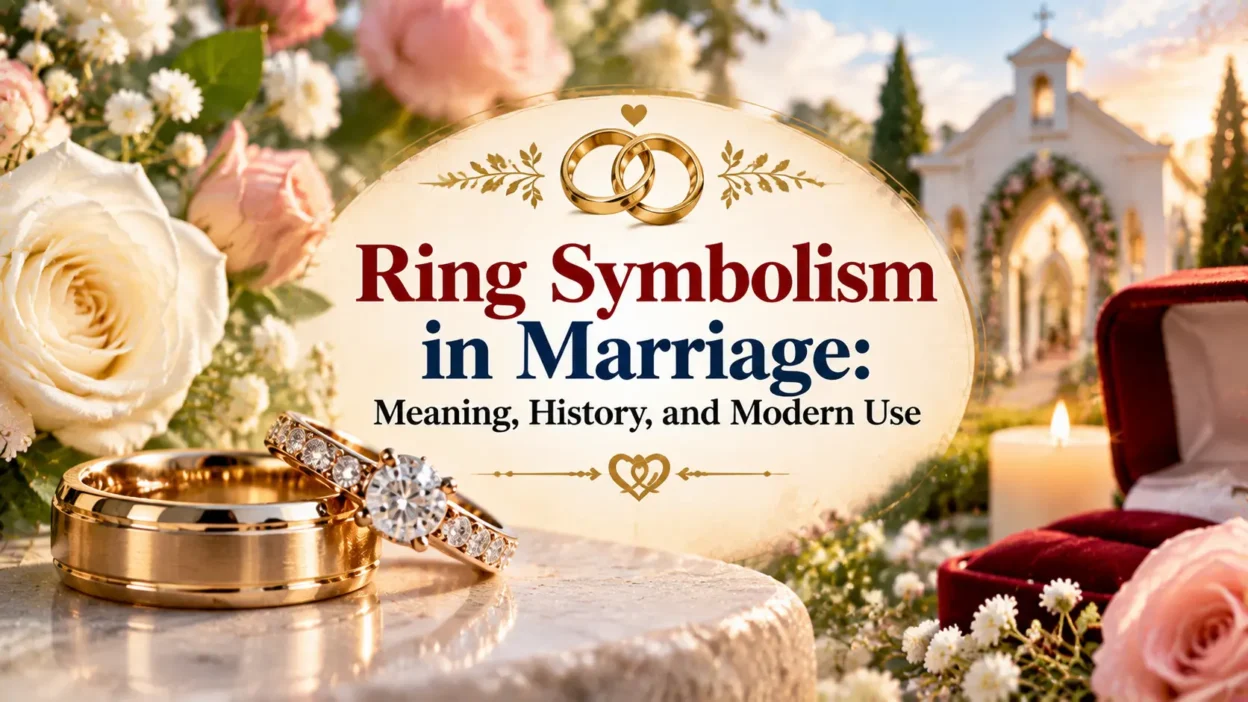
A wedding ring is one of the most recognized symbols of marriage around the world. Ring symbolism in marriage represents commitment, partnership, and the promise two people make to build a life together. While many people today see the ring as a sign of love and devotion, its meaning developed through centuries of cultural traditions, religious practices, and social customs.
The simple circular shape of a ring has helped it become connected with ideas of continuity and connection. In the United States, wedding rings are often viewed as personal expressions of a couple’s relationship, family traditions, and shared values rather than only as formal symbols of marriage.
Understanding why people exchange rings reveals how an everyday piece of jewelry became one of the strongest symbols associated with weddings, identity, and lifelong partnership.
Quick Answer
Ring symbolism in marriage commonly represents love, commitment, and lifelong partnership in modern American culture, especially through wedding ceremonies and daily wear. Historically, rings have also symbolized promises, social bonds, loyalty, and agreements between people.
TL;DR
- Wedding rings represent commitment and partnership today.
- Circles symbolize continuity, unity, and lasting bonds.
- Ancient cultures used rings for promises and agreements.
- Americans view rings as personal marriage symbols.
- Materials and designs often reflect identity and values.
- Modern couples redefine ring traditions in new ways.
The Physical Meaning Behind a Marriage Ring
A marriage ring is usually a circular band worn on the finger, most commonly made from gold, platinum, silver, or other metals. Some rings include gemstones, engraved messages, family designs, or personalized details that reflect the couple’s story.
The circle is the most important visual feature. Unlike shapes with clear beginnings and endings, a circle appears continuous. This quality led many cultures to connect rings with ideas of permanence, connection, and an ongoing relationship.
In modern weddings, the ring is not only a piece of jewelry. It acts as a visible reminder of a private commitment shared between two people.
What Wedding Rings Commonly Mean in the United States
In American culture, wedding rings are mainly associated with love, commitment, and marriage. Couples exchange rings during ceremonies as a public symbol that they have chosen to build a life together.
Many Americans also view rings as emotional objects connected to important memories. A wedding ring may represent:
| Context | Meaning in the USA | Common Associations | Notes |
|---|---|---|---|
| Wedding ceremony | Marriage commitment | Love, vows, partnership | Exchanged during many traditional weddings |
| Daily wear | Relationship identity | Spouse, loyalty, connection | Often worn after marriage |
| Family heirloom | Shared history | Generations, memories | Passed through relatives |
| Personalized design | Individual expression | Values, personality, style | Includes custom stones or engravings |
| Anniversary gifts | Continued commitment | Growth, milestones | Marks relationship stages |
For many couples, the ring’s value comes less from its price and more from what it represents.
Ancient Roots and Early Symbolism of Rings
The connection between rings and relationships goes back thousands of years. Ancient civilizations used rings for different purposes, including decoration, social status, legal agreements, and personal promises.
In ancient Egypt, circular shapes were associated with ideas of eternity because the circle had no obvious beginning or end. Rings made from materials such as braided plants or leather were sometimes exchanged as signs of connection.
Ancient Roman traditions also influenced later marriage customs. Roman rings could represent agreements and social relationships. Some rings were connected with ownership traditions of the time, reflecting historical views of marriage that differ from modern ideas of equality and partnership.
Over time, the meaning of marriage rings shifted from social contracts toward emotional commitment and personal choice.
How Marriage Rings Became Part of Western Weddings
The tradition of exchanging rings developed gradually through European religious and cultural practices. In Christian wedding ceremonies, rings became associated with promises made before a community.
The placement of the ring on the fourth finger of the left hand became common in many Western cultures. One traditional explanation connected this finger with a supposed vein leading toward the heart, although modern anatomy does not support that belief.
By the 20th century, wedding rings became especially common in the United States. Jewelry marketing, changing marriage customs, and cultural traditions helped establish the ring as a standard part of many American weddings.
Today, couples may follow traditional customs, create new ones, or choose alternatives based on personal preference.
The Emotional and Psychological Meaning of Wedding Rings
A wedding ring often carries emotional meaning because it connects a physical object with a personal promise. Seeing or touching the ring can remind someone of their relationship, shared experiences, and important moments.
Psychologically, symbols can strengthen personal identity. A ring can communicate a person’s connection to another individual and create a sense of belonging within a partnership.
For some people, wearing a wedding ring provides comfort because it represents stability and a meaningful relationship. For others, the meaning comes from the memory attached to the ring rather than the object itself.
Religious and Spiritual Interpretations of Marriage Rings
Many religions have incorporated rings into marriage traditions, although interpretations vary.
In Christianity, wedding rings are often viewed as symbols of marital vows and commitment before God. Some ceremonies include blessings of the rings as part of the marriage ritual.
In Judaism, a wedding ring plays an important role in traditional marriage ceremonies. The ring exchange represents the formal creation of a marital bond.
Other cultures and faith traditions may use different symbols or practices to represent marriage. The meaning of a ring depends on the beliefs and customs of the people involved.
Why Rings Are Associated With Forever and Unity
The circular design is one of the main reasons rings became connected with lasting relationships. A circle suggests continuation because it has no visible endpoint.
This idea appears in many symbolic traditions. Circles are often used to represent cycles, connection, and wholeness. When applied to marriage, the circle became a visual expression of a relationship that continues over time.
However, the idea of “forever” is symbolic rather than a guarantee. The meaning of a marriage comes from the actions, care, and commitment of the people wearing the rings.
The Role of Gold, Diamonds, and Other Ring Materials
The material of a wedding ring can add additional meaning. Gold has long been associated with value, durability, and beauty. Its resistance to corrosion helped make it a popular choice for jewelry connected with important life events.
Diamonds became strongly associated with engagement rings in modern American culture. Their popularity grew through changing social customs and jewelry traditions.
Today, couples choose many different materials, including recycled metals, alternative gemstones, silicone bands, and simple designs. These choices often reflect lifestyle, environmental concerns, personal taste, or financial priorities.
Marriage Rings in American Identity and Culture
In the United States, wedding rings are part of a larger cultural tradition surrounding marriage. They appear in wedding photographs, family celebrations, anniversary traditions, and personal memories.
The ring can also communicate social identity. A person wearing a wedding ring may be recognized as married, although people’s relationship choices are diverse and not everyone follows this tradition.
American culture has also expanded the meaning of rings. Some couples exchange rings regardless of gender, create matching designs, or choose unique symbols that represent their relationship.
Modern Uses Beyond Traditional Weddings
Modern couples often adapt ring traditions to match their own values. Some popular approaches include:
- Custom-designed rings with personal messages
- Family heirloom rings passed between generations
- Matching bands for partners
- Minimalist rings for everyday lifestyles
- Alternative materials for practical reasons
Rings also appear in popular culture, photography, fashion, and social media. Many people share engagement announcements and wedding moments online, making rings part of public celebrations of personal milestones.
Ring Tattoos and Alternative Marriage Symbols
Some couples choose ring tattoos instead of traditional metal bands. These designs may appeal to people who prefer permanent symbols, practical solutions, or a different form of expression.
Other couples use necklaces, bracelets, or cultural objects to represent their commitment. These choices show that the meaning of marriage symbolism continues to change.
The central idea remains the same: people use objects to represent important promises and relationships.
Common Misunderstandings About Marriage Ring Symbolism
Wedding rings are sometimes described as having one universal meaning, but interpretations vary across cultures and individuals.
A ring does not automatically define the quality of a relationship. The object represents a commitment, but the relationship itself depends on trust, communication, and shared effort.
Another misunderstanding is that every culture uses wedding rings in the same way. Many societies have different marriage symbols, and some traditions place less importance on rings.
The meaning of a ring comes from human beliefs and customs, not from the object alone.
How Ring Symbolism Has Changed Over Time
The meaning of marriage rings has evolved from legal and social symbols into expressions of personal love and identity.
Earlier traditions often focused on family agreements, social connections, and formal commitments. Modern interpretations emphasize emotional partnership, equality, and individual choice.
Today’s couples continue to reshape the tradition. Some prefer classic diamond rings, while others choose simple bands or completely different symbols. This evolution shows that symbols change as societies change.
FAQ About Ring Symbolism in Marriage
What does a wedding ring symbolize?
A wedding ring usually symbolizes commitment, love, and partnership between married people. Its circular shape is often connected with ideas of continuity and connection.
Why do married people wear rings on their fingers?
Many married people wear rings because the tradition has become a cultural symbol of marriage. The specific finger varies by country and tradition.
Do wedding rings have religious meaning?
Wedding rings can have religious meaning in some traditions, especially when included in religious marriage ceremonies. However, many people also use rings as cultural or personal symbols without religious beliefs.
What does a wedding ring tattoo symbolize?
A wedding ring tattoo often represents permanent commitment, personal expression, or a desire for an alternative to traditional jewelry. Couples choose it for different personal reasons.
Why are diamonds associated with marriage?
Diamonds became linked with engagement and marriage through modern jewelry traditions and cultural influences. Today, some couples choose diamonds, while others select different stones or materials.
Can a wedding ring have different meanings for different people?
Yes. Some people view rings mainly as symbols of love, while others connect them with family history, cultural identity, personal memories, or tradition.
Conclusion
A marriage ring represents more than a piece of jewelry. It carries ideas of commitment, partnership, memory, and personal identity. Across different periods and cultures, people have used rings to mark important relationships and promises.
Ring symbolism in marriage continues to change as couples create traditions that reflect their own beliefs and experiences. Whether a ring is simple, decorative, traditional, or completely unique, its meaning comes from the relationship and intention behind it.

