
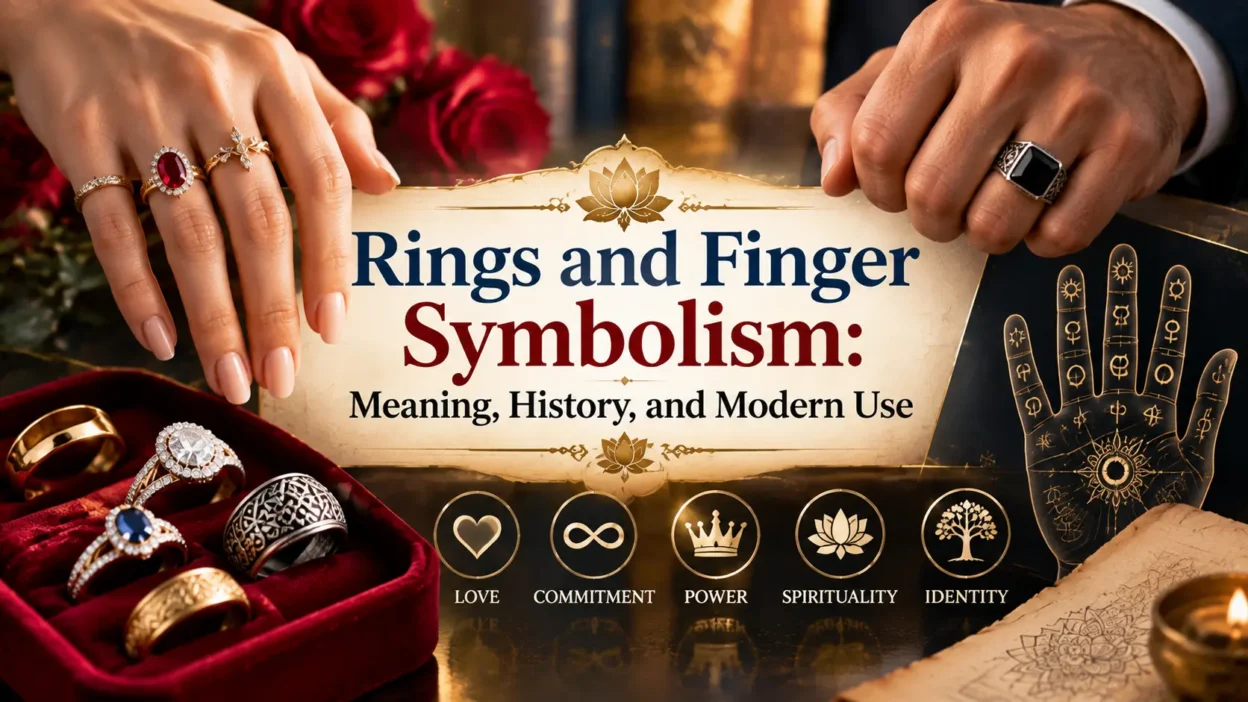
A ring may look like a simple piece of jewelry, but its placement on a specific finger often carries personal, cultural, and emotional meaning. Rings and finger symbolism explains how people use different fingers to communicate ideas about love, commitment, identity, status, spirituality, and personal beliefs.
From wedding bands exchanged during marriage ceremonies to family heirlooms passed through generations, rings often represent relationships and important life moments. In the United States, people commonly associate certain fingers with romance, independence, confidence, or personal expression, although meanings can change depending on culture, personal choice, and social trends.
Understanding finger symbolism helps explain why a person chooses a particular finger for a ring and why certain traditions continue even in modern fashion.
Quick Answer
Rings and finger symbolism commonly represents love, commitment, identity, and personal expression in modern American culture, especially through wedding rings, engagement rings, and meaningful jewelry choices. Historically, rings placed on different fingers have also represented social status, authority, beliefs, family connections, and cultural traditions.
TL;DR
- Rings often symbolize commitment, identity, and personal values.
- The ring finger is strongly connected with marriage traditions.
- Different cultures assign meanings to different fingers.
- Signet and ceremonial rings historically showed authority.
- Modern jewelry choices often reflect personal style.
Why Rings Became Symbols of Human Identity
Rings are circular objects with no beginning or end, which has contributed to their association with ideas such as continuity, loyalty, and lasting relationships. Across many societies, people have worn rings not only for decoration but also to communicate important information about themselves.
A ring can show that someone is married, connected to a group, holds a position of authority, remembers a loved one, or follows a personal belief. Unlike many other accessories, rings are usually worn directly on the body, making them a visible extension of personal identity.
In modern America, rings appear in many areas of life. People wear them as wedding jewelry, fashion pieces, family keepsakes, graduation gifts, friendship symbols, religious reminders, and personal statements.
The meaning usually comes from three factors:
- the type of ring
- the finger where it is worn
- the personal story behind it
A diamond ring and a simple metal band may both carry strong symbolism, but their meanings can be completely different depending on the wearer.
The Circle Shape and Its Ancient Symbolism
The circular shape of a ring has influenced its symbolism for thousands of years. Many cultures connected circles with ideas of unity, protection, and completeness because a circle appears endless and unbroken.
Ancient civilizations used rings for practical and symbolic purposes. Some rings served as personal seals, while others represented wealth, social position, or religious connection.
The ancient Egyptians used rings connected with ideas of eternity and spiritual continuation. Some rings contained symbols or inscriptions that connected the wearer with beliefs about protection and the afterlife.
In ancient Rome, rings could represent legal authority, family status, and social identity. Certain rings were connected with official duties, while others showed membership in particular groups.
Over time, rings moved beyond signs of status and became strongly connected with personal relationships.
What the Ring Finger Symbolizes in the United States
The ring finger has one of the strongest symbolic meanings in American culture. For many people in the United States, the fourth finger of the left hand represents romantic commitment because of long-standing wedding traditions.
Engagement rings and wedding bands are commonly worn on this finger to represent a promise between partners. The practice became especially widespread because of European marriage customs that influenced American traditions.
However, the meaning is not universal. Some people wear wedding rings on the right hand, while others choose different fingers because of cultural background, comfort, profession, or personal preference.
The ring finger may symbolize:
| Context | Meaning in the USA | Common Associations | Notes |
|---|---|---|---|
| Wedding ring | Marriage and commitment | Love, partnership, loyalty | Usually worn on left ring finger |
| Engagement ring | Future marriage promise | Romance, intention | Often includes gemstones |
| Family ring | Heritage and connection | Memories, ancestry | May be passed through generations |
| Personal ring | Individual expression | Style, identity | Meaning depends on wearer |
The finger itself does not create the meaning alone. The relationship between the object, tradition, and person gives the ring its symbolism.
The Meaning of Each Finger for Rings
Different fingers have developed symbolic associations over time. These meanings are not strict rules, but they provide insight into how people interpret jewelry placement.
Thumb Rings: Independence and Confidence
Thumb rings have often been associated with individuality and strength. Because the thumb is separate from the other fingers, wearing a ring there can visually represent independence or personal confidence.
In modern American fashion, thumb rings are often chosen because they look distinctive. Some people wear them as a style choice rather than because of a specific symbolic meaning.
Historically, thumb rings also had practical uses. Some cultures used thumb rings connected with archery, protection, or signs of social position.
Today, a thumb ring may suggest:
- self-expression
- confidence
- independence
- unconventional style
Index Finger Rings: Authority and Leadership
The index finger has traditionally been connected with power because people use it to point, direct, and give instructions. Rings placed on this finger have often carried associations with leadership and status.
In European history, important individuals sometimes wore rings on the index finger to display authority or family position.
In modern America, index finger rings are often fashion choices, but they may still communicate confidence and a strong sense of personal style.
Common associations include:
- leadership
- ambition
- confidence
- social identity
Middle Finger Rings: Balance and Individuality
The middle finger is the longest finger and occupies the center position of the hand. Because of this placement, some symbolic interpretations connect it with balance and personal stability.
Many people choose middle finger rings simply because the location creates a noticeable fashion statement.
Unlike wedding rings, middle finger rings usually have fewer traditional meanings in American culture. Their symbolism often depends on the design and the wearer’s personal connection.
They may represent:
- individuality
- balance
- creativity
- confidence
Pinky Finger Rings: Identity, Communication, and Personal Style
The pinky finger has developed several symbolic meanings across different societies. Because it is the smallest finger and sits apart from the main group of fingers, rings placed there are often associated with individuality, personality, and personal identity.
In the United States, pinky rings are commonly seen as fashion choices, but they also have historical connections with professional identity and family traditions. Some people wear signet rings on the pinky finger to represent ancestry, achievements, organizations, or personal history.
Historically, signet rings were important because they carried engraved symbols used to identify families, businesses, or individuals. A person could press the ring into wax to create a unique mark that represented authority and ownership.
Today, pinky rings may symbolize:
- independence
- confidence
- family heritage
- professional identity
- personal style
The meaning depends heavily on the wearer. A simple gold band, a family crest ring, and a modern fashion ring may communicate completely different messages.
Left Hand vs Right Hand Ring Symbolism
The hand where a ring is worn can change its interpretation. Many people associate the left hand with personal relationships and the right hand with individuality, public identity, or cultural traditions.
However, these meanings vary widely. There is no single universal system that applies to every person or society.
In many parts of the United States, wedding and engagement rings are traditionally worn on the left ring finger. This custom is connected to European traditions that became common in American marriage ceremonies.
Some people choose the right hand instead because of:
- cultural background
- family traditions
- personal comfort
- professional reasons
- relationship preferences
The right hand may also be chosen for rings that celebrate personal achievements rather than romantic commitments.
Examples include:
- graduation rings
- achievement rings
- anniversary rings
- personal statement jewelry
A ring on either hand can hold strong meaning when the wearer connects it with a specific memory or belief.
Religious and Spiritual Meanings Connected With Rings
Rings have appeared in many religious traditions as symbols of commitment, authority, faith, and connection.
In Christianity, rings are strongly associated with marriage vows. A wedding ring represents the promise made between two people and the public recognition of that commitment.
Some religious leaders and communities have also used rings as symbols of spiritual responsibility or leadership.
In Jewish traditions, wedding rings play an important role in marriage ceremonies. The simplicity of a traditional wedding band can represent the seriousness and honesty of the marital agreement.
In some spiritual practices, rings may be worn as reminders of personal beliefs, protection, devotion, or connection with a higher purpose. These meanings are often personal rather than universal.
Important religious symbolism connected with rings includes:
- commitment
- devotion
- promises
- responsibility
- belonging
A ring’s spiritual meaning usually comes from the belief system of the wearer rather than from the object alone.
Wedding Rings and the Symbolism of Love and Commitment
Few rings carry as much emotional meaning as wedding rings. In American culture, wedding bands represent a public promise between partners and are often connected with loyalty, trust, and shared life experiences.
The circular shape of the band contributes to its symbolism because many people view the unbroken circle as representing an ongoing relationship.
Wedding ring traditions have changed over time. Earlier customs focused mainly on practical and social agreements, while modern American weddings often emphasize emotional connection and personal choice.
Today, couples may choose:
- matching wedding bands
- unique handmade rings
- family heirloom rings
- alternative metals and designs
- personalized engravings
The value of a wedding ring is not only determined by its material. Many people consider its emotional meaning more important than its financial cost.
Rings in Tattoos and Modern Body Symbolism
Ring symbolism is not limited to physical jewelry. Ring tattoos have become increasingly popular as a permanent expression of relationships, memories, and identity.
Couples sometimes choose ring tattoos as alternatives to traditional wedding bands. Others use finger tattoos to represent personal beliefs, important dates, family connections, or creative expression.
Common meanings of ring tattoos include:
- lifelong commitment
- remembrance
- personal promises
- individuality
- artistic identity
Because finger tattoos are highly visible, they often communicate a stronger sense of personal identity than hidden tattoos.
However, modern tattoo culture also shows that symbolism is flexible. The same design can represent different ideas depending on the person’s experiences.
Rings in Fashion, Design, and Popular Culture
Modern ring symbolism extends beyond traditional meanings. Fashion has transformed rings into tools for self-expression, allowing people to communicate personality, taste, and creativity.
In American culture, rings appear in:
- fashion photography
- entertainment
- social media trends
- luxury design
- street fashion
- personal styling
A large statement ring may communicate confidence, while a minimalist band may suggest simplicity or elegance.
Celebrities, musicians, and designers have also influenced how people view rings. Certain styles become associated with creativity, success, rebellion, or individuality.
However, fashion meanings change quickly. A ring style that represents one idea in one decade may communicate something different later.
Emotional and Psychological Meaning of Wearing Rings
People often attach emotional meaning to rings because they connect physical objects with memories and relationships.
A person may wear a ring because it reminds them of:
- a loved one
- an important achievement
- a personal promise
- a meaningful period of life
- a cultural tradition
Psychologically, objects connected with personal experiences can become symbols of identity. A family ring may represent belonging, while a graduation ring may represent accomplishment.
This emotional connection explains why people often keep old rings even when they no longer wear them regularly. The symbolic value can remain even when the practical purpose changes.
Common Misunderstandings About Ring Symbolism
Although rings have many traditional meanings, assumptions about them can sometimes create confusion.
A common misunderstanding is believing that every ring placement has a fixed meaning. In reality, people choose rings for many reasons, including comfort, fashion, and personal preference.
For example:
- A ring on the left hand does not always indicate marriage.
- A pinky ring does not automatically represent wealth or status.
- A thumb ring does not always symbolize rebellion.
- A specific gemstone does not have one universal meaning.
Symbolism develops through culture and personal experience. A ring’s meaning should be understood through context rather than appearance alone.
Misuse and Controversial Interpretations of Ring Symbols
Like many cultural symbols, rings can sometimes be misunderstood or given meanings that are not historically accurate.
Certain ring styles have been connected with groups, movements, or social identities in specific periods. However, these associations often depend on location, time, and context.
It is important to avoid assuming a person’s beliefs or identity based only on their jewelry.
A ring may represent:
- fashion preference
- family history
- personal memory
- cultural tradition
- artistic choice
Understanding symbolism requires looking beyond the object itself.
How Ring Meanings Have Changed Over Time
The meaning of rings has continued to evolve. In earlier societies, rings often emphasized social position, authority, and family connections. Over time, they became increasingly connected with personal relationships and emotional expression.
Modern Americans often view rings as personal symbols rather than strict cultural signals.
Changes include:
- increased acceptance of different wedding traditions
- more personalized jewelry designs
- growing popularity of symbolic tattoos
- broader fashion experimentation
- reduced reliance on traditional rules
Today, rings function as both cultural objects and personal storytelling tools.
Frequently Asked Questions
What does wearing a ring on each finger mean?
Different fingers have traditional associations, but meanings vary by culture and individual choice. The ring finger is commonly connected with marriage, while other fingers are often linked with personal style, confidence, or identity.
Why is the wedding ring worn on the fourth finger?
The tradition comes from historical European customs that connected the fourth finger with marriage. In the United States, the left ring finger became the most common placement for wedding bands.
What does a ring tattoo symbolize?
A ring tattoo often represents commitment, remembrance, personal promises, or identity. Many couples choose them as permanent alternatives to traditional wedding rings.
Do rings have spiritual meanings?
Yes, rings can carry spiritual meanings in many traditions, including commitment, faith, devotion, and connection. The exact meaning depends on the person’s religious or personal beliefs.
What does a pinky ring symbolize?
A pinky ring may symbolize individuality, family heritage, professional identity, or fashion preference. Its meaning depends on the design and the person wearing it.
Are ring meanings the same in every culture?
No. Different cultures assign different meanings to ring placement, materials, and traditions. A symbol that has one meaning in one society may have another meaning elsewhere.
Conclusion
Rings and finger symbolism reflects the way people use jewelry to communicate relationships, identity, memories, and personal values. In modern American culture, rings can represent marriage, achievement, family connections, fashion, or individual expression.
The meaning of a ring is shaped by history, culture, and personal experience. While traditions such as wedding bands on the ring finger remain important, modern choices show that people increasingly use rings to tell their own stories.
Ultimately, rings and finger symbolism is less about strict rules and more about the connection between an object and the person who wears it. A ring becomes meaningful because of the memories, promises, and ideas attached to it.

